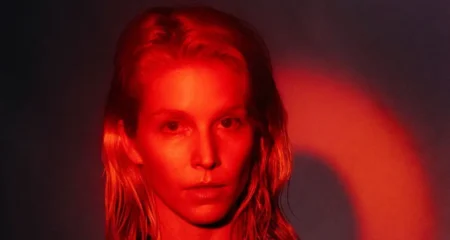


Artist: Lana Del Rey
Album: Born to Die
Label: Interscope
Released: January 27, 2012
Born to Die is an album about choosing to stay in something you know is going to destroy you, and finding that choice more interesting than the alternative.
That premise is not buried. It is the title. It is in the first line of the first track. Del Rey announced exactly what she was doing and got criticised for it anyway, mostly by people who confused a closed fist with an empty hand.
Fourteen years on, the backlash has aged worse than the album. The SNL performance was poor. The major label machinery was real. None of that touches the songs.
The meaning of Born to Die lies in Lana Del Rey’s portrayal of love as something knowingly destructive. Across the album, she explores the thrill of choosing intensity over stability, combining cinematic orchestration with hip-hop production to frame romance as both fantasy and inevitability.
The Sound and What Got Left Out
Producer Emile Haynie came to Born to Die from credits across Eminem, Lil Wayne and Kid Cudi, and that background shows in ways the baroque pop tag completely misses. The drums hit with MPC weight. The bass sits low and deliberate. The strings were built around those rhythms, not placed over them, which is why the album sounds cinematic rather than theatrical. Hip-hop wearing orchestral clothing. In 2012, that specific combination was genuinely uncommon.
What is less discussed is how much was deliberately removed. Demos existed with more aggressive instrumentation, faster tempos, guitars. All of it was gone by the time the album was finished. Del Rey has described telling her label that if they signed her, the sound was non-negotiable. She resisted pressure to change her signature breathiness, and valued certain collaborators specifically because they did not want to alter anything. The sonic uniformity critics heard as monotony was a controlled decision, not an accident of early-career limitations.
The vocal was equally constructed. She lowered her register deliberately after years of not being taken seriously in Brooklyn clubs as Lizzy Grant. The breathy, slow-burn delivery she arrived at set a sonic standard that now runs through a decade of pop: Billie Eilish, Olivia Rodrigo, most of what streams under sad girl pop today. She helped build the room it happened in, and she built it by declining to sound like anything that already existed.
What the Album Is About
Across twelve tracks, a woman who knows she is in over her head stays anyway. Not from weakness. Because the full aliveness of being inside something catastrophic beats whatever the calmer option looks like. She picks the drowning.
What most contemporary criticism missed is that this position extends beyond the lyrics into the album’s entire formal construction.
National Anthem is the clearest example: it frames desire and money as patriotic acts, borrows hip-hop’s cadence and structure, and then leaves the political meaning deliberately unstable, neither endorsing the fantasy nor puncturing it.
That tonal ambiguity is not a failure of nerve. It is the album’s method applied to its most ambitious track.
Born to Die ignores pop’s empowerment arc, indie’s confessional authenticity, and hip-hop’s assertive swagger while borrowing surface markers from all three. Every genre it touches, it uses partially and puts down. That is not incompetence. That is a consistent aesthetic stance maintained across twelve tracks by a 26-year-old on her first major label record.
The criticism at the time read these gaps as absences. A decade of reassessment has reframed them as the point. The depressive languor, the emotional plateau, the lack of cathartic release: not failures to achieve pop pleasure but a deliberate commitment to a different kind of listening. An open road instead of a climax.
Del Rey’s clichés operate inside this logic. They land precisely when the track’s emotional surrender demands nothing more than total conviction, and fall short when a song asks for something specific and gets a stock phrase instead.
Video Games earns every grandiose moment because the surrender builds bar by bar. Dark Paradise uses the same vocabulary without that groundwork, and the strings do the heavy lifting while the words coast.
That unevenness is real. It is also the unevenness of a record that set its own rules before it had fully learned how to execute them everywhere.
The Paradise Edition
Eight months after the original, the Paradise Edition added eight tracks and shifted the argument. Where the original twelve songs showed the character fully committed to her choices, the Paradise disc shows the cost.
Ride operates in a wide-open Americana register: a woman on a highway who has stopped trying to explain herself, delivered over strings that swell without resolution.
American strips back to piano and minimal arrangement, the smoky vocal sitting at the front with nothing behind it.
Yayo, a re-recorded version of a track from her 2010 self-titled release, is the bleakest thing in her catalogue at that point: 4am in a room where no one is coming, the melody barely moving.
Bel Air closes the EP as an airy, piano-led ballad, Del Rey’s voice sitting higher in her register than anywhere on the original album, children’s voices threaded through the production adding an unsettling fragility to what is otherwise the collection’s most celestial moment.
What the Paradise Edition confirms is that Del Rey knew exactly what she was making the first time. The darker material was already written. She chose which side of the character to show first, and which to hold back. That sequencing decision matters more than it has been given credit for.
Listen to Born to Die while reading the review below.
Track by Track
Born to Die opens on cathedral strings and sets the terms immediately. Not whether this works out, but how to feel while it falls apart. The clichés here are deployed with enough conviction that they read as statements of position rather than lazy writing.
Off to the Races is the most divisive track, and not without reason. The playful vocal runs sit awkwardly against the rest of the album’s register. But it is also the most nakedly honest track about the power exchange at the centre of everything: the narrator oscillating between “do what I want” and “tell me you own me” within the same song, the contradiction left unresolved because resolution is not what she is after.
Blue Jeans reads as a breakup song until “they took you away” arrives, at which point the tense shifts into something more final. Whether that means death or just permanent absence, it changes the emotional weight of everything before it.
Video Games remains the best thing here. The premise is almost aggressively mundane: he calls her over, opens a beer, plays video games while she puts on his favourite dress and perfume. She describes this as paradise. The production earns the grandiosity, the strings arriving late and quietly rather than front-loaded, the space in the arrangement doing as much work as the instrumentation. Against the rest of the album it is the sparest track, which is part of why it still sounds unlike everything around it.
Diet Mountain Dew announces its thesis in the opening line, “you’re no good for me but baby I want you,” and then repeats it for four minutes in different keys. The self-awareness is present, the narrator knows exactly what she is doing and does not care, but the writing does not develop that knowingness beyond the first statement and the production carries slack the lyrics should have taken.
National Anthem is the album’s most formally inventive track and its most underappreciated. Del Rey drops into a hip-hop cadence that nothing else here attempts, whispered verses against a choir-backed chorus in a structure entirely its own. The money-as-patriotism framing is the album’s most pointed lyrical idea, wealth declared as the real national anthem with a deadpan that sits somewhere between critique and complicity.
The video extended this by casting ASAP Rocky as JFK while Del Rey played both Marilyn Monroe and Jackie Kennedy simultaneously: the same woman in two roles, devoted and desired, neither version fully real. The album’s central dynamic given a face.
Dark Paradise is where the lyrical weaknesses are most exposed. The production carries the emotional freight while the words stay vague, and the album’s tendency to lean on orchestration when the writing falls short is clearest here.
Carmen is the record’s most interesting formal detour and the one track where Del Rey steps outside the first-person devotion that holds everything else together. The song is a portrait told from a slight distance: a girl drinking top-shelf liquor at seventeen, fooling everyone into thinking she is having the time of her life, the narrator watching rather than inhabiting. That shift in angle, observational rather than confessional, gives Carmen a quality nothing else on the album has. It is the one track that shows what a more varied Born to Die might have sounded like.
Summertime Sadness has the most viscerally specific imagery on the record. Telephone wires sizzling like a snare: you see and hear it simultaneously, and that kind of concrete double-sense detail is what separates the stronger tracks from those that settle for feeling over construction.
This Is What Makes Us Girls closes on a thesis stated without apology: these patterns, loving too hard, romanticising dysfunction, are not problems to solve. They are simply what it is. Del Rey has described the track as a favourite precisely because she did not compromise writing it, and the lack of compromise shows. The acceptance it offers is not comfortable. It is not meant to be.
What It Started, and What It Declined to Become
Born to Die arrived knowing exactly what it was. The sound, the persona, the thematic preoccupations, the hip-hop construction under orchestral clothing: all present from the first listen, nothing provisional. For a first major-label record from someone who had spent years being ignored, that certainty is not a small thing.
The catalogue that followed got more lyrically precise and compositionally ambitious in ways this album does not reach. Each subsequent record extended the project’s range in ways Born to Die’s deliberately narrow construction keeps closed.
But the narrowness was not a failure. It was the terms Del Rey wrote for herself before she signed anything with anyone. An album that ignored pop’s safety nets, indie’s authenticity requirements, and the empowerment script that critics in 2012 kept trying to hand back to her.
It is flawed, occasionally repetitive, and built on an emotional logic that took a decade of reassessment to properly describe. It is also the record that changed what pop music sounded like for everything that followed.
Those two things are not in tension. The closed doors are why it lasted.
Fourteen years later, the question is no longer whether Born to Die was misunderstood, but how many albums that followed quietly borrowed its blueprint.
You might also like:
- Best Lana Del Rey Songs: The Soundtrack of Summertime Sadness and Nostalgic Beauty
- Lana Del Rey’s Chemtrails Over the Country Club: Lyrics, Meaning, and Analysis
- Lana Del Rey White Feather Hawk Tail Deer Hunter Review: The Strangest Love Song She’s Ever Made
- Lana Del Rey’s Young and Beautiful: meaning, scene, legacy
- Lana Del Rey’s Love Lyrics Breakdown: A Cosmic Ode to Youth and Possibility
- Lana Del Rey’s HENRY, COME ON Lyrics Meaning Explained