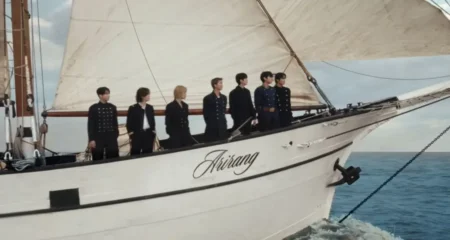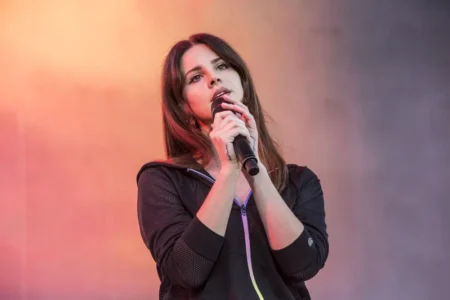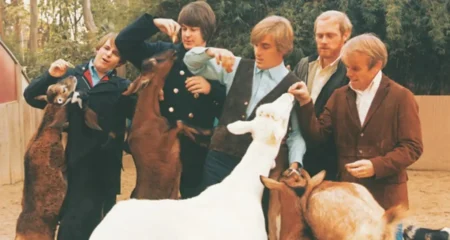

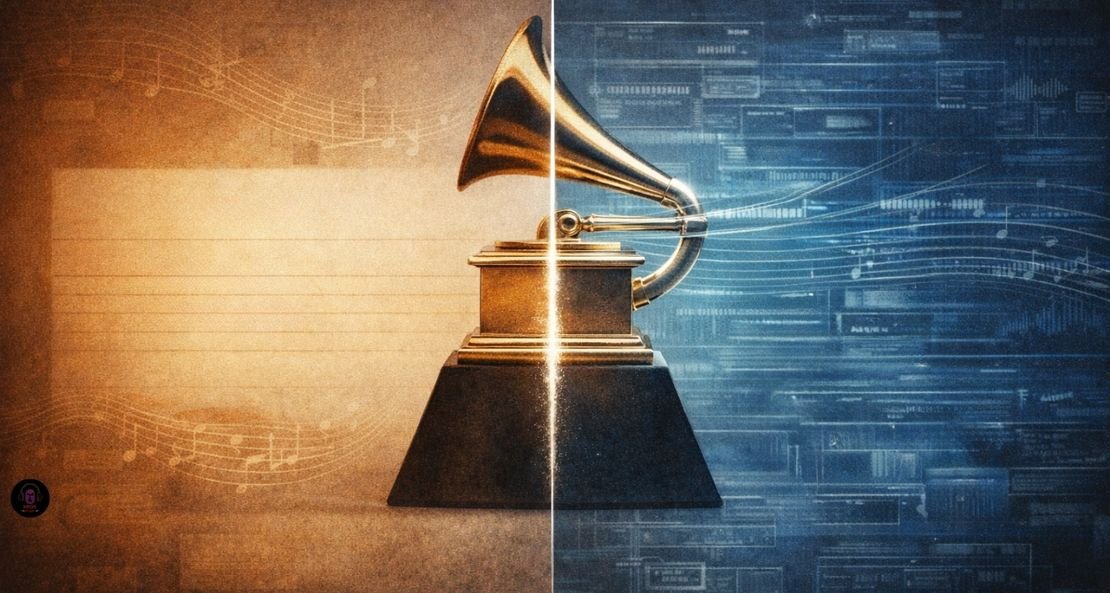
Something feels off when you compare Grammy Song of the Year nominees across four decades, though not in the way most people assume.
When Stevie Wonder and Bob Dylan announced nominees at the 1984 ceremony, they stood before an audience witnessing something extraordinary.
Every nominated song bore the signature of one or two writers.
Michael Jackson claimed two nominations with “Billie Jean” and “Beat It,” both solely his creation. Lionel Richie penned “All Night Long” alone.
Sting wrote “Every Breath You Take” without collaboration. Only “Maniac” required two minds to complete.
Fast-forward four decades, and the landscape has transformed beyond recognition. The 2026 nominees reflect an industry that operates through collective creation.
Kendrick Lamar and SZA’s “luther” credits ten songwriters. ROSÉ and Bruno Mars‘ “APT” lists eleven contributors.
Bad Bunny’s “DtMF” required seven writers to bring his nostalgic vision to life. Even “Golden” from the cultural phenomenon KPop Demon Hunters emerged from five distinct voices.
Before anyone declares this a catastrophe for songwriting, though, the numbers need proper context.
The Changing Architecture of Pop
When ROSÉ and Bruno Mars created “APT,” they didn’t simply gather round a piano. The production team included writers who specialised in specific elements: hook construction, verse development, bridge arrangements, and production choices that shape modern pop’s DNA.
Think of it less like solitary craftsmanship and more like architectural collaboration, where specialists handle distinct parts of a larger structure.
The track interpolates Toni Basil’s “Mickey” whilst incorporating K-pop sensibilities that recall PSY’s “Gangnam Style”, creating something that bridges cultures and decades.
Labels can’t survive on album sales anymore, so they assemble proven hitmakers to maximise the chances that a single actually connects.
This business pressure shapes how songs get written, just as three-minute radio rotation requirements dictated structure in previous decades.
The industry has transformed in ways that would’ve seemed impossible to 1984’s songwriters.
Modern pop songs function as multi-layered compositions where production choices carry as much weight as melody.
The distinction between writing and producing has blurred considerably. When Amy Allen receives songwriting credit alongside Jack Antonoff and Sabrina Carpenter on “Manchild,” each contributor brings distinct expertise that shapes the final work.
The streaming era rewards specific sonic signatures. Producers who craft distinctive sounds often receive writing credits because their contributions define what makes songs recognisable.
Eight songwriters worked on “That’s What I Like,” which won Song of the Year in 2018. Eight. The Recording Academy presumably didn’t see this as a problem.
The Sample Economy
Several 2026 nominees build upon existing material, though this practice hardly began yesterday. Doechii’s “Anxiety” transforms Gotye’s Grammy-winning “Somebody That I Used to Know” into something entirely different.
Originally uploaded to YouTube in 2019 as part of her COVEN MUSIC sessions, the track resurfaced thanks to a viral TikTok trend two years later.
The song speaks to contemporary mental health conversations whilst acknowledging its musical heritage.
Kendrick Lamar and SZA‘s “luther” draws from Luther Vandross and Cheryl Lynn’s work, specifically sampling “If This World Were Mine,” which Marvin Gaye originally wrote. You can dismiss this as derivative, but lineage isn’t theft when it’s declared openly.
When artists reference musical history, they’re starting a conversation across generations rather than pretending they invented something from nothing.
It transforms source material into something closer to commentary than copying.
Samples and interpolations reflect genuine admiration for musical heritage. They acknowledge influence explicitly rather than hiding inspiration.
The 1984 nominees worked within similar frameworks – musicians absorbed influences from blues, soul, and rock pioneers.
They simply operated before digital technology made sampling technically and legally standardised.
Authentic Excellence Still Emerges
Amongst the 2026 nominees, Billie Eilish and Finneas prove that two-person collaborations still produce Grammy-worthy material.
“WILDFLOWER” credits only the O’Connell siblings. The song explores dating a friend’s former partner whilst feeling haunted by his previous relationship, with Eilish acknowledging her own shortcomings in love.
It sounds exactly like what intimate, personal songwriting has always sounded like: specific enough to feel true, universal enough to hurt.
Bad Bunny’s “DtMF” emerged from seven writers but carries genuine emotional weight. The song expresses nostalgia-tinged grief with lyrics about taking more pictures and giving more hugs whilst wishing loved ones never move away.
Watch someone cry to this song on TikTok and tell me committee-written music can’t connect.
The KPop Demon Hunters phenomenon deserves particular attention. “Golden” has nabbed four Grammy nominations, though it missed the Record of the Year category, which would have made history as the first K-pop group recognised in that field.
The song represents representation and cultural exchange, demonstrating how collaborative creation can serve larger artistic purposes.
Beyond Nostalgia’s Simplicity
Picture the 1984 ceremony: John Denver hosting, Michael Jackson recovering from scalp burns sustained filming a Pepsi commercial, 51.67 million people tuning in.
We remember it as a golden age partly because we’re watching through layers of MTV rotation, Thriller dominance, and 40 years of radio play that’s drilled these songs into collective memory.
Michael Jackson dominated with eight awards that night, but this happened because Thriller had sold nearly 30 million copies by February 1984, more albums than the Police, David Bowie, Rolling Stones, Culture Club and Duran Duran combined that year.
Commercial dominance influenced Grammy voters then just as streaming numbers do now.
Those 1984 songs endure because they captured specific cultural moments. “Every Breath You Take” became shorthand for obsessive love despite Sting’s protestations that people misunderstood its darker themes.
“Billie Jean” is credited with breaking down MTV’s colour barrier, as the network initially resisted playing videos by Black artists. These songs mattered beyond their melodic strength.
Contemporary nominees navigate different challenges. Songs must work across platforms – TikTok snippets, streaming playlists, radio rotation, and live performance.
This multi-platform demand influences writing processes. Teams assemble because creating music that functions across diverse contexts requires varied expertise.
You might also like:
- AI Songs Top Charts: Breaking Rust & the Rise of AI Slop
- The Most Streamed Songs on Spotify (2025 List Updated)
- Family Ties: The Kendrick Lamar and Baby Keem Connection
- Lionel Richie Songs: Celebrating the Soundtrack of Our Lives
- Unpacking Bruno Mars’ When I Was Your Man Lyrics
- Unravelling the Depth of Saturn by SZA: A Lyrics Analysis
What Memory Forgets
When judging current music against past classics, we forget the forgettable. The 1984 Grammy ceremony nominated excellent songs, but that year also produced “99 Luftballons,” “Safety Dance,” and countless other tracks that seemed massive at the time but now exist mainly as ’80s night playlist fillers.
Every era generates memorable and disposable music in roughly equal measure. We just don’t remember the disposable parts, which makes history look better than it actually was.
Current nominees face immediate judgment without the luxury of hindsight. “WILDFLOWER” has become Billie Eilish’s longest-charting song on Billboard’s Hot 100, with a 72-week run surpassing even “BIRDS OF A FEATHER”. Longevity accumulates slowly, proving itself across years rather than weeks.
People love saying “time will tell” about contemporary music, as if we’re all just waiting patiently for history to render its verdict. But that misses how significance works.
Some 2026 nominees will fade, obviously. Others will define this moment in popular music whether we recognise it now or not.
“luther” might represent how hip-hop matured into sophisticated R&B fusion. “Golden” could mark when animated characters earned serious Grammy consideration alongside human performers. “Anxiety” might symbolise when artists openly discussed mental health through mainstream pop.
The Collaborative Future
Music creation has always involved collaboration. Phil Spector assembled the Wrecking Crew for his Wall of Sound.
Motown relied on the Funk Brothers. The Beatles worked with George Martin. The difference now lies in how the industry acknowledges these contributions through songwriting credits rather than session player anonymity.
This transparency better represents creative reality. When ten people shape a song, crediting all ten acknowledges their work.
Previous eras often buried contributions behind “produced by” credits whilst solo artists claimed full songwriting honours.
The streaming economy also influences collaborative writing. Record labels can’t rely on album sales alone, so they assemble proven hitmakers to maximise single success.
This business reality shapes creative processes, just as radio rotation requirements influenced song lengths and structures in previous decades.
Beyond the Binary
The conversation needn’t reduce to “then good, now bad.” Each era produces its own excellence and mediocrity.
The 1984 nominees represented extraordinary talent meeting perfect timing. The 2026 nominees reflect different industry mechanics, technological possibilities, and cultural conversations.
Of the Song of the Year winners since 1959, 27 were written by solo songwriters. This means collaborative victories have been common throughout Grammy history. The phenomenon isn’t new, it’s become more visible and acknowledged.
Rather than mourning lost simplicity, we might recognise how contemporary pop embraces complexity. Modern production techniques allow sonic experimentation that would’ve seemed impossible in 1984.
Digital tools democratise music creation, letting artists from Seoul to San Juan compete with Nashville and Los Angeles. This globalisation enriches pop music even as it complicates traditional songwriting models.
Here’s what actually matters: whether songs required one writer or eleven isn’t the question critics should be asking.
It’s whether the finished work moves people, expresses something genuine, or captures cultural moments worth remembering. Some 2026 nominees will achieve this. Others won’t. The same held true in 1984, 1994, or any year you choose.
Dismissing collaborative creation misses how artistry adapts to survive. The connection between creator and listener matters more than how many names appear in the credits, and that connection keeps happening regardless of whether we approve of the process.