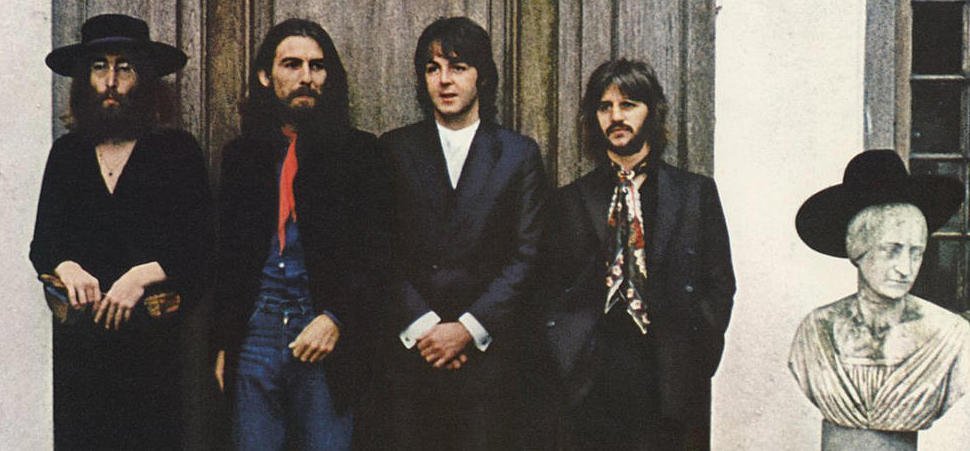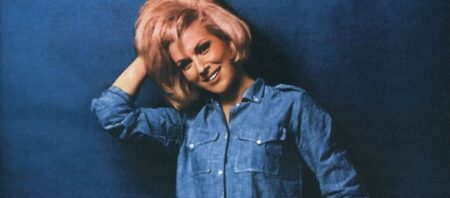

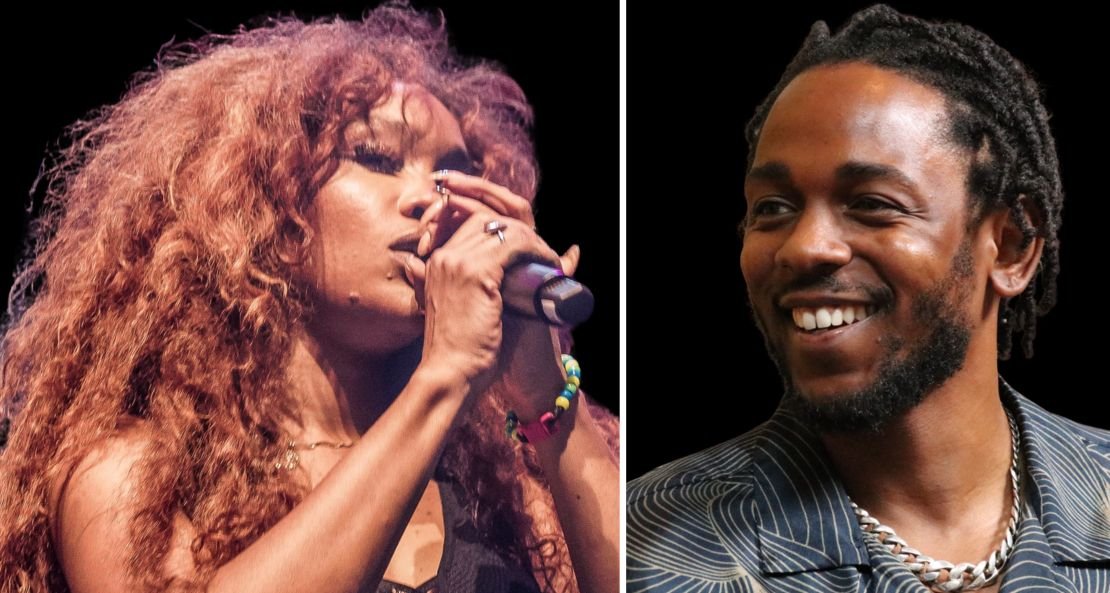
Sounwave has said Luther started with no drums, no lyrics, just him chopping a sample while Kendrick hummed over the top of it. You can still hear that in the finished track. Something about it feels like a room before anyone has spoken. Warm, slightly charged. Waiting for something that may or may not arrive.
The sample is Cheryl Lynn and Luther Vandross’s 1982 recording of If This World Were Mine, itself drawn from Marvin Gaye and Tammi Terrell’s 1967 original. Lamar keeps the melody and the sentiment on the surface. Underneath, he puts something else.
What Luther by Kendrick Lamar and SZA is about: Luther is a love song built around total devotion, in which Lamar sees himself as someone who would multiply his partner’s dreams, eliminate her enemies, and remake the world around her. The romance is genuine, but it is inseparable from power, the kind that does not always announce itself as such.
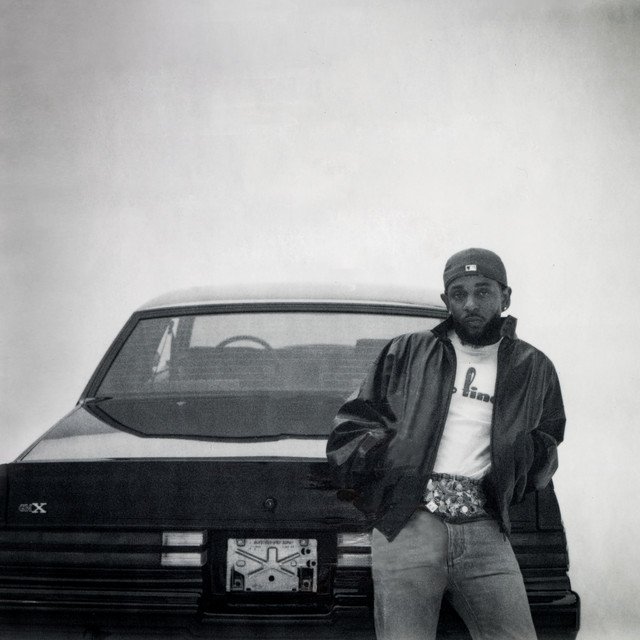
The song sits third on GNX, Kendrick’s surprise November 2024 album. The two tracks before it run taut and combative. Then this drifts in, slower, the guitars plucked quietly, SZA’s voice arriving like afternoon light through a window you forgot you left open. The shift is so complete it starts to feel like a point being made, though about what exactly is harder to pin down.
The Vandross connection earns the title. One word, no explanation needed, carrying an entire tradition of Black American romantic music. When the estate cleared the sample, they asked for no profanity. Lamar told Rolling Stone they made sure the song represented love. Given what some of the lines actually promise, that statement has a dry edge to it.
The opening lyric has more significance than the delivery lets on. “Roman numeral seven, bae, drop it like it’s hot.” Biblically, seven signals completion, the number of days in which the world was made whole. Addressing someone as the seventh thing is not casual. It places them at the structural centre of something much larger than a relationship. And this is, counting Gloria on the same album, the seventh collaboration between Lamar and SZA, a fact the lyric carries without needing to point at itself.
The Snoop reference folded underneath works on several levels. West Coast lineage, geography as musical loyalty. Given the noise around Snoop during the Drake period, it reads as a quiet gesture of something, reconciliation or acknowledgment or simply memory. Lamar rarely fills space.
The first verse is where it shifts. Or at least where it starts to feel different. He promises to take your enemies in front of God and introduce them to the fire. The production does not respond. The guitars stay soft, the tempo stays measured, the arrangement stays close and warm. The space between what is being described and how it sounds means a lot more than any individual line. You can hear Luther as pure romance; the music will let you. But the words are describing something that slides between protector and sovereign without marking the border.
When SZA comes in, the tone pulls inward rather than outward. A decade of collaboration sits behind this moment, Babylon through Doves in the Wind through All the Stars, and you can hear the familiarity. “Concrete flowers grow / heartache, she only doin’ what she know” carries the Tupac echo, The Rose That Grew from Concrete, without making any display of it. Less quotation than shared vocabulary. The kind of reference that passes between artists without needing citation.
Then she lands a line that arrives without warning. “If it was up to me, I wouldn’t give these nobodies no sympathy.” Whatever soft archetype the verse had been building collapses. She is deciding what she gives and what she holds back. The framing of love as power is not Lamar’s angle alone.
Their voices in the chorus find the same rhythm from different starting points, circling without quite meeting. There is a line about turning everything off that works as romance, though Lamar has talked enough about deliberately stepping back from public noise, phones down, social media gone, that it carries a second register alongside the first. The relationship, or the version of it they are presenting, is what stays when the rest is switched off.
Lamar has been with Whitney Alford since they were teenagers in Compton. Married in 2019. She has hovered at the edge of his music for years, felt without being named, present in the negative space of certain lines across multiple albums. Here the distance is shorter. The lines feel addressed rather than performed, though that distinction is one Lamar has always made difficult to verify, and probably on purpose.
The music video, directed by Karena Evans and shot at the Westin Bonaventure Hotel in downtown Los Angeles, is built almost entirely around geometry. The hotel is cylindrical. The lights curve overhead. The platform SZA stands on is circular. The lobby spaces, the framing of doorways, the way scenes transition, everything arcs. You feel it before you clock it consciously, which is the point.
Circles across visual traditions tend to point toward completion, cycles, something that loops back without a definitive end. Kendrick and SZA spend much of the video apart, on separate benches, in separate spaces, sometimes occupying the same location at different moments. The architecture keeps pulling the visual logic back toward the same points regardless. Love as described here is not static harmony. It is two people moving through the same spaces, sometimes together, sometimes not, the circle less a symbol of perfection than a description of how things actually go.
The number seven recurs visually alongside the lyric, one more layer sitting underneath without interrupting anything above it.
Black-and-white sequences and colour footage cut against each other in ways that resist a clean past-present reading. The shifts feel tonal, the monochrome quieter, the colour sequences warmer and closer to the body. At the video’s end, the original Vandross and Cheryl Lynn recording plays over images of both artists with their respective partners. Tribute and something else, a quiet claim on a lineage. Whether that claim lands depends partly on what you think of the rest.
There are brief flashes throughout, easy to miss at normal speed, of something resembling a solar eclipse. A dark circle edged with light. Lamar has always let religious imagery sit without annotation. The image joins the number seven and the video’s broader geometry without requiring a caption, or at least that seems to be the intention.
Evans had directed God’s Plan, In My Feelings, and Nice for What for Drake before this. The casting generated a lot of commentary, most of it reading the choice as another move in a conflict that had supposedly concluded. The video itself seems largely uninterested in that conversation. Though with Lamar, the two things have never been as separate as they might appear.
Luther reached number one on the Billboard Hot 100 on March 1, 2025, replacing Not Like Us, which had returned to the top following the Super Bowl halftime performance. One Lamar track unseating another. It then broke the record for the longest consecutive run at the top of Billboard’s Hot R&B and Hip-Hop Songs chart, reaching 23 weeks by June 2025, passing the 22 weeks Not Like Us had previously held.
At the 2026 Grammy Awards, Luther won Record of the Year and Best Melodic Rap Performance. Accepting the award, Lamar spoke about Vandross directly, about the team dropping tears when the clearance came through, about needing to be worthy of what Vandross and Lynn had put into the original. It is a statement that could be curated for the room. From someone who has treated the history of Black American music as something closer to obligation than influence, it reads differently. Or at least it does if you have been paying attention.
The production coalition is unusually wide for a single track. Sounwave anchored it. Jack Antonoff came in alongside him, along with saxophonist Kamasi Washington, Scott Bridgeway, Roselilah, and Matthew Bernard. Sam Dew, who co-wrote twelve of the Mr. Morale and the Big Steppers tracks, contributed here alongside Atia Boggs, whose credits span multiple Beyoncé Renaissance and Cowboy Carter tracks. The arrangement leaves air in the room. Nothing competes with the sample. It sits as if it was always there, which is either a production achievement or just what happens when the right people leave well enough alone.
By the time Luther circles back to the Vandross and Lynn recording in its closing minutes, something about the original sounds different. Vandross sang surrender, longing as its own sufficient reward. Lamar has spent the preceding four minutes filling that same melodic frame with protection, with retribution, with devotion that does not always stop to distinguish between tenderness and something harder to name. Hearing the original at the end, you cannot quite unhear what has been placed inside it.
Whether that’s the point or just the effect, it’s difficult to say. Probably Lamar knows. Possibly he does not mind either way.
You might also like:
- Kendrick Lamar’s “Reincarnated” Lyrics Explained
- Peekaboo Lyrics Meaning by Kendrick Lamar: Breaking Down the Mask
- Deep Dive into Kendrick Lamar’s Wacced Out Murals: Lyrics Meaning and Cultural Impact
- Kendrick Lamar’s “squabble up”: A High-Octane Return to Street-Level Bravado
Kendrick Lamar & SZA Luther Lyrics
Intro
If this world were mine
Verse 1: Kendrick Lamar
Hey, Roman numeral seven, bae, drop it like it’s hot
If this world was mine, I’d take your dreams and make ’em multiply
If this world was mine, I’d take your enemies in front of God
Introduce ’em to that light, hit them strictly with that fire
Fah-fah, fah-fah-fah, fah-fah, fah
Hey, Roman numeral seven, bae, drop it like it’s hot
If this world was mine, I’d take your dreams and make ’em multiply
If this world was mine, I’d take your enemies in front of God
Introduce ’em to that light, hit them strictly with that fire
It’s a vibe, do your dance, let ’em watch
She a fan, he a flop, they just wanna kumbaya, nah
Chorus: SZA & Kendrick Lamar
In this world, concrete flowers grow
Heartache, she only doin’ what she know
Weekends, get it poppin’ on the low
Better days comin’ for sure
If this world were—
If it was up to me
I wouldn’t give these nobodies no sympathy
I’d take away the pain, I’d give you everything
I just wanna see you win, wanna see
If this world were mine
Verse 2: Kendrick Lamar & SZA
It go in (When you), out (Ride it), do it real slow (Slide)
Baby, you a star, strike, pose
When I’m (When you), with you (With me), everything goes(Slow)
Come and (Put that), put that (On my), on my (Titi), soul (Soul)
‘Rari (Red), crown (Stack), wrist (Stay), froze (Really)
Drip (Tell me), pound (If you), on the way home (Love me)
Chorus: Kendrick Lamar & SZA
In this world, concrete flowers grow
Heartache, she only doin’ what she know
Weekends, get it poppin’ on the low
Better days comin’ for sure
If this world were—
If it was up to me
I wouldn’t give these nobodies no sympathy
I’d take away the pain, I’d give you everything
I just wanna see you win, wanna see
If this world were mine
Verse 3: Kendrick Lamar & SZA
I can’t lie
I trust you, I love you, I won’t waste your time
I turn it off just so I can turn you on
I’ma make you say it loud
I’m not even trippin’, I won’t stress you out
I might even settle down for you, I’ma show you I’m a pro
I’ma take my time and turn it off
Just so I can turn you on, baby
Weekends, get it poppin’ on the low
Better days comin’ for sure
Outro: SZA
I know you’re comin’ for
Better days
If this world were mine