
“Billie Jean” is a song about a woman who falsely claims Michael Jackson fathered her child. He denies it. She keeps pushing. The song is his side of that story, written in the first person, not from a distance.
“Billie Jean” is about false paternity accusations and the psychological pressure of being trapped inside a story that spreads faster than the truth. Michael Jackson presents a narrator denying the claim while watching the lie take hold around him.
That is the core of it. But the layers underneath that premise, the real-life stalker who inspired it, the production decisions that shaped it, the performance that changed pop culture, and why it still sounds like nothing else made that year, are what make this one of the most studied songs in recorded music.
Released on January 2, 1983, as the second single from Thriller, “Billie Jean” hit number one on the Billboard Hot 100 and stayed there for seven weeks. It is Jackson’s fastest-rising chart-topper since his Jackson 5 days. It won two Grammys (Best R&B Vocal Performance and Best R&B Song). It broke the colour barrier on MTV. And it gave the world the Moonwalk.
Not bad for a song Quincy Jones initially did not want on the album.
What “Billie Jean” Is Actually About
The song is a denial and a warning. Jackson’s narrator has had some kind of encounter with a woman named Billie Jean and she has gone on to claim their encounter produced a child.
He says it straight in the chorus: Billie Jean is not my lover / she’s just a girl who claims that I am the one / but the kid is not my son.
That hard stop is the whole song in miniature. What the track builds around it is the slow accumulation of things he cannot fully disprove. The law is on her side (for forty days and forty nights). She has told his circle they were together until 3am. She produces a photo of a baby whose eyes look like his. The pre-chorus keeps returning to the same line: the lie becomes the truth. Not paternity itself, but how fast a public accusation takes hold, and how little it needs to keep going.
The Real Inspiration
Jackson always maintained there was no single Billie Jean. In his 1988 autobiography Moonwalk, he wrote: “There never was a real Billie Jean. The girl in the song is a composite of people my brothers have been plagued with over the years. I could never understand how these girls could say they were carrying someone’s child when it wasn’t true.”
In interviews he pointed to the Jackson 5 touring years as the root of it. Groupies would attach themselves to the group, make claims about relationships that did not exist, and the stories would take on a life of their own. In a Thailand interview, Jackson said: “Billie Jean is kind of anonymous. It represents a lot of girls… every girl claimed that their son was related to one of my brothers.”
His biographer J. Randy Taraborrelli told a more specific story in The Magic and the Madness (1991).
According to Taraborrelli, Jackson received letters in 1981 from a woman he had never met, claiming he was the father of one of her twins.
The letters escalated into a parcel containing a gun and a note with instructions for a planned murder-suicide involving herself, Jackson, and the child. The woman was later admitted to a psychiatric hospital.
A separate real-life figure, a fan who called herself Billie Jean Jackson, believed Jackson had proposed marriage to her and was the father of her children.
She sent him her medical bills and arranged for a boutique to charge him for her wedding dress. When a court order was issued, she broke it and was jailed for two years. She reportedly kept sending letters until his death in 2009.
Jackson rarely talked about any of this publicly. Writing the song was his way, as he put it, of expressing his feelings without addressing her directly.
Lyric Breakdown
Verse 1 sets up the encounter. She was more like a beauty queen from a movie scene on a dance floor where every head turned. She told him her name was Billie Jean. Jackson frames her in terms of glamour and spectacle from the first line. That public visibility, every head turning, every witness, becomes the evidence she later uses against him.
The pre-chorus carries the mother’s warning: be careful of who you love / and be careful of what you do / ’cause the lie becomes the truth. Jackson spoke about the real dread behind that line. He said this kind of harassment gave him nightmares. The mother’s advice arrives too late in the song to help anyone.
The chorus repeats the denial without variation: she is not my lover, the kid is not my son. Jackson had spoken about how false accusations required constant restatement, not a single correction. By the third time you hear it in the song, the chorus has started to feel less like confidence and more like a man trying to hold something back with his bare hands.
Verse 2 introduces a biblical timeframe: for forty days and forty nights / the law was on her side. Then comes the song’s most unsettled image. She shows a photo of a baby, the baby is crying, and his eyes were like mine. Jackson does not resolve this moment in the lyric. Whether that was deliberate or simply reflects how open the real events behind the song remained is not something Jackson addressed on record.
The phrase we danced on the floor in the round runs through the verses. On the surface it places the encounter in a public space, visible to others, which is part of how she builds her case. Some readers have taken it as carrying a sexual meaning. Jackson did not comment on that reading directly.
How the Song Was Built
Jackson spent three weeks working on the bassline alone in his home studio in Encino before the full recording sessions began. The part was performed by Louis Johnson of The Brothers Johnson, who tried out every bass guitar he owned before Jackson settled on a Yamaha. The line is not complicated. What gives it its grip is precision and repetition.
Engineer Bruce Swedien mixed the track 91 times. His normal practice was one mix per song. As the mixes piled up they got worse. Jones asked him to go back to the second mix, which was far stronger than anything that came after. That second mix became the record you hear.
Swedien was also asked to build a drum sound with what Jones called “sonic personality,” something you could place in the first few notes before the rest of the track arrived. To get it, he built a custom platform for the drum kit including a flat piece of wood between the snare and hi-hat. Ndugu Chancler played the drums.
Jackson sang his vocal overdubs through a six-foot cardboard tube. The lead vocal was done in a single take, after daily vocal training throughout the recording period.
The string arrangement used violins, violas and cellos without a bass string section. Swedien later described the approach as classical rather than pop.
Additional personnel: Greg Phillinganes on synthesizer bass, David Williams on rhythm guitar, Michael Boddicker on synthesizer effects, Paulinho da Costa on percussion, Tom Scott on lyricon (an electronic wind instrument).
Producer Antonio “LA” Reid later told Rolling Stone: “Billie Jean is the most important record he’s made, not only because of its commercial success but because of the musical depth of the record. It has more hooks in it than anything I’ve ever heard. You could separate it into 12 different musical pieces and I think you’d have 12 different hits.”
Pharrell Williams put it plainly in a later interview: “I think there will never be a song like this one again, with this bassline, with this kind of effect, this eternalness, this perfection.”

The Title Quincy Wanted to Change
Quincy Jones wanted to call it “Not My Lover.” He was worried listeners would connect “Billie Jean” with tennis player Billie Jean King. Jackson said no.
Jackson also believed the final version was close enough to his original demo that he deserved co-production credit and additional royalties. Jones turned down both. The two did not speak for several days. The title stayed.
Jones also had a problem with the length of the intro, the drum-and-bass figure that runs for roughly 29 seconds before Jackson sings a word. Jackson’s response, which Jones recalled publicly, was that the intro was what made him want to dance. Jones dropped it.
Motown 25 and the Moonwalk
“Billie Jean” was performed live for the first time on May 16, 1983, as part of the NBC television special Motown 25: Yesterday, Today and Forever, marking the label’s 25th anniversary. Around 35 per cent of all TV owners in the United States watched that night.
“Billie Jean” was the only non-Motown song on the show. Jackson had asked Berry Gordy personally for permission to include it.
He took the stage in black high-water trousers, crystal-laden white socks, a black sequined jacket and a single white rhinestone glove. The whole performance was lip-synced to the studio recording because the show’s backing band could not match the sound of the track.
During the instrumental break, Jackson performed the Moonwalk in front of a national TV audience for the first time. He had learned the move, known technically as the Backslide, from Jeffrey Daniel of Shalamar, who had shown it on Soul Train. Jackson had spent weeks sharpening it in rehearsals before the show.
Backstage afterwards, Jackson told Oprah Winfrey in a 1993 interview that he had cried because he felt he had not done it well enough. What turned him around was a 12-year-old boy outside who told him the performance was amazing. Jackson said it was the first moment that night he felt he had done a good job, adding: “I know children don’t lie.”
MTV and the Colour Barrier
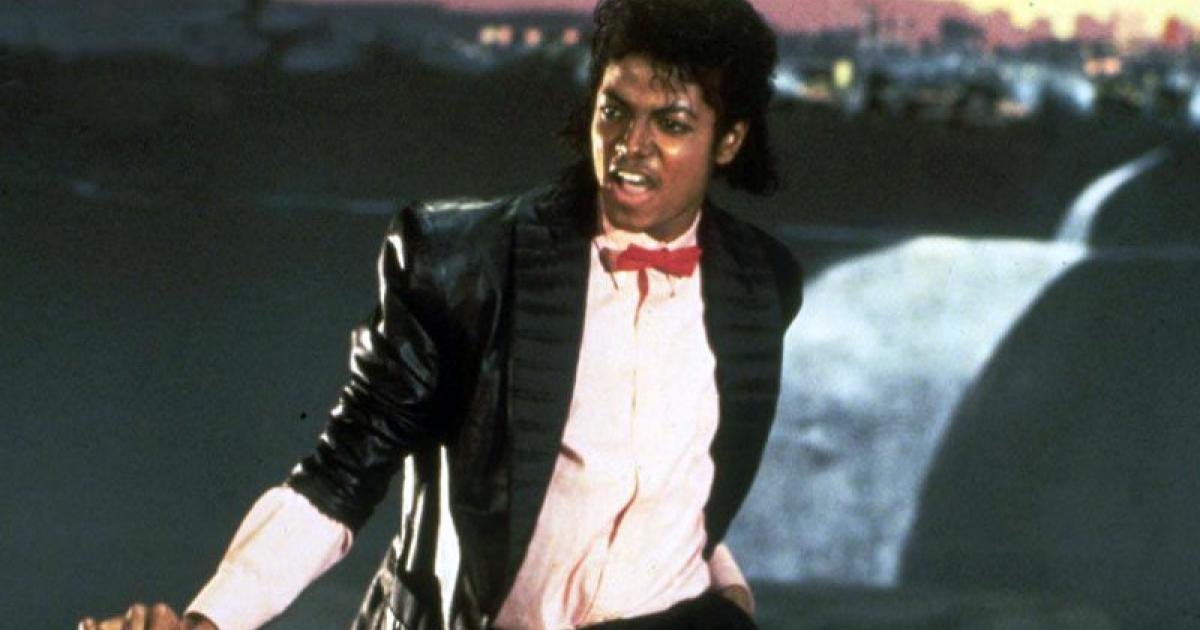
The video was directed by Steve Barron, chosen because Jackson and Jones liked his work on the Human League’s “Don’t You Want Me.” The original concept involved a group of dancers and a bigger set. The budget cut it down to what you see: Jackson moving through a dark city where each tile lights up under his feet and goes dark again. A figure follows him through the video, photographing everything.
MTV said no to airing it. The network ran a rock format and Black artists were routinely shut out. Rick James’s “Super Freak” had already been turned away. Record labels had stopped paying for videos by Black artists on the assumption MTV would never play them, which gave the network a ready excuse to keep refusing.
CBS head Walter Yetnikoff threatened to pull every CBS video from MTV unless “Billie Jean” aired. According to accounts in the book I Want My MTV, the network backed down. The clip went into medium rotation, then heavy rotation as the audience response came back. Jackson was already at number one by the time the video was getting regular play.
Prince followed. I Want My MTV co-author Rob Tannenbaum noted: “When Michael’s videos created higher ratings for MTV, network executives claimed they’d ‘learned a lesson’ and tentatively embraced the softer side of black pop music, especially Lionel Richie.”
Chart Performance and Reception
“Billie Jean” reached number one on the Billboard Hot 100, the Hot Black Singles chart, and the top of charts in the UK, Australia, Canada, France, Ireland, Switzerland and Belgium. It held number one in the US for seven weeks.
After the Motown 25 broadcast, Thriller was selling roughly one million copies a week worldwide. By the end of 1983, 32 million copies had been sold.
At the 1984 Grammy Awards, Jackson won eight awards in a single night. “Billie Jean” took Best R&B Vocal Performance and Best R&B Song.
The song came back to the Billboard Hot 100 at number 14 in 2014, after a 17-year-old student’s Jackson tribute routine at a school talent show hit 15 million YouTube views in a week. When Jackson died in June 2009, it charted again in over 20 countries.
Rolling Stone ranked it among the 500 Greatest Songs of All Time.
Why the Production Still Sounds Unusual
Most pop records of the era opened quickly, dropping into chords and melody within the first few seconds. “Billie Jean” opens with eight bars of drums and bass only. No chord, no pad, nothing decorative. The groove runs on its own until it is ready to let anything else in. When the synth figure arrives, it sits low in the mix rather than cutting through the top end, adding body without fighting the bass.
The strings do not sweeten the track the way pop strings usually do. Swedien described the approach as classical in construction rather than pop, which for most listeners reads as adding weight rather than warmth.
The song never fully lets go. The chorus is a flat denial, not a release. The outro is the same loop as the opening, fading out rather than wrapping up. What is documented is that Jackson pushed back on Jones’s request to shorten the intro, held the title against Jones’s objections, and believed the final version was close enough to his demo to fight for co-production credit. How the song arrived at its specific shape is not something Jackson laid out in detail on record.
The song ends without anyone being cleared. The accusation at its centre is never settled. Jackson said it was about the moment the lie becomes the truth.
You hear the chorus repeat and repeat and nothing gets resolved, and that is how the lie works: the more you deny it, the more it sounds like the thing you are denying is true. The song does not escape that loop. It just fades out inside it.
You might also like: