
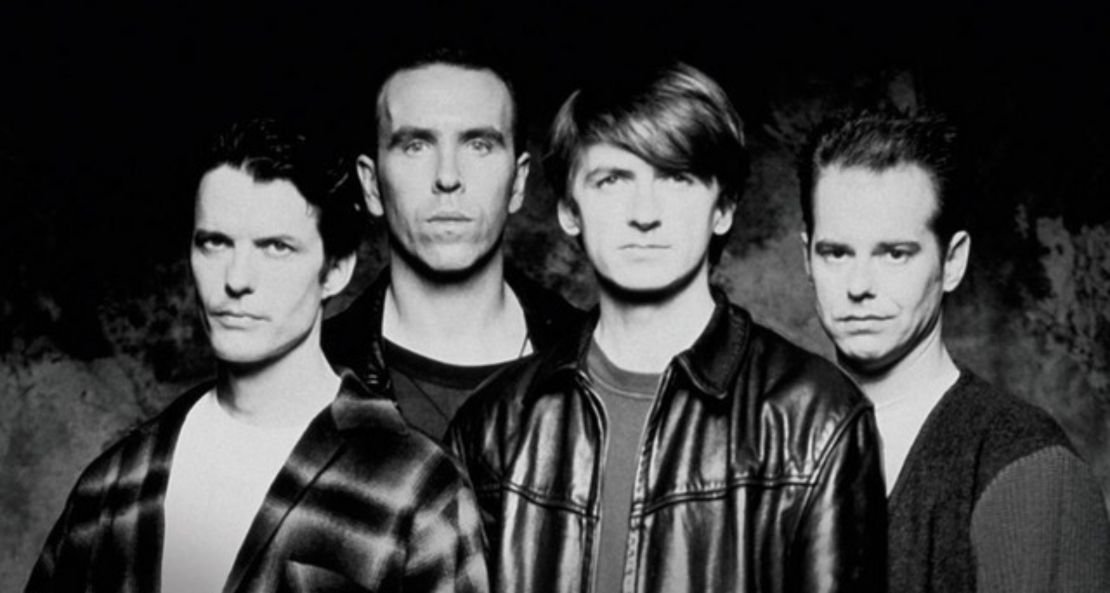
The punctuation matters more than anyone realised. For nearly four decades, listeners have been inserting an invisible comma into “Don’t Dream It’s Over,” transforming Neil Finn’s plea for persistence into an instruction to stop dreaming altogether.
The misreading reveals something uncomfortable about how readily we accept defeat, even when someone is explicitly telling us not to.
Finn wrote the song in 1986 during what he describes as an antisocial afternoon at his brother Tim’s Melbourne house.
Paul Hester had invited people over. Finn retreated to the piano instead, irritated enough to channel his mood into something that would outlast the gathering he was avoiding.
The line “they come to build a wall between us” arrived first, possibly about those unwanted visitors, possibly about larger forces.
Songs written in defensive moods often contain accidental prophecies. This one kept expanding beyond its origins, becoming a protest anthem, a solidarity hymn, a TikTok rediscovery soundtrack for Monsters: The Lyle and Erik Menendez Story, where it underscored a relationship literally divided by prison walls.
The production tension mirrors the lyrical ambiguity. Mitchell Froom brought in session legends Jim Keltner and Jerry Scheff the day before recording “Don’t Dream It’s Over,” having decided Crowded House couldn’t nail a shuffle properly.
The band spent that session watching master craftsmen work, then returned the next morning carrying that quiet devastation into their performance.
Nick Seymour’s bass feels slightly mournful because he was. Paul Hester’s hi-hat matches Finn’s guitar strumming with unusual precision because both men were playing through the same unspoken awareness: they might not be good enough.
The recording captures that exact moment before a band knows whether they’ll survive.
Froom’s Hammond organ solo, an instrument Finn had never considered, arrived like an external judgement on their limitations, simultaneously lifting the track beyond what they could have achieved alone and proving they needed rescue.
Finn recorded his vocal pushing past his natural falsetto range, creating a technical problem he’d spend years solving on stage.
He routinely lost those high notes early in tours, forced to hand the “dream” line to Hester or Seymour mid-performance.
The song literally demanded more than he could consistently deliver. That fragility became part of its meaning.
When you watch footage of Crowded House’s 1996 farewell concert at the Sydney Opera House, Finn describes a particularly poignant shot: Hester shedding tears while they sang those same lines. The camera holds on his face just long enough for the moment to crack open completely.
TikTok’s 205.9K videos have introduced “Don’t Dream It’s Over” to listeners who encounter it without the 1980s soft-rock context that initially defined it.
Stripped of nostalgia, the song reads differently. Gen Z hears it through Monsters, where it soundtracks a relationship poisoned by abuse and imprisonment, or through climate anxiety, political division, identity battles.
The walls feel more literal now. Finn has watched it appear at Ariana Grande’s Manchester benefit concert, in U2’s recent Vegas residency mourning Alexei Navalny, across protest movements he never anticipated.
Each appropriation slightly alters the song’s centre of gravity, pulling it further from the personal relationship dissolution Finn was originally contemplating towards something more explicitly political.
The matchbox snare drum from Finn’s original demo never made it to the final recording, but that lo-fi intimacy haunts the arrangement anyway.
You can hear it in the space between Nick Seymour’s bass entry and the first vocal line, in the way the double-tracked guitars create a shimmer that sounds like someone trying to convince themselves of something.
Tim Pierce’s delicate lead lines were added because Froom doubted Finn could play them himself.
The finished track is built from a series of doubts and replacements, session musicians covering for a band not quite ready, a producer inserting textures the songwriter never imagined.
That collaborative anxiety produced something accidentally universal: a song about not giving up that was made by people constantly questioning whether they were capable enough.
The title remains grammatically unstable, its meaning shifting based on where listeners place the emphasis.
“Don’t dream IT’S OVER” versus “Don’t DREAM it’s over.” One reading demands continued fight, the other suggests accepting reality.
Finn intended the former but the latter interpretation persists, visible across Reddit threads and Genius annotations where listeners still argue about whether the song encourages hope or resignation.
That ambiguity isn’t a flaw. It’s why the song keeps working in contradictory contexts, why it can soundtrack both solidarity and surrender, why it trends on TikTok decades after release without feeling dated.
When Finn discusses the song now, he focuses on how it continually surprises him, appearing in moments he never anticipated. That surprise is the point. He wrote a song about external forces building walls, never fully specifying who “they” were or what walls meant.
The vagueness wasn’t calculated – Finn was 28, processing relationship stress and career uncertainty through a piano in his brother’s house while avoiding a party.
But that lack of specificity let the song absorb whatever walls listeners were facing: political, personal, literal, metaphorical.
The song doesn’t resolve its own tension because Finn was living inside that tension when he wrote it, unsure whether his new band would work, whether he could step out of his brother’s shadow, whether he was capable of the thing he was attempting.
Capitol Records initially refused to release “Don’t Dream It’s Over” as a single, convinced a young band needed something upbeat.
Junior promotion staffer Paulette McCubbin ignored that directive and personally rang secondary market radio stations until they played it.
The song’s success came through insubordination, someone refusing to accept the prevailing wisdom about what could work.
That origin story perfectly mirrors the lyric’s meaning: don’t let them tell you it’s over, keep pushing even when the industry structure suggests stopping. The meta-narrative almost writes itself.
Finn’s voice cracks slightly on certain words in the final recording, moments where he’s reaching for notes just beyond his comfortable range.
Those cracks weren’t fixed because they sounded human, vulnerable in ways that perfectly matched lines about possessions causing suspicion and holes in roofs.
The song succeeds because it sounds like someone trying to convince themselves as much as anyone else.
That double consciousness – simultaneously reassuring and uncertain – is what makes it adaptable across contexts.
When Bono sings it for Navalny, when Grande performs it after Manchester, when TikTok users soundtrack their own struggles with it, they’re all borrowing Finn’s uncertainty and turning it towards their specific walls.
The song doesn’t promise victory. It just insists on not accepting defeat before the fight is actually finished.
What nobody discusses enough is how the song functions as accidental evidence of Finn’s lifelong artistic anxiety.
In interviews, he admits he doesn’t know what he’s doing most days, hasn’t figured out songwriting despite decades of success.
“Don’t Dream It’s Over” was the song that proved he could exist outside Split Enz, but even that proof required session musicians to complete, a producer to reshape his arrangement, a junior promotion employee to force radio to listen.
His biggest success came from a collaborative rescue operation dressed up as a band recording. The walls between us aren’t just external forces. Sometimes they’re the gap between what we can do alone and what we need help achieving.
The current TikTok resurgence positions “Don’t Dream It’s Over” as retroactive prophecy about 2020s division: political polarisation, algorithmic isolation, culture war trenches.
But Finn was writing about something more modest and more universal – the ordinary ways relationships and ambitions erode, the daily decision to keep believing when evidence suggests otherwise.
Scaling it up to anthem status doesn’t diminish the song but it does obscure what made it work initially: its small, personal scale, one person at a piano trying to convince himself not to give up.
That intimate origin is why it translates across contexts. Everyone knows that specific moment of self-persuasion, that internal argument about whether continuing is worth it.
The walls keep getting built. Finn keeps watching people sing his song in response. The cycle suggests something about how art metabolises context, absorbing new meanings while retaining original DNA.
“Don’t Dream It’s Over” will soundtrack crises Finn cannot predict, appearing at moments he won’t witness, meaning things he never intended.
That’s not misinterpretation. That’s the song working exactly as songs should, providing language for experiences beyond their creator’s imagination.
The only constant is the ambiguity, that grammatical instability that lets listeners hear either hope or resignation depending on which word they emphasise.
Both readings are correct. Both capture something true about navigating a world actively constructing barriers. Finn left the comma out. Decades later, that absence is what makes the song indestructible.
Neon Signals tracks where attention ignites and converts before songs break wide. If you want to catch the next resurgence while it’s still gathering momentum, you can subscribe here.
You might also like:
- Unveiling the Melancholic Beauty of Something in the Way by Nirvana
- Iris Lyrics: The Story and Meaning Behind the Goo Goo Dolls’ Hit Song
- Take Me Home, Country Roads by John Denver: A Timeless Anthem of Home and Nature
- The Killers’ Timeless Hit: Unravelling the Mr. Brightside Lyrics and Its Enduring Impact on Pop Culture