

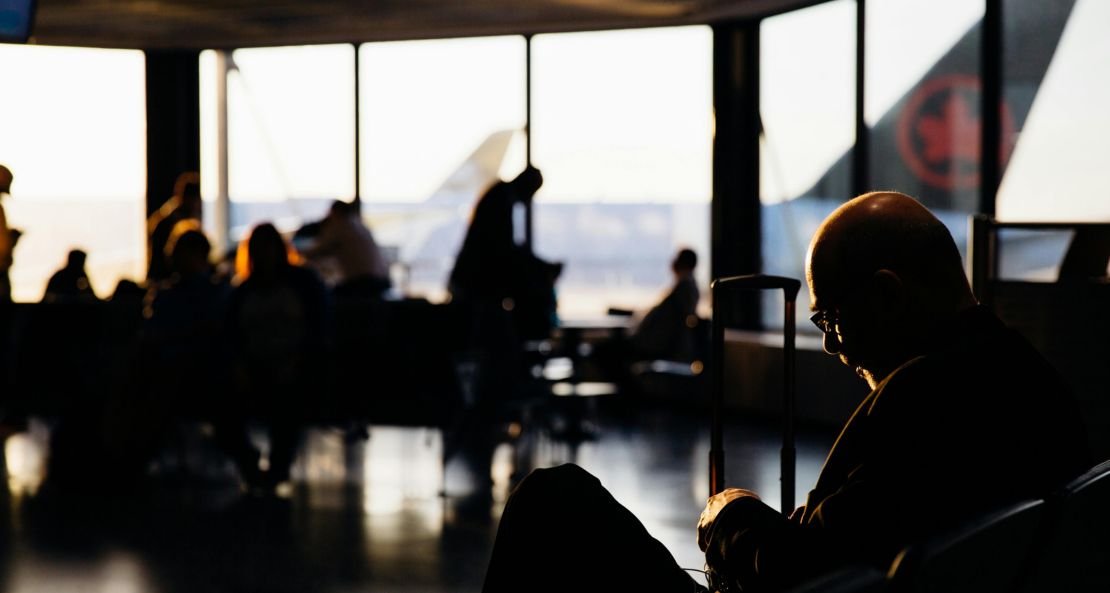
Searches for “holiday flights” hit a five-year high this December. Not “cheap flights.” Not “best deals.” Just “holiday flights,” typed by people who’ve already decided they’re leaving and now need to sort the logistics.
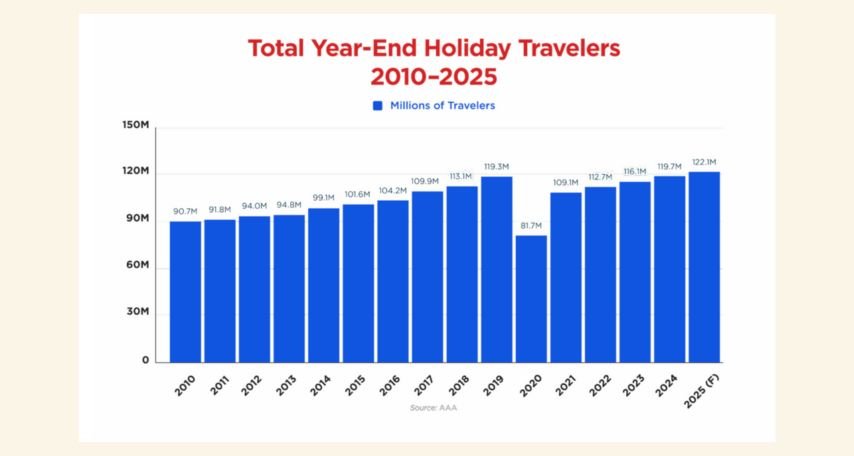
AAA projects 122.4 million Americans will travel at least 50 miles from home between December 20th and January 1st.
That’s 2.2% more than last year’s record, which was already 2% higher than the year before. The trend line points one direction: people want out.
The interesting bit isn’t the volume. It’s what they’re running from and what they’re running toward.
The Tourism Revelation
Here’s the stat that reshapes everything: the majority of Christmas travelers aren’t visiting family. They’re travelling for tourism.
Thanksgiving gets the family obligation traffic. Christmas gets the escape attempts. New Year’s gets people who want something entirely new.
The breakdown reveals Christmas as the pivot point where “visiting relatives” stops being the default answer to “why are you travelling.”
Only 24% of Americans have never travelled for Christmas, making it the most popular holiday for hitting the road. But that popularity doesn’t mean family dinners. It means active choice to be somewhere else.
The top destinations tell the real story: Florida, Southern California, Hawaii. Warm places. Beach places.
Distinctly non-Dickensian Christmas locations. People booking trips to destinations that look nothing like what Christmas “should” involve.
What Escape Actually Means
There’s physical escape (I’m not attending that dinner) and emotional escape (I need to reset before I break). Holiday travel 2025 involves both, often simultaneously.
Nearly 70% of people feel pressure to appear happier than they actually are during the holidays. That performance anxiety doesn’t vanish when you board a plane. But it shifts context.
Performing happiness in Hawaii whilst drinking something with an umbrella in it feels more sustainable than performing happiness in your childhood home whilst your uncle explains his political theories.
The warm-weather dominance reveals something specific about what people want. They’re not seeking “Christmas but elsewhere.” They’re seeking “not Christmas at all.”
Booking a December trip to Tenerife or the Maldives represents active rejection of traditional Christmas aesthetics in favour of something that feels like escaping not just geography but the entire seasonal expectation framework.

International searches concentrate on three patterns: Northern Hemisphere residents fleeing winter for summer beaches (New Zealand, Australia), cultural seekers wanting European Christmas markets (London, Paris, Brussels), or people choosing destinations where Christianity isn’t dominant (Morocco, Vietnam, Japan).
Each represents different escape angle, but all share the impulse to find Christmas that doesn’t look like the prescribed version.
The 122 million people leaving home aren’t just seeking new places. They’re responding to fundamental mismatch between how the holidays are supposed to feel and how they actually feel. The traditional narrative involves family togetherness, gratitude, peace.
The reality involves stress that 41% of adults report increases during this period, family conflict that affects more than a quarter of people’s wellbeing, and financial pressure that forces difficult choices. Holiday travel offers alternative, even if temporary.
The Economics Don’t Stop Anyone
Holiday airfare averages $900 for domestic roundtrip, up 7% from last year. International flights cost considerably more.
Add hotels, meals, activities, and you’re easily looking at £2,000-5,000 per person depending on destination.
People are paying it anyway.
Nearly 30% plan to spend over $1,000 on transportation and lodging alone. That’s not including food, entertainment, or gifts. The financial commitment suggests the escape holds serious value, worth prioritising over other December spending.
Interestingly, only 10-16% cite cost as reason for staying home. The people who aren’t travelling mostly say they prefer staying home or have family commitments, not that they can’t afford it. This isn’t economic barrier preventing travel. This is active choice in both directions.
The spending reveals holiday travel as investment in mental health and relationship quality, not frivolous expense.
When the alternative involves three weeks of obligation, performance, and family tension, spending £3,000 to sit on a beach in the Canary Islands starts looking like reasonable therapy bill.
Music Makes the Journey Bearable
Walk through any terminal in late December and notice the headphones. Everyone’s wearing them, even people travelling with companions.
Music creates portable bubble, transforming crowded spaces into manageable experience.
The music people choose for travel differs from home listening. Spotify data shows “Travel Chill” and “Deep Focus” playlists see 340% increase in December airport plays compared to summer months.
Die With a Smile, APT., and BIRDS OF A FEATHER all appear in top 50 most-saved songs to travel playlists during holiday periods.
People build separate playlists for outbound versus return flights, acknowledging different emotional states. Outbound titles include variations of “escape,” “leaving,” “adventure.” Return playlists skew toward “grounding,” “home,” “reset.” The curation isn’t casual.
These playlists average 3-4 hours of careful selection, suggesting people invest significant thought into their sonic companions.
The function resembles why people turn to sad songs at Christmas: mood-congruent listening that validates rather than contradicts internal state. You’re not throwing a party.
You’re managing anxiety about delayed flights whilst processing the decision to spend Christmas away from family.
Music provides company without requiring interaction, emotional resonance without triggering public breakdown.
Experiences Replacing Wrapped Presents
92% of Americans would rather receive experiences than gifts according to recent surveys. The experiential gift market is projected to reach $171.52 billion by 2029, growing at 6.41% annually.
This isn’t just about gifting philosophy. It’s about what people actually value. Physical objects accumulate. Experiences transform.
The shift represents fundamental change in how people conceptualise meaningful exchange, particularly during holidays traditionally focused on material consumption.
Holiday travel fits perfectly into this pattern. Instead of buying relatives items they don’t need, families pool resources for shared trips.
Parents gift their adult children flights to meet them in Mexico rather than sending parcels that arrive damaged. Friends coordinate group travel replacing individual present exchanges.
The economics work better too. Rather than spending £500 on five separate gifts that each cost £100, spending £500 on one extraordinary dinner in Barcelona with someone you care about creates more value for both parties. The memory persists. The connection deepens. Nobody needs to find drawer space for it later.
Experiential gifting aligns with broader cultural movements toward minimalism, sustainability, and intentional consumption.
Physical gifts often end up in landfill. Experiences end up in memory, in photographs, in stories retold years later. The environmental and emotional maths both favour experiences.
The Solo Travel Surge

Not all holiday travel involves groups or families. Solo Christmas travel is growing, particularly among people actively choosing not to attend traditional gatherings.
The destinations differ from family trips. Less theme parks, more cities with strong cultural offerings. Less resort packages, more boutique hotels that cater to individual travellers.
Solo travellers aren’t escaping toward something. They’re escaping from something. Family obligations they no longer want to fulfil. Traditions that stopped serving them.
Expectations that feel suffocating rather than comforting. Booking Christmas Eve flight to Marrakech and spending the holiday exploring medina souks represents active creation of new tradition, one that centres the individual.
The choice carries social cost, but for growing numbers, that cost feels worth paying.
What the Warm-Weather Migration Means
The dominance of beach destinations during winter holiday period signals more than weather preference. It signals desire for aesthetic opposition to traditional Christmas.
Snow, fireplaces, hot chocolate, cosy jumpers: the entire visual language of Christmas depends on cold weather making warmth feel precious.
Flipping that script by spending Christmas in shorts on a beach doesn’t just change temperature.
It changes entire symbolic framework. You can’t accidentally recreate traditional Christmas on a beach in Hawaii.
The warm-weather choice also enables different kind of family experience. Beach holidays force outdoor activity, which diffuses tension better than sitting in living room making conversation. Snorkelling doesn’t require discussing politics. Walking along shoreline doesn’t demand performing enthusiasm you don’t feel.
Why Cruise Bookings Keep Climbing
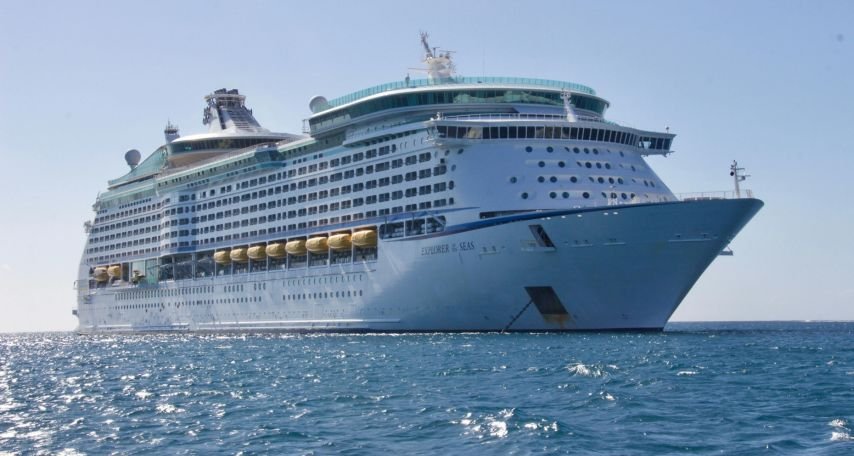
Travel by cruise has increased 25% since 2019, reaching 4.9 million Christmas travellers. Cruises solve specific problems that holiday travel amplifies.
They eliminate lodging decisions and meal planning. You board, unpack once, wake up in different places. Three meals daily plus snacks, all included. For people worn down by hosting Christmas dinner, outsourcing food decisions carries enormous appeal.
They also provide controlled social environment. You can be around people without being around your people. Shipboard interactions involve strangers you’ll never see again, removing stakes from conversation.
Cruises offer escape routes within the escape. If your partner wants structured activities whilst you want solitude, cruise ships accommodate both simultaneously.
The relationship tension that family Christmas gatherings often surface can disperse across deck space and scheduled programming.
The Return Flight Anxiety
Holiday travel doesn’t end when you land back home. You spent Christmas in Thailand or Italy or Mexico.
You had time to think, to breathe, to remember who you are outside family dynamics. Then you return to the place you left, and nothing has changed except now you’ve confirmed that different versions of the holiday exist.
Many people report post-holiday depression that intensifies after travel. The contrast between escape and normal life throws regular life’s deficits into sharper relief.
You’re not depressed because the holiday ended. You’re depressed because you’ve just demonstrated to yourself that different life is possible, then returned to circumstances that limit that possibility.
The Question Nobody Asks
If 122 million Americans are leaving home for the holidays, who are they leaving behind?
The flip side of every holiday traveller is someone they’re not visiting, some gathering they’re skipping, some tradition they’re breaking.
Families shrink when younger members travel instead of returning home. Parents hosting Christmas for the first time without their adult children have to reckon with loss even as their kids celebrate freedom.
The generational divide appears clearly. Gen Z (55%) and millennials are more likely to travel than older generations.
Younger people feel less bound by tradition, more willing to create Christmas that serves their needs rather than their parents’ expectations.
This creates tension but also opportunity. As travel becomes normalised Christmas option, the stigma decreases. The normalisation allows for more authentic choices. When obligation stops driving attendance, the people who show up actually want to be there.
Where People Go When They Go
The destination choices reveal clear patterns. Warm beats cold. New beats familiar. Distant beats nearby.
Domestic travel concentrates in predictable locations: Las Vegas, Orlando, Los Angeles, New York.
These cities offer infrastructure for visitors and enough scale that you’re never the only tourist wandering around looking for something open on Christmas Day.
International travel shows more ambition. Rio de Janeiro, Marrakech, Tel Aviv, and Curaçao all saw significant year-over-year search increases.
66% of Christmas travellers return to previous destinations, but that still leaves third actively seeking somewhere they’ve never been.
The specific destination matters less than what it represents. Booking Christmas flight anywhere signals “I’m doing this differently.”
What Happens Next
Holiday travel will continue increasing. The 2.2% annual growth compounds. In five years, we’re looking at 10-15 million more people travelling during the holidays than travel now.
That growth reshapes what Christmas means culturally. When quarter of the country spends the holiday in transit or at non-family destinations, “Christmas” stops signifying one specific thing.
It fragments into hundreds of different experiences, each valid for the person choosing it.
The people most threatened by this shift are those invested in traditional Christmas maintaining dominance. But for the 122 million people searching holiday flights right now, the shift feels like relief.
The search bar doesn’t judge. You type “flights to anywhere warm December 20” and it returns options. No guilt, no explanation required, no obligation to justify why you need out.
Just departure times and prices. That simplicity might be the real gift.