

The numbers don’t lie. According to the American Psychiatric Association’s latest poll, holiday stress in 2025 is anticipated to jump to 41% of adults, the highest level on record.
That’s a 13-point spike from last year’s 28%, and the trajectory isn’t heading anywhere good. People aren’t just tired of the season. They’re actively dreading it.
The searches tell the story better than any survey ever could. “Why are the holidays so stressful?” spikes every December like clockwork, but 2025 feels different.
The question isn’t academic anymore. It’s a cry for understanding from people who wake up and realise the season everyone calls magical makes them want to disappear.
This isn’t about hating Christmas or being a cynic. It’s about the gap between what December promises and what it actually delivers. And right now, that gap is widening.
The Financial Weight That Never Lifts
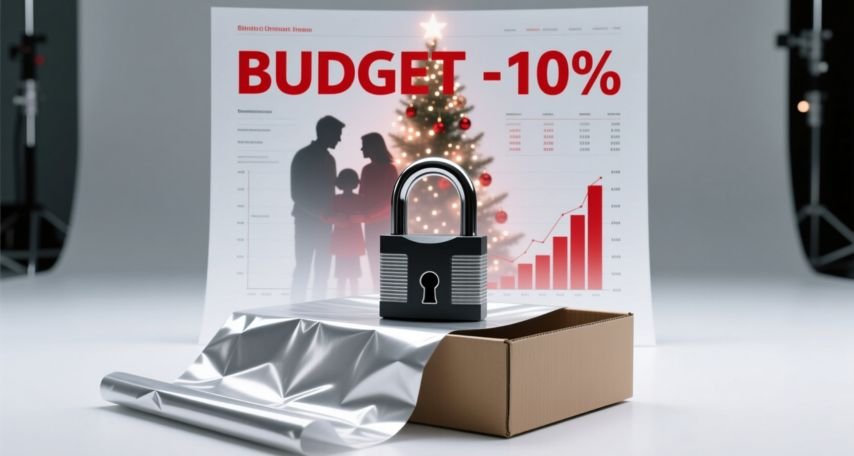
This holiday season, the festive spirit is sharing the stage with a far less cheerful guest: budget anxiety.
New surveys show a consumer base that’s determined to celebrate, but only after some careful financial calculations.
Take the latest numbers from Deloitte’s 2025 Holiday Retail Survey. The average US shopper plans to spend $1,595. That figure sounds substantial until you realise it’s a full 10% drop from last year.
It’s the kind of collective belt-tightening we haven’t witnessed in nearly thirty years of tracking, driven by persistent inflation and a widespread fear that the economy’s best days this year are behind us.
The mood isn’t just cautious; it’s practically defensive. More than 75% of those surveyed are bracing for higher prices on everything from toys to turkeys.
Over half are steeling themselves for a weaker economy overall. The old holiday magic of cheerful, open-wallet spending has been replaced by a new, more pragmatic ritual.
And this shopping stress is a global export. Deloitte’s UK research tells a similar tale of contradiction.
A third of British consumers say they’ll spend more, but they’re quick to clarify: it’s not out of generosity, but because inflation is forcing their hand.
Meanwhile, nearly one in five plan to spend less, pointing directly to the relentless pressure of the cost-of-living crisis.
This creates a bizarre economic picture. PwC forecasts UK holiday spending will still climb to £24.6 billion.
Yet, in the same breath, they note that consumer confidence is fraying and household finances feel pinched. We’re spending more to get less, and everyone knows it.
So, how are people adapting? The data reveals a season of strategic compromises. Across the board, consumers are cutting the “extras.”
New decorations, festive outfits, and premium food items are first on the chopping block. Gifts are being handmade, regifted, or hunted down with a focus on value so intense it could be its own holiday sport.
Brand loyalty is weakening as shoppers deliberately “trade down” to cheaper labels, refusing to let tighter budgets cancel Christmas altogether.
This leads to the season’s great paradox. Even as individuals pull back, the sheer volume of participation keeps the totals staggering.
In the US, groups like the National Retail Federation still predict holiday sales will crack the $1 trillion mark for the first time.
But that historic number masks the reality underneath: growth is slowing. The engine is still running, but it’s lugging a heavy load of economic worry.
The result is a holiday season defined by a new kind of tension. The timeless pull of tradition is now locked in a daily tug-of-war with financial reality.
People are absolutely intent on celebrating, on gathering, on giving. But they’re doing so with shrinking plans, rising stress, and a determined focus on making every dollar count.
The holidays are still here. They just look, and feel, a lot more budget-conscious.
Grief Doesn’t Take a Holiday
Nearly half of adults, 48%, report worry about missing someone or experiencing grief during the holidays, according to the American Psychiatric Association’s Healthy Minds Poll.
The empty chair at the dinner table. The stocking that shouldn’t still be hanging. The traditions that feel hollow when the person who made them matter isn’t there anymore.
What makes this worse is the relentless cheer everywhere else. You walk into a shop and “It’s the Most Wonderful Time of the Year” is playing while you’re trying not to cry in the biscuit aisle.
Social media shows everyone else’s picture-perfect gatherings, and you’re left wondering why your grief feels so loud when everyone else seems fine. Music becomes both refuge and trigger.
Recent research from University College London found that sad Christmas songs actually help listeners cope with loneliness and stress through what psychologists call the tragedy paradox.
When Phoebe Bridgers sings about Christmas loneliness or Kacey Musgraves admits “Christmas Makes Me Cry,” it validates what you’re feeling. You’re not broken for being sad. You’re just human.
The Social Exhaustion No One Admits
According to LifeStance Health’s 2025 Holiday Mental Health Report, 64% of people would prefer to skip at least a few of their holiday gatherings. Let that sink in.
More than half the population doesn’t actually want to attend the events they’re attending. But they go anyway because saying no feels like social suicide.
75% said at least a few of their planned gatherings feel more like obligations than something they truly want to attend. You’re not celebrating. You’re performing. There’s a difference.
The pressure to appear happy compounds everything. 69% feel pressure to appear happier than they actually are during the holidays, with younger people feeling this most acutely.
Millennials and Gen Z report the highest levels of performative happiness, which makes sense when you consider they’re also the generations most likely to document everything online.
You paste on a smile, post the perfect photo, then collapse the moment you’re alone.
When Obligation Meets Dysfunction
That performative exhaustion gets worse when the gatherings themselves are hostile. 32% report worry about dealing with challenging family dynamics, but the real number is likely higher. Not everyone admits their family is toxic, even to a pollster.
The holidays don’t magically repair broken relationships. If anything, they magnify them. Old wounds resurface. Political arguments erupt.
Someone drinks too much and says what they’ve been holding back all year. Then everyone pretends it’s fine because it’s Christmas.
Nearly 60% of people are concerned that political discussions will impact social gatherings, Sesame’s 2024 survey found, with the post-election climate in America making this particularly tense.
In the UK, it’s different topics but the same tension. Brexit. The economy. Immigration. Whatever the flashpoint, it’s waiting to explode over turkey and stuffing.
The Loneliness in a Season of Togetherness
Here’s the cruel irony: December celebrates connection while making lonely people feel more isolated than ever.
Research published in Perspectives on Psychological Science found that loneliness and perceived isolation have significant links to depressive symptoms, and the holidays amplify this.
If you don’t have a big family or close friends, the constant messaging about “being with loved ones” becomes a reminder of what you lack.
You see the lights, hear the songs, watch the adverts showing families laughing together. And you sit alone, wondering what’s wrong with you.
It’s different from the exhaustion of unwanted gatherings. This is the pain of having no gathering to attend at all.
Then there’s the third category: people who attend everything but still feel invisible. Emotional loneliness—the feeling of being unseen or unsupported even in a crowded room—hits differently than physical isolation.
You’re technically celebrating, but you’re not actually connecting. That gap between presence and belonging might be the loneliest feeling of all.
You might also like:
- Winter Wonderland: The Song That Defines the Holiday Spirit Across Generations
- What Are The Effects Of Music On Human Behaviour?
- Exploring the Emotional Impact of Music on Student Well-being and Mental Health
- Music & Wellness: Music Designed for Focus and ADHD
- Zach Bryan’s I Remember Everything: A Deep Dive into Lyrics and Meaning
- In My Life by The Beatles: A Timeless Classic of Memory, Love, and Change
Why Music Becomes the Coping Mechanism
When everything else fails, people turn to music. Not always the cheerful stuff either. Melancholic Christmas songs are surging in popularity, with tracks exploring themes of grief, lost love, and broken relationships getting millions of streams.
Sabrina Carpenter’s “santa doesn’t know you like i do” sits on 18 Spotify editorial playlists. Ed Sheeran’s “Under the Tree” pulled in 3.8 million YouTube views in November alone.
Charlie Puth’s “December 25th” and Bleachers’ “Merry Christmas, Please Don’t Call” speak to anyone who’s ever spent the season nursing a broken heart.
Johns Hopkins Medicine research notes that songs associated with strong memories stimulate the brain’s pleasure centre and can lower heart rate and blood pressure.
Music doesn’t just soundtrack the holidays. It regulates them. When you’re overwhelmed, the right song can pull you back from the edge.
The rise of sad holiday music isn’t about being miserable. It’s about validation. It’s hearing someone else admit that December can be brutal and feeling less alone in that admission.
What People Are Actually Searching For
When someone types “why are the holidays so stressful” into Google, they’re not looking for tips on time management or budget spreadsheets.
They’re looking for someone to say: you’re not imagining this. It really is harder than it used to be.
The searches reflect what surveys can’t fully capture. People want permission to feel how they feel. T
hey want to know they’re not failing at something everyone else seems to handle effortlessly. They want reassurance that opting out doesn’t make them broken.
The cultural script around the holidays insists on joy, gratitude, and togetherness. But the reality for millions is stress, grief, and exhaustion.
The disconnect between expectation and experience creates a special kind of psychological damage that builds every year.
The Rituals That Replace What’s Broken
When traditional celebrations feel too heavy, people create new ones. Some skip family gatherings entirely and volunteer instead.
Others host “Friendsgiving” dinners with chosen family rather than blood relatives. Some people treat December 25th like any other day and find peace in that.
Music plays a role here too. The Iso-principle in music therapy matches a listening experience to a current mood and then gradually shifts to music representing a desired mood.
Start with the sadness. Acknowledge it. Then slowly shift towards something lighter if that feels possible.
Playlists become personal rituals. Lo-fi Christmas jazz for people who can’t handle Mariah Carey. Indie covers that strip away the commercial gloss. Instrumental versions that provide atmosphere without emotional weight.
The point isn’t to force happiness. It’s to find what works for you, even if it looks nothing like what everyone else is doing.
What This All Means
Despite higher stress levels, 44% of people say the holidays have a positive impact on their mental health, up from 38% in previous years.
That’s the complexity no one wants to admit: December can be both deeply meaningful and completely exhausting. The two aren’t mutually exclusive.
The searches will keep spiking every December. People will keep typing “why are the holidays so stressful” into Google at 2am, looking for validation that they’re not failing at something everyone else seems to handle.
neonAnd maybe that’s the point. The question itself is the answer. You’re not broken. The season is just harder than the adverts promised, and admitting that is the first step towards surviving it.