

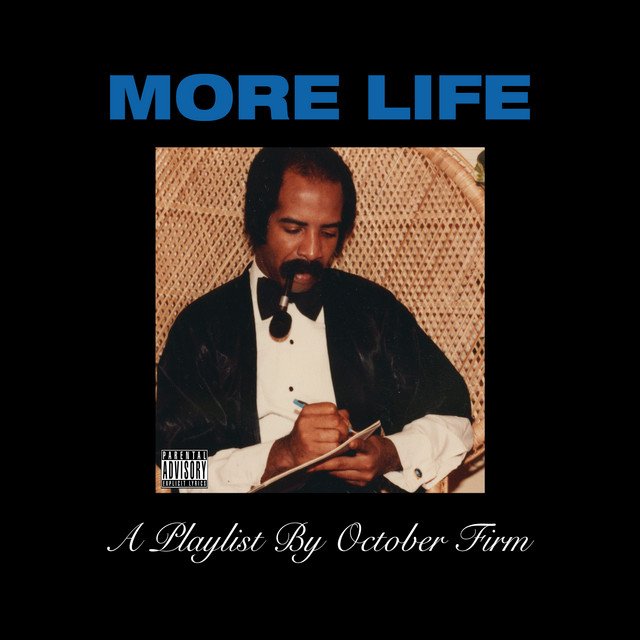
“Passionfruit” is a song about a relationship falling apart in slow motion, dressed in one of the warmest productions Drake has ever recorded.
The beat tells you one thing. The words tell you something else entirely. Most people hear it and file it under summer vibes. That is exactly what Nana Rogues and Drake intended, and it is also exactly how the song works against you.
Released in March 2017 as part of More Life, “Passionfruit” debuted at number eight on the Billboard Hot 100 and charted top ten in the UK, Ireland, Canada, New Zealand, and Denmark.
It was certified 3x Platinum by the RIAA and has since been covered by artists including Paramore, John Mayer, Mabel, Yaeji, and Benny Sings. Songs that sound this easy tend to get into people’s heads and stay there.
London producer Nana Rogues built the instrumental in Reason, starting with an NN-XT keyboard patch he described as smooth, not conventional electric piano, but warm enough to carry the whole track.
He layered a house bassline beneath it, then added a self-made pad, disco hi-hats, a soft 80s kick, shaker, snare fills borrowed from funk and disco, and late in the arrangement, a flute run through distortion and reverb with pitch-bended notes.
When he talks about what he was thinking while building it, the explanation sounds almost embarrassing in how sincere it is: “clouds in a jungle filled full of love. But not love from a girl. Love from life, and appreciation just a nice fluffy, bouncy.”
The beat was never about a person. It was about a generalised feeling of warmth, detached from any specific relationship. Drake placed a song about romantic failure directly on top of it.
Rogues met Drake at a Section Boyz show in Shoreditch after the 2017 BRIT Awards. He had sent over a batch of beats and did not know which one Drake had taken until close to the release date. He found out via the drop. The song opens with the voice of Moodymann, taken from a 2010 set recorded in Manchester.
Drake and his team added that. Rogues had nothing to do with it. The effect is of a DJ spinning the record back at a party, framing it as something already beloved before a single note has landed. Zoë Kravitz, daughter of Lenny Kravitz and Lisa Bonet, provides the outro and background vocals.
Her closing line, “um, trying to think of the right thing to say,” is the only moment in the song where someone actually names the difficulty. She does not find the words. The track ends on that pause.
Drake opens the first verse with: “Seeing you got ritualistic / Cleansing my soul of addiction for now.” The relationship has become automatic. Not comfortable, not safe, just automatic.
Comparing someone to an addiction you need to detox from is not the language of someone who wants to fix things. It is the language of someone who has already decided. “Tension between us just like picket fences” works because the picket fence is supposed to represent stability and domestic aspiration, and he uses it to describe pressure instead. Everything looks fine from outside. Inside is a different matter.
The chorus is where the song’s central idea sits. Passionate from miles away, passive with the things you say. Distance produces passion; proximity produces passivity.
The connection only functions when they cannot actually interact. “Passing up on my old ways” frames his self-change as cost rather than choice. He is giving things up. The song describes no corresponding gain anywhere.
“I can’t blame you, no, no” sounds like generosity. It reads as resignation with the confrontation removed.
The second verse moves faster. “Harder building trust from a distance / I think we should rule out commitment for now.” He names the problem and immediately proposes abandonment as the answer.
No development toward hope, just a straight line to the exit. “You’re just doing that to get even / Don’t pick up the pieces, just leave it for now.” The dynamic has shifted into something point-scoring rather than reparative, and Drake’s response is not to engage but to tell her to stop. He would rather let it decay than fight it out.
There is no reconciliation and no dramatic breakup. Two people let something die by not tending to it, which is harder to write about than a clean ending, and harder to make sound this good.
“Passionfruit” does not appear anywhere in the lyrics. The word is built across the chorus through the “pass” alliteration: passionate, passive, passing.
The fruit is implied rather than stated, the intensity implied, the substance absent. Passionfruit as a vine grows aggressively, vivid on the outside and structurally complex inside. Drake chose a title that is appealing to look at and precise about what it describes.
The theory sits underneath it whether you notice it or not. The song is in B major, but it never really lands there.
Rogues stays on the subdominant instead, an E major seventh that never quite lets anything settle. It just hangs. The chords don’t push you toward a clear feeling either. Depending on when you hear it, it can sound like acceptance, or something closer to grief, or even a kind of relief that doesn’t quite admit what it is.
That is why “Passionfruit” has stayed in active conversation for close to a decade. Multiple emotional interpretations available simultaneously, and none of them are wrong.
Drake’s vocal delivery is flat rather than emotive, and that is the correct choice. A singer working with vibrato and dynamics would expose how much is being left unsaid. Drake reports the situation. He does not perform it.
The covers tell you something about why this works at scale. John Mayer, Paramore, Benny Sings, Yaeji. The song travels across genres because the emotional situation it describes is portable: long-distance relationships, slow endings, people changing themselves for something that is already gone. The production wraps all of it in warmth that makes the subject bearable, which is also what makes it stick.
Rogues said he listened to the beat on loop after finishing it because he knew it was good. He had been thinking about clouds. Drake turned it into something heavier, left the clouds exactly where they were, and let the distance between the two do the work.
The song is still in rotation. The relationship it describes is not.
You might also like: