
In 1968, Aretha Franklin was the obvious answer to almost any question a Nashville or Memphis songwriter might ask. When John Hurley and Ronnie Wilkins brought Son of a Preacher Man to Atlantic Records, the logic was self-evident: here was a song about a preacher’s family, and Aretha’s father, C.L. Franklin, was one of the most celebrated Baptist ministers in America. She turned it down. Some sources say she found it disrespectful to her father; others say Atlantic itself blocked the release, calling it too gospel. Either way, the song went looking for another voice.
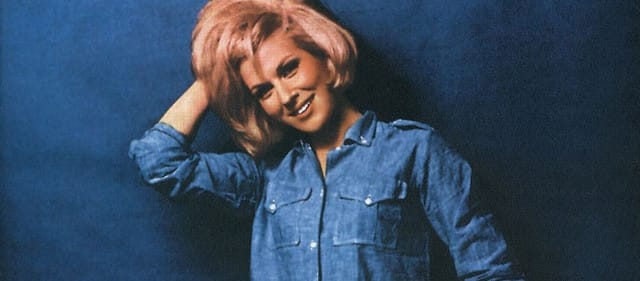
It found one in a white woman from West Hampstead who had spent most of the decade trying to convince American audiences she could feel music the way they felt it.
Son of a Preacher Man is a tale of young romance as a girl falls for Billy Ray, the son of a local preacher, who visits with his father and sneaks away with her while the adults talk inside. Everything in the record makes you feel why that particular arrangement gets through.
Dusty Springfield recorded it in September 1968 at American Sound Studio in Memphis with producer Jerry Wexler, Tom Dowd engineering, and Arif Mardin handling arrangements. She was, by multiple accounts, out of her depth. The rhythm section recorded live to a scratch vocal while Springfield stood in the room reportedly as nervous as she had ever been in a studio. She had come up through Phil Spector-influenced pop, where production filled the gaps, and what Wexler wanted from her was the opposite of that.
What she got, and hated, is exactly why the record works.
Tommy Cogbill’s bass is pivotal on the song. Cogbill, a former guitarist who had recently played on Aretha Franklin’s “Respect” and Wilson Pickett’s “Funky Broadway,” had a way of creating a forward motion that made everyone else in the room defer to him. Session bassist Michael Rhodes later described it as Cogbill taking up the bulk of the real estate in the mix and giving the track a sense of urgency that the rest of the band just surfed in the wake of. The bass is syncopated, busy but never heavy, moving between the beats. Reggie Young’s guitar sits back, a little eerie. Gene Chrisman’s drums keep time sliding into the fold.
Above that, the arrangement is sparse in a way Springfield initially resented. There is trumpet from the Memphis Horns’ Wayne Jackson, which lifts the chorus with a faint gospel-brass colour without ever announcing itself as a flourish. And somewhere in the mix, easy to miss until you know it is there, a triangle catches the high frequencies in a way very few hit records of the era attempted. It gives a point of brightness that stops the whole thing from becoming too dense. The Sweet Inspirations, who at this same period were backing Franklin and Pickett and had Cissy Houston among their number, come in briefly on the chorus, underlining son of a preacher man with a softness that sounds like collective approval.
When his daddy would visit, he’d come along / when they gathered round and started talking. Adults indoors, doing the godly visiting; children outdoors, doing something else entirely. The preacher’s son is not a rebel. He has access, which is more interesting. Being good isn’t always easy / no matter how hard I try / when he started sweet-talkin’ to me / he’d come and tell me everything is alright. The verb “teach” in the chorus carries more than it seems to on first listen. He is teaching her things her parents will perhaps find unacceptable. The transgression lives in the language, stealin’ kisses from me on the sly, even as the song romanticises every second of it.
Springfield’s vocals are a revelation. To think she wanted to redo it. Tom Dowd had already released it while she was still unhappy, and she threw a fit in the way she was becoming known for throwing fits. The version she disliked is one of the great vocal performances in Atlantic’s catalogue: breathy and close, suggesting a confidence she reportedly did not feel at the time. The cool detachment sits against the earthiness of the arrangement in a way that would not have worked if she had been trying to sound Aretha Franklin-adjacent, which, to her credit, she was not.
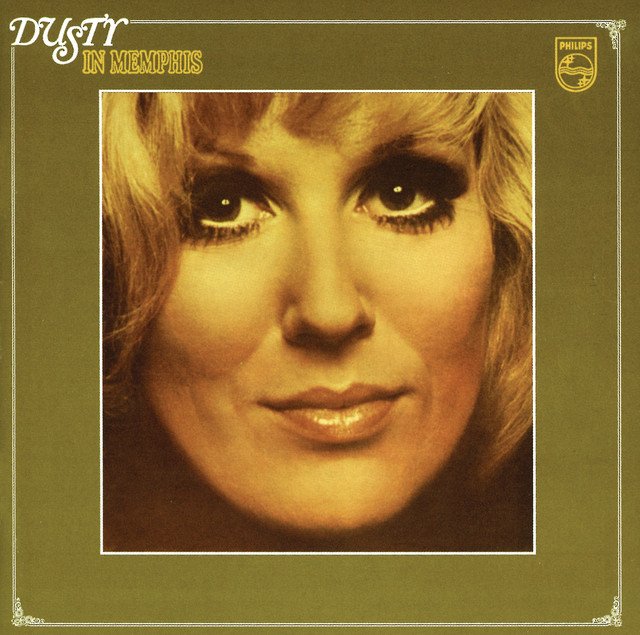
The album it came from, Dusty in Memphis, stalled commercially on release and is now on the Library of Congress National Recording Registry. That is an interesting thing to happen to a record made by a Catholic girl from Ealing who thought it sounded too British.
The song reached the top ten on both sides of the Atlantic in 1968 and 1969. It found a second life in 1994 when Quentin Tarantino put it on the Pulp Fiction soundtrack, not in the twist scene at Jack Rabbit Slim’s (that is “You Never Can Tell” by Chuck Berry, a common misattribution) but in the sequence that introduces Mia Wallace before she says a word. Tarantino said he would have cut the scene if he could not secure the rights. It sold over three million copies, and Springfield’s voice reached a generation with no particular reason to be listening to late-sixties soul.
Aretha Franklin recorded Son of a Preacher Man in 1970. Springfield later said she admired some of the phrasing Franklin used. It is rather a gracious thing to say about the singer the song was originally written for, who passed on it, and came back to it after someone else had already made it theirs.
You might also like:
- Dionne Warwick Songs: A Melodic Journey Through Time
- Barry White Songs: The Soulful Symphony of Love and Rhythm
- Unravelling the Depth and Beauty of Saturn by SZA: A Lyrics Analysis
- Rediscovering The Magic: The Story of John Lennon’s Now and Then
Dusty Springfield Son of a Preacher Man Lyrics
Verse 1
Billy-Ray was a preacher’s son
And when his daddy would visit, he’d come along
When they gathered ’round and started talkin’
That’s when Billy would take me walkin’
Out through the back yard, we’d go walkin’
Then he’d look into my eyes
Lord knows, to my surprise
Chorus
The only one who could ever reach me
Was the son of a preacher man
The only boy who could ever teach me
Was the son of a preacher man
Yes, he was, he was
Ooh, yes, he was
Verse 2
Being good isn’t always easy
No matter how hard I try
When he started sweet-talkin’ to me
He’d come and tell me everything is alright
He’d kiss and tell me everything is alright
Can I get away again tonight?
Chorus
The only one who could ever reach me
Was the son of a preacher man
The only boy who could ever teach me
Was the son of a preacher man
Yes, he was (Was), he was (Was)
(Ooh) Lord knows he was
(Yes, he was)
Bridge
How well I remember
The look that was in his eyes
Stealin’ kisses from me on the sly
Takin’ time to make time
Tellin’ me that he’s all mine
Learnin’ from each other’s knowin’
Lookin’ to see how much we’ve grown and
Chorus
The only one who could ever reach me
Was the son of a preacher man
The only boy who could ever teach me
Was the son of a preacher man
Yes, he was (Was), he was (Was)
Oh, yes, he was
Outro
(The only one who could ever reach me)
He was the sweet-talkin’ son of a preacher man
(The only boy who could ever teach me)
I kissed the son of a preacher man
(The only one who could ever move me)
The sweet-lovin’ son of a preacher man
(The only one who could ever groove me)
Was the son of a preacher man
(The only one who could ever reach me)
Was the son of a preacher man