
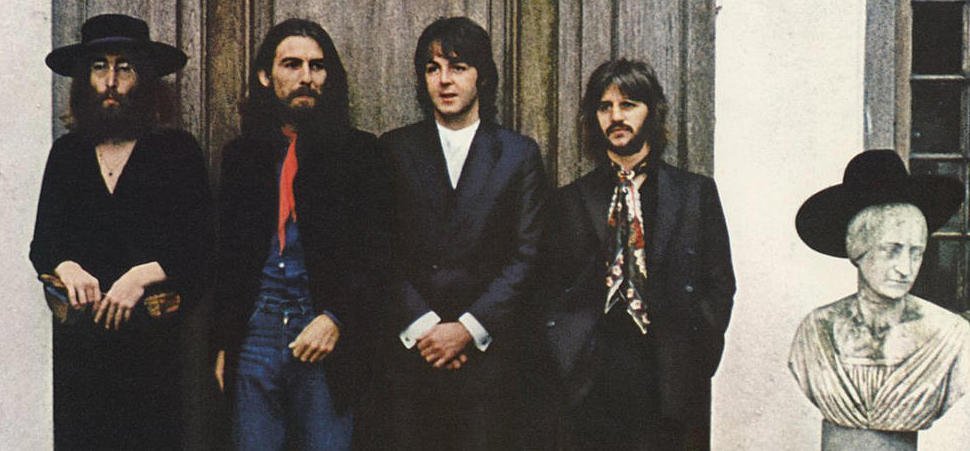
Paul McCartney wrote “Hey Jude” on a drive to visit a five-year-old boy whose father had just left.
It was 1968. The Beatles were reshaping themselves around absences nobody was naming yet. John Lennon had left his wife Cynthia Lennon for Yoko Ono, McCartney had ended his long engagement to Jane Asher, and one of the people left to absorb that fallout was five-year-old Julian Lennon, who had not asked for any of it. McCartney was the only Beatle who drove out to visit Cynthia and Julian at the family home in Weybridge, Surrey. On that drive, he started talking to the boy in his head, and what came out was Hey Jude.
“Hey Jude” is a song Paul McCartney wrote for Julian Lennon when John left Cynthia for Yoko Ono. The story behind the lyrics is about grief and permission, what it looks like when a child is expected to just deal with it and nobody explains how.
The song doesn’t so much comfort Julian as instruct him. There is a firmness underneath take a sad song and make it better that goes beyond consolation. The fool in the bridge, the one who plays it cool by making his world a little colder, could be read as McCartney describing a specific emotional posture that divorce forces on children who sense they’re supposed to be coping without being told how. Every time the lyric says let her into your heart, it is pushing back against that shutdown. The word let keeps coming back across the verses. It doesn’t feel accidental. The whole song runs on permission.
McCartney has described the early draft as a reassurance song, something he was building on the drive before he’d even arrived. “I started with the idea ‘Hey Jules,'” he told biographer Barry Miles in 1997. “Don’t make it bad, take a sad song and make it better. Hey, try and deal with this terrible thing. I knew it was not going to be easy for him. I always feel sorry for kids in divorces.” The working title was “Hey Jules,” a direct address to Julian, changed later because McCartney thought “Jude” sounded better in the mouth. He has also cited the character “Jud” from the musical Oklahoma! as a partial inspiration. Nobody on the Beatles side seems to have known that “Jude” is the German word for “Jew,” a fact that became briefly, badly relevant when staff at the recently shuttered Apple Boutique on Baker Street painted the song title on the building’s windows to promote the single. Less than thirty years after the war. Someone put a brick through the window.
The line that almost didn’t survive into the final recording is the movement you need is on your shoulder, which McCartney thought was redundant and Lennon refused to cut. When McCartney played the work-in-progress version and turned to offer to fix that bit, Lennon told him it was the best line in the song. It stayed. Whether that exchange reflects Lennon hearing the song as being about Julian or about himself is genuinely uncertain, because Lennon heard it as being about himself. In one of his last major interviews, in 1980, he told David Sheff that the line you were made to go out and get her sounded like McCartney telling him to leave Cynthia and pursue Yoko. “On a conscious level he didn’t want me to go ahead,” Lennon said, “but subconsciously he was saying it.” McCartney’s reported counter was that if any subconscious projection was happening, perhaps Jude was himself. He was engaged to Jane Asher when he wrote it and had begun seeing Linda Eastman. The encouragement toward emotional openness could be read as advice he was working out in the writing.
None of these interpretations cancels the others. Julian Lennon didn’t find out the song was written for him until he was a teenager. He told Steve Turner, for the book The Stories Behind Every Beatles Song, that it surprised him every time he heard it, and that growing up he had always felt closer to McCartney than to his own father. (Paul had more pictures taken with Julian at that age than John did, a Lennon-shaped gap McCartney seems to have filled without making a thing of it.) The song carries that asymmetry without announcing it.
Recording began at EMI Studios on July 29, 1968, where the band worked through 25 takes before deciding the facility’s four-track equipment wasn’t going to serve the size of what they were building. They moved to Trident Studios, which offered eight-track recording, and finished the session across July 31 and August 1. The session brought in a 36-piece orchestra who clapped and sang through the fadeout and were paid double their standard rate. The song runs seven minutes and eleven seconds, which producer George Martin initially said made it unreleasable as a single. Lennon’s response was that radio stations would play it if it was them. He was right. It entered the Billboard Hot 100 at number ten, making it the first single to debut in the top ten, then reached number one and held it for nine weeks. It topped the charts in at least twelve countries and has sold over ten million copies in the United States alone.
The recording features all four Beatles, which bears mentioning given that the band was already deep into White Album sessions that were starting to pull them apart. Ringo’s temporary walkout and the worst of the studio arguments were still coming, but the atmosphere was already difficult. McCartney on lead vocals, piano and bass. Lennon on acoustic guitar. George Harrison on electric guitar, Ringo Starr on drums and tambourine. Harrison had wanted to add a guitar echo response after each vocal phrase, something that mirrored McCartney’s melody back at him. McCartney told him it wasn’t what he heard. Harrison took the rejection quietly at the time but reportedly told the story to people for years afterward. It would have been too much, and McCartney was probably right to hold the line, but the episode is a small illustration of how completely he controlled the song’s emotional texture. Nothing was allowed in that didn’t serve the central address.
It was the first single released on Apple Records, the label the Beatles had just founded, and its music video, shot at Twickenham Studios on September 4, 1968, by director Michael Lindsay-Hogg, was the first time the band had performed for a live audience since their final concert in August 1966. The energy apparently caught them off guard. The session went well enough that it led, circuitously, to the Let It Be documentary.
The na na na coda runs for four minutes. The chorus repeats nineteen times. At some point in that stretch, the song stops being something you listen to and becomes something you’re inside. McCartney has said in interviews that he keeps it in his live setlist precisely because of what those final minutes do to an audience, the way strangers end up singing at each other in the dark. Stephen King, who wove the song throughout his Dark Tower series starting in 1982, described the gunslinger’s devastated world as one where all of history had been erased and the only thing anyone remembered anymore was the chorus of Hey Jude, a stranger way to pay a compliment to a pop song, and yet it works.
What the lyrics meaning ultimately falls on is something the song doesn’t spell out. It was written for a specific child in a specific situation in a specific year, addressed as reassurance and absorbed as permission and heard by billions of strangers as something slightly different each time. Julian heard one version of it. John Lennon heard another. McCartney may not have known who he was writing it for by the end. The song doesn’t clear that up.
You might also like:
- Son of a Preacher Man by Dusty Springfield: Meaning, Lyrics and Review
- American Pie Meaning: Breaking Down Every Verse and Its Hidden References
- James Blake – Trying Times Review: Flawed, Stunning, and Unmistakably His
- Lana Del Rey Let the Light In (ft. Father John Misty): Song Meaning, Lyrics Breakdown & Review
- The Story and Meaning Behind Joy to the World by Three Dog Night
The Beatles Hey Jude Lyrics
Verse 1
Hey, Jude,don’t make it bad
Take a sad song and make it better
Remember to let her into your heart
Then you can start to make it better
Verse 2
Hey, Jude,don’t be afraid
You were made to go out and get her
The minute you let her under your skin
Then you begin to make it better
Bridge
And anytime you feel the pain, hey, Jude, refrain
Don’t carry the world upon your shoulders
For well you know that it’s a fool who plays it cool
By making his world a little colder
Na-na-na-na-na, na-na-na-na
Verse 3
Hey, Jude, don’t let me down
You have found her, now go and get her
(Let it out and let it in)
Remember (Hey, Jude) to let her into your heart
Then you can start to make it better
Bridge
So let it out and let it in, hey, Jude, begin
You’re waiting for someone to perform with
And don’t you know that it’s just you, hey, Jude, you’ll do
The movement you need is on your shoulder
Na-na-na-na-na, na-na-na-na, yeah
Verse 4
Hey, Jude, don’t make it bad
Take a sad song and make it better
Remember to let her under your skin
Then you’ll begin to make it(Woah, fucking hell!)
Better, better, better, better, better, better, oh
Outro
Yeah, yeah-yeah-yeah-yeah-yeah-yeah
Na-na-na-na-na-na-na, na-na-na-na, hey, Jude
Na-na-na-na-na-na-na, na-na-na-na, hey, Jude
Na-na-na-na-na-na-na, na-na-na-na, hey, Jude
Na-na-na-na-na-na-na, na-na-na-na, hey, Jude
(Jude, Judy, Judy, Judy, Judy, Judy, ow-wow)
Na-na-na-na-na-na-na (Na-na-na), na-na-na-na, hey, Jude
(Jude, Jude, Jude, Jude, Jude)
Na-na-na-na-na-na-na (Yeah, yeah, yeah), na-na-na-na, hey, Jude
(You know you can make, Jude, Jude, you’re not gonna break it)
Na-na (Don’t make it bad, Jude) na-na-na-na-na (Take a sad song and make it better), na-na-na-na, hey, Jude
Hey, Jude, hey, Jude wow
Na-na-na-na-na-na-na, na-na-na-na, hey, Jude
Na-na-na-na-na-na-na, na-na-na-na, hey, Jude
Jude, Jude, Jude, Jude, Jude, Jude
Na-na-na-na-na-na-na, na-na-na-na, hey, Jude
Na-na-na-na-na-na-na, na-na-na-na, hey, Jude
(Na-na-na-na-na-na-na-na-na-na-na-na)
Na-na-na-na-na-na-na, na-na-na-na, hey, Jude
Na-na-na-na-na-na-na, na-na-na-na, hey, Jude
Na-na-na-na-na-na-na (Make it, Jude), na-na-na-na, hey, Jude
(Yeah-yeah-yeah-yeah, yeah, yeah, yeah)
Na-na-na-na-na-na-na, na-na-na-na, hey, Jude
(Go listen to ya ma-ma-ma-ma-ma-ma-ma-ma)
Na-na-na-na-na-na-na, na-na-na-na, hey, Jude
Na-na-na-na-na-na-na, na-na-na-na, hey, Jude