
In the late 1970s, John Lennon sat alone at a piano in his New York apartment and recorded a demo. What he captured would take the world over four decades to hear properly.
Now and Then is a song about missing someone you loved and lost, written by Lennon as an unfinished home demo and completed in 2023 by Paul McCartney and Ringo Starr using AI to pull Lennon’s voice cleanly out of a cassette recording. That’s the song at its simplest. What surrounds it is messier.
The demo, also known in earlier drafts as I Don’t Want to Lose You and Miss You, was recorded at the Dakota Building on the Upper West Side of Manhattan, where Lennon was living with Yoko Ono and raising their son Sean. The recordings he made at home during this period carry a quality his polished solo work sometimes doesn’t: the piano is heavy, the voice searching rather than performing, the lyrics partly mumbled over sections he hadn’t resolved yet. It plays like a songwriter using the tape machine the way some people use a diary.
In January 1994, Yoko Ono handed McCartney two cassettes of Lennon home recordings backstage at the Rock and Roll Hall of Fame induction ceremony in New York, where McCartney was inducting Lennon posthumously. The cassettes were labelled “For Paul.” Along with Free as a Bird, Real Love, and Grow Old with Me, the package included Now and Then. The surviving Beatles had already been quietly collaborating on the Anthology documentary project, and the two reunion singles that emerged gave fans something they hadn’t expected to want so badly.
Free as a Bird and Real Love were both completed and released. Now and Then wasn’t. The sessions on 20 and 21 March 1995 saw the three men start a backing track, but the work stalled on the second day. George Harrison simply didn’t want to do it. The demo’s problems went beyond recording quality: a persistent hum ran through the tape, the piano overpowered the vocal, and the song was structurally incomplete — a chorus without enough verses, the lyrics dissolving into mumbled placeholders partway through. Jeff Lynne, who co-produced the Anthology singles, later recalled the session as roughly one afternoon. They made a rough backing track and didn’t finish. Harrison’s verdict on the song was blunt. McCartney’s response was that it didn’t matter. It was John.
The song was set aside. Harrison died in November 2001.
What changed was Peter Jackson. His 2021 documentary Get Back used a machine-learning tool called MAL (named after the Beatles’ road manager Mal Evans) that could separate audio sources recorded together onto the same track. The system could identify what was voice and what was piano, then split them apart. For Now and Then, that meant getting Lennon’s vocal cleanly on its own, something the 1990s technology just couldn’t manage without losing half of it.
McCartney and Starr completed the song in 2022. Giles Martin co-produced alongside McCartney. The string arrangement came from McCartney, Martin, and Ben Foster, recorded at Capitol Studios in Los Angeles in May 2022 by session musicians who were told they were working on a McCartney solo project called Give and Take. Harrison’s original 1995 electric and acoustic guitar parts remain in the final mix, low but present. The slide guitar solo in the outro is not Harrison — it’s McCartney playing in a deliberate tribute to George’s style. Starr recorded new drums. The music video was directed by Peter Jackson and features previously unseen footage of the band performing at Hulme Hall in Birkenhead in February 1962, supplied by their former drummer Pete Best.
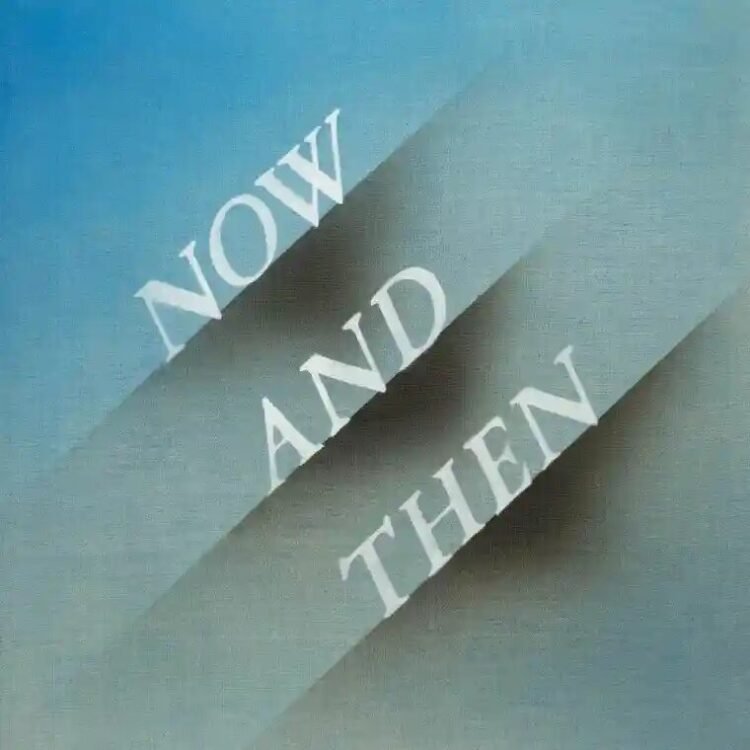
Now and Then was officially announced on October 26, 2023, and released on November 2 as the double A-side single alongside a new stereo remix of Love Me Do — the first and last on the same piece of vinyl.
The lyrics land in a direct, unguarded place: Now and then, I miss you / Oh, now and then, I want you to be there for me / Always to return to me. Who that plea is aimed at is where things open up. Giles Martin has suggested the song feels like a message passing between John and Paul, without overstating what kind. McCartney held onto this demo for nearly thirty years while letting others go. A persistent but unverified story claims Linda McCartney once said John’s last words to Paul in person were “Think about me every now and then, my old friend.” The song predates that alleged conversation, no evidence links the two, and McCartney has never confirmed the quote. It is best treated as myth. What is not mythological is McCartney’s attachment to finishing it, which outlasted every reasonable professional excuse not to.
McCartney sings the middle eight himself, a moment where the song becomes a duet across time rather than a reconstruction. His harmonies elsewhere sit against Lennon’s vocal as naturally as anything from the Blue Album period. The whole thing doesn’t so much resurrect the Beatles as refuse to let the conversation end.
Not everyone agrees the song was worth finishing. Some critics, on hearing the final recording, found themselves at least partially sharing Harrison’s original assessment. The production adds strings and Beatle-scale orchestration to a demo that could work just as well in its raw state. The mix has been criticised for burying Lennon’s piano, the instrument that defined the demo in the first place — Lennon’s own playing, taken out to make room for everything else, is something listeners who know the original tend to miss. Some of that criticism holds. The song is not Strawberry Fields Forever. It was never going to be.
What it is, though, is one of the stranger objects in popular music: a real performance by a band that stopped existing over fifty years ago, carrying genuine emotional weight, recorded across four different decades by people who spent at least some of those decades not speaking to each other. It also pushes back on the idea that music has to be made in real time to mean anything.
Now and Then topped the UK charts on release, the Beatles’ first UK number one in over fifty years, and charted at number one in Germany and Austria. It won Best Rock Performance at the 67th Grammy Awards, losing Record of the Year to Not Like Us. The original Lennon demo, circulating among fans since the 1990s in bootleg quality, remains a genuinely different listening experience. Those who know both tend to treat them as separate things rather than one being a rough version of the other.
The raw recording is Lennon alone at a piano, singing in an apartment, working through something he hadn’t quite finished. The melody carries that uncertainty. Decades later, Paul McCartney finished it. That is not a small thing.
You might also like:
- The Sound of Silence Meaning Explained
- Hallelujah Lyrics Meaning
- American Pie Full Breakdown
- Iris Meaning & Story
The Beatles Now and Then Lyrics
Intro: Paul McCartney
One, two, three
Refrain: John Lennon
I know it’s true
It’s all because of you
And if I make it through
It’s all because of you
Verse 1: John Lennon & Paul McCartney
And now and then
If we must start again
Well, we will know for sure
That I will love you
Chorus: John Lennon & Paul McCartney
Now and then
I miss you
Oh, now and then
I want you to be there for me
Always to return to me
Verse 2: John Lennon
I know it’s true
It’s all because of you
And if you go away
I know you’ll never stay
Chorus: John Lennon & Paul McCartney
Now and then
I miss you
Oh, now and then
I want you to be there for me
Bridge: George Harrison
(Ah)
(Ah)
(Ah)
(Ooh)
(Ah)
Refrain: John Lennon
I know it’s true
It’s all because of you
And if I make it through
It’s all because of you