
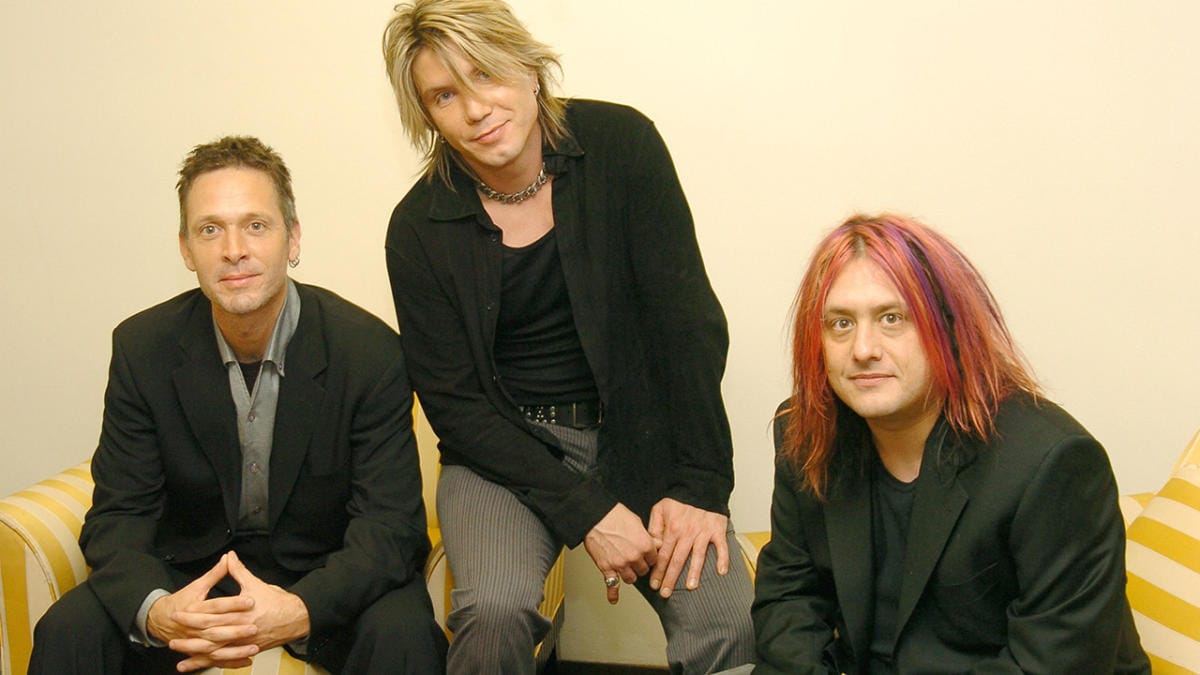
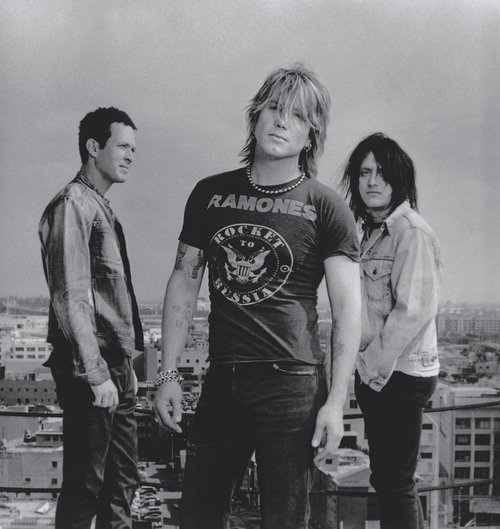
There’s a detail from the making of “Iris” that tells you everything about why the song hit the way it did. John Rzeznik, freshly divorced, living alone in a West Hollywood hotel room, picked up a guitar that only had four strings left. The tuning was bizarre, all Ds and a B. He later described it as mangled. Like his life. He wrote the song anyway, and it took four hours.
“Iris” is a song about an immortal angel who chooses to become human for love, but the reason it has accumulated three billion Spotify streams and a 2024 RIAA Diamond certification is simpler than that: it is a song about the terrifying, ordinary desire to be genuinely known by another person.
That’s the chorus. That’s the whole thing. Strip away the City of Angels mythology and the 16-piece string orchestra and the mandolin solo that Rzeznik freely admits sounded like fighting cats when he played it, and you’re left with one repeated line: I just want you to know who I am. No-one in 1998, and no-one now, is immune to that.
Warner Bros. were putting together the soundtrack for City of Angels, the 1998 romantic drama directed by Brad Silberling. The cast already included U2, Peter Gabriel, Alanis Morissette and Sarah McLachlan. Rzeznik’s manager got him a screening. The pitch was simple: write something for the scene where Nicolas Cage’s angel decides to abandon immortality for the woman he loves.
Rzeznik went back to the hotel and sat with that broken guitar. He had been watching the City of Angels source material too, Wings of Desire, where a Berlin angel observes human life from above and falls for a trapeze artist. The idea lodged in him. An immortal being, willing to trade eternity just to feel something. He told American Songwriter he thought it was a reverse Pinocchio story: the angel becomes a real boy.
The song came in around four hours. When he played what he had to the Warners executives, they wanted it. He named it “Iris” after spotting country singer Iris DeMent listed in the LA Weekly gig guide. He liked the sound of the name. There was no deeper calculation involved. The word never appears in the lyrics.
The song’s opening verse sets up the angel’s position precisely. He is invisible to her. She cannot see or hear him. He’s addressing her anyway, confessing that he’d give up eternity just to make physical contact with her, that she is closer to heaven than his actual home in heaven has ever made him feel. That last part is the lyrical gut-punch: he is literally celestial, and she still outranks it.
The second verse tightens the grip. The sensory language, taste and breath, pushes the whole thing into the body. This is an angel who has never had a body, cataloguing what he wants from one. The urgency is the urgency of someone who knows this moment is finite. He doesn’t want to miss it.
The third verse is where the writing slips its original frame. The film falls away without announcement. The image of bleeding just to know you’re alive has nothing to do with angels, not really. It lands closer to anyone who has had to manufacture feeling just to prove it’s still there, anyone who has lived so far inside performance that sensation becomes the only evidence left. The song stops belonging to the film at that point. It doesn’t come back.
The vocal never smooths that rawness out. Rzeznik’s delivery is strained and heavy throughout, and the imperfections stay in. There are moments of slight flatness on sustained notes that were never corrected in the mix, and that choice matters. A cleaner vocal would have made the song about craft. The version that exists makes it about desperation. He punches certain consonants hard, driving the lyrics forward on force rather than smoothness. Some notes slide off the end of phrases rather than landing neatly. The whole performance sounds like a man who cannot afford to be polished about this.
The chorus doesn’t hide what the song is doing, and Rzeznik has never pretended otherwise. He told Genius that the hook is easily relatable, that everyone wants to be seen and understood. The specific phrasing matters though: not I want you to know who I am, but I just want you to know who I am. The word “just” quietly carries more weight than anything else in the line. It makes the ask sound small and manageable, which is what makes it land as enormous.
The City of Angels commission came at an ugly moment. Rzeznik had watched the Goo Goo Dolls go from decade-long Buffalo punk outfit to mainstream success almost overnight after “Name” charted in 1995. His response to that success was a crisis rather than a celebration. He told American Songwriter he felt like a complete fraud, like he’d won the lottery by accident and everyone was now waiting for him to do it again.
By 1997 his marriage was over. He had moved out of Buffalo into a hotel in West Hollywood. He described the period as manic, schizophrenic. He was looking, in his own words, for something to hold on to. That context makes the chorus of “Iris” carry a different charge. The angel wanting to be known is also Rzeznik wanting to be known, past the hit, past the persona, past the expectation. The song is not secretly autobiographical. It openly contains both things at once.
The band recorded “Iris” in Los Angeles with producer Rob Cavallo, who brought in composer David Campbell for a string arrangement. The Goo Goo Dolls had come up as a punk band. They had never done strings. Robby Takac described watching a 16-piece orchestra through the glass and thinking about the bedroom they had all once shared in Buffalo.
Rzeznik told Songwriter Universe that when the two of them stood behind that glass, they looked at each other and both understood what it meant. They could not go back. The song was going to close doors with their old audience. They put it out anyway because they knew it was good, and they believed then that you could not keep playing a song every night unless it was an honest extension of who you are.
Session guitarist Tim Pierce played the mandolin parts and also, after Rzeznik’s catastrophic slide guitar attempt, took over the solo. Pierce’s version was gorgeous. Rzeznik’s had apparently sounded like cats fighting. He has not tried to claim otherwise in any interview.
The film ultimately used a solo acoustic version of Rzeznik playing the song alone, not the full produced recording the band had spent time and money building. Takac still sounds bemused by this. They negotiated to put the full version on the soundtrack album, which is the version everyone now knows.
The “Iris” chart history is one of the stranger ones in American pop. The label did not release it as a commercial single. Under Billboard‘s rules at the time, a song had to be sold as a single to chart on the Hot 100. “Iris” consequently dominated radio airplay for months without appearing on the chart most people used to measure success. It hit the top spot on the Airplay chart on August 1, 1998, and stayed there for 18 non-consecutive weeks.
Billboard changed the rule in December 1998. “Iris” appeared on the Hot 100 at number nine, months past its commercial peak. The song was nominated for Grammy Awards in Song of the Year and Record of the Year. It lost both to Celine Dion’s “My Heart Will Go On.” Rzeznik had a T-shirt printed before the ceremony that read I was nominated for three Grammys and all I got was this lousy T-shirt. When journalists asked him how it felt to lose, he opened his jacket.
The song went Diamond in late 2024, certified for ten million US units. By that point it had already benefitted from a placement in Deadpool and Wolverine, years of TikTok saturation, and a wave of nostalgia content built around the “what were you like in the ’90s” social media trend. Earlier in 2026, a viral version of that trend pushed “Iris” back into daily cultural circulation. SZA recorded a cover.
Rzeznik’s assessment, speaking to the Wall Street Journal after the Goo Goo Dolls headlined a 2025 tour with Dashboard Confessional: this is the biggest our band has ever been. But sometimes I feel like I wrote one song.
He is not wrong that the song has pulled further and further ahead of everything else they made. He is also not complaining exactly. He said in a 2026 Guardian interview that three billion Spotify streams is astonishing and overwhelming, and that without the people at Reprise Records who actually worked the song at Warner Brothers, nobody would have heard it at all.
The song is still in 3/4 waltz time. The mandolin is still Tim Pierce. The slide guitar still sounds nothing like Rzeznik would have played it. The chorus is still one of the most efficiently devastating pieces of commercial songwriting of the 1990s, built around a broken guitar with four strings in a hotel room by a man going through a divorce who had been asked to write a song about an angel.
You might also like:
- Decoding the Meaning of Californication Lyrics: Unveiling Truths Behind the Red Hot Chili Peppers’ Prophetic Anthem
- Interpreting the Meaning Behind Kate Bush’s Running Up That Hill Lyrics
- George Michael’s Iconic Ballad: Careless Whisper
- Unlocking the Meaning: A Lyrical Analysis of Patrick Watson’s Je te laisserai des mots
- The Resonance of Bring Me to Life: Evanescence’s Anthem of Awakening
Goo Goo Dolls Iris Lyrics
Verse 1
And I’d give up forever to touch you
‘Cause I know that you feel me somehow
You’re the closest to heaven that I’ll ever be
And I don’t wanna go home right now
Verse 2
And all I could taste is this moment
And all I can breathe is your life
And sooner or later, it’s over
I just don’t wanna miss you tonight
Chorus
And I don’t want the world to see me
‘Cause I don’t think that they’d understand
When everything’s made to be broken
I just want you to know who I am
Verse 3
And you can’t fight the tears that ain’t coming
Or the moment of truth in your lies
When everything feels like the movies
Yeah, you bleed just to know you’re alive
Chorus
And I don’t want the world to see me
‘Cause I don’t think that they’d understand
When everything’s made to be broken
I just want you to know who I am
Chorus
And I don’t want the world to see me
‘Cause I don’t think that they’d understand
When everything’s made to be broken
I just want you to know who I am
And I don’t want the world to see me
‘Cause I don’t think that they’d understand
When everything’s made to be broken
I just want you to know who I am
Outro
I just want you to know who I am
I just want you to know who I am
I just want you to know who I am