
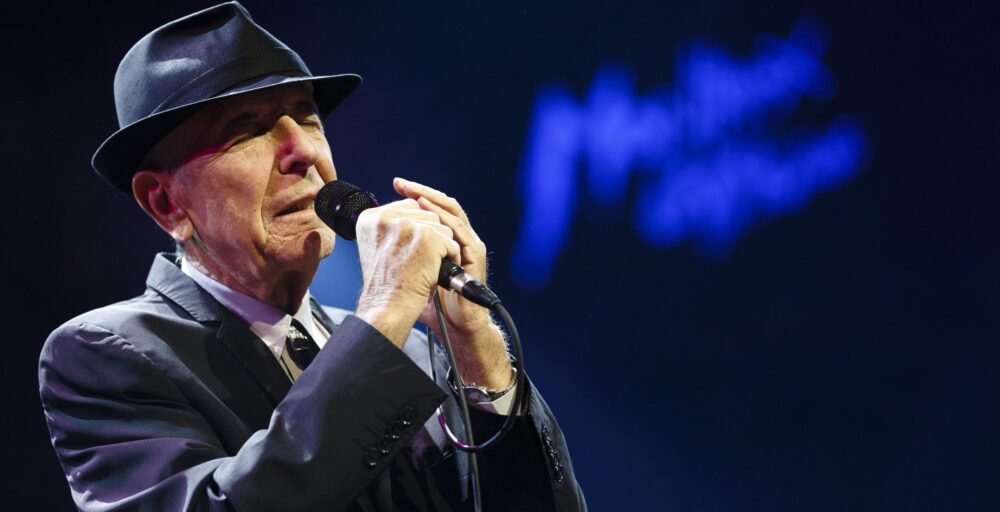
Leonard Cohen spent somewhere between five and seven years writing “Hallelujah.” He filled two notebooks. At one point during a session at New York’s Royalton Hotel, he ended up on the floor in his underwear, banging his head against it. He produced between 80 and 150 draft verses before settling on the ones that made it to tape. When Columbia Records finally heard the finished album, their president Walter Yetnikoff told him directly: “Leonard, we know you’re great, but we don’t know if you’re any good.” They barely released it.
None of that stopped “Hallelujah” from becoming one of the most covered songs in recorded history.
“Hallelujah” is Leonard Cohen’s secular hymn to broken praise: the song’s meaning is that the word “hallelujah” belongs just as much to the fallen, the lied-to, and the numb as it does to the faithful, and that saying it in the middle of disaster is not defeat but the only honest response left. Every verse arrives carrying a different kind of damage, and every chorus hands it back the same word.
The word itself comes from Hebrew. It is a compound: hallelu, an active imperative meaning “praise joyously,” combined with Yah, a shortened form of the divine name. In the Hebrew Bible it is an instruction, a command to the congregation to sing tribute. In Christian usage it softened into a general expression of joy or relief. Cohen took it out of both contexts entirely. He described what he built as his “secular hallelujah,” saying he wanted to show that the word “can come out of things that have nothing to do with religion.” He was also making a more precise argument: that the only liveable response to irreconcilable conflict is to stop trying to resolve it. “The only moment that you can live here comfortably in these absolutely irreconcilable conflicts,” he said, “is in this moment when you embrace it all and you say, ‘Look, I don’t understand a fucking thing at all — Hallelujah.'”
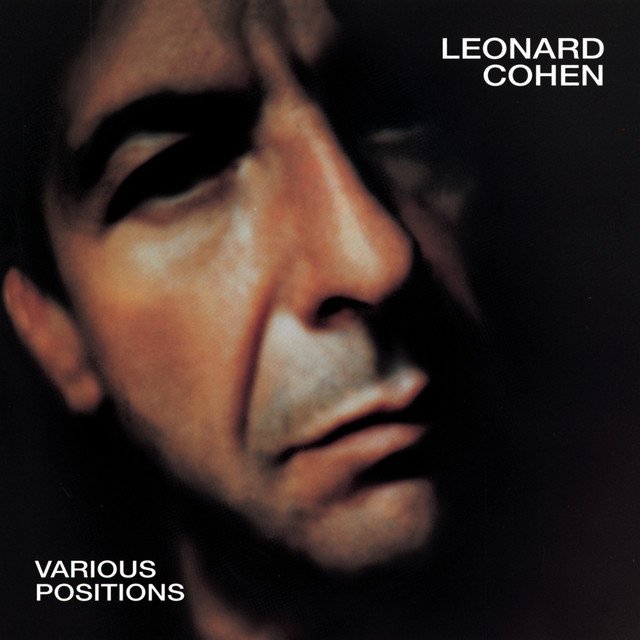
The song originally appeared on the 1984 album Various Positions, recorded at Quadrasonic Sound studios in New York in June of that year. Cohen arrived in the studio showing no sign of the torment the writing process had cost him. Producer John Lissauer later recalled that there was no discussion over which verses to use or in what order. Cohen had made every decision before he walked in. Engineer Leanne Ungar offered a practical explanation: Cohen wouldn’t bring extra verses to the studio because the meter was running. The breakthrough in the editing had apparently been a decision about how much to foreground the religious element. As Cohen later described it, the Biblical references became more and more remote from beginning to end until he understood they were no longer necessary. What remained was four verses. Out of 80 or more. That ratio tells you something about how much the song cost him. Or how much he was willing to throw away to get it right.
The first verse opens on King David, the warrior-king and musician who reportedly soothed Saul’s madness through his harp-playing. The “secret chord” is that one, the music that reached something no language could. Bono, speaking later about the song, called David “the first God heckler” and connected the David references to the birth of the blues, a tradition of shouting praise and admonishment at God in the same breath. But Cohen immediately punctures his own opening. After setting up this image of sacred music, he turns to whoever he’s addressing and says, plainly, that they don’t really care for music. The person he’s talking to is already outside what he’s just described. Music journalist Bill Flanagan noted that the song has this profound opening couplet about King David and then immediately delivers what he called a Woody Allen-style line of mild, exasperated disappointment. The baffled king in the last line of that verse is trying to compose his hallelujah. He doesn’t know what it is yet. He does it anyway.
Then Cohen describes his own chord progression mid-lyric: “It goes like this, the fourth, the fifth, the minor fall, the major lift.” This is where the song does something that most listeners miss entirely and most writers get wrong. If you take those words at face value, they sound like a description of melodic movement: a fourth up, a fifth up, then a minor interval falling, then a major interval rising. But the melody doesn’t do any of that. The vocal line through those words is a continuous rise. What Cohen is actually charting is the harmonic movement underneath, the chord changes. The four chord is F. The five is G. The minor fall is A minor. The major lift brings you to G major. The words describe the chords, not the tune, and if you come to the song with any music theory knowledge, the gap between what the words say and what the melody does creates a loop you cannot quite resolve. It keeps pulling you back. The fact that it also works as poetry about life’s emotional arc, the falls and the lifts, is either deliberate or the luckiest accident in songwriting. The song is composed in C major in 12/8 time, a rolling, gospel-adjacent feel that is not accidental either. The Hammond organ on the original recording carries its own weight of association: church, gospel, a certain kind of collective voice. It sits underneath Cohen’s most emphatically secular lyric. He lets the sacred linger even as he insists he has stepped outside it.
The second verse folds two Old Testament stories together without labelling either of them. David’s lust for Bathsheba, whom he spotted bathing on a rooftop and then had her husband killed to obtain, runs alongside the story of Samson, whose supernatural strength was bound up in his hair until Delilah cut it while he slept. The verse gives both of them in the same lines, “she broke your throne and she cut your hair,” two figures brought down by desire, both still arriving at the same word. Not after things improved. In the middle of the damage.
The third verse drops the Biblical framework and becomes explicitly personal and contemporary. The narrator is addressing someone who has been treating love as a competition. He has been here before. He knows this room. Love is not a victory march and it cannot be won. The “cold and broken hallelujah” arrives here not as metaphor but as fact: this is what love actually produces when you strip away the ceremony. Something imperfect, something honest, still worth the word.
The fourth verse is the most confessional. No kings, no sacred references. Just a man accounting for himself honestly: insufficient, numb, trying to touch something he couldn’t feel. “And even though it all went wrong, I’ll stand before the Lord of Song with nothing on my tongue but hallelujah.” The Lord of Song is not named and Cohen never clarified who he meant. It might be God. It might be music itself. Either way, everything went wrong, and this word is all that’s left.
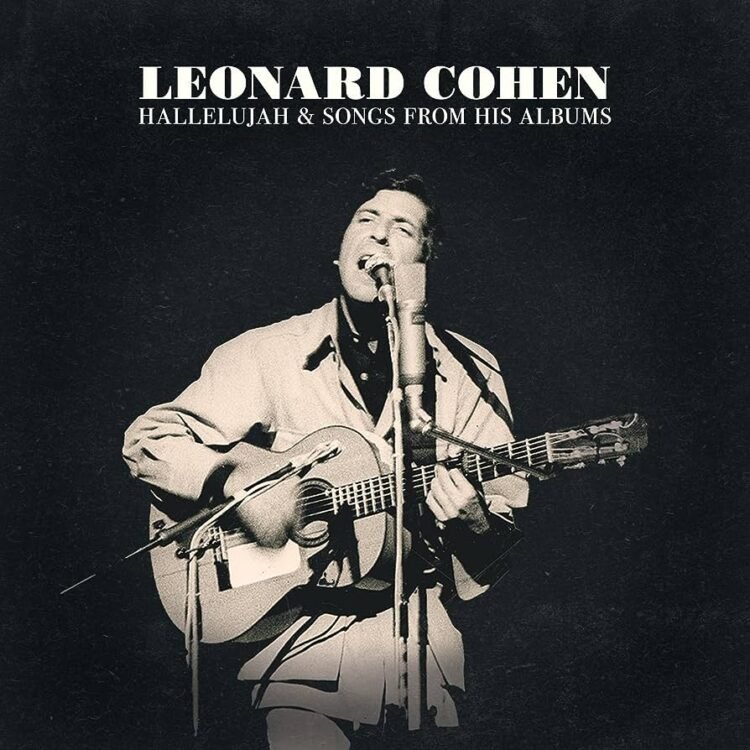
How you hear all of this depends significantly on who is singing it. Cohen’s own performance, particularly the 2008 London recording, makes the song’s meaning visceral in ways that are specific to his voice and his way of moving through the language. He slides into notes rather than landing on them, pushes and pulls the rhythm into something closer to speech than song, makes the words physically onomatopoeic: “cut” sounds cutting, “tied” carries weight in the approach to the note. His voice in that period was often described as gravelly, which misses what it actually does. It is low and richly coloured and soothing and precise. He conveys the song’s emotion vividly.
What made the song a phenomenon was largely not Cohen. Bob Dylan was one of the first to recognise it, performing it live in 1988. John Cale, founding member of The Velvet Underground, stripped it to piano for a 1991 Cohen tribute album, sending a fax to ask for the lyrics and receiving back a sheet containing fifteen verses. He chose four, different ones from Cohen’s recorded selection. Jeff Buckley then built his 1994 recording on Cale’s arrangement, not Cohen’s original, and produced the version most people now hear in their heads when the song’s title comes up. When Buckley drowned in the Mississippi in 1997, the song absorbed his death as well, taking on a grief it hadn’t been written with. In 2001, Rufus Wainwright’s cover appeared on the Shrek soundtrack and introduced the song to an audience who had never heard of Leonard Cohen. An animated ogre’s romantic awakening. Cohen himself later told The Guardian he felt the proliferation had become overkill: “I think it’s a good song, but too many people sing it.”
That frustration is understandable. The reason the song keeps being covered is the same reason it was nearly impossible to write: it is trying to do something that has almost no equivalent in popular music. It is not about faith lost or love won or grief processed. It is about the act of praise itself, examined from every angle that makes it difficult, and insisting that none of these things disqualify you from the word. That argument has turned out to be useful to a remarkable number of people in a remarkable number of situations, none of which Cohen predicted and most of which, if asked, he probably would have preferred to avoid.
He claimed 150 draft verses. His notebooks bear that out. What survived was four. In them he managed to say something that has now been said back to him, in one form or another, by over three hundred artists. Most of them are wrong about at least one thing he meant. He would not have been surprised.
You might also like:
- “Pale Blue Eyes” by The Velvet Underground: Meaning, Lyrics and the Love He Didn’t Stop
- Tyler Childers’ Feathered Indians Lyrics Explained: A Conflicted Tale of Lust, Regret, & Appalachian Truth
- Lana Del Rey’s A&W: Song Meaning, Lyrics Breakdown and Review
- Noah Kahan Porch Light Meaning: A Song Written From His Mother’s Point of View