
Shelley Albin had hazel eyes, not blue. The story goes that Lou Reed changed them because blue fit the song better, though he never said so on record, and it may be one of those biographical details that feels true because it fits the man so well. Writing came first. Everything else arranged itself around that.
They met at Syracuse University in the early 1960s, where Reed had enrolled as a journalism major. The origin story is almost too good: Shelley was dating a football player at the time, who spotted Reed on the street and pulled over to mock him, calling him shocking and evil. She dumped the football player and started dating Reed instead. They were together, on and off, until 1964. “Pale Blue Eyes” and “Lisa Says” are both clearly tied to her, and “I’ll Be Your Mirror” is sometimes linked to her too, though that one is disputed. By the time this song was recorded in 1968, Reed was 26, Shelley had married someone else, and the relationship had been over for years. That distance matters. This is not a song written in the heat of it.
“Pale Blue Eyes” is Reed’s account of loving a woman who belongs to another man, told so plainly and so quietly that the admission barely registers until the final verse lands and everything before it rearranges. That is what the song is about. A love song built around a sin he couldn’t stop committing, arriving not at resolution but at something more honest: the acknowledgment that he would do it again.
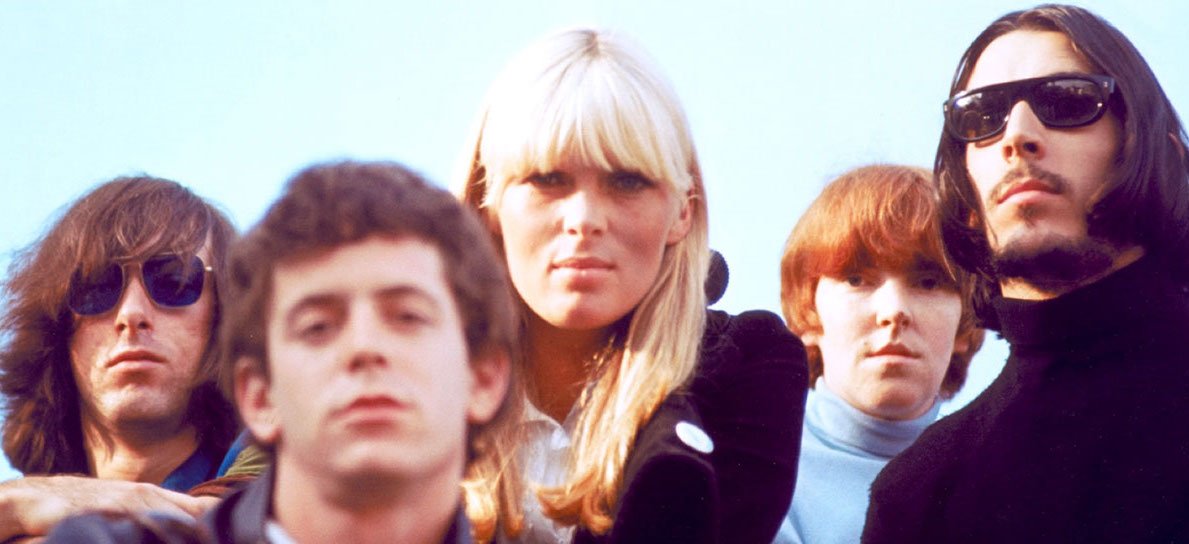
The music reflects that simplicity without announcing it. No drums. Four instruments: acoustic guitar from Reed, electric from Sterling Morrison, bass and Hammond organ from Doug Yule, tambourine from Maureen Tucker tapping the two and four where a snare would normally sit. The organ arrives in the refrain with just enough warmth to stop the song collapsing into itself. Morrison called the whole record the closet mix, because it sounds like it was recorded in isolation, and that’s not a criticism. It sounds private. Like something you weren’t meant to hear.
Reed’s voice has no particular beauty to it, no trained smoothness, and that’s where the intimacy lives. There’s a rawness that sounds unguarded rather than performed, cracked in places, slightly off in others, and because none of it is concealed you stop analysing and start listening differently. It slips past you before you have time to push back. The breathiness is very Dylanesque, gentle and plucky but not polished. A complicated story told in the simplest possible terms, stripped of everything that isn’t essential. You hear the missed notes. The cracks. None of it is hidden, and that’s the point.
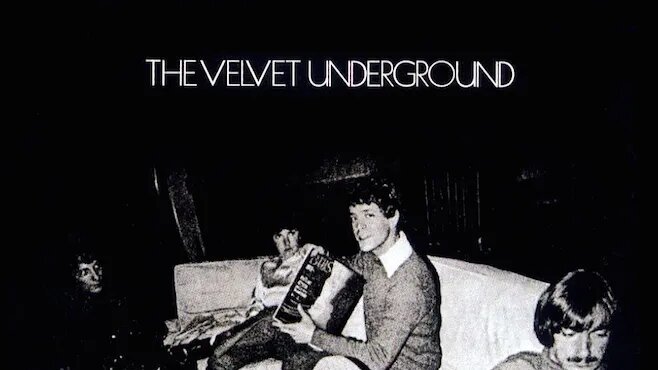
The music reflects that simplicity without announcing it. No drums. Four instruments: acoustic guitar from Reed, electric from Sterling Morrison, bass and Hammond organ from Doug Yule, tambourine from Maureen Tucker tapping the two and four where a snare would normally sit. The organ arrives in the refrain with just enough warmth to stop the song collapsing into itself. Morrison called the whole record the closet mix, because it sounds like it was recorded in isolation, and that’s not a criticism. It sounds private. Like something you weren’t meant to hear.
Reed’s voice has no particular beauty to it, no trained smoothness, and that’s where the intimacy lives. There’s a rawness that sounds unguarded rather than performed, cracked in places, slightly off in others, and because none of it is concealed you stop analysing and start listening differently. It slips past you before you have time to push back. The breathiness is very Dylanesque, gentle and plucky but not polished. A complicated story told in the simplest possible terms, stripped of everything that isn’t essential. You hear the missed notes. The cracks. None of it is hidden, and that’s the point.
The opening image, lips like sugar cane, is sweetness and addiction in three words, with a faint foreignness to it, something not quite native to New York City. What follows is a careful accumulation of detail: the line “you have your family and I have mine” reads as Reed acknowledging the life she has without him, the marriage he’s on the outside of. He calls her a very old friend at one point, which sounds like the only accurate thing left to call her. The verse refrain, “thought of you as my mountaintop, thought of you as my peak, thought of you as everything I had but couldn’t keep,” is where everything the song is trying to say sits each time it returns. You can’t keep things on mountaintops. There are always valleys.
The final verse is where the song’s meaning snaps into focus. “It was good what we did yesterday” and he’d do it once again. “The fact that you are married only proves you’re my best friend.” But it’s “truly, truly a sin.” The double “truly” lands like a confession that knows it changes nothing.
The arrangement builds in the subtlest possible increments. No key change or swell, just each instrument leaning in fractionally as the song progresses, adding a little more presence before easing back out. The guitar starts to cut through slightly more, the bass adds a little more movement, and then it eases off into a quiet release with no fanfare. A steady bluesy progression holding it all together, and then it ends without telling you how to feel about that.
It exists because Reed pushed back against every commercial instinct the band had developed by 1968. They’d dragged noise rock to its outer limits on White Light/White Heat, become the sound of countercultural New York under Andy Warhol, proved they could hold a room at Max’s Kansas City. The expected move was more of all that. Instead Reed said he thought making another White Light/White Heat would be a terrible mistake, that the band had to show the other side of themselves or become one-dimensional. Sterling Morrison was more direct about where that other side came from. John Cale’s departure, he said, was what allowed Reed’s sensitive side to hold sway. Why else did “Pale Blue Eyes” happen on the third album, with Cale gone?
Shelley later said of Reed that he could be very sweet, but he wasn’t happy unless he made somebody more miserable than he was. She knew him during his early twenties, a few years on from when his parents had committed him to electroshock therapy at seventeen, following a psychiatrist’s recommendation they didn’t know to question. The person who wrote this at 26 had put some distance between himself and all of that. Something in the recording sounds like a man who has learned to carry difficult things rather than set them down, though whether that reads in the music or we bring it there ourselves is hard to say.
R.E.M. put a version on Dead Letter Office in 1987. Patti Smith performed it live throughout the late seventies. The Kills recorded it for a Levi’s Pioneer Sessions revival project in 2010. A significant strand of indie rock runs directly back to this record, from The Smiths to Arcade Fire to The National, and “Pale Blue Eyes” is the most concentrated version of why. It proved that the most radical move an experimental band could make was occasionally making something quiet. That a song about a real woman, possibly renamed just because it sounded right, could outlast almost everything else the Velvet Underground ever made.
The song sounds like the situation is still ongoing. Fifty-six years on, it still does.
Linger on.
You might also like:
- The Sound of Silence Meaning: Why Simon & Garfunkel’s Song Still Haunts Modern Life
- Exploring Love and Destiny: A Deep Dive into Taylor Swift’s Invisible String Lyrics
- Mitski My Love Mine All Mine Lyrics Meaning: A Complete Breakdown
- Bluebird Lyrics Meaning by Lana Del Rey: A Song of Escape and Emotion
- Arctic Monkeys 505 Meaning: The Hotel Room, The Heartbreak, and Why It Still Hits