
Most love songs are about another person. “My Love Mine All Mine” is about the love itself, and the terrifying possibility that when you die, the most real thing you ever held dies with you.
Mitski’s argument is that love is the only thing a person genuinely possesses, not property, not a body, not a career, because everything else eventually deteriorates, gets taken, or disappears. The song asks the moon to preserve her love after she dies, so it can keep shining down on the people she leaves behind. It is a small request made to an ancient object, which is exactly the scale the song operates on.
How the Song Was Written
Mitski wrote “My Love Mine All Mine” while carrying groceries home. The bags were heavy, she had them balanced across both arms, and to dissociate from the discomfort she started making up a melody in her head.
She was singing to herself, “my love, love,” and caught herself thinking: wait, this is actually something. She got home, put the groceries down, and recorded it before the idea left her.
It came from a private, unguarded moment. Mitski said this was the first record where she stopped caring what people think, and that admission lands differently once you know the song started as a tune she hummed to herself on the street, not something built for an audience.
The Meaning Behind the Lyrics
The song opens on the moon. Not romantically, but cosmically.
“Moon, a hole of light / through the big top tent up high” came from a specific evening when Mitski was sitting outside and the night sky looked like fabric to her, the moon a gap letting light through. What struck her was not the beauty of it. It was the timeline.
The moon was there before she existed. It will keep going long after she dies. She described it like the difference between a dog’s lifespan and a moon’s: in cosmic terms, she’s a speck of dust drifting for a few seconds.
“Here before and after me” is not poetic filler. It is the exact thought she was sitting with.
From there, the opening verse becomes a request:
“Moon, tell me if I could / send up my heart to you? / So, when I die, which I must do / could it shine down here with you?”
The grammar of the ask matters. She is not asking to be remembered. She is asking whether the substance of what she felt, the love itself, could survive her.
The chorus is where the philosophical core locks in:
“Nothing in the world belongs to me / but my love”
This is not a romantic declaration in the conventional sense. It is a property claim.
Mitski explained this in a video she posted around the song’s release. She started with the problem: she doesn’t actually own anything she can keep. Material things get lost, broken, stolen, or worn out. Her body will stop working. Even her songs, once released, belong to the world more than they belong to her.
But the love she has built inside herself, that she created, cultivated, and held onto, is hers for as long as she chooses to keep it.
She went further. She said that loving is the best thing she has ever done. Better than any song she has written. Better than any professional achievement.
And the particular sadness that fuelled the song is this: when she dies, she cannot leave that behind. The most beautiful thing she has is the one thing that will not survive her in any tangible form.
She also brought in a specific contrast with the music industry. Everything in her career has had a cost: DIY tours, lost money, health sacrificed for exposure that may or may not materialise. But love costs nothing in that extractive sense. It is the one resource that does not deplete when you give it away.
The second verse deliberately grounds the song after that abstraction. Mitski talked openly about making that structural choice: the first verse is cosmic, so the second pulls it back to a person.
“My baby here on earth / showed me what my heart was worth”
She did not arrive at this understanding of love through pure philosophy. Someone taught her the value of it by receiving it.
The verse then redirects back to the moon, this time asking it to shine the love down not for Mitski, but for her:
“So, when it comes to be my turn / could you shine it down here for her?”
The pronoun shift is the most discussed line in the song. Mitski has not put explicit labels on her sexuality, though she has left signals across her catalogue. In “Cop Car,” recorded for the 2020 film The Turning, she sings of having loved many boys and many girls.
The “for her” reads as the most direct acknowledgement in this particular song that she is addressing a female partner, consistent with patterns elsewhere in her work without being prescriptive about what it means.
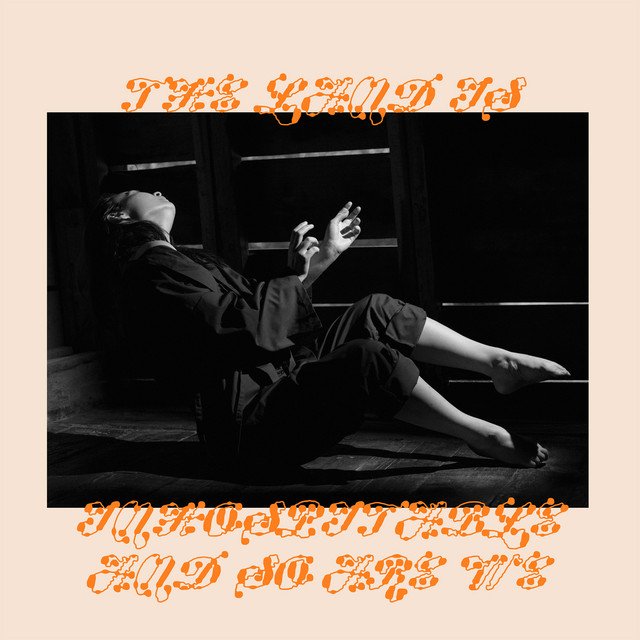
The Production
The song was produced by Patrick Hyland, Mitski’s longtime collaborator. He has worked across most of her catalogue, and the sound they built here is deliberately spare: subdued piano, pedal steel guitar, and a choir of 17 people that Mitski arranged herself.
The choir members include singer-songwriters Caitlin Rose, Erin Rae, and Tristen Gaspadarek. That is not an anonymous session choir. Those are artists with their own practices, brought in specifically, which gives the choir sections a different weight when you know that.
The song is in A Major. The chord movement slips into D minor, creating a melancholic pull, while later seventh chords deepen that sense of unease. Technically it runs at 114 BPM in a half-time feel, which is why it registers as slower than it is.
Mitski’s vocals layer multiple tracks of her own voice in unison, spreading the sound until it feels less like a performance than something overheard.
The song was not one of the three singles released ahead of the album. It arrived with the record on September 15, 2023, the official music video having gone up on YouTube the previous day. That matters for understanding its cultural trajectory: it had no promotional runway. It travelled entirely by word of mouth.
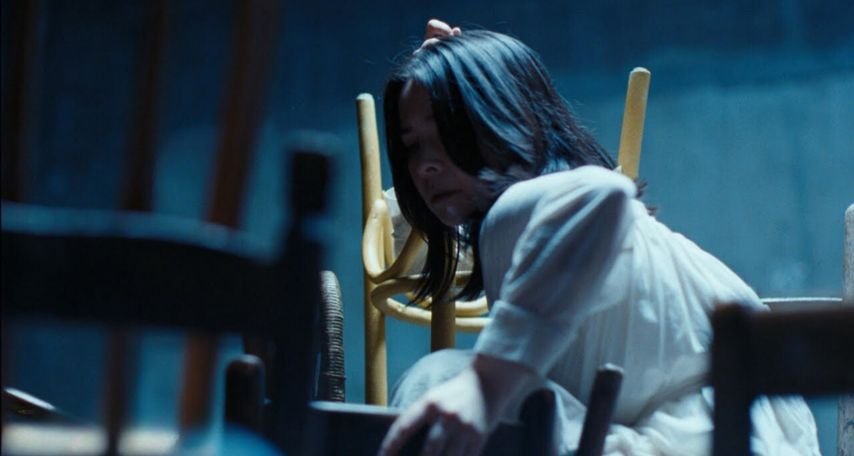
The Music Video
Director AG Rojas and cinematographer Evan Prosofsky shot the video in an empty industrial space. Mitski spends the video stacking chairs into a precarious tower, climbing it, and at the top sitting quietly looking out at an ocean sunset.
The egg placed beneath the bottom chair is a detail worth stopping on. Symbolically it reads as vulnerability, something fragile supporting an impossible weight. The connection to Tsukimi, the Japanese moon-viewing festival that falls on the same date as the album’s release, appears intentional rather than coincidental.
What the video does not do is ease the pressure it builds. Mitski reaches the top of the tower and does not celebrate. She just looks.
The final shot of her hand framing the horizon, functioning like an aperture, is where the visual and the lyric finally meet. The love is hers. The view is hers. She is choosing what to hold.
Chart Performance and TikTok Impact
“My Love Mine All Mine” became Mitski’s first song to enter the US singles chart, debuting at No. 74 in October 2023 and peaking at No. 49.
What got it there was not radio play or a conventional promotional campaign. It was people on TikTok recognising something in the song people could recognise as their own, the rare case where a piece of writing about mortality spread because it made people think about love, not death.
The song appeared in over 300,000 TikTok videos by early October, within three weeks of release, driven by 6.5 million official US streams.
What is telling about the TikTok lifecycle is how the content shifted over time. Early posts were reflective, people responding to the song’s ideas about love as a possession. Over time it skewed more specific: partners, anniversaries, quiet relationship moments.
Listeners latched onto the second verse and made it a love song, which it partly is, while the first verse’s cosmic frame gave the feeling enough gravity to seem meaningful rather than sentimental.
The song let people feel something large using footage of something small.
Barack Obama included it among his favourite songs of 2023. It was named song of the year by multiple outlets and ranked No. 1 by online music communities.
The cover versions spread further than most songs of its generation. Laufey posted a TikTok reaction the day after the album dropped that collected 4.4 million views. Clairo posted an Instagram cover the same day. Artists including Sabrina Carpenter and Gracie Abrams added their own versions.
A sign language interpretation reached 22 million views. A cover by Algie Powers generated 8.9 million. The song’s long instrumental section drew in classical and folk players, with versions on Carnatic violin, saxophone, and string quartet all circulating. A Spanish translation found an audience independently.
By early 2024, the song had accumulated over 2.1 million TikTok posts and 560 million Spotify streams, making it Mitski’s second most-streamed track on the platform. Her Spotify monthly listeners rose from around 10 million to 38.7 million across the period.
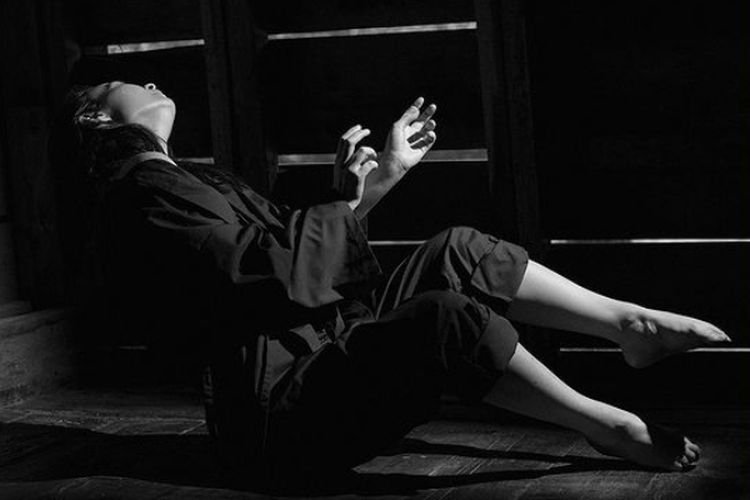
Where the Song Sits in Her Catalogue
“My Love Mine All Mine” is the outlier on The Land Is Inhospitable and So Are We. The other songs on that album are more complex, less linear. This one has a standard pop song structure and lyrics plain enough that a casual listener can follow them on a first pass.
That simplicity is part of why it connected across demographics and languages. But it is also the product of something specific in Mitski’s headspace during this album: she had settled in Nashville, stepped off social media in 2019, and made a record where she genuinely stopped calculating what other people wanted from her.
The languid country and folk production reflects that.
Her trajectory is worth knowing. She started with two albums made as student projects at SUNY Purchase, moved to a punkish indie rock sound on Bury Me at Makeout Creek (2014), signed to Dead Oceans for Puberty 2 (2016), expanded into pop on Be the Cowboy (2018) and Laurel Hell (2022), and landed here: a gothic Americana record that sounds like it was made with no one else in the room.
“My Love Mine All Mine” carries the logic of everything she built before it, but here she left the scaffolding out.
What is left is one question dressed as a song: if the moon has been here since before you were born and will be here long after you are gone, could it hold your love when you no longer can?
The chorus does not answer that. It just keeps asking, quietly, until the song ends.
Album: The Land Is Inhospitable and So Are We (2023)
Producer: Patrick Hyland
Runtime: 2 minutes 18 seconds
Key: A Major
Chart peak: No. 49, US Hot 100
You might also like:
- Decoding Tate McRae’s Greedy: A Deep Dive into the Lyrics and Meaning
- Exploring Love and Destiny: A Deep Dive into Taylor Swift’s Invisible String Lyrics
- Ivy Bae’s God Goes Where I Can’t Follow: A Symphony Of Heartbreak
- Lizzy And The Palm’s Honest Song – An Ode To Vulnerability
- Ghosting: A Modern Dating Trend Echoes In Andie Mechanic’s Lucy