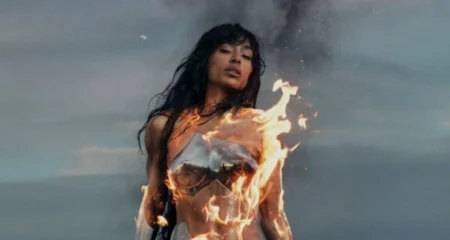

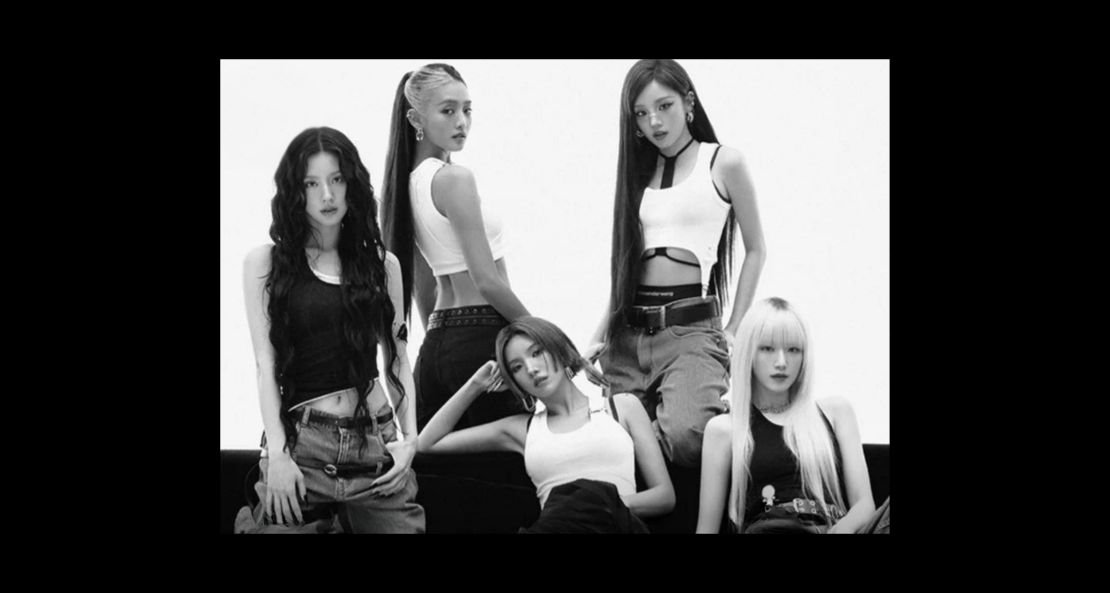
i-dle do not return with a bang on Mono. They return with a refusal. A refusal to overperform, to overdecorate, to shout their politics into the void.
This is not a comeback designed to dominate timelines. It is a song that asks what happens when pop stops competing and starts listening. That choice alone is the provocation.
Mono positions itself as anti-spectacle at a moment when K-pop thrives on excess.
No maximalist drop, no theatrical switch-ups, no lore maze. Instead, the group strip the sound to a clean, early-2000s dance skeleton.
The beat moves with restraint. The synths glow softly rather than stab. Even the hook avoids melodrama, looping with a calm insistence that trusts repetition over force.
This minimalism is deliberate, and it reframes i-dle’s usual image of control through dominance into control through discipline.
The lyrics work the same way. They do not argue. They flatten. “Play the whole world in mono” is not a slogan about sameness so much as a provocation about noise.
The song keeps returning to the idea of muting the external signal so the internal rhythm becomes audible, a line that appears explicitly in the Korean lyric about silencing the mind and letting the heartbeat sing.
Identity here is not something proven or defended. It is something felt once the interference dies down.
That matters because the song walks directly into volatile territory. Lines about left and right, straight or gay, arrive without cushioning.
Many listeners have already bristled at that centrist phrasing, reading it as flattening real power differences.
But Mono is not trying to broker peace between ideologies. It is trying to escape the theatre of constant categorisation altogether.
The lyric does not ask opposing sides to agree. It asks the listener to step outside the binary logic that keeps identity permanently reactive.
Whether that works depends entirely on where you’re standing when you hear it.
The spoken interlude is where things get genuinely awkward. Members list pronouns plainly, almost stiffly, then voice uncertainty before landing on self-acceptance.
It should feel clunky. It does feel clunky. And that clumsiness is the point. i-dle do not perform fluency here. They perform exposure.
In K-pop, where global-facing English usually aims for smooth universality, this hesitation reads as a crack in the persona.
The group sound human rather than authoritative, which is either brave or naive depending on how generous you’re feeling.
skaiwater’s feature reinforces that crack, though not in the way you’d expect. Their verse does not dominate or dramatise the message.
It blends in, rhythm-first, voice relaxed. Sonically, it barely registers as a disruptive presence.
That might be a problem if you wanted fireworks, but it suits the song’s refusal to escalate. The feature feels chosen for texture, not clout.
The video commits fully to this vibe. Shot in black and white, bodies move in and out of frame without hierarchy. Hands link, separate, reappear.
The choreography avoids formation fetishism, favouring collective motion that looks loose even when it is not.
Colour only arrives at the end, and when it does, it feels earned rather than triumphant.
The visual language reinforces the song’s central wager: that connection does not need amplification to exist.
What Mono ultimately offers is not unity as spectacle, but quiet as resistance. In an era where pop activism often mistakes volume for courage, i-dle choose subtraction.
They trust that turning the effects down can still carry weight. The risk is misreading.
The reward is clarity.
This is art with a message, yes, but more importantly, it is art that understands when to stop speaking.
And in 2026, that restraint might be the boldest move i-dle have made.
You might also like: