
Nobody owns “House of the Rising Sun.” That’s the first thing to understand. It arrived with no confirmed author, no verified birthplace, and a lyric so old that even musicologist Alan Lomax, who spent decades collecting American folk songs, couldn’t pin its origin beyond knowing jazz musicians were playing it before the First World War. It just existed, like weather.
The song is a first-person confession from a man returning to the place that ruined him, a notorious New Orleans establishment called the House of the Rising Sun, knowing full well it will finish the job. That’s what “House of the Rising Sun” is actually about. No arc, no recovery. It doesn’t even pretend there is one.
What The Animals did with it in 1964 wasn’t just a cover. It was a claim. And a messy, disputed, legally complicated one at that.
The earliest known recording is from 1933, when Clarence Ashley and Gwen Foster put it to tape as a sparse acoustic sketch. Georgia Turner had a version in 1937. Lead Belly recorded it twice in the 1940s. Woody Guthrie had it. Bob Dylan put it on his 1962 debut, borrowing the arrangement from Greenwich Village folk singer Dave Van Ronk, who wasn’t asked and took a while to forgive it. In most of these earlier versions the narrator is a woman. The House of the Rising Sun is a brothel. She’s in it. The warning is hers.
Before any of those recordings, the song’s lineage likely runs back to a family of British folk ballads, most often linked to The Unfortunate Rake, a narrative tradition dating to at least the 18th century and often traced further into earlier English song culture. That lineage carries the same themes of ruin, illness, and moral consequence. What changes over time is the setting. The warning stays.
The Animals flipped the gender and the whole centre of gravity shifted. Their narrator is male. His mother sews jeans. His father drinks until the world becomes something he can cope with. The House of the Rising Sun stops being a place that traps women and becomes something harder to name, the kind of pull a certain man feels towards self-destruction when he’s been watching his father do it long enough. There’s something almost comfortable about that reading, though, something that lets listeners keep a bit of distance from the song. The more direct reading is that the narrator isn’t a victim of circumstance at all. He knows exactly what the house is and he’s choosing it. The father is an explanation, not an excuse. And the warning to his mother in verse three isn’t really a plea for anyone to intervene. He’s already leaving. The warning is a goodbye dressed up as concern, and the song is honest enough not to pretend otherwise.
As for the name itself, the House of the Rising Sun was a real establishment, or at least a real type of one. New Orleans historians have pointed to several brothels and saloons operating under that name or close variations in the French Quarter during the late 19th and early 20th centuries. The rising sun was a common sign used by brothels of the period, sometimes painted above the door or hung as a lantern. Some researchers have connected the name to Storyville, the city’s notorious red-light district, though no single building has ever been definitively confirmed as the one the song refers to. The name likely stuck because it worked both ways: sunrise as hope, as new beginnings, and simultaneously as the hour when men who’d been up all night gambling or drinking finally had to reckon with what they’d done. That double meaning runs through the whole lyric. Spiritually, the rising sun carries weight across multiple traditions, representing rebirth and the possibility of redemption. The song uses all of that ironically. The house promises those things. It delivers none of them.
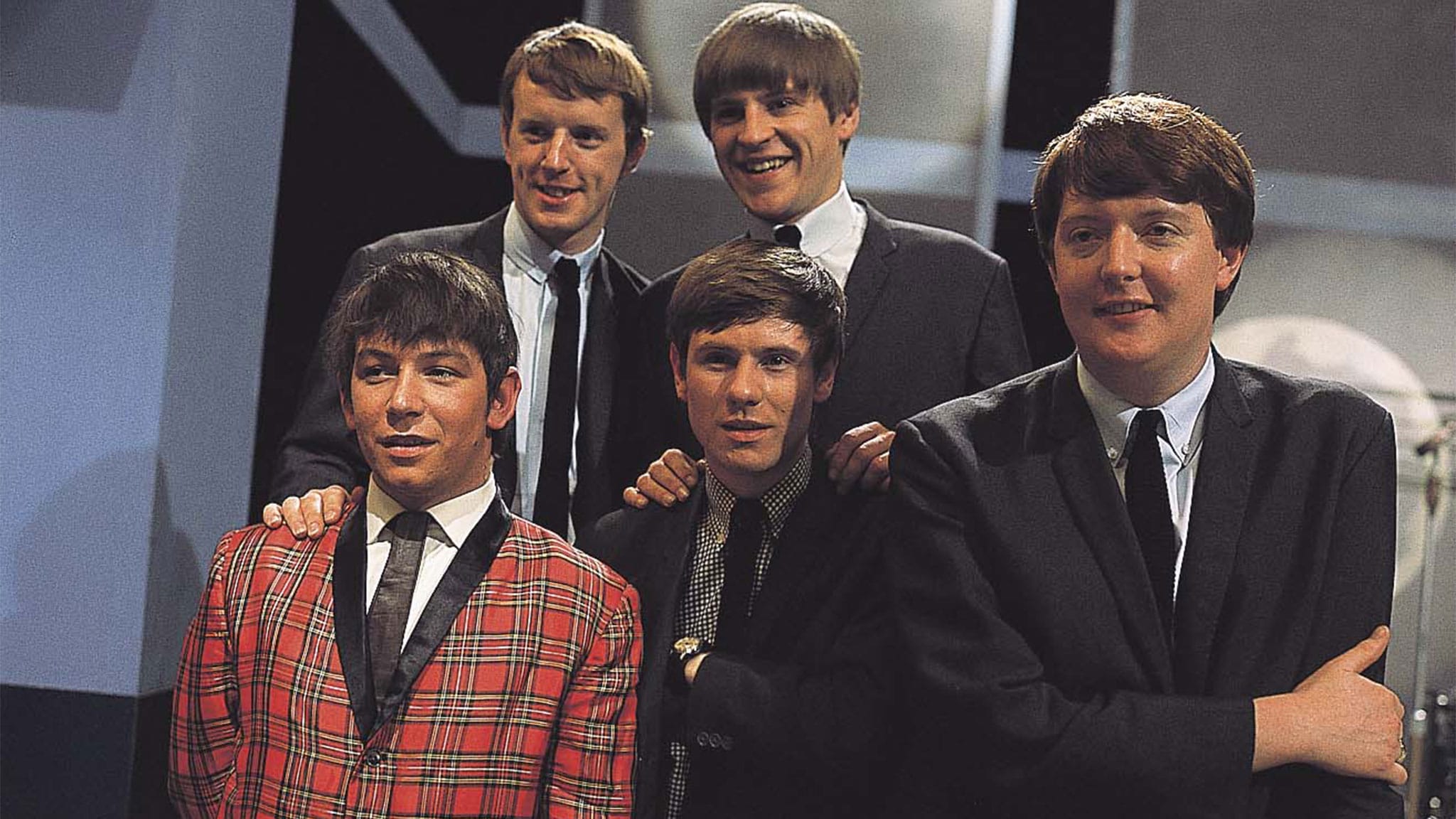
Eric Burdon heard it not from Dylan’s record but from Northumbrian folk singer Johnny Handle performing at a club in Newcastle. When The Animals started playing it live during their 1964 Chuck Berry tour, they used it as a closing number specifically because it didn’t sound like anything else on the bill. Everyone else was trying to be Chuck Berry. The Animals were doing something older and darker, and the audiences could feel the difference even if they couldn’t have explained it.
On May 18, 1964, mid-tour, they walked into a studio and recorded it in a single take. Fifteen minutes total. Producer Mickie Most, who hadn’t particularly wanted to record the song, called the band the morning after and declared it the single. At four and a half minutes it was absurdly long for pop radio. The BBC initially refused to play it. Most released it at full length anyway: “We’re in a microgroove world now.” It hit UK number one in July. US number one on September 5, making The Animals the first British group to top the American charts since The Beatles, who sent a congratulatory message. Bob Dylan, watching a British band electrify one of his own folk songs, started thinking about plugging in an electric guitar. Eric Burdon’s version of events is that Dylan went electric in the shadow of what The Animals had done. Dylan might tell it differently, but the timing is the timing.
The song opens on the chorus, which is unusual. A verdict before any evidence. “There is a house in New Orleans they call the Rising Sun, it has ruined many a poor boy, and God, I know I’m one.” The narrator names himself as a casualty before the song has told you anything about him. It’s a strange structural choice that most writers would talk themselves out of, and it’s the reason the song hooks so fast.
The first verse lays out the split. His mother is a tailor, grounded, practical, making things. His father is a gambling man in New Orleans. Two directions, and the song tells you which one the narrator took without bothering to say so directly.
Verse two is bleaker than it sounds on first pass, partly because it’s describing the father and partly because it’s clearly also describing the son. “A gambler needs only a suitcase and a trunk… the only time he’s satisfied is when he’s drunk.” The narrator isn’t observing his father from a safe distance here. He’s delivering a manifesto he’s already adopted, whether he realises that’s what he’s doing or not.
Price’s Vox organ arrives and changes everything about the room. It doesn’t ease in. It tears through the middle of the song like it’s been waiting for the verses to finish. Not a pleasant sound, not a comforting one. Alan Price said it was inspired by Ray Charles’ “I Got a Woman,” which he’d heard on a jukebox, and you can hear that lineage, but Price took it somewhere angrier, more trapped. Hilton Valentine holds the arpeggio underneath it, Am to C to D to F, cycling for the full duration without variation. That should be monotonous. It isn’t, not even close. Partly because Valentine played it straight through with no overdubs, and there’s something about the slight physical anxiety of a hand maintaining that pattern for four and a half minutes, in one take, while the organ goes off beside it, that you can actually hear in the recording if you listen for it.
The third verse is the moment the narrator looks outside himself, briefly. He turns to address his mother and asks her to warn the others. “Oh mother, tell your children not to do what I have done.” Don’t spend your life in sin and misery in the House of the Rising Sun. It’s genuine. It doesn’t feel performative. It lands, and then the next verse arrives and undoes it almost immediately.
One foot on the platform, the other on the train, going back to New Orleans to wear the ball and chain. Prison or addiction, the song doesn’t specify. It may be that the song doesn’t specify because by this point in the narrator’s life the distinction has stopped mattering, or maybe it never mattered as much as listeners want it to.
Is “House of the Rising Sun” about addiction? Yes, though the song earns something by refusing to use that word or anything like it. What it captures, more precisely than most things written about addiction before or since, is the logic of return. The narrator is not confused about what the house will do to him. He’s been there. He’s warning his family in real time. He understands the situation completely and is going back regardless, and the song doesn’t frame this as weakness or tragedy or a cry for help. It frames it as fact. That’s the part that makes people uncomfortable and also the part that makes the song stick. Most songs about destruction give the listener somewhere to stand. This one doesn’t, and it doesn’t try to.
The chorus returns unchanged. The house is still standing.
Burdon was 23 when he recorded this. He sounded considerably older, in a way that had nothing to do with technique and everything to do with conviction. He’d absorbed American blues with an intensity that shouldn’t have worked on a white kid from Newcastle but did, and on this recording what you’re hearing isn’t a performance of anguish. It’s a report. He starts low, almost conversational, and the chorus comes out of him like something that had been building pressure. One of the most-quoted reactions to the music video, from a Reddit thread with 11,000 upvotes: “lead singer was 22, looked 17 and sounded 50.” Rolling Stone later named him one of the greatest vocalists of all time. The 23-year-old recording is the evidence.
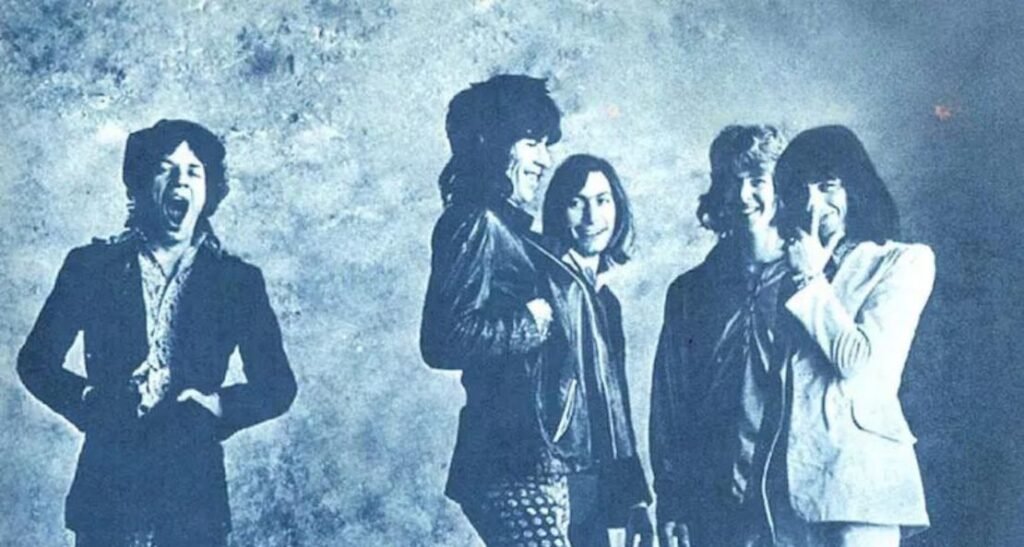
Mick Jagger and Keith Richards saw The Animals play this song at the Club A Go Go in Newcastle before it existed as a record. “I saw the look on the faces of Mick and Keith,” Burdon told Uncut. “It was quite clear they had to kill us off.”
The songwriting credit on the released single reads “Written by: Trad. Arranged by Alan Price.” That single line is where everything gets ugly. The stated reason was practical: the record label didn’t have space for all five names, and Price’s came first alphabetically. According to guitarist Hilton Valentine, manager Mike Jeffery told them the credit line was simply too long to list the full band, and that things would be sorted out later. They weren’t. The arrangement credit, and the publishing income attached to it, went to Price alone. What that meant in practice extended well beyond record sales. Under performance rights rules, when “House of the Rising Sun” is played live, the royalty triggered goes to the credited arranger, not to whoever is on stage. Price left the band in 1965. After that, every time The Animals performed the song that made them famous, they were generating a payment to the man who’d gone. “With the stroke of a pen, the rest of the Animals were screwed,” Burdon wrote later. The band broke up in 1966. The resentment, depending on who you ask, never entirely did.
“House of the Rising Sun” appeared in Casino, Forrest Gump and Supernatural, has been covered by Five Finger Death Punch, Nina Simone, Dolly Parton and alt-J among dozens more, and was recognised by the Library of Congress as one of the songs that shaped America, which is a genuinely strange distinction for a recording nobody authored. None of those covers have replicated The Animals’ version. Not because of anything mystical about the original, but because a single take is what it is. The organ solo happened the way it happened. Valentine’s arpeggio ran straight through because stopping wasn’t an option. Burdon sang it at 23 in whatever state of tiredness and hunger and ambition he was actually in on May 18, 1964, and that state is in the recording whether you can identify it precisely or not. You’d need all of that back. You can’t have it.
The house is still there. The narrator is on the train.
You might also like: