
The most played song of 1971 started as a joke nobody bothered to fix.
“Joy to the World” by Three Dog Night is a nonsense pop song that became a genuine cultural force. Put simply, the song means this: joy belongs to everyone, and it does not need a reason.
Written by Hoyt Axton around a bullfrog named Jeremiah who never said anything intelligible, the song asks nothing complicated of the listener.
Throw away the wars, share the wine, and extend that feeling to every living thing in the sea. That is the whole message, and it worked on 50 million people.
A Family Business at the Top of the Charts
Before getting to Jeremiah, there is a piece of music history that belongs at the front of this story.
Hoyt Axton’s mother, Mae Boren Axton, co-wrote Elvis Presley’s “Heartbreak Hotel,” which reached number one in 1956. When “Joy to the World” topped the charts in 1971, the Axtons became the only mother and son in the history of popular music to each have a writing credit on a number one single. Chuck Negron later put it plainly: “Hoyt Axton, the only person in the history of popular music that his mom and him had a number one. His mom of course wrote ‘Heartbreak Hotel’ and he wrote ‘Joy to the World’… that’s the only time that’s ever happened.”
That distinction still stands.
The Placeholder That Nobody Replaced
Hoyt Axton wrote “Joy to the World” for a morning cartoon show called The Happy Song that never made it to air. Jeremiah the bullfrog was a character in the show. With the chorus already composed and the melody locked, Axton needed verses. What he wrote were placeholders, syllables to fill space until something better came to him.
Something better never came. Axton recalled the moment in the Oregon News-Review: “Jeremiah was an expedient of the time. I had the chorus for three months. I took a drink of wine, leaned on the speaker, and said ‘Jeremiah was a bullfrog.’ It was meaningless. It was a temporary lyric. Before I could rewrite it, they cut it and it was a hit.”
That is the origin of the most recognisable opening line in classic rock. Not inspiration. Not craft. A man leaning against a speaker with a glass of wine, filling dead air in a song written for a cartoon that nobody would ever see.
Two Rejections Before a Champion
When Axton took the song to Three Dog Night, he pitched it first to co-lead vocalists Danny Hutton and Cory Wells. Both passed. The song struck them as too lightweight, too silly for a band that had built its reputation on hits like “One” and “Mama Told Me (Not to Come).”
Chuck Negron heard it next and read it differently. He later explained: “I knew that was a hit. I knew that that line was going to be in everyone’s head. It was just too bizarre and you know it was coming, hitting you right in the face. So yeah, I stuck up for it because I thought it was… you kind of need the silly songs, right? There’s a lot of seriousness that we needed. We needed to lighten up.”
Negron’s approach to getting reluctant bandmates on board was practical. He brought them into the studio to sing on the backing vocals. That move changed the dynamic.
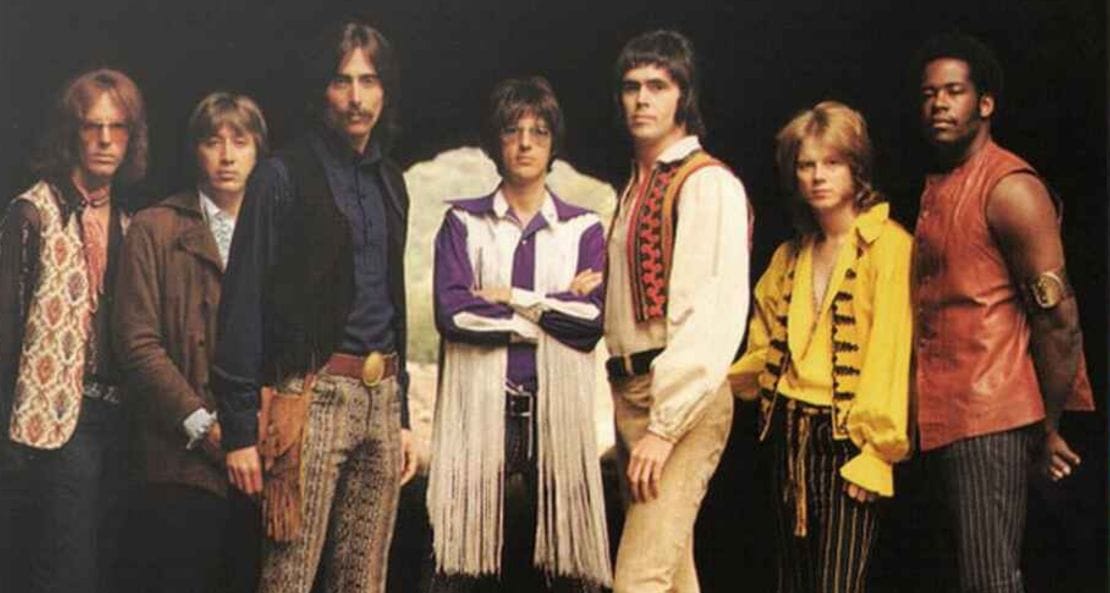
The band’s instrumentalists, guitarist Michael Allsup and bassist Joe Schermie, were personal friends with Axton and wanted to bring it home for him, given that his song had already been turned down twice within the same group. That motivation came through in the room. All seven band members ended up contributing to the recording, tracked at North Hollywood’s American Recording Company under producer Richard Podolor.
Axton had already heard no from elsewhere before Three Dog Night. He had offered the song to Steppenwolf, who had previously recorded his track “The Pusher” on their 1968 debut. Lead singer John Kay recalled: “I heard it more like a children’s song, with ‘Jeremiah was a bullfrog.’ Three Dog Night had an enormous hit with it, but I could not see myself doing that song. It wasn’t me.”
Steppenwolf instead recorded a different Axton song, “Snowblind Friend.”
The DJ Who Made It a Hit
The finished track was placed at the end of side two of the Naturally album, released in November 1970. The band and label expected nothing from it. The first single from the album was “One Man Band,” which peaked at number 19.
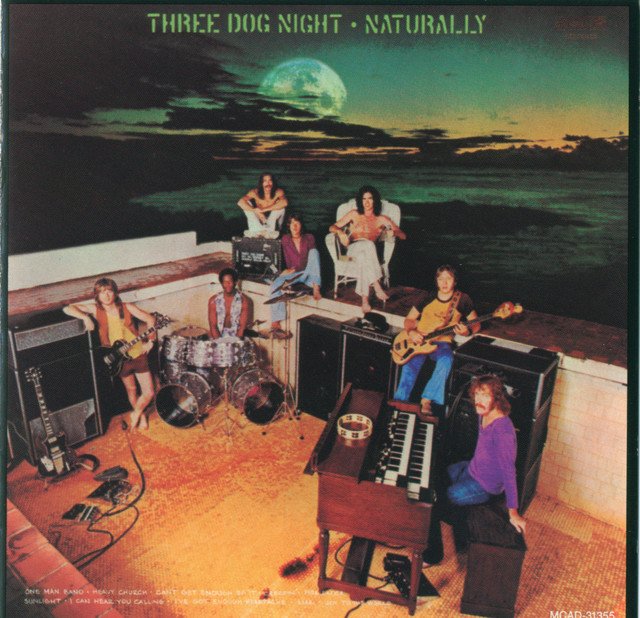
“Joy to the World” was going nowhere until Larry Bergman, a DJ at KISW-FM in Seattle, needed one more track to fill a tape he was producing for broadcast. He pulled the album cut because it fit the space. Bergman told Songfacts: “I put it on the tape and played it on the air. Within the hour the KJR DJ Gary Shannon came running over from the AM side and asked where I got that song. ‘People were calling,’ he said.”
Shannon took a copy back to KJR and played it on the AM station. Within weeks it was number one in Seattle. The station received a gold record for it. Three Dog Night came to Seattle to launch their next album.
Released as a single in early 1971, the song held the top position on the Billboard Hot 100 for six consecutive weeks. At the year-end tally, it sat at number one for the entire year, ahead of the Bee Gees, the Osmonds, and the Rolling Stones. It received Grammy nominations for Record of the Year and Best Pop Vocal Performance by a Duo, Group, or Chorus at the 1972 ceremony.
What the Lyrics Actually Say
The Three Dog Night Joy to the World lyrics meaning is not complicated, which is the point.
Jeremiah was a bullfrog Was a good friend of mine I never understood a single word he said But I helped him a-drink his wine And he always had some mighty fine wine
Verse one establishes a companion whose language the narrator cannot understand, which does not stop them from sharing wine. The friendship works without comprehension. That is either a comment on human connection, or it is a man singing about a bullfrog. Both readings hold.
The chorus lands the thesis: “Joy to the world, all the boys and girls.” Not joy to the worthy. Not joy to the successful. All the boys and girls. The inclusivity is the point, and it extends further: “Joy to the fishes in the deep blue sea, joy to you and me.” The song grants the same status to fish as it does to people, which is either absurd or generous depending on how you come at it.
Verse two makes the political case through fantasy. “If I were the king of the world, I’d throw away the cars and the bars and the wars.” Three things that complicate life, disposed of in one line. The argument is childlike on purpose. Simplicity is not the song’s limitation. It is its whole position.
The band briefly considered changing the opening to “Jeremiah was a prophet,” which would have added biblical weight. Negron recalled the decision plainly: “We didn’t think the prophet thing was very rock and roll, so we changed it back.” The bullfrog stayed, and the song kept the absurd, generous energy that made it work.
“Our Most Honest Song”
Negron later drew a distinction between the band’s best work and what “Joy to the World” represented. His words: “I said ‘Joy to the World’ may not be our best song, but it’s our most honest song. In that song, we were just trying to have fun and be real, you know, and I think that’s what comes across.”
Understanding what the meaning behind “Joy to the World” actually is requires taking that statement seriously. The song did not succeed despite being unpretentious. It succeeded because of it. Three Dog Night were, by Negron’s own account, a band prone to taking themselves seriously at the time, and this was the moment they stopped.
Negron also pushed back on the idea that the song was lesser because Three Dog Night did not write it. He placed the band in the same interpretive tradition as Frank Sinatra and Elvis Presley: artists who did not write their signature material but made it definitively their own through performance. In his reading, that is exactly what Three Dog Night did here.
Cultural Life After 1971
The song’s second major cultural moment came in 1983, when it appeared in The Big Chill. Negron described watching the film: “I went to see the movie and I put that little boy singing that song… it made me cry because you know at that point my life wasn’t very good. And to feel that you did something important and important enough to have a child [singing it] showed me, with all the self-loathing that I had, that in fact I’d done something at least that was good.”
The Forrest Gump soundtrack in 1994 brought the song to a second generation. That soundtrack sold over eight million copies in the United States alone.
The song’s reach across genres is clear from who covered it. Little Richard recorded a version, which said something about where the song sat culturally: this was not purely a rock track, it was a song that R&B and soul artists heard something in. The Supremes and The Four Tops both recorded it too. It has appeared at Denver Broncos home games as a crowd anthem and surfaced in Outlander and Friends over the years.
In 1979, Hoyt Axton started a record label. He named it Jeremiah.
What the Song Leaves Behind
The structural fact that holds “Joy to the World” together across five decades is this: its meaning and its method are the same thing. A placeholder lyric about a fictional cartoon bullfrog, recorded by a band that mostly did not want to make it, turned down by Steppenwolf, nearly buried on side two of an album, broken by a DJ filling dead air, became the biggest song of the year because nobody in the chain was trying to manufacture something important.
Hoyt Axton had the chorus written for three months before he found a verse to put under it. The verse he settled on made no sense. That combination, an irresistible hook attached to cheerful nonsense that even its own writer admitted was temporary, turned out to be exactly what 1971 wanted to hear.
Some songs survive because they were built to last. This one survived because nobody was paying close enough attention to stop it.
You might also like:
- The Profound Meaning Behind Simon & Garfunkels Sound of Silence
- Chicago 25 or 6 to 4 Song Meaning: The Accidental Classic That Became Everything
- Interpreting the Meaning Behind Kate Bush’s Running Up That Hill Lyrics
- Meaning Behind Feathered Indians by Tyler Childers: A Blend of Classic and Contemporary