
Apple Music just handed artists something genuinely useful. Released 2 December 2025, this year’s Replay isn’t just another end-of-year stats dump for fans to screenshot and forget.
Musicians now get access to proper analytics that actually matter: listenership growth, year-over-year performance summaries, and geographical breakdowns showing exactly where fans are streaming from. Finally, a platform treating artists like they deserve to understand their own success.
For listeners, the feature has evolved into something genuinely personal. Three new categories shift the focus from pure numbers to actual behaviour.
“Discovery” highlights the new artists you found this year. “Loyalty” reveals which musicians you keep returning to, year after year. “Comebacks” tracks the artists who vanished from your rotation and then mysteriously reappeared.
The psychology behind these additions is smart: instead of just showing what you played, Replay now tells a story about how you explore music and where you find comfort.
Why Artists Should Actually Care This Time
Previous years saw Replay deliver basic streaming numbers and little else. This iteration brings metrics that could genuinely inform strategy.
Musicians can now see which cities drive their listening, how their audience grew month-over-month, and which songs stuck versus which ones listeners skipped.
The data includes Shazam activity, radio spins, chart rankings, and playlist placements. Artists distributing through services like RouteNote get direct access to these numbers, creating a feedback loop between creative output and audience response.
Consider what this means for touring decisions. An artist discovering concentrated listening activity in Manchester or Berlin now has concrete data to justify booking those markets.
Album release timing becomes less guesswork when you can see which months historically generated the strongest engagement. The year-over-year comparisons reveal trajectory: are you growing steadily, plateauing, or experiencing breakthrough momentum?
The competitive advantage here shouldn’t be underestimated. Spotify Wrapped dominates cultural conversation every December, but Apple’s early release creates a window where artists can grab attention before the inevitable Wrapped flood.
That strategic timing, combined with richer artist insights, positions Replay as something more than just a me-too feature.
The Listener Experience: Patterns Over Numbers
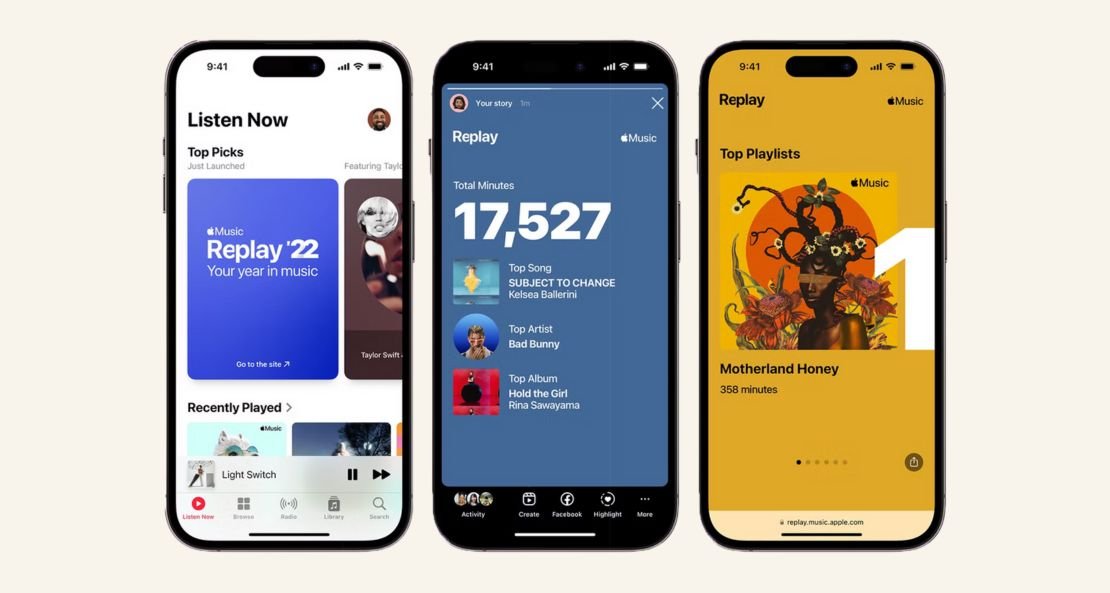
Opening your Replay feels different this year. The animated highlights reel plays like a visual mixtape, scenes and sounds from your year stitched together with surprising emotional weight.
You scroll through total minutes listened (some of you really need to touch grass), longest artist streak (guilty pleasures exposed), and genre breakdowns that confirm what you suspected: yes, you did listen to an alarming amount of drum and bass at 3am.
The Discovery section hits hardest for music obsessives. It surfaces the moment you first played an artist who later became a favourite, creating a timeline of how taste evolves.
Loyalty shows which musicians survived every mood shift and playlist purge. These aren’t vanity metrics; they’re mirrors showing how you actually consume music when no one’s watching.
Monthly breakdowns let you revisit specific periods. February’s heartbreak soundtrack. July’s festival prep. November’s rainy Sunday mornings. The feature remembers what you might have forgotten, turning ambient listening into something resembling a personal archive.
The Numbers That Actually Moved Culture
Apple’s 2025 global charts reveal which tracks dominated beyond individual bubbles. ROSÉ and Bruno Mars’ “APT.” claimed the top spot, that viral Korean drinking game chorus worming into every corner of the internet.
Kendrick Lamar and SZA’s “luther” followed, proving that moody R&B still cuts through. Lady Gaga and Bruno Mars’ “Die With A Smile” rounded out the podium.
Tyler, The Creator earned Artist of the Year recognition with 4.5 billion minutes streamed between November 2024 and October 2025.
The timing follows “Chromakopia’s” release, an album that demonstrated how experimental hip-hop can still achieve massive commercial reach when the artistry justifies the ambition.
Drake remained the platform’s most-streamed artist overall for 2025, whilst Morgan Wallen’s “I’m The Problem” topped album charts.
These results show the split between algorithmic playlist success and dedicated fanbase streaming, two very different paths to the same outcome.
How Artists Can Weaponise This Data
Smart musicians treat Replay as market research, not just a vanity check. The geographical data reveals untapped markets.
If you’re seeing consistent streams from a city you’ve never visited, that’s a touring opportunity waiting to happen. Promoters pay attention to these numbers; they indicate demand before you’ve spent money on advertising.
The year-over-year growth metrics tell you what’s working. Did your TikTok strategy actually convert to streaming? Are fans staying engaged between releases? Which songs maintained momentum months after dropping? This information shapes everything from setlist choices to which singles deserve music videos.
The Shazam data deserves particular attention. High Shazam activity suggests your music is reaching people in public spaces: shops, radio, clubs, other people’s playlists. That organic discovery matters more than algorithmic placement because it indicates cultural penetration beyond streaming platform ecosystems.
Artists can share these milestones with fans, creating connection through transparency. Posting “you listened to our album 50 million minutes this year” generates reciprocal energy; fans like knowing their support translates to measurable impact. This social proof also attracts industry attention. Labels, managers, and booking agents scroll these posts looking for momentum.
The Technical Bits That Matter
Accessing Replay happens through the Apple Music app’s Home tab or directly at replay.music.apple.com. The data covers streaming through the end of November, with December numbers rolling in as the month progresses.
The feature works across iPhone, iPad, Android, Mac, and PC, removing platform friction that previously limited these year-end recaps to mobile-only experiences.
Monthly Replays remain accessible throughout the year, not just during December. This year-round availability turns the feature into an ongoing tool rather than a once-annual novelty. The “Replay All Time” playlist compiles your most-played tracks since joining Apple Music, creating a living document of your listening history that updates continuously.
For artists, the analytics dashboard lives within Apple Music for Artists, the platform’s creator-facing portal. Distribution services typically provide access credentials when you first upload music to the platform.
The interface prioritises clarity over complexity: charts that actually make sense, filters that narrow data to specific timeframes, and export options for presentations or team reviews.
Why Release Timing Creates Competitive Advantage
Apple dropped Replay the same day as Amazon Music’s year-end summary and one week after YouTube’s Recap. This coordinated early release serves strategic purpose.
By arriving before Spotify Wrapped (which launched today, 3 December 2025), these platforms grab social media oxygen whilst attention remains fresh.
The pattern reveals how streaming services compete beyond catalogues and sound quality. Year-end recaps drive app opens, social sharing, and subscriber loyalty.
For platforms fighting for market share (Apple Music holds roughly 88 million subscribers versus Spotify’s 220 million premium users), every engagement touchpoint becomes a retention tool.
Artists benefit from this competitive landscape. Multiple platforms releasing recaps means multiple opportunities to celebrate milestones and thank fans. It extends the cultural moment beyond Spotify’s single-day dominance, giving musicians more visibility windows and fans more content to share.
What the New Categories Reveal About You
The Discovery metric gamifies taste-making. Being an early listener to an artist who later breaks mainstream carries social currency now, a way to claim authentic fandom before the bandwagon arrives. Apple knows this psychological quirk and surfaces it deliberately, turning passive listening into a badge of credibility.
Loyalty measures something deeper: which artists matter enough to survive trend cycles and mood shifts. These are the musicians woven into your actual life, not just your For You algorithm.
For artists, appearing in someone’s Loyalty category represents the highest compliment; you’ve transcended novelty and become part of their permanent rotation.
Comebacks feel almost confrontational, highlighting abandoned favourites and guilt-tripping your fickleness. But they also reveal how taste oscillates. The artist you burned out on last spring might sound perfect again by autumn. This cyclical listening pattern challenges the industry’s obsession with constant growth; sometimes fans just need a break.
The Elephant in the Room: Does Any of This Actually Help Artists?
Fair question. Streaming analytics improve yearly, but whether they translate to sustainable careers remains debatable.
An artist seeing strong Apple Music numbers still faces the same structural challenges: streaming payouts that require millions of plays to generate liveable income, algorithmic systems that favour established names, and a attention economy where even viral success rarely converts to long-term fandom.
The counter-argument: better data beats no data. Understanding where your audience lives, which songs they skip, and how your momentum compares year-over-year provides actionable information.
Artists can’t control streaming economics, but they can control how they respond to audience behaviour. Replay makes that response more informed.
The real value might be psychological. Musicians spend months or years creating in relative isolation, wondering if anyone’s actually listening. Seeing concrete evidence of impact, of real people in real cities choosing your music repeatedly, provides validation that transcends numbers. Sometimes you just need to know it’s landing.
How Replay Fits the Larger Streaming Picture
Apple Music Replay exists within an ecosystem where TikTok drives discovery, playlists determine reach, and cultural moments happen in 15-second clips. The feature provides a valuable counter-balance: long-form engagement data that rewards sustained listening over viral flash.
A song might trend briefly on TikTok and generate millions of short-form streams, then vanish. Replay highlights the tracks that stuck around, the albums people played front-to-back repeatedly, the artists who earned genuine loyalty. This distinction matters as the industry grapples with what success actually means in the streaming era.
For artists, it suggests two parallel tracks: chase viral moments for visibility whilst building catalogue depth for longevity. The musicians appearing in listeners’ Loyalty categories didn’t get there through one hit; they earned that placement through consistent output and emotional resonance that transcends trend cycles.
The Social Media Angle You Can’t Ignore
Replay’s shareable design isn’t accidental. Every stat, every milestone, every comparison comes with built-in share functionality. Apple understands that user-generated content drives platform visibility better than any advertising budget.
The format creates natural conversation starters. Friends compare top artists, debate whose music taste is superior, discover shared favourites. Artists repost fan screenshots, creating feedback loops of appreciation. Music journalists write thinkpieces about what the aggregate data reveals about 2025’s listening trends.
This social layer transforms individual statistics into collective experience. Your Replay might feel personal, but it exists within millions of other personal stories, creating a snapshot of how an entire year in music unfolded across different listeners, genres, and geographies.
What Artists Should Do Right Now
If you’re a musician, open your Apple Music for Artists dashboard immediately. Study the geographical data; book shows in cities showing strong engagement. Examine which songs maintained momentum; consider those sounds for future releases. Compare your year-over-year growth against your own goals, not industry averages.
Share your milestones authentically. Fans respond to genuine excitement more than corporate posting. A simple “you all listened to our album 10 million minutes this year, that’s genuinely mad” connects better than overproduced graphics and hashtag spam.
Use the data to inform conversations with your team. Managers need this information for routing tour schedules. Labels want to see trajectory when discussing marketing budgets. Booking agents need proof of demand before negotiating festival slots. Replay provides receipts that justify decisions.
The Future of Year-End Recaps
As platforms compete for engagement, these features will only become more detailed. Expect future iterations to include predictive elements: “Based on your 2025 listening, here’s artists you might obsess over in 2026.” Machine learning could surface connections between seemingly unrelated favourites, revealing patterns you didn’t notice consciously.
Privacy concerns might eventually limit how much data platforms surface, but for now, the trend moves toward transparency. Users want to understand their own behaviour; platforms want users sharing that understanding publicly. This alignment creates momentum that won’t reverse easily.
For artists, the evolution toward richer analytics represents long-overdue progress. Streaming transformed music distribution but left creators guessing about audience reality. Tools like enhanced Replay metrics close that information gap, even if imperfectly.
Does Replay Actually Matter?
In the grand scheme, maybe not. It won’t fix streaming economics or democratise industry access. Most artists will still struggle to make a living from music alone. Fans will still discover most new music through algorithms they don’t control.
But Replay offers something valuable nonetheless: a moment to reflect, to appreciate, to understand how music actually moves through people’s lives over months of accumulated listening. For artists, it provides concrete evidence that the work matters, that real humans in real places chose your songs when faced with infinite options.
That might not change everything, but it changes something. And right now, in an industry that often treats musicians as interchangeable content suppliers, every bit of recognition and useful data counts for something.