


The reaction to “Big Foot” came in loud and fast, but most of it missed the point.
The Clash called it a bore. Complex called it a missed opportunity. Both leaned on the same assumption: that a rapper of Nicki’s calibre should have ended this in one shot. That assumption says more about what people wanted than what the record is actually doing.
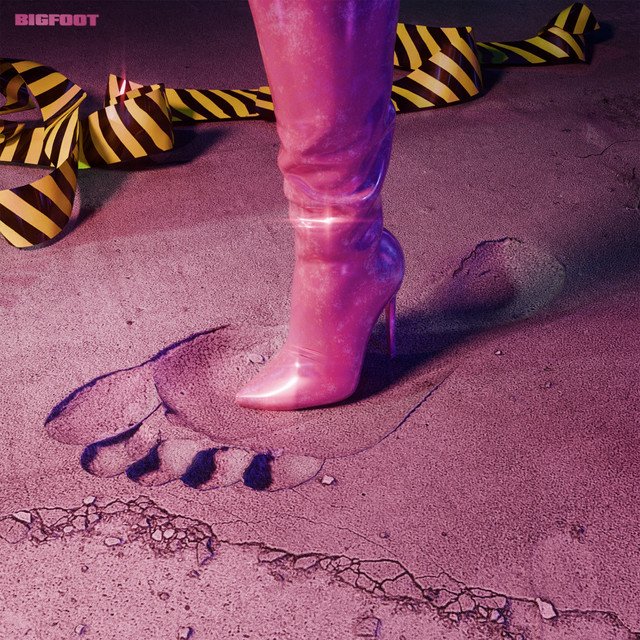
Nicki Minaj’s “Big Foot” is not designed as a decisive diss track but as an opening move in an ongoing rap feud with Megan Thee Stallion. Rather than aiming for an immediate knockout, the song functions as a “war notice,” directly naming Megan, introducing layered accusations, and setting up a potential follow-up. Its effectiveness depends less on chart performance and more on whether it provokes a response and escalates the exchange.
This is not a finishing blow. It was never structured to be. Go back through major rap battles and the opening salvo is almost never the one anyone remembers. Charged Up existed to confirm Drake was actually stepping into the ring. “Takeover” was Jay-Z’s opening shot before Nas settled it with “Ether.” Big Foot is that kind of record, the first name drop in an exchange where Megan’s “Hiss” never once said “Nicki.” That asymmetry matters more than critics have given it credit for.
The production confusion shaped the backlash more than the record itself. The beat Nicki previewed on Instagram Live was not the beat that landed on streaming platforms. She had been sitting on an instrumental from LilJuMadeDaBeat for six years, a producer with close ties to Megan’s camp.
When she announced the song, she claimed clearance was being blocked at Megan’s behest. Lil Ju did not clear it. The released version, produced by Tate Kobang and ZellTooTrill, was a last-minute substitution. By the time the official version dropped, some listeners were reacting to a song that no longer existed.
What actually landed is messier, sharper, and more deliberate than either side has given it credit for. The intro lands hardest.
“How you f*ck your mother man when she die? How you go on Gayle King and can’t cry?” is not a throwaway.
The first line is an allegation that Megan slept with her own late mother’s partner, a separate and more pointed charge than anything that follows. The Kelsey Harris accusation, that Megan slept with her best friend’s man, comes later in the verse as its own distinct bar: “F*ckin’ your best friend man is crazy, you the type, though.”
The second line takes the CBS interview with Gayle King, where Megan’s composure drew widespread attention following the Tory Lanez shooting, and reframes that composure as dishonesty. Using video evidence to build a character case is a legitimate battle rap tactic, and Nicki executes it cleanly here.
The Megan’s Law flip in the verse does what it is supposed to do.
“This lil’ beggin’ whore talkin’ ’bout Megan’s Law / for a free beat, you could hit Megan raw” names the target directly. Megan’s “Hiss” never named Nicki. Big Foot opens by saying the name out loud. Whether you find the bar clever or crude, it is the first shot in this exchange that draws actual blood rather than dancing around it.
The ghostwriter line is the most technically rewarding on the record and the easiest to miss.
“If you a ghostwriter, party in Megan jaw”
uses Pardison Fontaine’s nickname Pardi as the punchline, alleging both that he wrote her material and that the arrangement was transactional. The bar only works if you know the background, which is the point. It is constructed for a specific listener.
The P-E-T-T-Y bar gets dismissed as a basic self-description, which means most people heard it wrong.
“P-R-T-T-Y, but I’m P-E-T-T-Y”
is not Nicki calling herself petty as a personality trait. Her legal surname is Petty. She is Mrs. Petty. The bar is built on the literal fact of her name, spelling it out phonetically in the same style as “Super Bass”-era Nicki, where phonetic wordplay was a signature device. Megan is performatively petty. Nicki holds the legal documentation.
The kitchen section in the middle of the verse,
“tryna steal the sauce, I said get up out my cookbook / but really I’m a sweetie pie”
is not just a structural flourish. Food and cooking metaphors run through Nicki’s catalogue as shorthand for originality and influence. When she uses cookbook here, the subtext is specific: that Megan built her lane by following a blueprint Nicki laid down, and is now being told to step back from a recipe she did not write. It ties the personal beef to a longer argument about creative lineage that Nicki has been making publicly for years.
Where the record genuinely loses ground has nothing to do with intent and everything to do with execution. The “dark like chocolate” line falters because the flow stutters on the syllable count going into it, and the threat it is meant to escalate never arrives with any force. “The porn star” bar,
“fuckin’ with Nicki this year, ho, I’m comin’ like a pornstar,” announces its punchline too early and relies on the image doing work the wordplay does not. The Lupe Fiasco section is a groan-level pun, “what a fiasco, Lupe / Future made you pay,” where the name-drop is the entire joke and the joke is not good enough to justify the slot it occupies. These are real weaknesses in a verse that earns several of its best moments through layered construction.
The outro is where opinions break cleanly. Nicki cuts the beat entirely and shifts into a spoken warning.
“I went easy on you. I don’t think you want the next installment.”
Removing the music is a deliberate choice: it strips away the performance frame and makes the target sit with words addressed directly to them rather than to an audience. It is an uncomfortable listen, which is the point. The issue is strategic, not aesthetic. If Megan does not respond, the “I went easy on you” threat evaporates. You cannot claim control of a battle that never happens.
The repeated “lyin’ on your dead mama” section draws the heaviest criticism, and a lot of that criticism conflates two different arguments. Nicki is not mocking Megan for the loss of her mother. The specific charge is that Megan invoked her mother’s name to defend claims that her court testimony later contradicted, particularly around her account of the Tory Lanez incident. That is a different and more targeted accusation. Whether it registers as such to a casual listener is another question, and the production decision to loop the line over and over does undercut the precision of the argument by making it feel like pure antagonism rather than prosecutorial.
Commercially, “Hiss” debuted at number one on the Billboard Hot 100. Big Foot came in at number 23. On chart terms, the first round went to Megan. But Big Foot’s function was always to force a response, not to top a chart. The real verdict on this record will not come from its debut position or its critical reception. It will come from whether Megan responds, and whether the receipts Nicki is holding actually land when she opens the clip. “Big Foot” is a war notice. If it feels incomplete, that’s because it is. The record only makes full sense if someone answers it.
You might also like:
- Doja Cat’s Agora Hills Lyrics: A Deep Dive Into the Meaning Behind the Song
- Doomsday Pt. 2 Lyrical Lemonade & Eminem Lyrics: A Deep-Dive Analysis
- FACTS Tom MacDonald, Featuring Ben Shapiro Lyrics: An In-Depth Analysis
- The Meaning Behind J Cole’s No Role Modelz Lyrics: From Uncle Phil to George W. Bush
- Drake and 21 Savage Rich Flex Lyrics: Meaning, Production, Release Date and References