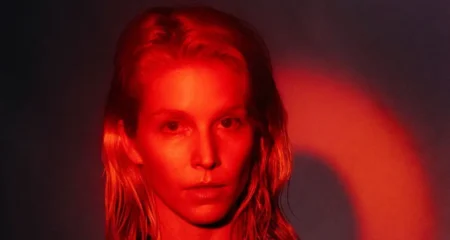


Two years after standing in white clothes holding a map to hope, Nathan Feuerstein returned in November 2025 with a mansion on fire.
The FEAR EP dropped on the 14th with six tracks, zero apologies, and a statement that rattled anyone who thought healing follows a straight line.
This wasn’t the triumphant sequel fans expected after HOPE topped the charts. This was regression, relapse, and a reminder that mental health doesn’t care about your album cycle.
The burning mansion on the cover tells you everything before you press play. That architectural metaphor for his mind, first introduced on his 2015 debut Mansion, now sits engulfed in flames.
The burlap sack from HOPE reappears, but this time it’s suffocating rather than symbolic of transformation.
After 455 days of Instagram silence, NF broke through with teasers that racked up over 22 million views in two weeks. The anticipation wasn’t just for new music but for answers about where his story goes when hope isn’t enough.
View this post on Instagram
HOPE arrived in April 2023 dressed in light and optimism, debuting at number one on multiple Billboard charts. Nate found the map he’d been searching for since The Search.
He stood on mountaintops, faced his darkness, wore white, and suggested maybe progress was possible.
That album sold 80,500 physical copies in week one and sent him on a sold-out global arena tour. Critics praised it as his most personal document yet. The title track and “HAPPY” went gold. Everything pointed upwards.
FEAR dismantles that narrative within the first thirty seconds. The opening line borrows from Simon & Garfunkel: “Hello darkness, my old friend.” Not a new enemy. Not an unexpected visitor. An old friend knocking again, and this time Nate’s too exhausted to keep the door locked.
The EP doesn’t negate HOPE but acknowledges its limitations. You can find the map and still get lost. You can wear white and still burn. You can promise yourself you won’t let fear back in, and then you do.
The sonic shift matches the thematic one. Where HOPE leant into brighter production and moments of actual levity, FEAR returns to the claustrophobic atmospheres and piano-driven melancholy that defined Perception and Therapy Session.
Jeff Sojka co-produced alongside NF, crafting soundscapes that feel like rooms with the walls closing in. Sparse acoustic guitars bleed into orchestral swells that never quite resolve.
Gospel choirs haunt the background of “WASHED UP.” Pitched-up vocal samples create ghostly echoes on “WHO I WAS.”
Most strikingly, two tracks contain zero rapping. “Home” and “SORRY” rely entirely on melody, with NF trading bars for sustained notes and James Arthur adding his raspy vulnerability to the latter. This isn’t an artist expanding his range for commercial appeal.
This is someone too tired for wordplay, letting melody carry what language can’t. The production choices serve the emotional brutality. Nothing here is designed for radio. Nothing here wants to comfort you.
The title track opens with devastating honesty. NF admits his OCD has worsened, his hands are bleeding, he’s questioning whether he might be schizophrenic.
The line “Made a promise to myself I wouldn’t let the fear back in, but then I did though” captures the crushing disappointment of relapse.
Mental health recovery isn’t linear, and “FEAR” refuses to pretend otherwise. He’s not just struggling. He’s lost the keys, lost his hope, lost his will, lost his joy, lost a friend, lost his home, lost his faith, lost his voice.
The religious imagery cuts particularly deep. “Is this what You wanted?” repeats like a prayer turned accusation.
He questions whether God gave him a false sense of peace just to show him what real peace looks like.
Whether the mansion burning is divine punishment or self-inflicted chaos. The music video places him in a church where darkness literally wraps around him like serpentine restraints.
His shadow wears the burlap sack before he does, suggesting fear caught up before he even realised it was chasing him.
The video ends with his dark-clothed self stealing the keys from his white-clothed body, unconscious on the floor.
Watch the official “FEAR” music video:
“Home” strips everything away except grief. Positioned second on the tracklist, it serves as the EP’s emotional core.
NF received a text about someone dying and hasn’t recovered. He describes calling their phone, leaving voicemails, sending messages, acting like they’re still here as a survival mechanism.
The production opens with fragile acoustic guitar before strings swell into something almost anthemic, mirroring how grief comes in waves. One moment you’re stable.
The next you’re drowning in memories of running through yards along M-61, playing cards until midnight, living in a house that meant safety.
This isn’t abstract mourning. These are specific, lived experiences that now exist only in retrospect. The song’s refusal to name the deceased makes it universal. Grandmother, mentioned briefly in “FEAR.” Friend, brother, anyone who left a home-shaped hole.
The track showcases NF fully embracing melody over aggression, a gamble that pays off because vulnerability doesn’t always need rapid-fire delivery. Sometimes the hardest truths sit right there in a simple chorus.
“WHO I WAS” teams NF with Machine Gun Kelly for the project’s most collaborative moment. The stripped-back acoustic production lets both artists excavate generational trauma without competing.
Kelly opens with his father’s ashes accidentally dropped in a rental car, an uncomfortably visceral image of grief and carelessness.
NF follows by looking at his own children and seeing patterns he’s terrified of replicating. “Hope they don’t wind up like Dad, stuck in this loop like I am” functions as confession and warning.
The track explores how trauma perpetuates across generations. Both artists admit to anger issues, overreaction, professing love then treating people poorly.
“Wasn’t taught that in my house” becomes a refrain acknowledging damage received and potentially passed down.
The pitched-up vocal samples create ghostly presence, representing past selves watching from shadows.
Everything both artists cared about and loved reduced to ash and dust, former identities burnt away through painful transformation.
The collaboration works because neither tries to outperform the other, creating complementary perspectives on similar pain.
“GIVE ME A REASON” reverses the expected narrative. Instead of seeking motivation or inspiration, NF begs to be hated again.
He needs somebody to grab the blade in his back and twist it. Success has dulled his drive, comfort has numbed his hunger, and he’s forgotten what struggle feels like.
The track returns to aggressive production and rapid-fire flows, NF at his most combative demanding external conflict to reignite internal fire.
The paradox cuts deep: admiration and accolades can be as dangerous as criticism when you built your identity on being the underdog.
“I forgot what that struggle like, I forgot what that hustle like, I forgot what that humble like” repeats like a mantra.
He wants authentic confrontation, people talking behind his back when no one’s recording, honest feedback about why his music isn’t better than theirs. The desperation for opposition reveals how success can feel like quicksand for artists who found their voice fighting against something.
“SORRY” with James Arthur shifts into pop territory with polished production and radio-ready melodies.
On surface level it’s a breakup ballad, waiting by phones and burning bridges. But within FEAR’s context, the double meaning emerges. This isn’t necessarily about a romantic partner.
It’s about apologising to former versions of yourself, acknowledging the person you used to be before survival mode and success changed everything.
Arthur’s vocal runs blend with NF’s singing in the final chorus, both artists confessing to bending truth, breaking trust, crossing lines.
The glossy production might alienate fans wanting relentless introspection, but vulnerability exists in different forms.
Sometimes the hardest admission isn’t buried in complex wordplay. Sometimes it’s sitting right there in a simple “I’m sorry” when you’ve spent years running from that accountability. The track functions as acknowledgement before the final blow.
“WASHED UP” closes the EP with the most devastating questions NF has asked publicly. “Am I on the brink of somethin’ great or have I lost it? Am I on the verge of makin’ waves or am I washed up?”
He searches for the kid he used to be before numbers mattered, before label cheques arrived, before commercial success potentially compromised artistic integrity.
Gospel choir samples create church atmosphere fitting for this confessional about artistic mortality.
The metaphor carries particular weight in hip-hop culture where relevance evaporates overnight. NF admits lying through his teeth if he said he doesn’t think his moment passed.
He questions whether the fire’s gone, whether he should say goodbye, whether his prime already happened or he’s still climbing.
The admission “I’d be lying through my teeth if I said I don’t think my moment passed” represents something rare: an established artist publicly voicing insecurity when the genre typically demands confidence.
The music video shows NF in black clothes holding a shovel, the same implement Fear used to trick him previously.
He unearths the map to Hope from his previous album, but it appears empty, drained of purpose. The mansion burns. Fear holds the keys. Hope’s map is useless.
After the brief respite of HOPE, NF ends FEAR at rock bottom without manufactured resolution. The willingness to sit in that discomfort, to document artistic crisis without forcing answers, represents courage.
Watch the official “WASHED UP” music video:
Fans across Reddit, YouTube, and TikTok responded with overwhelming emotion and recognition. Comment sections filled with people sharing their own relapse stories, their experiences with OCD, their grief over lost loved ones.
One TikTok user wrote: “Especially these lyrics got me actually crying when I heard them for the first time cuz my grandma actually died 2 months ago and I lost a friend who’s actually my brother, 6 months ago. These lyrics hit so deep and hurt so bad yet it’s like therapy tho.”
Another described the EP as “the most heartbreaking, realistic, understandable EP I’ve ever heard.” YouTube reaction videos showed people visibly shaken, pausing mid-track to collect themselves.
The consensus wasn’t about whether FEAR is good or commercially viable. The consensus was recognition. This is what mental health actually looks like. This is what relapse feels like. This is what happens when the map doesn’t work anymore.
Reddit threads dissected every frame of the music videos, connecting FEAR back through NF’s entire discography.
The mansion, the balloons from The Search, the cage from Perception, the keys that unlock and lock different parts of his mind.
Fans recognised this isn’t a standalone project but another chapter in a decade-long conversation NF’s having with himself and anyone listening who sees their battles reflected in his.
Some criticism emerged, mostly from those wanting the aggressive wordplay of earlier work. But that resistance missed how FEAR operates.
This isn’t about technical prowess or lyrical complexity. This is about honesty when honesty means admitting you’re back where you thought you’d escaped.
The overarching storyline tracks through symbolic architecture. The mansion introduced in 2015 represented his mind, each room holding trauma, grief, fear, anger.
The Search in 2019 showed him trapped in a cage, dragging black balloons representing intrusive thoughts. CLOUDS in 2021 explored that headspace further. HOPE in 2023 presented a map, white clothes, the possibility of escape.
FEAR burns it all down. The mansion that once provided structure now becomes a prison that must be destroyed.
The white clothes he wore representing optimism get stripped away as his dark self reclaims control. The map leads nowhere. The keys belong to Fear again. This isn’t pessimism. This is the reality that recovery is cyclical, that darkness doesn’t disappear because you found light once.
What connects every track is the admission that promises break. You promise yourself you won’t let fear back in. You promise you’ll keep fighting. You promise the worst is behind you.
And then life proves promises mean nothing against brain chemistry, grief, exhaustion, the weight of maintaining success whilst battling demons that don’t care about your Billboard position.
The cultural relevance of NF’s vulnerability in 2025 cannot be overstated. We live in an era of curated mental health narratives on social media, inspiration porn disguised as honest discourse, influencers selling wellness as a product.
NF presents the opposite: no resolution, no redemption arc, no five-step programme to feeling better.
Just the uncomfortable truth that healing isn’t linear and sometimes you end up back in the burning mansion holding the gas can.
This honesty matters because mental health representation in music too often swings between glorification and neat resolution.
NF presents a third option: showing ongoing struggle without judgement or false hope. After seemingly finding light in HOPE, his willingness to revisit darkness gives permission to others experiencing similar cycles to acknowledge their reality without shame.
The EP earned 76,000 equivalent album units in its first week, 48,000 in pure sales. It debuted at number four on the Billboard 200 whilst leading the Top Album Sales chart and becoming the biggest rap album debut of 2025.
Five tracks entered the Billboard Hot 100. Critical reception ranged from calling it “a deeply vulnerable body of work that peels back more layers than we’ve ever seen from him” to complaints about lacking complexity.
The polarisation makes sense. FEAR isn’t designed to please everyone. It’s designed to be honest.
What FEAR hints about NF’s next chapter remains deliberately ambiguous. The EP ends with unanswered questions, the mansion in ashes, Fear holding the keys.
There’s no teaser for redemption, no promise of hope returning, no suggestion that light wins. Just the acknowledgment that the story continues, messy and unresolved and real.
Perhaps that’s the point. NF’s never sold easy answers. He’s built a career on refusing to pretend pain has expiration dates or that success fixes internal struggles.
FEAR solidifies that commitment. Two years after finding hope, he’s back in familiar darkness not because he failed but because darkness doesn’t operate on album cycles.
In 2025, when everyone’s performing recovery for engagement metrics and packaging trauma for content, NF’s FEAR stands as a refusal. A refusal to lie about feeling better. A refusal to manufacture resolution. A refusal to pretend the mansion isn’t burning.
That refusal hits harder than any triumphant comeback could. Because for millions of listeners battling their own fears, their own relapses, their own burning mansions, seeing someone with platinum plaques and sold-out arenas admit he’s still struggling, still questioning, still afraid creates something more valuable than inspiration.
It creates recognition. And sometimes recognition is the only honest gift you can offer.
For more on NF’s journey, explore our analysis of his previous work and what makes his approach to mental health in music so resonant with fans worldwide.
If you enjoyed this analysis, check out our [complete guide to NF’s discography]