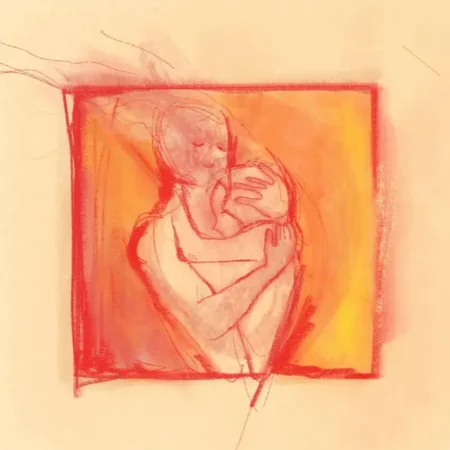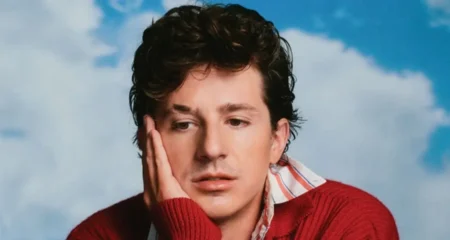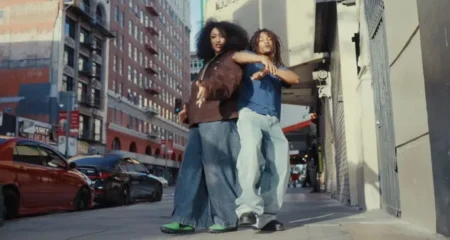


Charlotte rapper MAVI returns with The Pilot, a 24-minute mixtape released on November 17, 2025, that functions as both a victory lap and a compass pointing towards new artistic territory.
The release date was no coincidence. It marked exactly one year of sobriety for the 26-year-old MC, who celebrated the milestone with a Los Angeles release party attended by peers including MIKE, Saba, and Redveil.
Created during his first sober year whilst opening tours for Earl Sweatshirt and Freddie Gibbs with The Alchemist, the project marks a clear departure from the grief-stricken introspection of 2024’s Shadowbox.
Where that album wallowed in loss and addiction, The Pilot moves with newfound clarity, even when turbulence threatens to pull it back down.
In interviews, MAVI describes the transformation plainly: therapy sessions, piano lessons, gaining ten pounds of muscle, and moving into an apartment overlooking Charlotte’s Spectrum Arena. The work shows.
The opening track, “Heavy Hand,” signals the shift immediately. MAVI spits with an aggression rarely heard in his catalogue, his voice cutting through the production with razor-sharp precision.
“I’m the best-dressed nigga on my therapist couch,” he announces, setting the tone for a project that flexes while acknowledging the work required to maintain balance.
The line captures the mixtape’s central tension. Success tastes sweeter when you’ve fought demons to earn it.
That philosophy extends beyond the bars. During his Lyrical Lemonade Lunch Break Freestyle, MAVI deliberately got his nails and hair done, making a statement.
“I think the whole self-destructive rapper thing is A, pathetic and B, dangerous for the kids,” he told Rolling Stone. “I want to take care of myself and love myself in public. That’s a powerful image for Black men, especially.”
It’s this intentionality that separates The Pilot from performative sobriety narratives. MAVI isn’t just clean. He’s constructing a new archetype.
Across these ten tracks, MAVI moves with the confidence of someone who has survived his darkest moments and emerged with something to prove.
His flows no longer coil inward but stream outward, delivered at tempos that would have overwhelmed his earlier work.
The cryptic Earl Sweatshirt-influenced abstraction of Let the Sun Talk feels distant. MAVI raps now like he wants to be heard, not decoded.
Production Shifts Gears
The sonic palette mirrors that evolution. Producers Angelo LeRoi, Nephew Hesh, and a tight circle of collaborators craft beats that glimmer with jazz-inflected instrumentation.
Flutes trill over snapping drums on “Denise Murrell,” while soul samples are chopped and looped into hypnotic patterns on “Landgrab” and “Mender.”
The production rarely sits still, shifting between live instrumentation and contemporary trap frameworks without losing cohesion.
“Triple Nickel,” featuring MIKE, exemplifies this balance. Horns and keys carve out pockets for both rappers to slip through with double-time flows, their voices bouncing off each other in a conversation about success, paranoia, and expectation.
MIKE’s verse, delivered in his signature mumbled meditation, provides the perfect counterpoint to MAVI’s increasingly assertive delivery.
When MIKE raps about secrets “too deep for rhyming with,” you feel the shared understanding between artists who’ve used opacity as both shield and sword.
Standout Moments
“Silent Film” showcases MAVI at his most versatile. The track, which he’s revealed originates from a separate dance project, is the mixtape’s oldest composition.
Over a shuffling breakbeat and mellow chords, he weaves between singing and rapping, stretching syllables and experimenting with melodic phrasing.
“Made a million off of my grief, none of my people rose from the dead,” he admits, acknowledging that financial success doesn’t resurrect loss.
The track moves with breathless energy, yet its melancholy never lifts completely. It hints at a willingness to push beyond underground rap’s self-imposed boundaries.
The Earl Sweatshirt collaboration “Landgrab” arrives like a riddle wrapped in rebellion. At just ninety seconds, the pair trade bars over a hazy loop, referencing John Henry, Rick Owens, and basketball bust Michael Olowokandi in the same breath.
It’s playful and serious at once, the kind of exchange that only works when both MCs operate on the same frequency.
MAVI has known Earl since he was eighteen, staying at his place before being woken in the middle of the night to start rapping.
Now opening dates on Earl’s 3L World Tour, their relationship feels less like a feature and more like a quiet passing of the torch.
“31 Days” forms the mixtape’s emotional core. MAVI confirmed the song was written literally on his thirty-first day of sobriety, capturing the truth of that moment without revision.
“The stuff I say about my life on The Pilot is absolutely true and current on that day that I said ’em,” he explained.
Reflecting on supporting his family while touring relentlessly, he delivers the line “Don’t ask me how I feel, got another mouth to feel” with blunt resolve.
The piano motif that bookends several tracks lands here with particular weight, offering brief stillness in a project that otherwise refuses to slow down.
The sobriety journey began unexpectedly in Dublin, followed by a final, viscerally unpleasant night of drinking at Amsterdam’s Banana Bar.
Performing Shadowbox material on tour, MAVI recalls thinking, “I don’t want this to be my life, this shit I’m talking about in this song.” That breaking point echoes quietly throughout the tape.
The Features Elevate
MAVI’s first-ever collaborations on his own projects weren’t accidents but strategic decisions. He describes features as “bumpers” in bowling, creative constraints that force sharper writing rather than comfort.
Kenny Mason’s appearance on “Typewriter” benefits most from that philosophy. Built around an ornate multi-part horn and string loop by producer lilchick, the track gives both rappers room to flex technically.
Mason’s verse about being “bred in the violence of poverty” resonates with the mixtape’s hardscrabble ethos, while the back-and-forth reflects hip-hop’s persistent class contradictions.
Then there’s “Potluck” with Smino, the tape’s most accessible moment. Smino’s playful energy lightens the mood without sacrificing substance, and when MAVI jokes about going from “Metro link” to “linking with Metro Boomin’,” the line lands clean.
It’s the project’s most streamed track for a reason, offering a glimpse of what MAVI could sound like if he leaned further into mainstream reach.
You might also like:
- Jon Bellion’s Father Figure Album: A Mature Return to Form
- NF Complete Guide: Every Album, EP & Song Ranked
- Jean Dawson’s Prize Fighter: When Fighting Fair Doesn’t Matter
- Livestream Culture: How Hip-Hop Conquered Twitch & Kick
- J. Cole’s cLOUDs Lyrics Meaning and Review
Themes of Transformation
What makes The Pilot compelling isn’t just the sonic shift but how MAVI holds contradiction. He’s sober but still haunted. Successful but suspicious. Confident while standing “three degrees from priesthood or the precinct.” The mixtape doesn’t resolve these tensions. They’re the cost of staying airborne.
The transformation coincided with turning twenty-six, when the prefrontal cortex completes development. MAVI jokes about whether the changes stem from sobriety or “the twenty-six-year-old prefrontal cortex galaxy brain thing,” but the result is undeniable. Writing is clearer, easier, and faster.
His approach has shifted from abstraction to concreteness. Different, not better or worse, but sharper.
That clarity hasn’t erased imagination. MAVI speaks openly about embracing fantasy in rap, citing Ka and MF DOOM as artists who stretch reality without abandoning truth.
Writing songs about experiences he hasn’t lived, he says, strengthens the language he brings back to himself.
On “Mender,” he admits he’s reached his dreams without sleeping, feels consumed by leeches, and craves revenge while acknowledging God. These aren’t tidy confessions. They’re dispatches from someone learning to live with growth’s messiness.
The album art reinforces the theme. Inspired by Japanese fashion editorials and Issey Miyake’s Pleats Please, the cover places MAVI mid-leap in a fitted wingsuit against a muted sky. He’s not grounded, but not flying either, visually echoing the mixtape’s in-between state.
Context Matters
The Pilot arrives at a moment when conscious and abstract hip-hop occupy an uneasy space in the culture. Artists like MAVI, MIKE, Navy Blue, and Pink Siifu have built devoted audiences without compromising vision. This mixtape doesn’t abandon that ethos, but it does suggest a widening aperture.
The 24-minute runtime works in its favour. There’s no filler, no padding for playlists. MAVI says what he needs to say and exits. In an era of bloated albums, the restraint feels intentional.
Minor Criticisms
If the project has a weakness, it’s that its newfound clarity occasionally edges toward safety. The polish that allows MAVI’s voice to cut so cleanly also dulls some of the danger that made his earlier work feel volatile.
Where Let the Sun Talk sounded like a private unraveling, The Pilot sometimes feels staged for witnesses. Sobriety has steadied the plane, but turbulence once gave his music its most unforgettable lift.
There are moments, too, where flexing outweighs emotional depth. Tracks like “G-ANNIS FREESTYLE” showcase technical skill without matching the resonance of “31 Days” or “Mender.” The balance tilts slightly toward confidence at the expense of vulnerability.
Looking Forward
As a prelude to First in Flight, which MAVI says is 85 percent complete, The Pilot succeeds on its own terms. The forthcoming album draws its title from North Carolina license plates, referencing the Wright Brothers’ first flight at Kitty Hawk while reaching into Afrofuturism and rearward-facing futurism.
MAVI has spoken about researching the Tuskegee Airmen and imagining flight as liberation rather than conquest.
Beyond music, he’s launching a foundation focused on arts education and tech grants for underprivileged Black kids in Charlotte, distributing fully loaded laptops and pushing back against a city that overfunds finance while neglecting humanities. “Art is a human behavior,” he says. The work extends his vision beyond consumption toward community.
The Pilot establishes MAVI as an artist in transition, confident enough to experiment while preserving the introspection that made him vital. The features elevate without overshadowing. The production sharpens rather than distracts. The runtime leaves you wanting more.
The best tracks here, “31 Days,” “Landgrab,” and “Triple Nickel,” rank among MAVI’s strongest work. They prove evolution doesn’t require erasure. As he prepares for his next full-length, The Pilot suggests sobriety hasn’t dulled his pen. It’s refined it.
Standout Tracks: “31 Days,” “Landgrab,” “Triple Nickel,” “Heavy Hand,” “Potluck”