

Most comfort songs lie to you. They promise things will be okay, that love returns, that morning comes with answers. “Rises the Moon” doesn’t do any of that. Liana Flores promises you the moon will rise, and that’s it. No resolution attached. The moon doesn’t know what’s wrong with you. It rises anyway. Somehow, for several hundred million people, that’s enough.
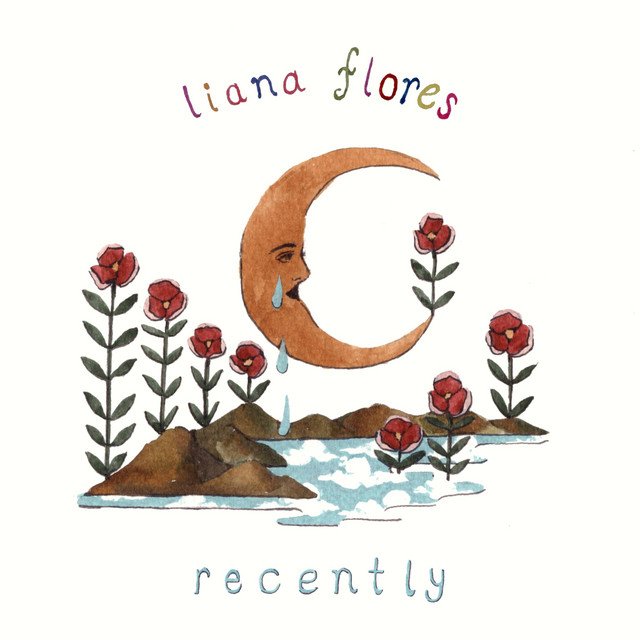
Released on 9 April 2019 as the opening track of her second EP Recently, the song was written and self-produced by Flores when she was still a teenager in South Norfolk.
It sat on streaming platforms for two years, then went viral on TikTok while Flores was finishing a zoology degree at the University of St Andrews.
She graduated with first-class honours and had no particular plans beyond research work. The song had already made other arrangements.
By April 2024 it had surpassed 400 million Spotify streams, landing on playlists like aesthetic, end credits, and Levitate. Flores signed to Verve Records and released her debut album Flower of the Soul shortly after. The song that started it all is still the one nobody has quite explained, because the thing it does isn’t easy to explain: it offers the bare minimum and makes you feel held by it.
Who Is Liana Flores?
The “British folk artist” label in most write-ups is only half the picture. Born on 2 June 1999 to a Brazilian mother and a British father, Flores grew up between two musical traditions. Her mother played Astrud Gilberto, João Gilberto, and Caetano Veloso around the house.
She absorbed bossa nova before she could name it. As a teenager she picked up guitar specifically to play those patterns, and fell into British folk around the same time.
Bossa nova and folk look like an unlikely pair until you hear what they share: both are carried by voice and guitar alone, both prize understatement, both treat restraint as a form of emotional precision.
Where they differ, Flores has said, is that folk is a people’s genre, grassroots and direct, while bossa nova was developed deliberately as a blend of American jazz and Brazilian music for a specific social setting.
“Rises the Moon” holds both: the fingerpicking pattern has the same self-contained circularity you hear in João Gilberto recordings, running alongside the vocal rather than beneath it, while the language is as plain and unadorned as any English folk song.
It doesn’t sound like a fusion. It sounds like something that could only have come from one person.
What the Song Actually Does
Notice that “Rises the Moon” is written entirely in the second person. The sun digs its heels to taunt you. Memories swim and haunt you. Close your weary eyes, tread the water child, know that you’ll be visited by sleep. Flores is not confessing. She is witnessing.
Standing slightly outside the experience, watching someone go through it, and the only thing she can offer with certainty is: the moon will rise.
This is not a song about her pain. It’s a song addressed directly to yours, which is a less common and more precise position for a songwriter to take.
That second-person address is why it worked on TikTok the way it did, attached to craft videos, late-night mood compilations, fan edits with no particular subject matter.
The song doesn’t require you to have a specific story. It requires only that you are currently in a difficult period without knowing when it ends. Which, at any given moment, describes most people.
The moon rising is also, in the most literal sense, zoology: the subject Flores was studying at St Andrews while this song quietly accumulated its hundreds of millions of plays.
She wrote one of the most widely streamed song about natural cycles while spending her days studying them. The moon doesn’t rise as comfort in this song. It rises as fact. And facts, Flores seems to argue, can hold you when everything else won’t.
The Harder Reading
Most analyses of this song stop at the first chorus, satisfied that bad days end and the moon is reliable. The second chorus is where it gets harder.
The first chorus promises autumn will come to “darken fading summer skies.” Uncomfortable, but manageable as seasonal logic: things change, including hard things. The second chorus is different. Autumn comes now “to steal away each dream you keep.”
Sit with that line. It isn’t saying your problems will pass. It’s saying that while you were in them, the clock was running on other things.
The dreams you held onto during the difficult stretch, the things you told yourself you’d get to on the other side, some of those are gone too.
And Flores tells you this inside a consolation song, gently, almost as a footnote. You came for comfort and she confirms it: surviving the hard period is not the same as coming through it intact. Some of what you were protecting didn’t make it. The moon marked that time passing the same way it marks everything else, without preference, without pause.
The Beautiful Song of the Week newsletter called it in 2023: the song is “major and minor all at once.” Real comfort doesn’t pretend the cost is zero. It just stays present while you pay it. The instruction is still breathe. But breathe here isn’t hope. It’s the minimum viable act.
Inside the Lyrics
Verse 1 opens with the sun not as warmth but as antagonist: something resistant, dug in, taunting. “Digs its heels” is a phrase from human obstinacy applied to astronomical fact, which is exactly the kind of distortion that happens when you’re inside a period that won’t move.
The second half shifts into memory, blurring into watercolour, swimming and haunting. Both halves describe time behaving wrongly: either refusing to pass or passing without leaving anything clear.
The refrain “rises the moon” follows each image as counterpoint rather than resolution. The moon doesn’t respond to the sun or the memories. It just comes.
The first chorus uses lullaby cadence deliberately. “Close your weary eyes” sounds like comfort until you register what follows: autumn is coming, and it’s coming for the summer skies, not for your problems. Flores puts consolation and inevitability in the same line and declines to separate them.
Verse 2 runs two images in direct opposition: a sinking ship pulling you down, a daffodil pulling you up. Both are violent. Then a third force: the people telling you what you owe, sitting alongside the drowning and the uprooting as if it belongs there, because it does. “Tread the water, child” is the response to all three. Not instruction toward safety. Instruction to stay above the surface while the conditions remain what they are.
The second chorus is where the song tells the truth it has been building toward. Autumn doesn’t just change the season now. It steals the dreams you were keeping. The cycle is neutral: it carries things away as well as bringing them. Flores knows this and says it plainly, and then says breathe again anyway.
The Sound
Solo acoustic guitar and voice, almost nothing else on the EP recording. The fingerpicking pattern is structural, not decorative; the song doesn’t exist without it. Flores’s vocal approach is closer to bossa nova than folk: narrow dynamic range, no projection, staying tight to the melody throughout. She never pushes for impact. She doesn’t need to. That restraint is itself an argument: here is someone who will not oversell you. Which, given what the lyrics are promising, matters.
The major-minor harmonic tension underneath mirrors the lyrical logic without announcing it. Nothing resolves into triumph. The sun and the moon remain in opposition, and the music holds that without forcing a conclusion.
After the Viral Moment
Flores was finishing her finals when her roommate told her the song was everywhere on TikTok. She didn’t have the app herself. When the noise didn’t stop, she realised she had a decision to make. She told whynow: “It was a turning point for me in terms of taking music more seriously. Up until that point, I was going to try and find work in zoology research.”
What’s interesting about that admission is the order of it. The song didn’t make her want to be a musician. It made her take music more seriously, which is a different thing, a more reluctant, provisional relationship with the career that had just arrived uninvited. She graduated with first-class honours and then followed the song’s lead rather than her own plan. That a track about accepting what you cannot control redirected its own writer’s life is either ironic or perfectly consistent, depending on how you read it.
The TikTok moment led to Verve Records, a sold-out debut tour, and Flower of the Soul in June 2024, produced with Noah Georgeson in Los Angeles, whose credits include Joanna Newsom and Bert Jansch. The album expands the bossa nova-folk hybrid with strings and Brazilian collaborators including Tim Bernardes. It is more fully realised and more ambitious. It is also, by most measures, less devastating than a teenager with a guitar in South Norfolk writing alone about what it feels like when time won’t move.
Why It Keeps Finding People
The YouTube comments under the official video run to thousands, and what they share is not a specific grief but a specific condition: being inside a hard period without a visible end date. Panic attacks. Graduation anxiety. 3am sleeplessness. The loss of someone. Each person comes to the song with a different story and finds it already waiting.
This is what the second-person address achieves over time. Flores didn’t write about herself. She wrote toward whoever needed it, and the song has been keeping that appointment ever since, on TikTok, on Spotify playlists designed for ambient emotional weight, in the headphones of someone who just needed something that wouldn’t flinch.
The last word in the song is breathe, and it appears six times across both choruses. Not a conclusion, not a consolation, not even advice. Just the minimum: keep your lungs working. The moon doesn’t rise for you specifically. It rises on schedule. Not that you matter to the universe. It keeps going regardless.
Breathe.
You might also like:
- Laufey Falling Behind Lyrics: A Timeless Anthem for the Yearning Heart
- Mitski I Bet on Losing Dogs Lyrics: Unpacking the Intricate Layers
- Lana Del Reys Captivating Rendition of Take Me Home, Country Roads
- Unlocking the Meaning: A Lyrical Analysis of Patrick Watson’s Je te laisserai des mots
- Running by Norah Jones: A Lyrical and Sonic Journey Through the Night