

Here is what the song is actually about: giving up. Not giving up on life. Giving up on the idea that you can control how it unfolds. Not in a defeated way. In a way that recognises you have run out of road and the only sensible thing left is to stop pushing.
“Let It Be” by The Beatles is the sound of a man who has tried everything else. Paul McCartney wrote it in the autumn of 1968, though the finished version would not appear until March 1970, by which point the band was already a corpse dressed up for one last photograph. The song arrived as a single two months before McCartney announced he was leaving, and four months after John Lennon had privately told the others he wanted a divorce.
The story everyone knows is the dream. McCartney, anxious about the band falling apart, saw his mother Mary in a dream one night. She had died of breast cancer in 1956, when he was fourteen. In the dream she said something comforting. “It’ll be all right,” or words to that effect. He woke up and wrote the song. That is the official version.
Here is the other one. Mal Evans, the Beatles’ roadie and general dogsbody, claimed in a 1975 television interview that the dream was about him. “Paul was meditating one day and I came to him in a vision,” Evans said. “I was just standing there saying ‘let it be, let it be.'” For years this was dismissed as Evans talking rubbish. Then the outtakes emerged. On the 2018 super-deluxe reissue of the White Album, there is a snippet of McCartney playing an early version of the song during the sessions for While My Guitar Gently Weeps. The lyric is not “Mother Mary.” It is “Brother Malcolm comes to me.”
So which is it? A dead mother or a living roadie? McCartney almost certainly did have the dream about his mother. He also almost certainly wrote the song around a phrase that came from somewhere else. The mind does not keep clean ledgers. Memory is a thief and a liar. The song is better for the confusion.
The basic track was laid down on 31 January 1969 at Apple Studios, during the chaotic sessions that would eventually become the Let It Be album and film. John Lennon sat on the floor, playing bass badly because he did not want to be there. Yoko Ono sat next to him, knitting. George Harrison played a guitar solo he would later disown and replace. Ringo Starr kept time and said very little. This was take twenty-seven, and it was the best of a bad bunch.
Then came the overdubs. On 30 April 1969, Harrison replaced his guitar solo with a more polished version. On 4 January 1970, with Lennon on holiday in Denmark having already quit the band, McCartney went back into the studio. He erased Lennon’s bass part and played his own. He added backing vocals with his wife Linda and George Harrison. He brought in eight brass and cello players to add a gospel sheen. By the time he was finished, Lennon is barely there. The song credited to Lennon-McCartney sounds like a solo statement.
Phil Spector then got his hands on it. He made it sound like a prayer being shouted over a parade. McCartney hated it. He spent the next thirty-three years trying to undo Spector’s work. But the single version, the one everyone actually knows, is Spector’s.
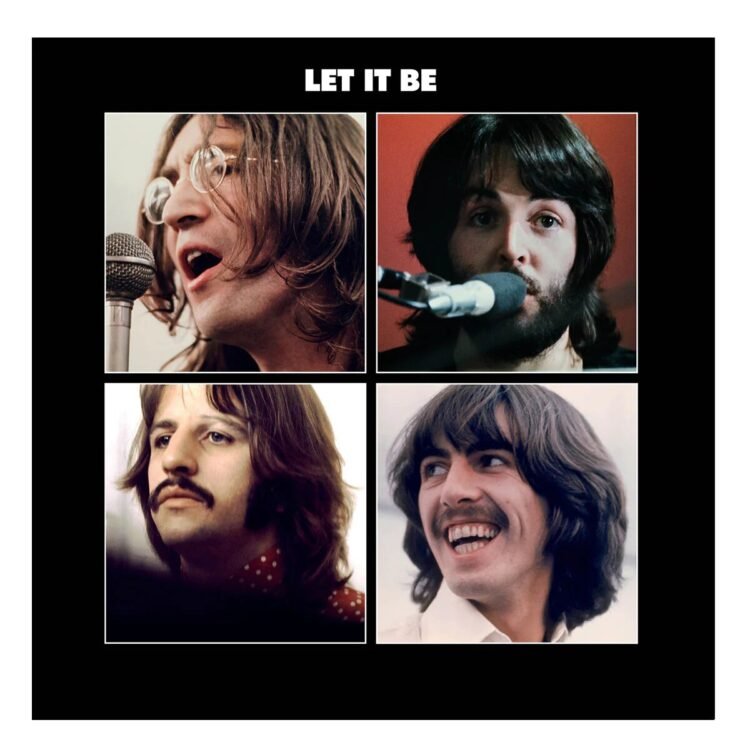
You wait for the song to go somewhere else. It never does. The chord progression moves from C to G to A minor to F, and then it does it again, and again, and again. No key change. No middle eight that takes you somewhere new. It just sits there, like a person who has said all they have to say and is now waiting for you to speak. The piano part is simple enough that a child could learn it in an afternoon. The bassline is McCartney at his most restrained. The drums are Ringo doing what Ringo did best: playing for the song, not for himself.
The lyrics are closer to affirmations than poetry. “When I find myself in times of trouble, Mother Mary comes to me.” “And when the night is cloudy, there is still a light that shines on me.” These are not clever lines. They are the kind of thing you would write in a journal at three in the morning when you cannot sleep and everything feels wrong.
Lennon hated it. He told Playboy in 1980 that “that’s Paul’s totally. It had nothing to do with the Beatles. It could have been Wings.” He thought McCartney was trying to write his own Bridge Over Troubled Water. But McCartney had written the song in 1968, a full year before Simon and Garfunkel released theirs. What Lennon was really saying was: this is not my kind of song. Too straightforward. Too hopeful. Too unguarded. It does not have the armour he put on his own work.
The single was released on 6 March 1970 in the UK and 11 March in the US. It reached number one in America and number two in Britain, kept off the top spot by Lee Marvin’s Wand’rin’ Star, a piece of information that still feels like a practical joke. The B-side was You Know My Name (Look Up the Number), a seven-year-old comedy sketch that the band had been tinkering with since 1967. A song about surrender paired with a song about nothing at all.
The video, newly restored and released in May 2024, is essentially the same footage fans have seen for fifty years. The Beatles playing the song in their basement studio at Savile Row. McCartney at the piano. Harrison with his rosewood Telecaster. Starr steady on the drums. Lennon on the floor, playing bass, looking like he would rather be anywhere else. The restoration is clean. The song remains unchanged.
Sometimes the answer is not an answer. It is a pause. McCartney did not write a solution to his problems. He wrote a description of the moment before the solution arrives. “There will be an answer.” Not there is an answer. Will be. Future tense. A promise of a resolution, made by someone who does not yet know what it will look like.
“Let It Be” is not the best Beatles song. But it is the one people play at funerals and weddings and moments when language fails. The song you put on when you have done everything you can and now you have to wait. A eulogy for control.
You might also like:
- Piano Man Lyrics: A Deep Dive into Billy Joel’s Signature Song
- Unveiling the Hidden Meanings: A Deep Dive into Leonard Cohen’s Hallelujah
- The Sound of Silence Meaning: Why Simon & Garfunkel’s Song Still Haunts Modern Life
- The Story Behind Until I Found You: How Stephen Sanchez and Em Beihold Created a Viral Country Pop Hit
- Megan Moroney: The Story Behind Tennessee Orange
- Jacksonport’s Kissing Me At Three: A Cosy Ode To Winter Romance