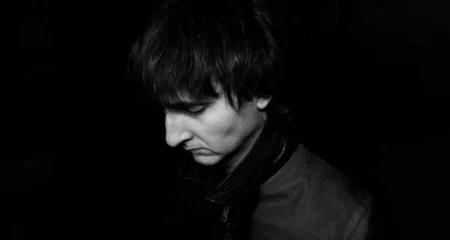

It’s January 2026, Jolene Allison-Burns is sitting across from us with the calm, slightly amused look of someone who still hasn’t fully processed what just happened to her career.
One minute, she was a Belfast songwriter cutting her teeth the way so many do—writing, performing, showing up again the next night, hoping someone in the room was paying attention—and the next, she’s stepping into a new kind of music economy where “going live” can function like touring, radio, and fan club all at once.
On Moxie Media Marketing’s artist page, her story is rooted in Belfast and shaped by community. She has written songs connected to her documentary work and the lived experiences surrounding her. Music that comes from somewhere.
And now, coming out of TikTok LIVE Fest season, she’s in that rare position artists spend years chasing: a year that actually looks like a turning point.
“It’s weird,” she says, laughing, then pausing like she’s trying to find the honest version without sounding too sentimental. “Because you work your whole life for momentum, right? And then momentum finally shows up, and it doesn’t knock politely. It just kicks the door in.”
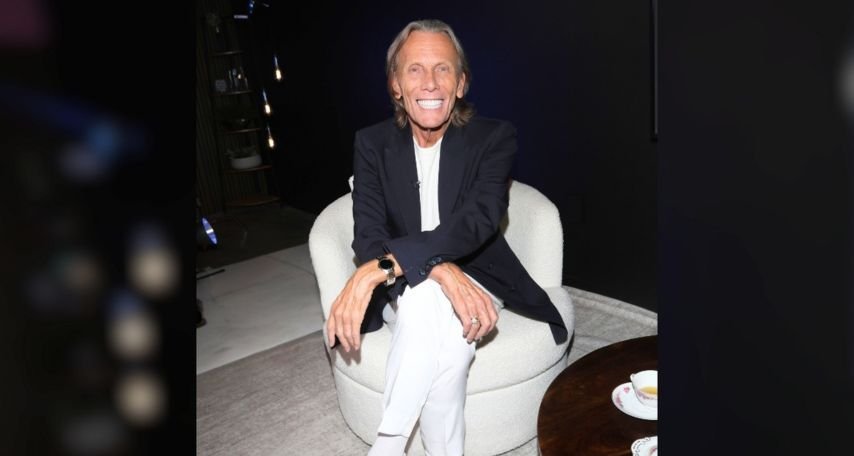
Jolene’s recent run has been tied closely to her partnership with Moxie Media Marketing, led by entrepreneur Kenneth W. Welch Jr., who sits nearby during our conversation.
He’s less in the posture of a traditional music executive and more like someone who has spent years watching talented artists miss opportunities because the math of the business rarely works in their favour.

“That’s the part people don’t really talk about,” Welch says, leaning back. “We love to romanticize ‘the grind.’ The hustle. But we don’t always admit that the game is uneven from the start.
There are artists who show up to these competitions, these platforms, with full teams behind them—managers taking percentages, budgets, infrastructure. Most independent talent just doesn’t have that. They’re showing up alone.”
Jolene nods. “And that’s not shade,” she adds quickly. “That’s just reality. It’s not a level playing field. Never has been.” She pauses. “But what I’m proud of is—I didn’t need to become someone else to compete. I didn’t need to fake a persona or wait for a label’s permission. I needed a plan. Consistency. And the right people around me.”
When we ask what “the right people” actually means—what support looks like in practice—she doesn’t answer like someone reciting a talking point. She answers like someone remembering late nights.
“Moxie showed up in the unglamorous parts,” she says. “The strategy calls. The scheduling. Figuring out how you pace a week so you don’t burn out by Thursday. How you build a show, not just a stream. They treated me like an artist with a future—not like a moment they were trying to capitalize on.”
It’s a distinction that keeps surfacing throughout the conversation: the difference between building something and just capturing a spike.
Jolene’s newest release, “Can’t Control Me,” fits that distinction. It’s an independent statement that feels personal but also unmistakably intentional in its timing—dropped through her official channels as part of the Moxie ecosystem rollout.
“I wrote that song from a place of finally claiming my own voice,” she says, tapping the table lightly on the word claiming. “And then it became bigger than just me. Because I think every independent artist has had that moment—where someone, an industry person, a gatekeeper, sometimes even a well-meaning friend—tries to tell you what you are. What you should sound like. What you should do to be ‘marketable.'” She makes air quotes around the word, half-smiling.
“And I just thought… no. You can’t control me. That’s it. That’s the song.”
Welch glances over with the kind of grin that suggests he’s heard this story before, probably in a studio or on a late-night call.
“That’s exactly why people connect with her,” he says. “You can’t manufacture that. It’s a real artist with something real to say. Audiences know the difference.”
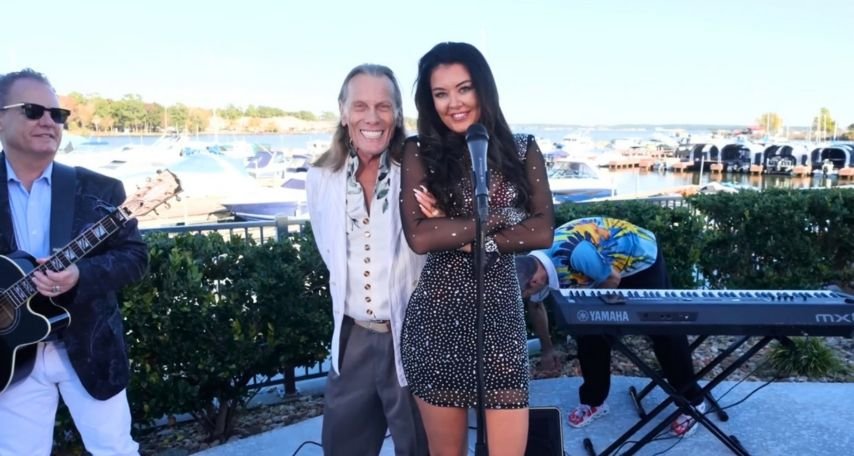
The conversation shifts to the broader thesis Moxie has been pushing publicly: that independent artists can build sustainable careers without waiting for the traditional machinery to notice them.
Welch has been positioning the Global Talent Billboard Directory as part of that mission—an online visual platform designed to spotlight independent talent and connect artists into a wider discovery and promotion ecosystem. A stage that doesn’t require permission.
Jolene doesn’t talk about it like a corporate product. She talks about it like a door she wishes had existed five years ago.
“People need places where independent talent isn’t treated like a hobby,” she says. “Where you’re not just another name in someone’s DM inbox, hoping they’ll respond. The Global Talent Billboard Directory is the kind of thing that says, ‘No—this is real. This is organized. This is professional.’ It gives you a place to actually be an artist, not just hope someone notices you are one.”
Then she lands on the line that feels like the center of the whole conversation. In an industry obsessed with leverage and gatekeeping, it sounds almost radical for how simple it is.
“I want artists to bet on themselves.”
She doesn’t mean it in the vague, motivational-poster way. She means the practical way—and she starts listing the unsexy truths nobody puts in the success montage.
Show up when no one’s watching. Keep writing even when the last song didn’t hit. Keep performing. Learn how your audience actually behaves, not how you wish they did. Protect your energy. Find a team that doesn’t treat you like a line item.
“Trust is a skill,” she says. “Trusting yourself when you’re not getting the outside validation yet—that’s a skill. And you don’t get it from affirmations. You build it by doing. By performing. By finishing songs even when you’re not sure about them. By putting the work somewhere people can actually find it.”
When we ask what she’d tell an artist who feels like they’ve already missed the wave—who thinks TikTok, livestreaming, the whole creator economy thing has already peaked and passed them by—Jolene doesn’t hesitate.
“I’d tell them to stop asking if it’s too late and start asking if they’re ready,” she says. “Seriously. Because the world doesn’t reward perfect. It rewards the person who keeps showing up—who shows up consistently enough that people actually get to fall in love with the journey. That’s what builds fans. Not one viral moment. The journey.”
Welch jumps in. “And the industry sees that now. The platforms, the brands—even the old gatekeepers, the ones who used to decide who got a shot—they’re following the crowd now, not leading it. Artists who can build real community have actual power. That’s new. That wasn’t true ten years ago.”
Jolene looks down at her hands for a moment, then back up.
“I’m grateful,” she says, more quietly now. “Not just for what happened this year, but for who showed up while it was happening. There’s so much incredible talent out there—some of them will never get the shot they deserve because the traditional system just can’t hold everyone.
It’s not built for everyone. So if Moxie can open doors for real independent artists—people who aren’t waiting around for permission—then that’s something I want to be part of. That matters to me.”
Before we wrap, she offers the kind of straightforward encouragement that sticks.
“If you’re an artist and you’re tired of waiting for someone to pick you—go build your own stage,” she says. “Go perform. Go live. Write the song that scares you a little. Look at what’s happening with the Global Talent Billboard Directory, because the whole point is giving artists a way forward that doesn’t require begging for access.”
She laughs, and the intensity breaks for a second.
“And when you do it, don’t do it trying to be someone else. The only thing you can’t fake in this industry is heart. People feel it. They know.”
She glances at Welch, then back at us.
“So give them something real.”