

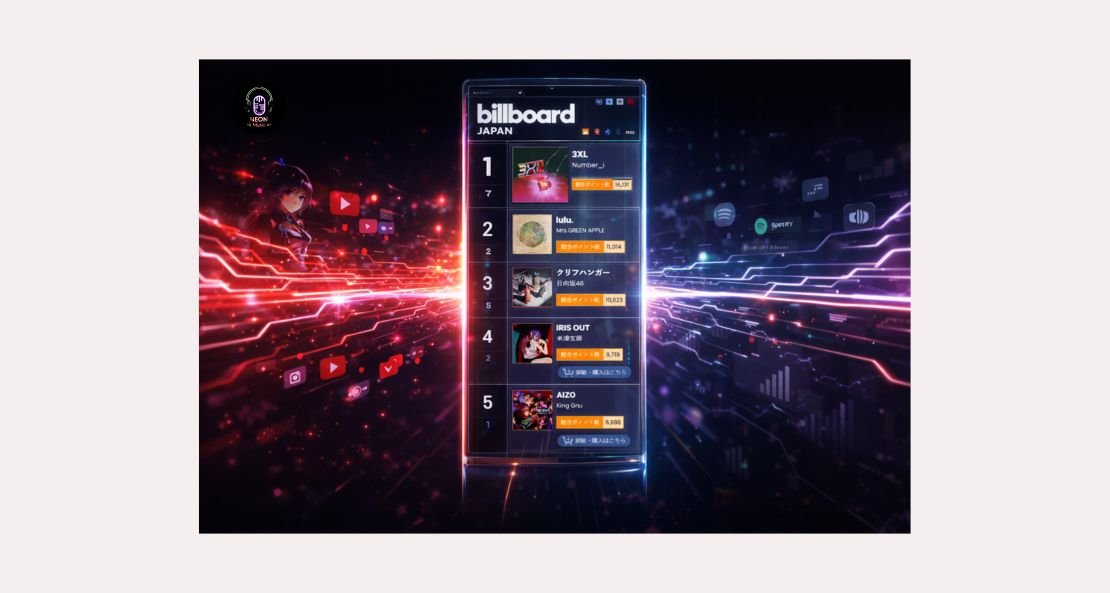
Billboard Japan just confirmed what the American music industry is too proud to admit: YouTube streams count because that’s where people actually hear music.
The confirmation came days after YouTube stopped submitting data to US Billboard charts over methodology disputes.
In January 2026, Lyor Cohen announced YouTube would withhold streaming data because Billboard’s formula weighted paid subscriptions higher than ad-supported streams.
The ratio change from 1:3 to 1:2.5 wasn’t enough. YouTube wanted equal weighting. Billboard refused. The divorce became final 16 January.
In Cohen’s own words: YouTube believes ‘every fan matters and every play should count equally’ and says Billboard’s formula undervalues ad-supported listening.
Billboard Japan didn’t blink. YouTube data stays. The chart combines physical and digital sales, audio streams, radio airplay, and video views (including YouTube and GYAO!), and has incorporated karaoke plays in its formula. No changes to methodology.
The Japanese system already treats YouTube as legitimate measurement of popularity rather than something requiring mathematical punishment.
This divergence isn’t about chart mechanics. It’s about what different markets accept as evidence that music matters to people.
What’s Actually Charting Shows Why YouTube Data Matters
The 4 February 2026 Billboard Japan Hot 100 reveals exactly why excluding YouTube would gut the chart’s relevance.
Number_i’s “3XL” debuted at number one, propelled by the kind of multi-platform engagement that defines Japanese music consumption.
The track dominated across physical sales, streaming, and crucially, video views.
Strip out YouTube data and the song’s chart position collapses despite representing what Japanese audiences are actually listening to.
Mrs. GREEN APPLE sits at number two with “lulu,” continuing their 2025 chart dominance that saw “Lilac” rule Japan’s mid-year charts.
The band’s success operates across every metric Billboard Japan tracks, but their visual content on YouTube drives discovery.
Their music videos rack up tens of millions of views within days of release. Remove that data and you’re measuring only part of their actual cultural impact.
HANA occupies seven positions in the top 100, including numbers seven, eight, nine, 13, 21, 29 and 37.
The girl group’s chart footprint demonstrates how modern J-pop acts build audiences: YouTube content fuels streaming, which drives physical sales, which generates karaoke plays.
Each metric reinforces the others. You can’t measure one without acknowledging how the others connect.
Hinatazaka46’s “Cliffhanger” jumped from number 40 to number three, the kind of movement that signals viral video content spreading beyond established fanbases.
Yonezu Kenshi’s “IRIS OUT” holds at number four after 20 weeks, sustained by continued YouTube engagement long after initial release excitement faded.
These aren’t artists gaming algorithms. They’re acts whose music connects across platforms, with YouTube serving as the primary discovery mechanism.
What the chart reveals: Japanese audiences don’t separate “streaming” from “watching.” They experience music through video content, audio streams, karaoke, and physical ownership simultaneously.
American charts can exclude YouTube because American consumption patterns skew audio-first. Japanese charts can’t because video-first consumption dominates the market.
Two Charts, Two Philosophies
The American position rests on revenue logic. Billboard weights paid streams higher because subscribers generate more money per play.
A person paying £10 monthly for Spotify counts more than someone watching music videos for free.
The Japanese position treats all engagement as meaningful. Someone watching a music video on YouTube demonstrates intentional listening behaviour.
They searched for the song, clicked play, stayed through the whole track. YouTube represents 58.6% of how Japanese people discover and consume music according to 2023 research. Excluding it would measure premium subscribers whilst ignoring most actual listeners.
American charts now effectively prioritise paid platform users, a demographic skewed towards people who can afford monthly subscriptions.
Japanese charts continue measuring everyone who engages with music, regardless of payment model.
Why Japan Needs YouTube Data More Than America Does
Japan’s music economy maintained parallel systems where fans buy three copies of the same CD for trading cards whilst primarily listening on YouTube.
Physical sales remained culturally significant through collectible culture and organised fandom structures even as digital consumption exploded.
YouTube became the bridge between these behaviours. Channels like The First Take, which launched in 2019, transformed into internet-era versions of Music Station.
Artists performing there regularly top Billboard Japan’s Hot 100 through primarily YouTube and streaming channels.
The platform doesn’t just supplement physical sales—it actively drives them. Remove YouTube data and Billboard Japan stops measuring how Japanese audiences actually discover music.
The chart would skew towards physical buyers and premium subscribers whilst missing the majority consumption pattern.
American charts can survive without YouTube because Americans stream differently. Japanese charts can’t.
What Free Streams Actually Measure
YouTube’s argument centres on fairness. Every stream represents a human choosing to listen. Whether they pay for premium or tolerate ads shouldn’t determine if their choice counts. Cohen stated: “Every fan matters and every play should count.”
Billboard’s counterargument is that not all streams demonstrate equal intent. A clip playing in the background of a video differs from someone seeking out a song on Spotify.
This distinction makes sense until you consider how most people actually encounter music now.
In practice, the majority of music discovery happens through algorithmic recommendation, not active search. Spotify’s Discover Weekly plays songs people didn’t choose.
Apple Music’s Autoplay continues after albums finish. YouTube’s autoplay does the same thing. If passive listening disqualifies YouTube streams, it should disqualify half of premium platform plays too.
What really separates YouTube from Spotify isn’t listener intent. It’s whether the listener pays. And there’s the friction point: should charts measure popularity or purchasing power?
YouTube cited RIAA figures showing streaming comprises 84% of US recorded music revenue.
The argument goes: if streaming dominates consumption, excluding ad-supported streams effectively ignores how most people access music.
Billboard counters that revenue matters more than raw listening numbers. Both positions contain truth.
Neither addresses the fundamental question of what charts are supposed to measure.
The Charts Markets Deserve
Japan chose measurement that reflects actual behaviour. The chart methodology evolved continuously to incorporate new consumption patterns. Digital sales added in 2010. YouTube and streaming in 2015. Karaoke plays in 2018. Twitter metrics added then removed.
Each change responded to how people actually engaged with music rather than how the industry wished they would.
America chose measurement that reflects industry priorities. Excluding YouTube data from American charts produces the outcome major labels prefer: premium platforms pay better royalties, so charts favouring premium platforms push fans towards higher-paying services.
Japan’s willingness to include YouTube data suggests different priorities, particularly when viral moments drive discovery across free platforms before converting to paid streams.
What Gets Left Behind
YouTube’s withdrawal from US charts immediately changes how music success gets calculated. Artists who overperform on YouTube relative to premium platforms lose chart positions.
Acts with young audiences who predominantly use free platforms drop below artists whose demographics skew older and wealthier.
The impact isn’t uniform. Latin music, K-pop, hip-hop and genres with younger audiences rely heavily on YouTube consumption.
Chart methodology that devalues YouTube streams therefore shifts visibility towards specific musical communities whilst penalising others.
Japan’s decision to maintain YouTube data preserves measurement of anime music, J-pop, and emerging artists whose audiences skew young.
These acts often build followings through YouTube before crossing into traditional success metrics.
The same principle applies when AI-generated music enters charts: platforms must decide whether to measure all engagement or only engagement fitting traditional revenue models.
The Question Nobody Wants to Answer
If charts exist to document cultural impact, they should measure all engagement. If charts exist to track commercial performance, they should acknowledge they’re measuring purchasing power rather than popularity. American charts want both functions without admitting they conflict.
Billboard Japan picked a side. The chart documents how Japanese people engage with music across all access points.
American Billboard charts optimise for revenue signals at the cost of excluding substantial portions of the listening public.
Looking at this week’s Billboard Japan Hot 100 proves the point. Back number’s “Blue Amber” sits at number 24 after 40 weeks on chart.
Mrs. GREEN APPLE occupies multiple positions with different tracks: “GOOD DAY” at 26, “Kusushiki” at 27, “Lilac” at 30, “Soranji” at 46. These aren’t flash-in-the-pan viral moments.
They’re sustained popularity maintained through YouTube engagement long after initial release hype faded.
The chart’s lower positions tell equally important stories. Vaundy’s “Kaiju no Hanauta” holds at number 55 after 236 weeks, nearly five years of continuous chart presence driven by YouTube’s long-tail discovery. RADWIMPS’ ‘me me she’ re-enters at No. 92, now in its 16th week on the chart overall.
Spitz’s “Cherry” sits at 93 after 41 weeks. These tracks survive because YouTube allows catalogue music to compete with new releases through recommendation algorithms and playlist placement.
Strip out YouTube data and these patterns disappear. The chart becomes a snapshot of current promotional cycles rather than a document of what actually resonates over time.
The methodological divergence between Billboard Japan and US Billboard charts reveals more than chart mechanics. It exposes which markets accept that music’s value extends beyond quarterly revenue reports. Japan’s decision to maintain YouTube data whilst America drops it isn’t technical. It’s philosophical.
American charts now measure the music industry’s preferred customer base: people who pay for streaming.
Japanese charts continue measuring actual audiences: everyone who chooses to listen. The split confirms what was already obvious. Charts document what the industry values, not what listeners love.
Subscribe to Neon Music for weekly analysis of music industry power plays, chart politics, and what streaming data actually reveals about how we listen now.
You might also like:
- Mrs. GREEN APPLE in 2025: Why Lilac Dominated Japan’s Mid-Year Charts
- Streaming Payouts 2025: Which Platform Pays Artists the Most?
- UK Charts 2026: Why American Music Dominates British Streaming
- How TikTok Viral Songs Dominated Charts in 2025
- AI Songs Top Charts: Breaking Rust & the Rise of AI Slop
- UK Spotify Charts January 2026: Album Streaming Returns