
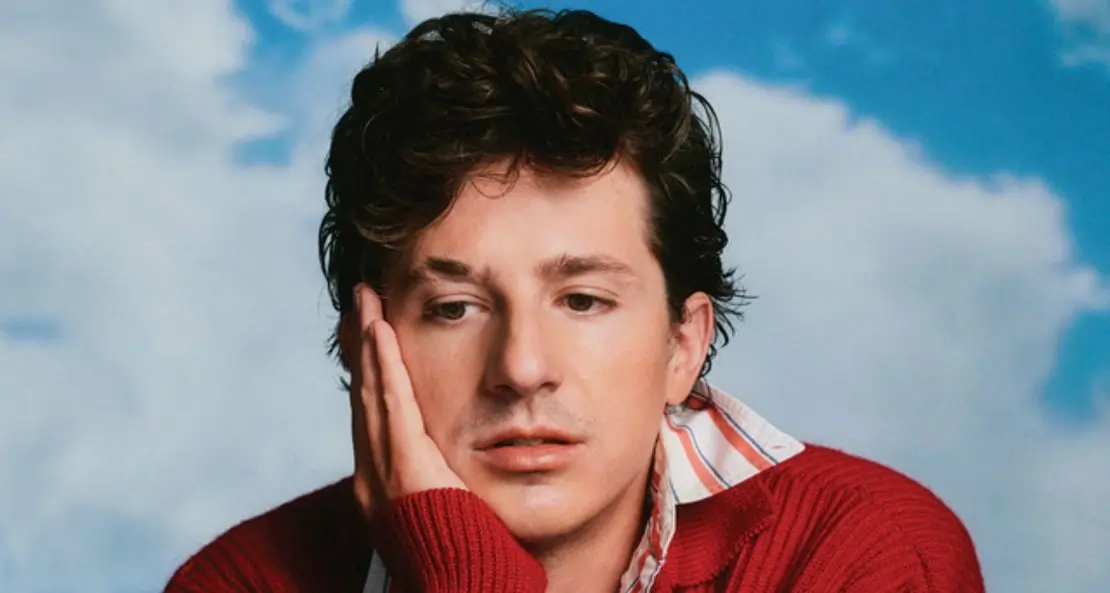
Whatever’s Clever! dropped on March 27, 2026 via Atlantic Records, co-produced with BloodPop (Justin Bieber, Lady Gaga) and mixed by Grammy-winning engineer Manny Marroquin. Twelve tracks. Six features. A guest list that reads like a Hall of Fame roll call. And underneath all of it, the most cohesive record Puth has put his name to.
This is not the Charlie Puth who wrote “Attention” and moved on. The 34-year-old who made Whatever’s Clever! became a father the week it came out, performed the national anthem with Kenny G at Super Bowl LX in February, was honoured as MusiCares Person of the Year in January, and had his name dropped by Taylor Swift in the title track of The Tortured Poets Department. Swift’s line, “we declared Charlie Puth should be a bigger artist,” landed as a very public signal to pay attention.
The album has a specific starting point. Max Martin called Puth before a note was written and told him he missed the emotion in his records, that there was a time he could feel what Puth was singing about without even making out the lyrics. Puth started the album based on that conversation.
The sound pulls from late-80s/early-90s pop, yacht rock, and blue-eyed soul, but the references are too specific and too well-executed to call it nostalgia tourism.
Puth started the album from a blank slate with BloodPop, which is how “Changes” was born from an unusual session where BloodPop was coding a video game and feeding Puth ambient sounds from a gaming PC.
The track that became the album opener arrived through a sound Puth couldn’t name. He told Rick Beato that the hook came from the chord itself, specifically an F over B flat in the chorus that carries just enough dissonance to pull you back every time.
He even reached out to Bruce Hornsby to play the piano break. Hornsby turned it down, saying the section sounded finished. He was right. Puth played it himself.
“Changes” is a song about the distance that grows between people as life shifts. That explosive chorus, built on programmed drums and what sounds like a faked guitar loop put through Melodyne, hits with the force of something that cost more than it looks like it did. A gospel choir arrives late and makes the whole thing feel like something you might have heard through an open car window in 1989.
“Beat Yourself Up” is the best 80s track that never came out in the 80s. Written as an indirect heart-to-heart for a friend who is too hard on himself, it evolved into something Puth realised he needed to hear. The bass line is warm, the groove is loose, and the chord progression carries the same familiar pull as Rick Astley’s “Never Gonna Give You Up.” Max Martin pushed Puth to make the snare louder on this one. He should be thanked for that.
“Cry (feat. Kenny G)” is a song Puth wrote for his grieving father, telling him it is okay to fall apart. The track breathes late-80s easy listening, warm and uplifting where it could have been heavy, a smart tonal decision on a song about watching a parent break down. The lead vocal was kept from the first take. Puth added layers around it but did not re-sing it, because the emotion was already there and he knew it. The Kenny G collaboration came about through the Moises app: Puth isolated a saxophone solo from a Kenny G YouTube video, transposed it, and sent it as a map of what he wanted the solo to sound like. Kenny G called back and said it was done. Puth was at In-N-Out with his wife at the time. The finished solo ended up roughly 75% what Puth had sketched, which is the right outcome. It arrives in the final section and gives the song room to exhale.
“Washed Up” is built around happy trumpets in the style of Jimmy Buffett-era pop, and the brightness is deliberate. The song is about organising an intervention for a close friend struggling with addiction. Puth told the LA Times it shares a key with the Spice Girls’ “Stop,” C major, which he called “a very happy key.” Most artists would write a dark song about a dark subject. Puth writes a happy one.
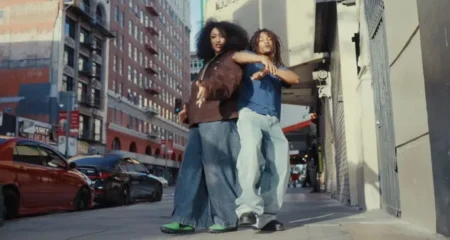
“New Jersey (feat. Ravyn Lenae)” is a grudge song dressed as a diss track. Puth sings about avoiding his home state entirely after a heartbreak there, lying to himself that there is nothing worthwhile in New Jersey rather than admitting what actually happened. Ravyn Lenae’s counter-verse reframes the whole story: she saw the relationship as a casual fling, not the serious commitment Puth believed it to be. Two people, one story, completely different versions. The track is petty in the best way.
“Don’t Meet Your Heroes” is a soulful mid-album cut about meeting someone you admired and walking away wishing you hadn’t. Puth will not say who. It also carries the jazziest instrumental moment on the album, a piano solo that sits in a different register to everything around it and makes the track feel heavier.
“Home (feat. Hikaru Utada)” is a song Puth wrote for his wife Brooke, now the mother of their son Jude. Built around the idea that a house means nothing without the specific person who makes it one, Puth said of the track: “Home was written for my best friend, wife and soon-to-be mother of our first child. Everything makes sense with her.”
The decision to bring in Hikaru Utada, one of Japan’s most influential pop artists was purely on aesthetics. Utada sings her verse in Japanese and pulls the song toward her Heart Station-era sound, which Puth had the confidence to leave intact.
“Hey Brother” is a midtempo R&B letter to Puth’s younger sibling, stacked with the kind of vocal layering and harmonic precision that comes from someone who studied at both the Manhattan School of Music and Berklee. It’s easy to miss the depth of the arrangement, which you discover on the second listen.
“Sideways (feat. Coco Jones)” is the silkiest thing Puth has done. The piano preset is the Dig EP from the Roland JV-1080, the same one Babyface used on the Waiting to Exhale soundtrack. Puth knew exactly what he was referencing. Jones came in with two hours before a red-eye to New York and knew every note of the song before she walked in. She does not try to compete with Puth. She just pushes him.
“Love in Exile (feat. Michael McDonald & Kenny Loggins)” is the yacht rock payoff. The title came from Loggins himself. The track has a buoyancy that recalls the Doobie Brothers’ “What a Fool Believes,” which McDonald and Loggins co-wrote nearly fifty years ago. You cannot make this record and not put those two on it. Michael McDonald told the LA Times he had been eager to work with Puth and jumped at the chance when Loggins made the call.
“Until It Happens To You (feat. Jeff Goldblum)” works Goldblum’s spoken word into a hand-clapping groove. It is the one moment on the album where the concept is doing more lifting than the song. As a breather before the closing track it is functional. As a standalone entry on a record this musically deliberate, it is the least essential thing here.
“I Used to Be Cringe” closes the album as a direct reckoning with who Puth used to present himself as. He is not trying to disown his catalogue. He is acknowledging that the version of himself who made “Marvin Gaye” with Meghan Trainor was performing something, and that he is done performing it.
The production throughout reflects someone operating at the limits of their taste rather than the limits of their ambition. Manny Marroquin’s mixes are dynamic but punchy, giving the record the kind of warmth and forward pressure that recalls late-80s pop production at its best. Puth uses 19 orchestral musicians on one passage of “Changes,” deliberately avoiding a round number because it felt tighter.
Whatever’s Clever! compares favourably to Voicenotes (2018), which remains Puth’s most replayed album and the one his fanbase returns to most. On Voicenotes the music did the work. Here the arrangements do the talking and the lyrics get out of the way. His 2022 self-titled Charlie never had the replay value that Voicenotes still does. This will.
For years the knock on Charlie Puth was that he had the musicianship but kept pointing at it. On Whatever’s Clever! he stops pointing and just plays. The album does not need Taylor Swift’s endorsement, though it arrived at the right moment. It just needed him to stop separating who he is from what he makes. He figured that out. Better late than never, but also: not that late.
Rating: 9/10
Label: Atlantic Records Released: 27 March 2026 Tracklist: Changes / Beat Yourself Up / Cry feat. Kenny G / Washed Up / New Jersey feat. Ravyn Lenae / Don’t Meet Your Heroes / Home feat. Hikaru Utada / Hey Brother / Sideways feat. Coco Jones / Love in Exile feat. Michael McDonald & Kenny Loggins / Until It Happens To You feat. Jeff Goldblum / I Used to Be Cringe
You might also like: