
The single is dead. Long live the playlist hit.
Music discovery happens in the background now. You open Spotify for your morning commute, and an algorithm serves you “Chill Morning Vibes.” You hit the gym, and suddenly you’re listening to “Beast Mode Workout.” The songs blur together. You couldn’t name half the artists if your life depended on it. But you keep streaming.
This isn’t accidental. Streaming services have quietly restructured how the music industry operates, moving power from A&R executives and radio programmers to faceless recommendation engines. The consequences ripple through everything: how artists write songs, how labels market releases, how listeners discover new music.
The numbers tell the story. Streaming now accounts for roughly 84% of U.S. music industry revenue, according to the Recording Industry Association of America’s 2024 report. Meanwhile, 78% of people listen to music via streaming platforms. These aren’t just statistics. They’re a seismic shift in how music reaches ears.
The Algorithm Takeover
Spotify’s RapCaviar once launched careers overnight. A single playlist placement could transform an unknown rapper into a stadium act.

Those days are fading. Human-curated playlists still exist, but their influence is waning as platforms push algorithmic recommendations.
The shift started around 2020. Spotify CEO Daniel Ek acknowledged that users increasingly preferred algorithmic suggestions over editorial picks.
The company responded by doubling down on features like AI DJ and Daylist, tools that automate music selection based on listening patterns, time of day, and even weather conditions.
Major labels noticed. Industry insiders reported significant drops in streams from flagship playlists like RapCaviar and Dance Hits.
The curators who once held kingmaker status found their influence diluted. Spotify’s Discovery Mode, which allows artists to accept lower royalty rates in exchange for algorithmic promotion, further complicated the landscape.
The platform maintains that human expertise still guides playlist decisions. Sulinna Ong, Spotify’s global head of editorial, regularly reaffirms the company’s commitment to curated playlists.
But the evidence suggests otherwise. Internal presentations reveal plans to leverage data more aggressively in curation, blurring the line between human taste and machine learning.
Welcome to the Algorithmic Bubble
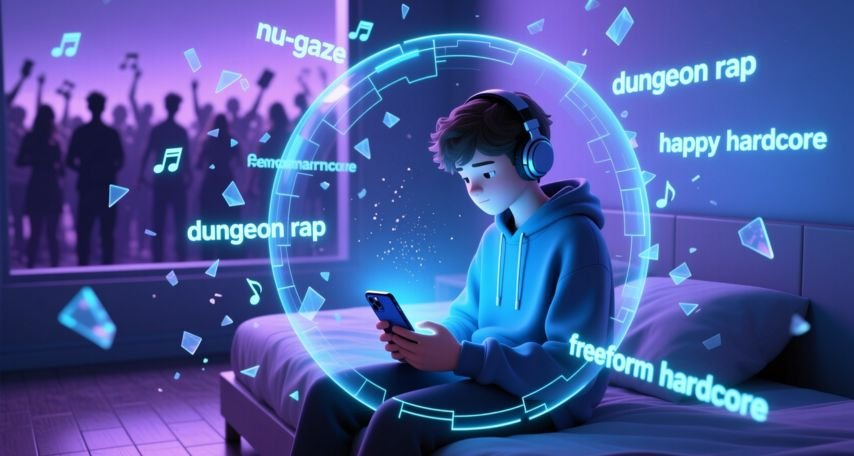
Spotify’s genre database contains over 6,000 micro-genres. Dungeon rap. North Alabama indie. Nu-gaze. These aren’t jokes. They’re real categories, each with its own algorithmic fingerprint and dedicated listener base.
Hyper-personalisation sounds brilliant on paper. Who wouldn’t want a service that understands their taste perfectly? But it creates problems. When every user receives a unique cocktail of recommendations, shared musical experiences evaporate.
MIDiA Research found that hyper-personalisation makes listeners feel isolated from other fans. Why engage with “happy hardcore” listeners when you’re into “freeform hardcore”?
The distinction seems ridiculous, but algorithms treat them as separate ecosystems. Communities fragment. The monoculture splinters into thousands of micro-cultures, each trapped in its own feedback loop.
Young listeners feel this most acutely. For 16- to 24-year-olds, TikTok ranks as the top music discovery method, followed by YouTube and streaming services. Radio barely registers. Less than 10% discover music through personal recommendations. The algorithmic bubble isn’t coming. It’s here.
This shift towards passive discovery appears to reduce artist exploration. While older listeners tend to explore an artist’s catalogue after discovering a song, younger audiences simply hit repeat. The algorithm serves them variation without depth, breadth without connection.
Engineering the Playlist Hit
Artists and producers have cracked the code. They know what streaming platforms want, and they’re giving it to them.
Song structure has changed completely. Traditional singles opened with verses, built through bridges, and faded out. Today’s hits start with the chorus. No time for introductions. The hook needs to grab attention within the first five seconds, or the skip button beckons.
Bridges? Gone. Guitar solos? Extinct. Songs now peak in the final chorus rather than a traditional bridge section.
The average track length has shrunk below three minutes and thirty seconds. Shorter songs mean more streams, and streaming pays the same whether a song runs 90 seconds or four minutes.
The playlist economy rewards songs engineered for mood rather than artistry. Artists tag their releases with metadata describing “high-energy,” “upbeat,” or “relaxed” vibes. These tags determine playlist placement more than genre or artistic merit.
Production teams study Spotify’s audio analysis algorithms, which measure danceability, energy, acousticness, and valence (emotional positivity).
They craft songs to hit specific algorithmic sweet spots. A “Workout Hits” placement requires high energy and danceability scores. “Chilled Sunday” demands acoustic warmth and lower energy levels.
Playlist pitching services have become an industry unto themselves. Companies like PlaylistPush and DaimoonMedia promise artists placement on curated lists for fees ranging from £50 to £700, depending on the playlist’s follower count.
These services operate in a grey area, sometimes using legitimate curator networks, other times employing questionable methods that skirt streaming fraud.
Artists who refuse to adapt struggle. The old model rewarded albums as coherent artistic statements. The new model treats individual tracks as content units, optimised for algorithmic distribution rather than human curation.
The Passive Listening Problem
Critics argue that algorithmic playlists encourage passive consumption. Users discover music technically, but they don’t engage with it.
Songs pass through their ears without leaving marks. The save button goes unused. Artists collect fractions of pennies from streams that generate zero lasting connection.
This passivity contrasts sharply with previous eras of music discovery. Record store clerks recommended albums based on conversation and trust. Radio DJs crafted sets that told stories across genres.
Music critics championed artists and explained why their work mattered. These gatekeepers had biases, but they created context.
Algorithms can’t replicate that context. They analyse patterns but miss cultural nuance. An AI might group songs by tempo, but it can’t sense shifts in social relevance or understand why a particular artist resonates with a movement. Viral TikTok trends like “coastal cowgirl” or “quiet luxury” spawn niche playlists that require human interpretation.
Kyle Chayka, writing about “algorithmic culture,” suggests platforms encourage a “Generic Style” that reproduces formulas rather than expressing individuality. Music increasingly follows proven templates because the algorithm rewards predictability over originality.
The loss extends beyond discovery. When music criticism thrived, thoughtful analysis helped listeners understand why certain albums mattered. Critics championed challenging work that demanded multiple listens. Playlists flatten that experience. A song either hooks immediately or gets skipped. No room for slow burns or acquired tastes.
Randy Fusee, CEO of the streaming service Coda Music, argues that true musical discovery is being stifled by an over-reliance on algorithms.
He states, “True discovery happens in those unexpected moments, not through recycled recommendations.” His company’s approach is built on a philosophy that prioritises human curation and social sharing over automated suggestions.
This challenge becomes even more pronounced with the rise of AI-generated music flooding streaming platforms, creating additional competition for human artists while further diluting the royalty pool.
Reclaiming Balance
The situation isn’t hopeless, but it requires intentionality from all parties.
Artists face difficult choices. Conforming to playlist economics guarantees broader reach but risks artistic compromise. Refusing to adapt means accepting smaller audiences. The solution lies somewhere between these extremes.
Smart artists optimise for playlists without sacrificing their vision. They release shorter radio-friendly tracks while saving experimental work for albums or EPs.
They engage with fans directly through social media, building communities that transcend algorithmic recommendations. They pitch strategically, targeting playlists that genuinely fit their sound rather than chasing raw follower counts.
Metadata matters. Accurate genre tags, mood descriptors, and featured artist credits help algorithms understand where songs belong. This isn’t selling out. It’s communication. The algorithm can’t listen to music the way humans do, so artists must translate their work into machine-readable language.
Release strategy matters too. Consistent output trains algorithms to recognise an artist’s style and recommend their music more effectively. A single track every three months works better than radio silence followed by an album dump.
But artists shouldn’t abandon ambition. The streaming economy rewards commercial viability, but history remembers artistic innovation. The goal isn’t choosing between playlists and integrity. It’s finding ways to achieve both.
Listeners can resist algorithmic bubbles through active engagement. Seek out independent radio stations and music blogs. Ask friends for recommendations.
Visit record shops and talk to staff. Attend concerts early to catch support acts. These actions require more effort than shuffling a generated playlist, but they restore the human element to discovery.
Platforms bear responsibility too. Spotify and Apple Music should balance algorithmic recommendations with human curation that provides context and builds communities around shared taste. The tools exist. The question is whether profit motives will allow their proper use.
The Future of Music Discovery
Streaming has democratised music distribution. Artists reach audiences without label backing. Listeners access millions of songs for less than the cost of a single CD. These are genuine improvements worth celebrating.
But the algorithmic turn threatens to commodify music into mood management. Songs become interchangeable content units, selected by machines for maximum engagement rather than artistic merit or cultural significance.
The challenge moving forward is preserving what makes music meaningful while embracing technological progress.
Algorithms excel at matching patterns. Humans excel at creating context, building communities, and recognising significance that transcends data points.
Music survives by balancing these forces. Artists who understand playlist economics while maintaining artistic vision will thrive.
Listeners who actively engage with music rather than passively consuming it will find deeper satisfaction. Platforms that integrate human wisdom with algorithmic efficiency will build lasting cultural value.
The playlist hit isn’t going anywhere. But it doesn’t have to be the only game in town.
You might also like:
- The 2024 Music Industry Trends Guide: What’s Really Changing and Why You Should Care
- The Rhythmic Pulse of 2023: A Deep Dive into Spotify’s Top Artists and Trends
- 15 Old Songs That TikTok Resurrected Into Modern-Day Hits
- AI Music’s Dark Secret: 7 Million Daily Tracks and Zero Legal Cover
- Neo-Soul Renaissance: Must Listen Artists of 2023 and the Evolution of a Genre
- The Power Of Music And How It Shapes Society