
Updated March 2026
“25 or 6 to 4” by Chicago is a song about trying to write a song. The title refers to the time, roughly 25 or 26 minutes before 4 AM, when Robert Lamm sat awake in a Hollywood Hills house, staring at an antique clock he could barely read, and wrote exactly what he was experiencing. He put that moment into the lyrics as a placeholder. He never replaced them.
That is the whole secret. Nothing is hidden. People just didn’t believe it.
What does “25 or 6 to 4” mean?
“25 or 6 to 4” by Chicago is about songwriter Robert Lamm trying to write a song late at night. The title refers to the time, around 25 or 26 minutes before 4 AM, when he looked at a clock and turned that moment into the lyrics.
The Night It Happened
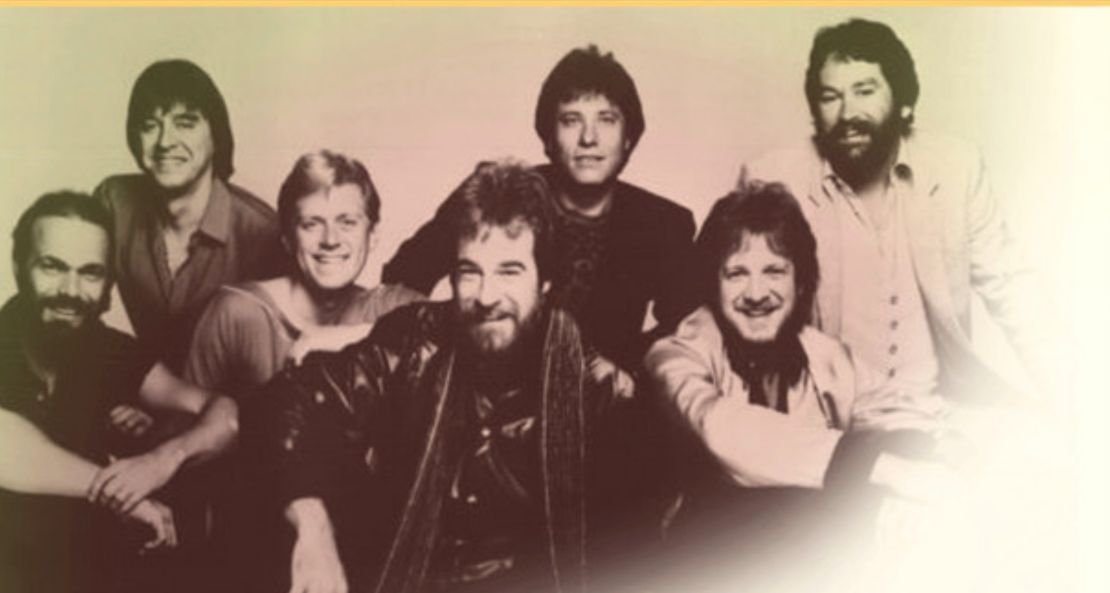
In 1969, Chicago were working the off-nights as house band at the Whisky a Go Go on the Sunset Strip. Lamm was living a short walk up the hill, sharing a rented bungalow with other musicians who had migrated west from Chicago. There was a piano in the back room. Coming home from the Whisky one night, unable to sleep, he sat down and started working a riff that would eventually become the opening of “25 or 6 to 4.”
He told Dan Rather in 2019 that he fooled around with the riff for maybe half an hour, looking out over the city of Hollywood, watching lights on the tall buildings. That became the lyric about flashing lights against the sky. But he couldn’t find a theme. He couldn’t figure out what the song was supposed to be about.
So he looked across the room at an old grandmother’s clock on the wall. He couldn’t quite read it. The hands were somewhere around 25 or 26 minutes before 4:00 AM. And he started writing down exactly what he was doing: sitting up late, searching for something to say, not sleeping, not finding it.
“I just began to jot down what the hell I was doing there,” he told Rather. “I thought, well, for now, I’m just going to describe the process of writing this song, and I’ll figure out what the lyrics are going to be later.”
He never did. The placeholder stayed.
He took the song to rehearsal the next day, the band got hold of it, and it stopped being raw material. The placeholder became permanent.
In a 2019 interview with Mix magazine, Lamm admitted he couldn’t quite make out the clock’s hands, which is why the title carries the uncertainty of “or.” It was one of those. He wasn’t sure which.
What the Lyrics Actually Say
Once you know the origin, the lyrics become unusually literal for a song of this stature.
The opening verse sets the scene without disguise. “Waiting for the break of day / Searching for something to say / Flashing lights against the sky / Giving up, I close my eyes” is a direct account of Lamm’s state. He was fighting fatigue and writer’s block simultaneously. The lights were real: the city spread out below the Hollywood Hills.
The chorus puts him physically in the room. “Sitting cross-legged on the floor / Twenty-five or six to four” is not poetic imagery. That’s what he was doing at that specific minute.
The second verse escalates the exhaustion: staring blindly into space, getting up to splash his face, wondering how much he can take. The line “should have tried to do some more” has fuelled drug theories for decades. In context, it’s a man asking himself whether he should have pushed harder at the piano before giving up.
The final verse turns repetitive in the way late-night exhaustion turns repetitive: the same phrases circling back, the spinning room sinking deep, the same search for something to say. That’s not a lyrical device. That’s what happens when you’ve been awake too long.
As James Pankow put it plainly in a 2018 interview: “Robert was laying on the floor of his house in the Hollywood Hills looking over the city of Los Angeles just before dawn. He had been up all night.”
The Drug Theory and the Singapore Ban
The speculation started almost immediately. The numbers looked like code. The imagery, the spinning room, staring blindly, wondering how much you can take, fit a certain kind of experience if you were inclined to read it that way. One persistent theory linked “25” to LSD-25 and “6 to 4” to a ten-hour trip running from 6 PM to 4 AM.
Singapore’s authorities took it seriously enough to ban the song when it was released in 1970, citing alleged drug references.
Lamm has consistently denied the drug reading. His explanation is consistent across every interview, even if the specific prop changes. Sometimes it’s a watch, sometimes it’s a billboard, most recently it’s the grandmother’s clock. What doesn’t change is the core account: he was up late, he couldn’t read the time properly, and he used the uncertainty as a lyric.
The irony is that the drug theory spread partly because the music sounds like it could support one. Terry Kath’s wah-driven guitar solo, the relentless rhythm section, the way the song builds and doesn’t quite resolve, none of it sounds like a man writing notes at a piano. It sounds considerably more intense than that. The music outran the lyrics from the beginning.
The Voice Behind the Song
Peter Cetera sang lead on “25 or 6 to 4.” What most people don’t know is that he recorded it with his jaw wired shut.
A few months before the session, Cetera was at Dodger Stadium watching the Chicago Cubs beat the Dodgers. A group of men, described variously as Dodger fans and Marines in different accounts, targeted him for his long hair and his team loyalty. He was beaten badly enough to be hospitalised. His jaw was broken in three places.
Producer James William Guercio wasn’t prepared to wait. The band had a recording schedule and Guercio pushed ahead. Cetera sang the track through clenched teeth. He later recalled his concern that once the wires came off, his jaw would lock again, so he kept his mouth mostly closed when singing. What sounds like a deliberate stylistic choice, that tight, controlled, slightly constricted delivery, was the direct result of physical injury.
It became his signature. The vocal on “25 or 6 to 4” set the template for everything Cetera did afterwards.
The Recording: What Made the Track
The song was tracked at close to five minutes. The single, edited down by nearly two full minutes for radio, removed the second verse entirely and cut most of Kath’s guitar solo. Guitar World ranked the full solo at number 22 on their 2015 list of best wah solos ever recorded.
Kath ran his guitar through a modified Fender concert amp combined with what Guercio described as a 1950s hi-fi preamp, possibly a McIntosh unit. Guercio admitted he didn’t fully understand how Kath got the sound, but he wanted it and made no attempt to change it.
Cetera played bass with his fingers rather than a pick. Guercio wanted a pick for a more defined attack; Cetera didn’t want to change his technique. The compromise was Cetera using the back of his fingernail.
The horn section, Lee Loughnane on trumpet, Walter Parazaider on saxophone, and James Pankow on trombone, had been with the band since its formation as Chicago Transit Authority. Jimi Hendrix once described the section as sounding “like one set of lungs.” He also reportedly called Kath the best guitarist in the world.
Alex Schachter and the Parkland Connection
On February 14, 2018, a gunman killed 17 people at Marjory Stoneman Douglas High School in Parkland, Florida. One of those killed was 14-year-old Alex Schachter, who played trombone in his school band and whose favourite song was “25 or 6 to 4.”
Alex’s father, Max Schachter, left his job to campaign for improved school security. Chicago’s management made contact, and the band invited over a thousand students and families to their West Palm Beach concert, dedicating the song to Alex.
The school band recorded a version of the track, which was later included in NBA 2K Playgrounds 2.
By the time Chicago played that concert in Parkland, the song had travelled a long way from the bungalow above the Sunset Strip where Lamm couldn’t sleep. A late-night writing exercise, banned in one country for alleged drug references, had become a gathering point for a community processing an act of mass violence. The song had accrued meaning the way a stone gathers moss: gradually, without anyone planning it.
Why “25 or 6 to 4” Still Matters
The reason “25 or 6 to 4” keeps generating search traffic, covers, and debate is precisely because Lamm never finished it. He left the scaffolding in place. The song describes a creative process without producing the thing that process was supposed to create. It documents the failure to write a song by becoming one.
The music fills the gap the lyrics deliberately leave open. Kath’s guitar, the horns, the metronomic pressure of the rhythm section, none of it sounds like a man sitting cross-legged on a floor at 3:35 in the morning wondering what to write. It sounds like something much larger. Which is why listeners keep arriving with their own explanations.
Pankow described the opening riff as having become “a required lick for every new guitar player.” Chicago has closed virtually every concert with it for over five decades.
At its simplest, “25 or 6 to 4” is about creative frustration, written in real time during a sleepless night. The title is not a code. It’s a clock reading from a bungalow in the Hollywood Hills, sometime in 1969, by a musician who needed a line and used the first thing he saw.
Lamm has said it himself: “The reason nobody can figure out what this song is about is because, well, it’s not really about anything.”
That may be the most accurate thing anyone has said about it. It is also, clearly, not the whole story.
You might also like:
- Meaning Behind Feathered Indians by Tyler Childers: A Blend of Classic and Contemporary
- The Rolling Stones Brown Sugar Lyrics: A Controversial Classic
- Just My Imagination (Running Away with Me): Exploring the Timeless Magic of The Temptations Classic Song
- Killing Me Softly with His Song: A Timeless Classic That Resonates Across Generations
- Journey’s Any Way You Want It: A Rock Anthem That Stands the Test of Time