
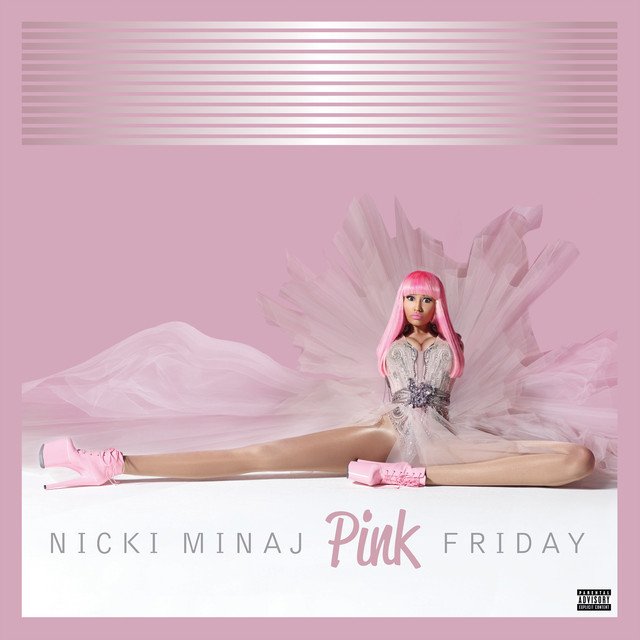
“Super Bass” was never meant to carry Nicki Minaj’s pop crossover. It started as a deluxe-edition bonus track on Pink Friday, pushed as the seventh single in a campaign already running long. It still became her first solo top ten hit in both the US and the UK. When a record climbs that far from that late in the rollout, it is not timing doing the work. It is the song.
What is “Super Bass” by Nicki Minaj about?
“Super Bass” is about being drawn to someone and choosing to act on it rather than hold back. The production mixes pop gloss with rap technique without sitting cleanly in either camp, which is how it reached audiences who would not normally overlap.
The song was written by Nicki Minaj with Ester Dean, Roahn Hylton, and Daniel Johnson, known professionally as Kane Beatz, who also produced the track alongside JMIKE. Kane Beatz was already an in-demand name in rap and R&B before this, but “Super Bass” became his most widely heard production. Ester Dean, whose songwriting credits span Katy Perry, Rihanna, and Chris Brown, also contributed uncredited vocals to the final recording. Her voice is present in the chorus, though she was not officially listed as a featured artist. Minaj described the concept to MTV News as being about “the boy that you are crushing over,” taking a playful approach rather than a direct one. Ester Dean framed it similarly, telling Complex it was “about being a girl and liking a guy and not being afraid to say it.” Both descriptions simplify what the writing is doing.
The hook runs on a refrain that mimics the physical thump of bass through a speaker. The phrasing is simple enough to memorise after one listen, but rhythmically dense enough to reward repetition. That balance is what made it spread. Listeners latch onto the hook immediately, then stay for the detail in the verses. It becomes something people repeat, quote, and perform rather than just play.
The verses are where Minaj’s technical skill is more visible. She is not writing for end rhymes. The rhymes run internally, threading through the middle of lines rather than sitting at the end: “He a mothaf*ckin trip, trip, sailor of the ship, ship / When he make it drip, drip, kiss him on the lip, lip.” The couplet structure shifts between verses, preventing the track from settling into a predictable rhythm.
The pre-chorus shifts the tone. Minaj opens with coy admiration, then closes by stepping fully into rap mode: “I am Nicki Minaj, I mack them dudes up / Back coupes up and chuck the deuce up.”
The line hits harder because of what comes before it. The charm makes the assertion sharper. That back-and-forth between softness and dominance runs through the whole song and explains much of its appeal across very different audiences.
Verse two sketches a different type to verse one. Where the first goes for the club archetype, the second reaches for something more understated: the guy in the polo, the entrepreneur, the one who can work the room or go solo. The line “I think I like him better when he dolo” has a specificity that separates it from most pop-rap writing of the period.
Kane Beatz built the track on a busy, bright framework: digital raindrop effects, a hip-hop drum pattern, and an upbeat hook that pulls from J-pop as much as from Miami bass. The production sits in an unusual tonal space: it has the rough-edged digital feel of dancehall riddims while the high end carries the brightness more associated with J-pop than rap. That combination is part of why it did not register as a conventional hip-hop record on first listen.
There are two meaningfully different versions of “Super Bass” in circulation. A/B comparison between the version that appeared on the Now! 79 UK singles compilation and the album version on Pink Friday reveals a measurable disparity. The album version is approximately 3dB louder subjectively.
More notable is the tonal difference: the album version appears down roughly 3dB below 200Hz, meaning it carries less sub bass, and is tilted upward from 1kHz, making it brighter. The vocals also sit higher in the mix on the album version.
This runs counter to standard industry practice. Singles are typically mastered louder, more vocal-forward, and with more presence; album cuts usually retain more low-end and dynamic range for wider-bandwidth playback.
The likely explanation is that the song’s unexpected pop crossover prompted a post-release remaster to better match mainstream radio. Whatever the reasoning, the two versions offer an unusually clear window into how the upper tier of the industry defines “radio-friendly” at the mastering stage.
“Super Bass” entered the US Billboard Hot 100 at number 98. The following week it jumped fifty places to number 48, also entering the Hot Rap Songs and Hot Digital Songs charts that same week. By week fourteen it reached number three, where it peaked.
The song spent 39 weeks total on the Hot 100, remaining in the top fifty for 38 of those. It was Minaj’s first solo top ten hit in the UK, peaking at number eight on the UK Singles Chart, and also charted in the top ten in Australia, New Zealand, and Canada.
The song went eight-times platinum in the US by December 2013 and was certified Diamond in November 2021, representing 10 million equivalent units sold domestically. Billboard placed it on their list of 100 Songs That Defined the Decade and ranked it at number 13 on their 500 Best Pop Songs of All Time.
Rolling Stone included it at number 375 on their revised 500 Best Songs of All Time list. At the 2011 MTV Video Music Awards it won Best Hip-Hop Video, and it was nominated for Best Rap Performance at the 2012 Grammy Awards.
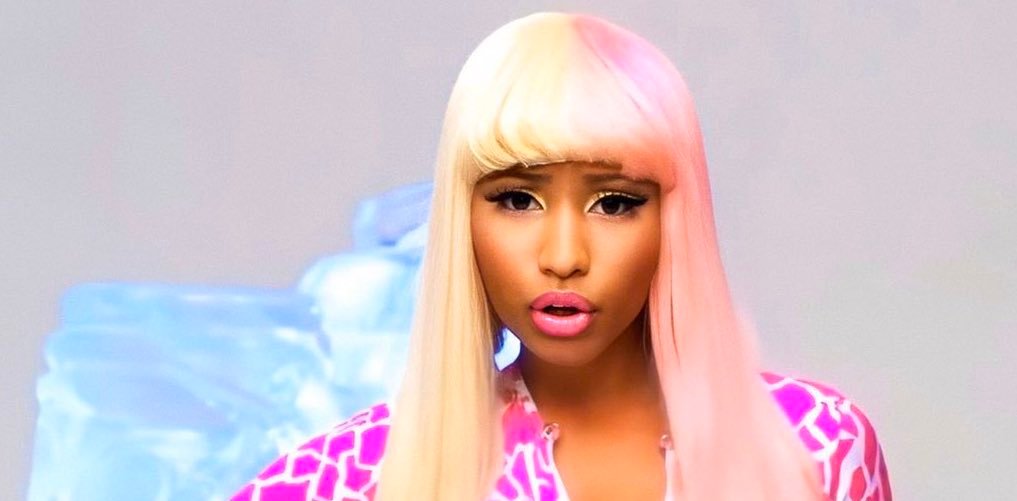
Director Sanaa Hamri shot the music video in March 2011. The visual palette is built almost entirely around bubblegum pink, with Minaj cycling through a series of looks while taunting a group of men through prop-heavy set pieces.
Minaj described the concept as “really colorful and cutesy — an icy world, a sexy world, a playful world.” The video lives up to that description. The bubblegum pink palette keeps the visuals from tipping into the kind of aggression the lyrical content could have justified, which is a deliberate choice, and the right one. It is why the clip worked for nine-year-olds performing covers in their bedrooms and for the same song playing at adult club nights simultaneously.
Taylor Swift performed “Super Bass” during a radio interview in February 2011, later joining Minaj to perform it at the 2011 American Music Awards. Swift’s early and public enthusiasm introduced the track to an audience that would not have encountered it through rap or urban radio, and Minaj publicly acknowledged the friendship that followed.
Nine-year-old Sophia Grace Brownlee filmed a bedroom cover that went viral on YouTube, leading to a slot on The Ellen DeGeneres Show in October 2011 and, improbably, red carpet credentials at both the 2011 American Music Awards and the 2012 Grammys. The song appeared in episodes of Glee, The Big Bang Theory, and the 2012 film Pitch Perfect.
The “super bass” phrase itself entered casual use as shorthand for a powerful sound system, and the title’s double meaning, the audio phenomenon and a metaphor for physical attraction, gave the song lyrical flexibility across contexts.
Replaying “Super Bass” now changes what you hear. The pop structure is obvious. Less obvious is the density of the rap writing underneath: the internal rhyme schemes, the verse-to-verse pattern shifts, the tonal control Minaj deploys moving between vulnerability and assertion.
The song carries no featured artist and no DJ drop. Minaj runs the whole four minutes. Part of why it has lasted is structural: the hook is short and repeatable enough to travel across contexts, from radio to viral covers to television placements, while the verses carry enough variation to support repeat listening rather than a single play. The production sounds glossy and lightweight while carrying more complexity than it first suggests.
That the album master was reworked to sit brighter and louder than the original single suggests someone recognised, perhaps too late, that the original mix was not entirely suited to the pop moment the song had created. Both versions exist. The difference between them shows how commercial pop decisions are made after the moment has already happened.
You might also like:
- Unravelling the Genius of Eminem’s Mockingbird: Lyrics, Symbolism, and Cultural Influence
- The Phenomenon of Post Malone: A Deep Dive into His Most Popular Songs
- The Hidden Meaning Behind Nicki Minaj’s Red Ruby Da Sleeze Lyrics
- The Ultimate Guide to Jack Harlow’s Lovin On Me: Lyrics, Meaning, Video, Reviews, and More