
“Die For You” is about a relationship where the love is real but still not enough to make it work. Someone who would die for a person but still won’t stay with them. That gap between feeling and action is never explained, barely even acknowledged, and that’s where the song lives.
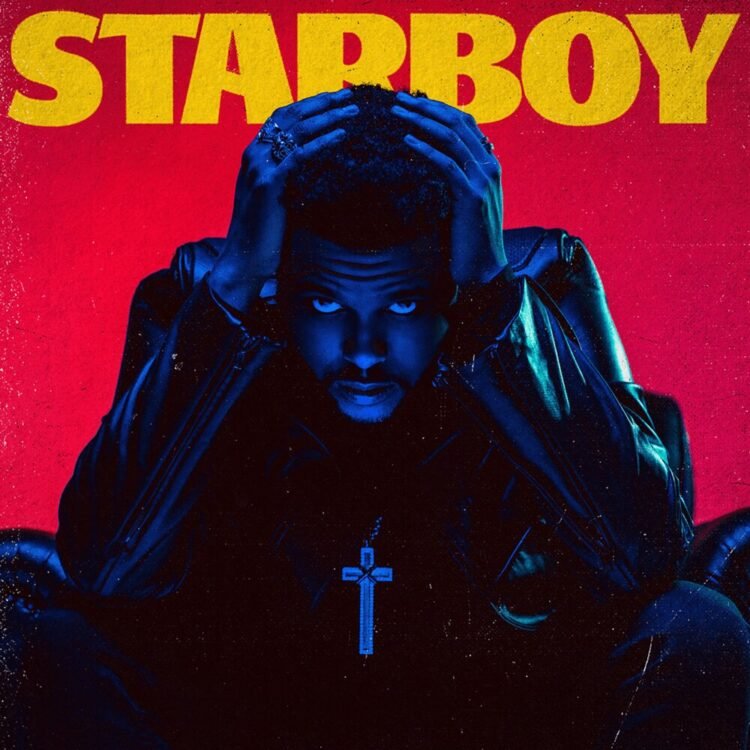
It wasn’t an obvious hit. Released as a later single from Starboy in September 2017, nearly a year after the album dropped, it peaked at No. 43 on the Billboard Hot 100 and had a relatively modest radio presence compared to the album’s bigger singles. Then TikTok happened, the way things do on TikTok, not through any real strategy but through the song finding the people it was always going to find. The song drifted back into orbit, picked up momentum, and by 2023 it had reached No. 6 and multi-platinum status, outperforming its original run entirely.
The writing credits include The Weeknd alongside Doc McKinney, Cirkut, Cashmere Cat, Prince 85, Dylan Wiggins, and Billy Walsh. McKinney, who first crossed paths with Abel Tesfaye in 2011 during the House of Balloons sessions, described the Starboy process in a 2017 interview as constantly shifting: some songs built from nothing, others assembled from fragments that had been sitting around. “Die For You” came from the latter. Which matters, maybe, because The Weeknd told Zane Lowe on Beats 1 Radio in 2016 that it was one of the hardest songs on the album to write, completed late in the process, roughly a week before Starboy dropped on November 25th. He said the lyrics specifically. A song about a person who can’t say what he means, written by a person who couldn’t quite land the words either.
The production holds that same logic. The tempo sits in a slow, steady pocket: warm analogue synth pads, restrained drum programming, a bassline that moves more by feel than forward momentum. There’s no dramatic drop, no sharp structural shift, just a gradual lift as the vocal layers build toward the chorus and fall back again. It leans into the feeling instead of trying to break out of it.
He compared it to The Knowing from House of Balloons and Angel from Beauty Behind the Madness, the closing tracks on his previous records, songs that work partly because of where they sit. By the time you reach them, the album has already done something to you.
The song opens reaching for words to explain the situation. That’s the setup. The pre-chorus is where it gets clearer: both people know what’s happening. She hates that she still wants him. He knows he’ll miss her and says it’s happened before. This isn’t new for either of them. It’s a pattern they recognise, which makes it harder to ignore.
The chorus delivers the central contradiction: he would die for her but can’t stay. “The distance and the time between us / it’ll never change my mind.” But what distance? What time? The song won’t say. By not naming the obstacle, he avoids having to justify it. He performs devotion while stepping around the harder question underneath it: if the feeling is this strong, what actually matters more?
The second verse shifts tone. He admits he can’t take the pain indefinitely, then asserts he’s the right person for her, then immediately walks it back: “I think I’m right for you.” That one word is the most honest moment in the song. Everything else runs on absolutes. “I would die. I would lie. I would kill.” “Think” is the only crack in it, sitting quietly while the rest sounds certain, and the bridge that follows doesn’t build from confidence. It builds from that doubt, each claim trying to outdo the last because none of them have actually changed anything. He knows it.
There’s one moment from late 2016 that did something to the song that the lyrics alone couldn’t. The Weeknd and Bella Hadid had just broken up, the song was finished in those weeks, and days later both appeared at the Victoria’s Secret Fashion Show in Paris. He performed. She walked the runway past him mid-set and glanced back over her shoulder. That image was everywhere within 24 hours. Two people who’d just split, on the same stage, while he sang about not being able to leave. Whether “Die For You” was written about her almost stops mattering at that point. The moment attached itself to the song permanently.
He’s never said who it’s about. That’s probably right. A song tied to one person belongs to that person. This one doesn’t.
The slow commercial rebuild started when The Highlights landed in February 2021, putting the song back into rotation. By 2021 it had started gaining traction on TikTok, before surging widely in 2022, not because the label pushed it but because the song’s pacing suited short-form video in a way that turned out to be structurally ideal without being designed for it. It worked for sincere romantic confessions and for parodies of them equally, which kept it moving. An official music video followed in January 2023, more a response to the resurgence than the cause of it.
In 2023 Ariana Grande joined the track. The remix is more balanced, but less revealing. What the original depends on is having no answer: one voice speaking into silence. Grande fills that silence. The unresolved quality, which is most of what the song is, gets softened. The remix introduced it to a new audience who then went back to the original, which is probably what it was there to do.
On Starboy, the song’s placement gives the album a sense of continuity. Party Monster presents a speaker absorbed in excess, detached to the point of numbness. Ordinary Life pushes that further. A Lonely Night acknowledges the isolation but treats it as a trade he chose. “Die For You” breaks that. It introduces something the persona can’t control. After an hour of the album insisting he doesn’t need anyone, this song says otherwise. He does need someone. He just can’t keep them. Without it, Starboy ends as a performance. With it, the performance breaks.
At the centre of it is a question the song never gets near answering: if you love someone enough to die for them, why not make the smaller sacrifices first? He expresses the feeling and the outcome without connecting them. By the third time the chorus returns the claims have gone further than anyone could hold you to, and the song holds anyway, partly because of that earlier “I think,” the one moment that didn’t fully commit.
It peaked twice, in two different decades, for reasons that don’t line up cleanly. The second rise doesn’t explain the first. It just suggests the song found the people it was waiting for, a little later than expected.
“Die For You” appears on The Weeknd’s Starboy, released November 25, 2016, via XO/Republic Records. Written by Abel Tesfaye, Doc McKinney, Cirkut, Cashmere Cat, Prince 85, Dylan Wiggins, and Billy Walsh.
Where the Song Sits on Starboy
Tracks like “Party Monster” present a speaker fully absorbed in excess, detached to the point of numbness. “Ordinary Life” pushes that further, framing emptiness as the cost of having everything. “A Lonely Night” acknowledges the isolation but treats it as a trade he chose.
“Die For You” breaks that progression. It introduces something the persona can’t control. By the time it arrives, the album has spent over an hour insisting he doesn’t need anyone. This song exposes the opposite. He does need someone. He just can’t keep them.
Without it, Starboy ends as a performance. With it, the performance breaks.
The song sits in a paradox. If you love someone enough to die for them, why not make the smaller sacrifices first? The Weeknd never answers that. He expresses the feeling and the outcome without connecting them.
The chorus returns three times. By the third, the claims have gone further than anyone could hold you to, and the song holds anyway, because of that earlier “I think,” the one moment that didn’t fully commit. Everything else sounds certain. That word sits in the middle of it like a loose thread.
The song peaked twice, in two different decades, for reasons that are not connected. Neither peak explains the other. Maybe the second audience found something the first one missed. Or maybe it just reached the people who knew what it felt like to mean something completely and still not follow through.
You might also like:
- The Weeknd & Lana Del Rey’s The Abyss Breakdown: A Love Song on the Edge
- The Weeknd’s The Hills Lyrics and Meaning: Obsession, Exposure, and the Sound of Losing Control
- Unravelling Call Out My Name by The Weeknd: A Lyrical Journey Through Heartbreak
- Inside ‘Starboy’: The Weeknd’s Dark Dance with Fame, Faith, and Futility