

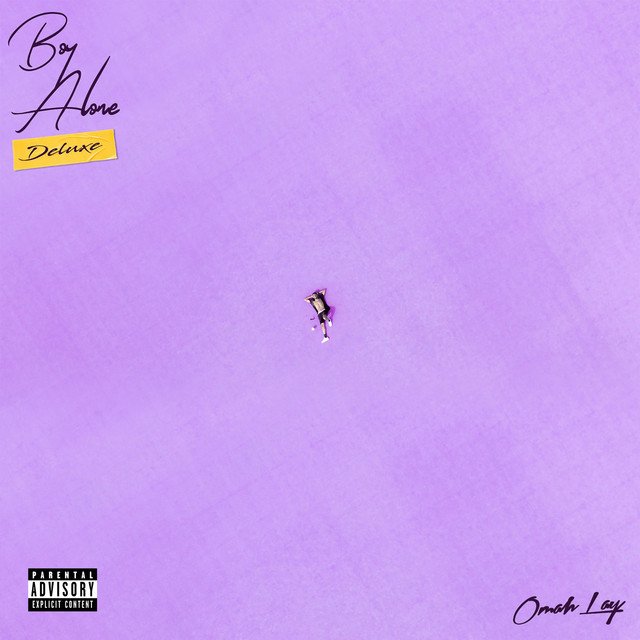
“Soso” is Omah Lay three months into a breakdown, calling out to a Kalabari woman he couldn’t stop thinking about, asking her to pull him back from somewhere he couldn’t get out of alone.
The layered production, the Highlife melody, the river deity buried in verse two. None of it is for theatrics. He was drowning and this is what came out. Fela Kuti once said water has no enemy. Omah Lay spent three months learning what happens when you fall in anyway.
The track comes from his debut studio album Boy Alone, released July 2022 on Sire Records and Keyqaad. It became the album’s defining moment quietly. Producer Tempoe built something almost translucent around one of Nigerian music’s most raw vocal performances: guitar licks borrowed from a 1970s Highlife session, a whistle that arrives and vanishes like a thought you can’t hold, a double-clap rhythm that never pushes too hard. You nod before you understand what Omah is talking about.
The first thing most pieces get wrong is the word itself. “Soso” is not a Nigerian Pidgin phrase meaning “only” or a spiritual abstraction.
Omah Lay was direct in his Apple Music interview: it is a Kalabari girl’s name. A Port Harcourt name. She is not his girlfriend. She is his friend’s little sister who grew up on Snapchat and Instagram and became someone he couldn’t stop noticing. He could have called her anything: alcohol, money, smoke. He said as much himself. But Soso is the name that arrived, and it already carried cultural weight before the song gave it more. A conversation only partly meant to be overheard.
Omah Lay spent roughly three months isolated at a Nigerian resort before recording Boy Alone. No visitors. No social obligations. The accumulating pressure of being a 25-year-old from Rivers State who had broken through internationally and found that success brought its own collapse.
In his Hey Steph TV interview, he described writing “Soso” in terms that had nothing to do with craft: he was losing his mind, smoking constantly, and there was nothing in life that felt good. The industry he had just cracked was withholding support. Even people he considered inspirations declined to help. When he sings that one mind is telling him to disappear, it is not a metaphor.
The first verse arrives almost matter-of-factly:
Ah-ah, ah-ah / All of the things them talk, I no dey hear, hear / Try wetin I do if you no dey fear, fear / One mind dey tell me to disappear, ‘pear / Soso come and help me oh ’cause / I don pray, Maami / I don break, commandment / I can’t stay for one place / For God’s sake, come and take / Come take my pain away from me
The opening lines are a shrug, but not a casual one. He has tuned out the criticism, and the reason he cannot hear it is not confidence.
The invitation to critics to step into his position carries the exhaustion of someone who has stopped arguing and started daring people to understand. What follows is the most compressed confession in the song: he has prayed without result, broken a commandment that goes unnamed, cannot stay still. Restlessness, guilt, failed faith, the inability to locate himself. Then Soso’s name enters, and the whole verse pivots.
The chorus is four words on a loop that grows more urgent each time it returns:
Soso take my pain away / Soso take my pain
When you are in real pain, you do not construct elaborate requests. You repeat the one thing you need until it either arrives or loses meaning. Omah Lay is still asking by the end because the answer hasn’t come.
The second verse is where the song opens culturally, and where most articles flatten it:
Shibiri, shibiri, shibiri / They are talking shit shibiri / Water no get enemy / ‘Til you fall for Oshimiri / I poto, poto my eyes / Ten shots, high rise / Touch God, I cry / Offshore, cut my dreadlocks
“Shibiri” is Nigerian slang for rubbish. He dismisses the gossip and industry static in one breath, then reaches for something older.
The line “water no get enemy” comes from Fela Kuti: water is so essential to life that nothing can oppose it. Omah Lay agrees, then adds the caveat. Oshimiri is a large river in southeastern Nigeria that, in Igbo and Rivers State tradition, carries associations with a water deity, a spirit entity in the depths. The river is neither good nor bad in the abstract. It only becomes dangerous when you fall in without a way out. Success felt like that to him: necessary, inescapable, and pulling him under regardless.
“Poto poto” is wet mud in Nigerian Pidgin, the kind that forms around stagnant water. He has mud in his eyes. Ten shots and a high rise. He touched something he calls God and wept. He cut his dreadlocks offshore. None of it worked. Water runs through Boy Alone eight separate times. Omah Lay grew up in a state literally called Rivers. On “Soso,” that motif becomes its most loaded: the very thing that shaped him is the thing that can drown him.
Most analysis skips the melody entirely, which explains why “Soso” hits differently from other other similar Afrobeats songs: Omah Lay was explicit in his Apple Music notes that it is Highlife. Old Highlife.
He described listening to the great Highlife singers and feeling that they received their melodies from the spirit itself, not from calculation or trend-awareness. He said he made sure to connect with his ancestors when he built the song.
Classic Nigerian Highlife originally processed colonial-era grief through gorgeous sound, understood beauty and pain as inseparable. The Highlife antecedents sang about rivers and spirits and longing. He is doing the same thing in 2022.
Tempoe’s production holds that lineage without announcing it. The guitar sits in the mix the way it would on a 1970s Highlife session, slightly back, slightly warm, never straining. The whistle carries the role a talking drum would have played on those older records. Listeners describe a physical reaction: the chest tightening, something pressing underneath a song that should feel weightless. When something is beautiful enough, it still finds the bruises.
The bridge pulls closer:
Girlie, me I don pray, maami / I don break, commandment / I can’t stay for one place / For God’s sake, my bae / Come and ginger me
“Ginger me” means energise me. He is asking Soso not just to remove the pain but to replace it with something. The outro pushes further:
Only you dey feel my pains / Give me vitamins wey go take these pains away
Vitamins is precise where medication would be too heavy. Not a cure. Something the body takes regularly to stay functional, something that does not fix but maintains. He is not asking Soso to save him. He is asking her to make ongoing life possible.
The song proves its own point through its own form: the thing Omah Lay is pleading for is already present in the music. The Highlife melody delivers what the lyrics are chasing.
You feel steadier after two minutes of “Soso” not because anything has changed but because the melody has temporarily held it for you. “Soso” does the opposite of what most records about longing do: it makes isolation sound like somewhere you would willingly go back to.
Which is exactly why you go back to it. Every replay is the same thing Omah Lay was doing in that resort: calling Soso’s name and waiting for the feeling to shift. The song has become the thing it was written to summon.
You might also like: