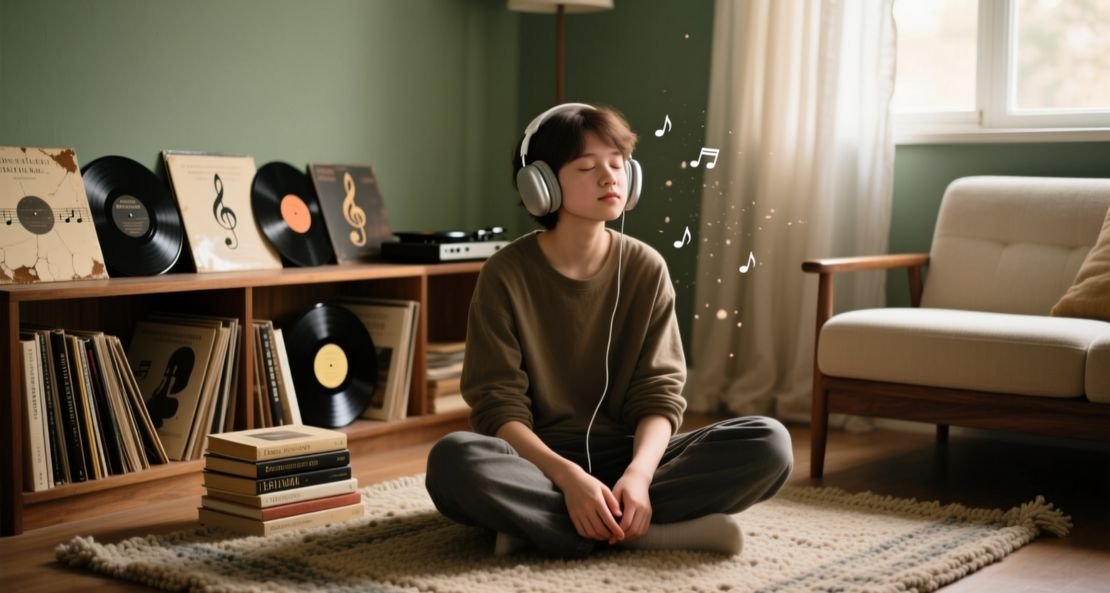
You’re at a house party. The bass thumps through the walls, conversations overlap into white noise, and someone’s trying to get everyone to play beer pong.
Meanwhile, you’re calculating the socially acceptable exit time so you can get home to that Phoebe Bridgers album you’ve been saving for the right headspace. If this scenario hits close to home, you’re not alone. And you’re definitely not broken.
Music lovers who gravitate toward smaller social circles or solitary listening sessions often share specific personality traits that shape how they connect with both sound and people. These aren’t flaws or signs of social deficiency.
They’re characteristics that influence everything from musical taste to creative output, from the artists we idolise to the communities we build online.
Let’s talk about what actually makes certain music fans tick differently, and why having three close friends and a killer Spotify library might be exactly the kind of social life that works.
Deep Focus and Obsessive Interests
Some people casually listen to music. Others build entire Notion databases cataloging every B-side, live recording, and demo track their favourite artist ever released.
If you’ve ever spent three hours falling down a Wikipedia rabbit hole about shoegaze production techniques or can recite the exact setlist from a Radiohead show in 2006, this trait probably defines you.
Research suggests that people with intense special interests often prefer depth over breadth in their social connections. The same brain wiring that lets you memorise every lyric Elliott Smith ever wrote also makes small talk at networking events feel like psychological torture.
You’d rather have one friend who’ll debate the meaning behind Mitski’s “Working for the Knife” for an hour than ten acquaintances who think indie music is “just sad guitar stuff.”
Artists like Sufjan Stevens and Fiona Apple exemplify this trait. Stevens’ albums demand repeated listens to catch every orchestral detail and obscure historical reference. His fans don’t just hear the music; they study it.
Apple disappeared from public life for years between albums, focusing intensely on perfecting her craft rather than maintaining industry relationships. Both artists attract listeners who value the same kind of concentrated attention.
Vinyl collectors understand this impulse intimately. You don’t just buy records; you research pressing quality, hunt for first editions, and build listening rituals around Saturday mornings with coffee and a clean stylus.
This isn’t hoarding. It’s curation driven by genuine passion, and it creates a different relationship with music than someone who lets Spotify’s algorithm decide their soundtrack.
The album-listening experience itself rewards this personality type. Sitting with Kendrick Lamar’s “To Pimp a Butterfly” from start to finish, catching the way themes develop and songs reference each other, offers something fundamentally different than playlist culture.
It’s a solitary but deeply satisfying way to engage with art, and it doesn’t translate well to party environments where people treat music as background noise.
High Sensitivity to Stimulation
Ever left a concert early not because the band sucked, but because the crowd’s energy felt physically overwhelming?
Do fluorescent lights and open-plan offices make you want to crawl into a sensory deprivation tank?
High sensitivity isn’t weakness or antisocial behaviour. It’s a nervous system that processes more information, more intensely, than the average person’s.
According to psychologist Elaine Aron’s research, approximately 15-20% of the population classifies as highly sensitive persons (HSPs).
These people pick up on subtleties others miss: the slight pitch shift in a vocalist’s voice, the emotional subtext in a conversation, the way a room’s acoustics change the feel of a song. This makes them incredible listeners but terrible at crowded bars.
Thom Yorke of Radiohead has spoken about his discomfort with large social gatherings and the music industry’s networking culture.
His lyrics often explore alienation and overstimulation (“fake plastic trees,” anyone?). The band’s music rewards sensitive listening: layered textures, unconventional structures, electronic experimentation that reveals new details on every listen.
Their fanbase tends toward people who’d rather dissect “Pyramid Song” in a quiet room than discuss it at a loud afterparty.
Bedroom producers and lo-fi artists particularly attract highly sensitive listeners. Artists like Clairo, Cavetown, and mxmtoon built careers making intimate, quiet music that feels like it was recorded in a friend’s apartment (because often, it was).
The aesthetic isn’t just trendy; it’s functional. Soft vocals, minimal production, and confessional lyrics create a sonic environment that doesn’t assault sensitive nervous systems.
The whole genre of ambient music exists because some people need sound that doesn’t demand attention but provides gentle stimulation.
Brian Eno pioneered ambient music specifically to create environments, not entertainment. William Basinski’s “The Disintegration Loops” offers hours of slowly degrading tape loops.
Stars of the Lid makes guitar-based drone music that unfolds over 20-minute tracks. These artists serve listeners who find overstimulating music physically uncomfortable.
Music therapy research shows that highly sensitive people often use music to regulate emotions and manage overstimulation.
A carefully chosen playlist becomes a tool for nervous system regulation, not just entertainment. When your social energy drains quickly, music provides comfort and connection without the cost of actual human interaction.
Independence and Self-Reliance
The DIY music scene didn’t emerge from people who loved networking. It grew from musicians who’d rather record in their bedroom than compromise their vision for a label deal.
The same independence that drives someone to learn home recording, graphic design, and social media marketing so they can release music on their own terms also shapes how they approach friendship.
Independent-minded people tend toward quality over quantity in relationships. They don’t need constant social validation because they derive satisfaction from their own projects and interests.
This doesn’t mean they’re loners; it means they’re selective. They’d rather skip the group chat and meet up one-on-one with the friend they actually connect with.
Mac DeMarco built his career independently, recording in his apartment and maintaining creative control.
Frank Ocean famously bought himself out of his major label contract to release music on his terms, then disappeared from public life for years.
Bon Iver’s Justin Vernon recorded his breakthrough album alone in a Wisconsin cabin during winter. These artists model a kind of success that doesn’t require networking dinners or playing the industry game.
The rise of Bandcamp, SoundCloud, and bedroom pop demonstrates how technology supports musical independence.
Artists like Clairo went from posting tracks on Bandcamp to signing with major labels without traditional industry gatekeeping.
Her early music was made alone in her bedroom, addressing topics like social anxiety and feeling out of place. The medium matched the message.
This independence extends to music discovery. People who prefer smaller social circles often trust their own taste over algorithmic recommendations or friend suggestions.
They browse record stores for hours, follow obscure music blogs, and build playlists with the same care others put into maintaining large friend groups. The solitary pursuit of good music becomes its own reward.
Online music communities serve these personality types well. You can discuss music theory on Reddit, share discoveries on Discord servers, and connect with people over shared obsessions without the social overhead of maintaining real-world friendships.
These communities offer connection on specific terms: shared interest, flexible engagement, no small talk required.
Selective Social Energy
Some people recharge by going out. Others recharge by staying in with a good album and decent speakers. This isn’t introversion versus extroversion in the simple sense; it’s about how you manage a finite resource.
Social energy depletes differently for different people, and music fans who prefer smaller circles have often accepted that their batteries drain fast in group settings.
The difference between intimate gigs and festival culture illustrates this split. A sold-out arena show offers spectacular production and collective energy, but the experience is often passive: you watch, you absorb, maybe you sing along.
A 50-capacity venue show where you can see the artist’s guitar pedal settings and they acknowledge your request between songs offers something entirely different. It’s active, personal, and far more draining because it requires real presence.
Soccer Mommy (Sophie Allison) writes extensively about social exhaustion and the pressure to maintain friendships while touring.
Her music addresses the guilt of canceling plans and preferring solitude, themes that resonate with fans who share these experiences. The song “Your Dog” captures the uncomfortable feeling of not meeting someone’s social expectations while knowing you can’t force yourself to be different.
Festival culture versus intimate shows represents two different approaches to musical community. Festivals offer the illusion of shared experience, but you’re mostly anonymous in a crowd.
Smaller shows require social engagement: you might talk to the artist, other fans will try to befriend you, the bartender will remember your order.
For people who manage social energy carefully, that intimacy can be wonderful or exhausting depending on their current reserves.
Online music communities again serve this trait well. You can participate in lengthy discussions about Björk’s vocal techniques when you have energy, then lurk silently for weeks when you don’t.
Discord servers dedicated to specific genres or artists let people engage on their own terms. The social contract allows disappearance without explanation.
Music journalists and critics often fit this profile. The job requires deep listening, analysis, and articulation, all fairly solitary activities.
You attend shows alone, write reviews in isolation, and occasionally interact with editors or other writers. It’s a career that suits people who’d rather think deeply about music than schmooze at industry parties.
Creative Introspection
Songwriting, particularly confessional indie and folk styles, requires the ability to sit alone with uncomfortable emotions and translate them into art.
Artists who write from personal experience need solitude to process their internal worlds. Their fans often share this trait: the capacity and preference for turning inward rather than seeking external stimulation.
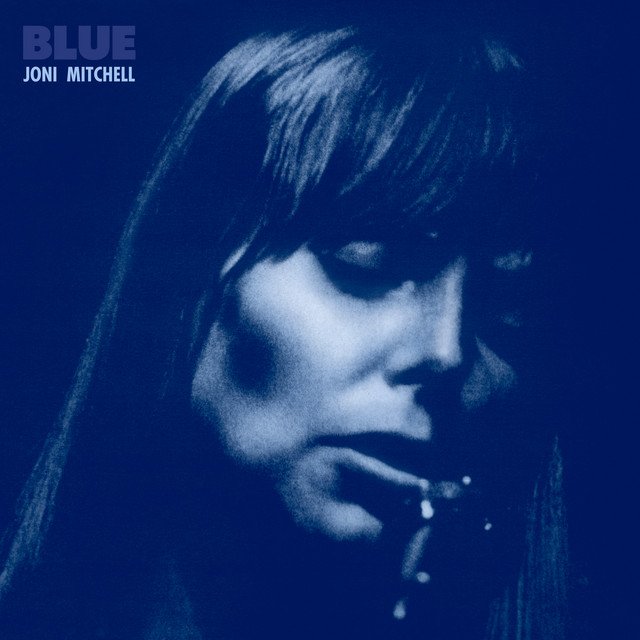
Joni Mitchell’s “Blue” remains the gold standard for introspective songwriting. She wrote it during a period of self-imposed isolation, processing relationship endings and personal searching.
The album’s vulnerability comes from someone willing to examine her emotional life with brutal honesty. You don’t write “River” at a party; you write it alone, facing truths you’ve been avoiding.
The emo and indie emo genres exist entirely because some artists process emotions through music rather than conversation.
American Football’s “Never Meant” captures the aching nostalgia of growing apart from people without a single moment of extroverted energy.
The music itself is math-rock complexity played at bedroom volume levels, technical enough to reward close listening but emotionally raw enough to feel like reading someone’s diary.
Modern artists continue this tradition. Phoebe Bridgers’ “Punisher” explores depression, relationship anxiety, and existential dread with specific, vivid imagery.
Her fans often cite feeling “seen” by lyrics that articulate experiences they couldn’t explain to friends. boygenius (Bridgers, Lucy Dacus, and Julien Baker) took this further, three introspective songwriters collaborating on music about the difficulty of connection even when you desperately want it.
Julien Baker’s music particularly speaks to people who process life internally. Songs like “Appointments” and “Turn Out the Lights” document depression, addiction, and faith struggles with unflinching detail.
Baker has discussed how songwriting functions as emotional processing for her, a way to examine and understand her own experiences. Her fans often use her music similarly, as a tool for self-reflection rather than party soundtracks.
The production style of introspective music also matters. Minimalist arrangements leave space for lyrical focus.
Bon Iver’s falsetto and sparse instrumentation, Elliott Smith’s double-tracked whispers, Adrianne Lenker’s barely-there guitar: these aesthetic choices suit artists and listeners who value emotional clarity over sonic bombast. The quiet demands attention in a way that stadium rock doesn’t.
Creative introspection extends beyond songwriting. Music photographers, album cover artists, and music video directors often work in solitary focus.
The creative process across artistic mediums tends to require alone time for deep work. People who gravitate toward creative pursuits naturally spend less time socialising because their energy flows into their work.
Why This Matters
Music culture often presents a false choice: either you’re a social butterfly hitting every show and making industry connections, or you’re missing out.
But some of the most dedicated music fans, the ones who genuinely drive culture forward, operate differently.
They’re the people writing 3,000-word Rate Your Music reviews, moderating genre-specific subreddits, running music blogs that three hundred dedicated readers check daily, and actually buying physical albums to support artists.
The internet made it possible to build musical community without geographic or social proximity. You can connect deeply with someone across the world over a shared love of slowcore without ever meeting them.
Discord servers for specific artists let fans dissect lyrics and share rare recordings. Music Twitter offers constant discourse (some good, much terrible) without requiring anyone to leave their apartment.
This shift benefits people who prefer smaller social circles. You’re not limited to whoever happens to live nearby and attend local shows.
You can find your specific people: the ones who care about the same obscure subgenres, share your analytical approach to listening, or simply understand why you’d rather stay home with a new album than go to a club.
The traits discussed here often cluster together. Someone with intense focus might also be highly sensitive and prefer independence.
These aren’t separate personality types but overlapping characteristics that influence how people engage with music and social life.
None of these traits represent problems that need fixing. They’re different ways of moving through the world, with their own strengths and challenges.
Understanding these patterns helps explain why certain music speaks to you while leaving others cold. Why some artists’ fanbases feel like finding your people, while others seem alien despite critical acclaim.
Why you’d rather text a friend about a new release than discuss it at a party. Your personality shapes your musical taste, and your musical taste reflects your personality.
If you’ve got three close friends, a carefully curated music library, and zero interest in expanding your social circle just for the sake of numbers, you’re not antisocial.
You’re not missing out. You’re just someone who figured out that depth beats breadth, that solitude enables creativity, and that sometimes the best company is the right album at the right moment.
The music industry increasingly recognises different ways of being a fan. Artists build Patreon communities for dedicated supporters.
Labels release deluxe editions with extensive liner notes for collectors. Streaming services offer endless deep cuts for obsessive listeners. The culture makes room for people who engage deeply rather than broadly, and that space keeps expanding.
Your social life doesn’t need to look like anyone else’s. If your idea of a perfect Saturday involves your favourite records, maybe one good friend, and several hours of uninterrupted listening, you’re living correctly for your personality.
The music you love often comes from artists who felt the same way. Their art exists because they chose creation over socialisation, depth over breadth, quality over quantity.
So next time someone suggests you “get out more” or questions your small social circle, remember: you’re in good company.
Some of the best music ever made came from people who’d rather be alone in a studio than networking at an industry party. Your personality isn’t a bug; it’s a feature. And the music you love proves it.
You might also like:
- The Science of Attraction: Psychological and Biological Factors That Drive Love
- What Are The Effects Of Music On Human Behaviour?
- How Music Affects the Brain: A Powerful Guide to Boost Your Brain Health and Performance
- Exploring the Emotional Impact of Music on Student Well-being and Mental Health
- Music & Wellness: Music Designed for Focus and ADHD
- The Ultimate Guide to Indie Music: Definition, History, and Examples