

Most artists leave thousands of pounds unclaimed each year. Not because platforms aren’t paying, but because they don’t know which money streams exist or how to collect them.
This isn’t about what Spotify pays versus Apple Music (we’ve already covered which platforms pay best). This is about the mechanical execution required to actually receive every payment you’re owed, convert casual listeners into premium subscribers, and systematically increase your streaming income.
The Money Most Artists Never Collect
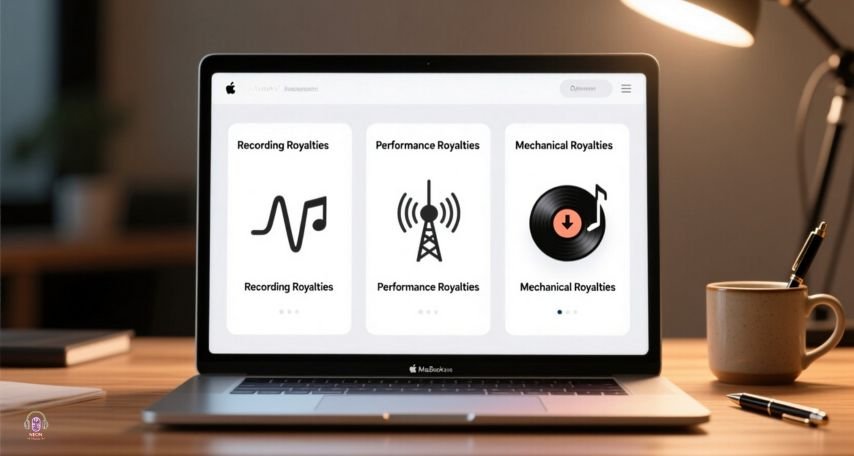
When your song plays on Spotify, three separate payment streams generate. Most independent artists collect only one of them.
Recording Royalties: What You Probably Already Get
Your distributor sends your music to platforms and collects recording royalties (master rights payments). This money goes to whoever owns the master recording. If you’re independent, that’s you. This is the payment most artists know about because distributors handle it automatically.
Performance Royalties: The Money You’re Missing
The majority of songwriter money from Spotify, Apple Music and all other streaming services are mechanical royalties, not performance royalties, and ASCAP, BMI etc do not collect mechanical royalties. This fundamental misunderstanding costs musicians serious money.
Performance royalties generate whenever your music plays publicly: radio, television, shops, bars, live venues, streaming services. PROs collect royalties on behalf of songwriters and publishers whenever their music is performed publicly.
In the UK, join PRS for Music. In the US, choose between ASCAP or BMI. ASCAP charges a one-time membership fee of £38 for songwriters and £38 for publishers, while BMI doesn’t charge any fee for songwriters to join but charges £115 for publishers.
Critical step most artists miss: If you don’t register a publishing company with ASCAP, you will only get half of your money, as they split publishing and songwriter royalties 50/50.
Create a vanity publishing company (literally just make up a name like “Sunset Music Publishing”) and register it alongside your songwriter account. Otherwise, you forfeit 50% of your performance royalties.
For BMI, you don’t need the vanity publisher setup. If you are an unaffiliated songwriter with BMI, you don’t need to register a vanity publishing company as BMI will pay you 100% of the money.
Mechanical Royalties: The Third Payment Stream
Mechanical royalties generate whenever your song gets reproduced: physical sales, downloads, streams. In the US, the Mechanical Licensing Collective (MLC) now collects these royalties from streaming services, and you are legally owed these mechanicals.
The MLC holds money waiting for you. Register at themlc.com immediately if you’re based in or have streams from the US.
Outside the US, your local mechanical rights organisation collects these. In the UK, that’s MCPS (now merged with PRS operations).
Most independent artists use publishing administration companies to chase down global mechanicals. Services like Songtrust, Sentric or CD Baby Pro collect both performance and mechanical royalties worldwide. Admin publishing companies take their commission (15-20%) and pay you out the rest, but they track down money from territories and sources you’d never find independently.
Action step: If you released music in the past five years and haven’t registered with a PRO or mechanical rights organisation, thousands of pounds likely sit unclaimed. Register today.
Choosing Your Distributor: The Hidden Costs
Distribution services look similar on the surface. They all get your music onto platforms. But fee structures, payout timing, and additional costs vary dramatically.
The Annual Subscription Model
DistroKid pioneered unlimited uploads for a flat annual fee. DistroKid does not charge a commission at all, passing along 100% of royalties, currently starting at £17.99 yearly.
Artists releasing multiple tracks annually benefit most. If you drop one single and two EPs across 12 months, unlimited uploads make financial sense. But if you release two singles yearly, you’re paying more than necessary.
Hidden costs: YouTube Content ID (£4.95 per track yearly, plus 20% of earnings), collaborator splits, lyrics distribution. These “extras” add up quickly.
Speed represents DistroKid’s main advantage. Releases typically go live within 24-48 hours. For time-sensitive drops tied to promotional campaigns, this matters.
The Per-Release Model
CD Baby charges £7.50 per single and £22 per album, with no annual fees. The service takes 9% commission on digital sales and streams.
Mathematics: An artist earning £300 yearly from streaming pays CD Baby £27 in commission versus DistroKid’s £17.99 subscription. But that artist spent £22 uploading the album to CD Baby in the first place, making total first-year costs £49.
CD Baby makes sense for artists releasing infrequently or testing the waters before committing to annual subscriptions. You pay once, and your music stays live forever without recurring fees.
The Middle Ground
TuneCore recently switched to subscription pricing. TuneCore offers three annual plans: Rising Artist at £17.99/year for unlimited releases, Breakout Artist at £29.99/year, and Professional at £37.99/year. Artists keep 100% of royalties.
TuneCore’s publishing administration service distinguishes it. For a £56 one-time fee and 15-20% commission, TuneCore users get full access to publishing administration, collecting mechanical royalties for streams and sales, plus direct licensing royalties for sync, master use, YouTube and print.
If you’re not separately using Songtrust or another admin publisher, TuneCore’s built-in publishing administration catches money other distributors miss.
Decision framework:
- Releasing 4+ tracks yearly + want speed = DistroKid
- Releasing 1-2 tracks yearly + want simplicity = CD Baby
- Want publishing administration included = TuneCore
- Already have separate publishing admin = Choose based on release frequency
Playlist Strategy: Beyond Hoping for the Best
Getting playlisted isn’t luck. It’s systematic outreach combined with understanding how curation actually works.
Editorial Playlist Pitching: What Actually Works
Use Spotify for Artists to pitch an upcoming, unreleased song to playlist editors, delivering your music to Spotify at least 7 days before release date so editors have time to listen.
Most pitches fail because they’re generic. Describe your song’s genre and vibe clearly, compare your sound to artists that are already well-known to give curators an easy reference point, and keep it clear and concise as Spotify limits you to 500 characters.
Effective pitch template:
“[Your location] artist blending [specific subgenre] with [specific subgenre]. This track channels [well-known artist] meets [well-known artist] energy, perfect for [specific playlist name] or [specific playlist name]. Opening lyric creates immediate emotional anchor with [brief description of feeling, not technical specs]. Produced by [credible producer if you have one] / self-produced in [unusual interesting detail about recording].”
What doesn’t work: “This is a pop song I think your listeners will enjoy.” Every artist thinks that.
What works: Opening with cinematic description that drops you right into the story, teasing mystery, danger, and emotion all in one punchy line.
Mentioning video, Meta Ads, Submithub, and social content shows that this release has momentum behind it. Editors want songs gaining traction, not tracks languishing in obscurity.
Independent Playlist Outreach
Independent playlists created by third-party curators, ranging from influencers to music bloggers, are often more accessible than editorial playlists.
Find curators through:
- Searching Spotify for playlists in your genre with 1,000-50,000 followers (sweet spot for engagement)
- Checking who playlisted similar artists
- Using tools like Chartmetric or Playlist Push to identify active curators
Outreach approach that works:
“Hi [curator name], I’ve been following
for [timeframe] and particularly love your inclusion of [specific artist] and [specific artist]. My new track [song name] shares similar [specific element – production style, vocal approach, mood]. Here’s the link: [Spotify URI]. No pressure either way, and thanks for the work you put into curating.”
Personalisation matters. This personalised approach shows you’ve done your homework and aren’t just spamming curators with random submissions.
Batch outreach to 20-30 curators per release. Expect 5-10% response rate. A single playlist placement with 5,000 engaged followers can generate more value than larger but passive lists.
Building Your Own Playlist Engine
Creating your own playlist is a strategic way to showcase your sound and build a following by curating a blend of your own tracks and new music from others.
Create genre-specific playlists including:
- Your tracks (10-15% of total)
- Similar established artists (30-40%)
- Other emerging artists in your scene (50-60%)
Update weekly. Share on social media. Tag artists you’ve included. Many will share back, exposing your playlist (and your tracks within it) to their audiences.
This isn’t vanity. Promotion is key – share your playlist on social media accounts, and consider linking to it in your music video plans, using platforms like TikTok, Instagram, and Facebook to drive more listeners to your public playlists.
Data-Driven Optimisation: Using Analytics to Make Decisions
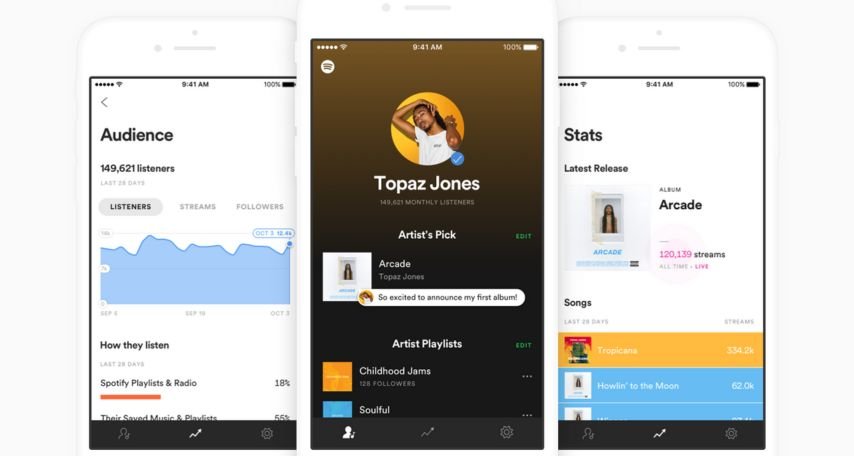
Spotify for Artists provides mountains of data. Most artists glance at total streams and ignore the rest. That’s leaving money on the table.
Geographic Targeting
Knowing where in the world your music is hitting the hardest is a major advantage, as this data can be a game-changer when it comes to planning tours or promotional campaigns.
Check your top cities monthly. If 40% of your streams come from Manchester, London and Birmingham, target UK-specific playlists and run geo-targeted social media ads to those cities.
Streaming payouts vary dramatically by region. Artists with strong US and European audiences earn more per stream than those with listener bases in developing markets.
Tactical application: An artist with substantial fanbase in both Europe and North America can capture peak listening hours in both regions by carefully selecting release time, maximising exposure through this strategic approach to ensure music reaches the widest possible audience.
Release your track at 00:01 in your primary market’s timezone. If your biggest audience lives in New York, release at midnight EST. This puts your track in Release Radar playlists exactly when those listeners typically check new music Friday morning.
Listener Conversion Metrics
Spotify introduced new audience segments allowing artists to dive deeper into how their audience is changing over time, make strategic decisions on how to gain new listeners, re-engage their audience, and grow their fan base.
Track your listener-to-follower conversion rate. If 10,000 people streamed your track but only 200 followed your profile, something’s disconnecting. Either your profile lacks compelling content (fix your bio, add Artist Pick, update photos) or the track attracted wrong-fit listeners who won’t become fans.
Spotify Analytics can help you understand and optimise engagement metrics, showing how many saves your tracks are getting, how many users are adding songs to playlists, and the listener-to-stream ratio for tracks.
Action metric: Saves and playlist adds signal to Spotify’s algorithm that your track deserves broader exposure. Spotify’s algorithm rewards engagement – things like how long people listen to your song, whether they save it to their library, and how often they share it.
Encourage saves explicitly. Instagram stories asking “Save this track if you’re feeling it” convert better than generic “go stream my song” posts.
Release Timing Optimisation
Successful artists treat historical performance data like a roadmap, analysing when their previous releases performed best, examining factors like the day of the week and even the time of day.
Check your Spotify for Artists audience tab. When are your listeners most active? If data shows peak listening between 16:00-20:00 on weekdays, that’s when your followers check Release Radar and Discover Weekly.
Friday remains the standard release day, but consistency is key when it comes to Spotify’s algorithm, as regular releases keep your name in the mix and maintain engagement, meaning you stay on the algorithm’s radar.
Drop singles every 6-8 weeks rather than saving everything for one album. Each release creates a new opportunity for playlist placement and algorithmic discovery.
Converting Free Listeners to Premium Subscribers
Premium subscribers generate 3-4 times more revenue per stream than free tier listeners. You can’t directly convert other artists’ fans, but you can optimise your own audience’s upgrade rate.
Why This Matters
Check your Spotify for Artists listener breakdown. What percentage use premium versus free accounts? If 60% of your streams come from free tier, you’re earning significantly less than artists with 80% premium listeners.
You can’t force upgrades, but you can attract demographics more likely to subscribe. Demographic information can have significant impact on marketing strategies – younger audiences may be more engaged on social media platforms like TikTok or Instagram, while older audiences may be more responsive to email newsletters or Facebook posts.
Listeners aged 25-45 with disposable income convert to premium at higher rates than teenagers on free accounts. Targeting tour dates, email campaigns and social ads toward older demographics brings in listeners who pay more per stream.
Indirect Conversion Tactics
Share Spotify links over YouTube or SoundCloud embeds. When someone clicks your Spotify link, they enter Spotify’s ecosystem where premium upgrade prompts appear regularly.
Feature exclusive content on Spotify. If you release acoustic versions, live recordings or bonus tracks exclusively on streaming platforms (not YouTube), fans wanting that content must engage with services that monetise listens.
Build email lists and communicate directly. Compare streaming income to direct sales – an artist with 500 dedicated fans who each buy two releases a year at £7 each makes £7,000, more than most artists earn from streaming. Email subscribers who genuinely support your work convert to premium accounts because they’re invested beyond casual listening.
Algorithm Optimisation: Technical Execution
Spotify’s algorithm determines which listeners discover your music through Release Radar, Discover Weekly and Radio features. The algorithm analyses listener behaviour, song metadata, and audio characteristics to recommend music matching each listener’s taste.
Metadata Accuracy
Music editors have to comb through thousands of tracks to find material they need, so incorrect information or sarcastic remarks can hurt your chances of connecting with them.
Genre tags, mood descriptors, language settings and cultural identifiers tell algorithms where your music fits. Getting these wrong means Spotify recommends your track to listeners who’ll skip it immediately, tanking your algorithmic performance.
If there’s discrepancy between your expected and actual perception by algorithms on Spotify, you end up recommended to people who will never become fans. A metal band whose acoustic ballad succeeded on mellow playlists then saw decreased algorithmic streams when their heavier catalogue got recommended to ballad lovers who rejected it.
Be specific with genre tags. “Alternative rock” is too broad. “Post-punk revival” or “dream pop” helps algorithms find your actual audience.
Platform-Specific Features
Artists who use platform-specific features are favoured – artists with playlist picks on their profiles and Canvas on their songs get more visibility than those who don’t.
Upload Canvas (looping 3-8 second videos) for every track. When Now Playing view is open, listeners save or playlist tracks with Canvas over 4x more on average compared to tracks without one.
Set your Artist Pick. Spotlight your newest release, most successful track, or upcoming show. Change it monthly to keep your profile active.
Add lyrics to all tracks. Apple Music and Tidal display full lyrics; Spotify requires Musixmatch integration but it’s worth the hassle for discoverability.
Engagement Signals
Spotify’s algorithm rewards engagement – save rates, playlist additions, completion rates, and shares all signal quality.
Optimisation checklist:
- Track intros under 10 seconds (reduces skip rate)
- Strong hooks in first 30 seconds (counts as stream after 30 seconds)
- Ending that doesn’t trail off awkwardly (improves completion rate)
- Professional mixing and mastering (increases saves)
Ask fans explicitly to save tracks and add to playlists. Real-time data processing enabled the algorithm to adapt much faster to changes in users’ preferences, meaning immediate post-release engagement determines algorithmic momentum.
Beyond Streaming: Supplementary Revenue
Independent artists increasingly bypass streaming poverty through direct-to-fan sales. But whilst building those alternatives, maximise what streaming offers.
Merch integration: Spotify now lets you add merch links directly to your profile. Update this section with actual products, not generic “coming soon” placeholders.
Tour dates: Spotify promotes events to fans as they listen to your music in the Now Playing view, on your artist profile’s Events tab, and through personalised recommendations. Keep tour dates current.
Pre-saves: If an artist set up a Countdown Page in 2024, they’ll see how many presaves it generated towards that project. Pre-saves signal to algorithms that your release has momentum, improving playlist consideration.
Sync licensing: Register with libraries like Musicbed, Artlist and Epidemic Sound. A single TV placement pays what a million streams would generate.
The 30-Day Action Plan
Most artists feel overwhelmed by all this information. Here’s your implementation schedule:
Week 1: Collection Systems
- Register with PRO (PRS for Music / ASCAP / BMI)
- Register vanity publishing company if using ASCAP
- Sign up for MLC (US) or MCPS (UK)
- Review distributor contract for hidden fees
Week 2: Profile Optimisation
- Upload professional photos and banner to all platforms
- Write compelling 150-word bio
- Add Canvas to all existing tracks
- Set Artist Pick
- Update social links and tour dates
Week 3: Playlist Research
- Identify 30 independent playlists in your genre (1,000-50,000 followers)
- Find curator contact info
- Draft personalised outreach messages
- Create your own branded playlist with 20 tracks (3 yours, 17 others)
Week 4: Analytics and Strategy
- Review Spotify for Artists geographic data
- Identify top 3 cities
- Check premium vs free listener split
- Analyse save rates and playlist adds
- Plan next release based on historical performance data
Repeat the playlist outreach monthly. Update analytics review weekly. Optimise based on what the data actually shows, not what you hope it shows.
The Reality Check
None of this guarantees success. Streaming economics remain fundamentally flawed for most artists. But collecting every payment you’re owed, targeting the right listeners, and systematically optimising based on data moves you from hoping for the best to executing a strategy.
The difference between an artist earning £300 yearly from streaming and one earning £3,000 often isn’t talent or even audience size. It’s administrative thoroughness. Registering with PROs. Choosing distributors wisely. Pitching playlists methodically. Using analytics to make decisions instead of guesses.
Most artists leave money unclaimed because they don’t know it exists. Now you know. The systems are documented. The tools are accessible. The question isn’t whether you can collect this money. It’s whether you’ll actually do the work.