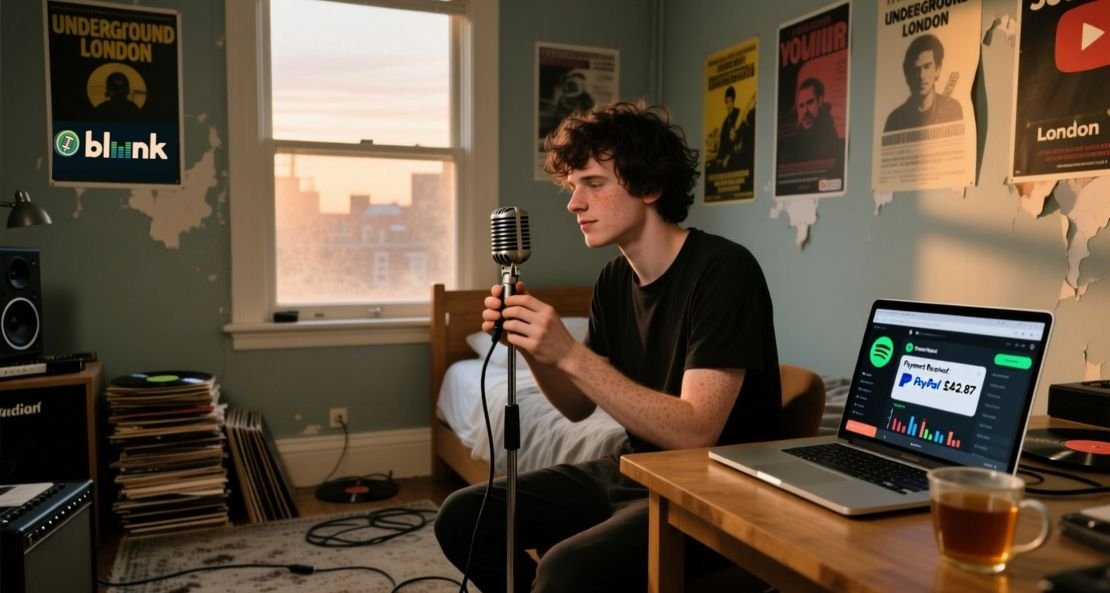
Streaming pays buttons. Everyone knows this. What’s changing is how many artists have stopped pretending otherwise.
The maths looks grim. Spotify pays roughly £0.003 per stream. That’s 285,000 streams to earn £1,000. Meanwhile, on Bandcamp, artists keep 82% of every sale. Artists are doing the sums and choosing differently.
This isn’t anti-streaming posturing. It’s about understanding where real money lives. Streaming platforms work as discovery tools. Income happens elsewhere, through direct relationships with people who actually want your music enough to pay for it.
The Sell Before You Stream Strategy
Here’s the approach that’s working: sell your music directly to fans before it touches any streaming platform. Release it through your own website or Bandcamp two to four weeks ahead of the Spotify drop.
The logic makes sense when you think about it. Your most dedicated listeners check for your new releases anyway. They’d rather support you directly than wait for the streaming version. Early access gives them something tangible, something that feels like participation rather than passive consumption.
Music industry consultant and artist advocate Curtis King shifted his entire release strategy to this model. His project ‘Storm Symphony’ pulled in £4,000 from 135 people in two weeks through the platform Even.
That same amount would need over a million Spotify streams. The traditional route would take months of waiting for distributor payments. King’s money arrived immediately.
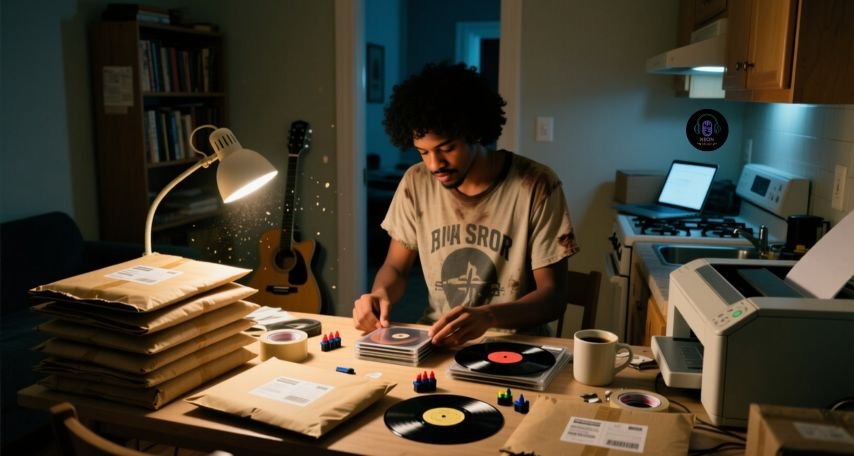
Another project, ‘Extended Warranty’, went further. King handled everything himself, from mixing and mastering at home to printing CDs through Kunaki and mailing them directly to buyers. The entire operation ran without middlemen taking cuts.
This trend has become measurable. According to Luminate’s 2024 report, direct-to-consumer sales made up 63% of first-week physical album sales among the US Top 200 albums of the year. Artists are sidestepping conventional retail and streaming services to sell directly to their fans, and it’s working at scale.
Pay What You Want Changes Everything
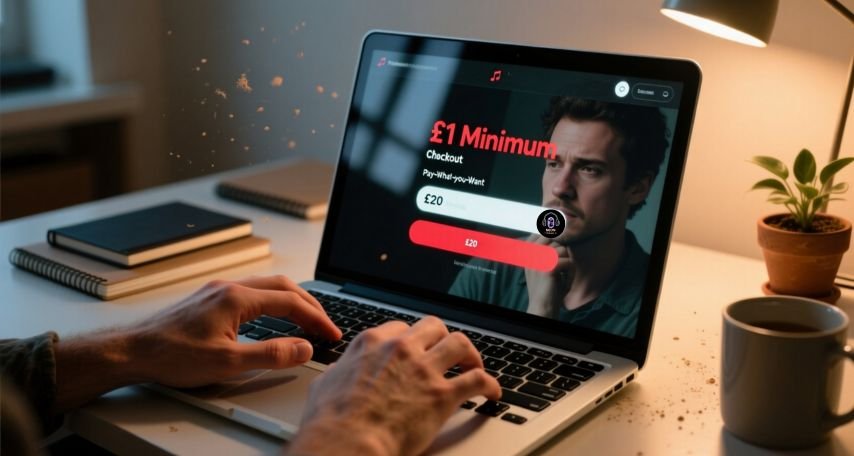
This is where it gets interesting. When artists offer pay-what-you-want pricing with a low minimum (often £1 or even free), something counterintuitive happens.
People regularly pay more than the suggested amount.The psychology here isn’t complicated. Music that matters to someone has value beyond the transaction.
Research from the University of Bonn using brain imaging found that pay-what-you-want decisions activate different neural patterns than fixed-price purchases, suggesting consumers process these transactions through both rational and social considerations.
People want to appear fair, to support artists they value, and to reciprocate when they receive something meaningful. Music business lawyer Autumn Amari, who works with independent artists, consistently sees this pattern.
Bands she’s consulted report fans paying £10, £20, sometimes £50 for digital albums when the minimum sits at £1. Eight to nine people paid £100 each for King’s ‘Storm Symphony’ because they believed in the project.
Bandcamp has made this their entire business model since 2008. Artists set their own prices, including pay-what-you-want options. The platform takes 15% on digital sales and 10% on physical goods, leaving artists with roughly 82% after payment processing.
According to Bandcamp’s own data, fans have paid artists and labels £1.62 billion through the platform. That’s not theoretical money. That’s actual revenue reaching actual bank accounts.
The platform’s Bandcamp Fridays, where the company waives its revenue share entirely, have generated over £120 million for artists since March 2020. The December 2024 event alone saw fans spend £3.1 million in a single day.
Building the Asset That Actually Matters
Your email list is worth more than your streaming numbers. This isn’t marketing hyperbole. It’s the difference between guaranteed contact and algorithmic hope.
When you post on Instagram or TikTok, you reach some fraction of your followers. The platform decides how many people see it. When you email your list, everyone gets it. That’s the entire difference between owning your audience and renting it.
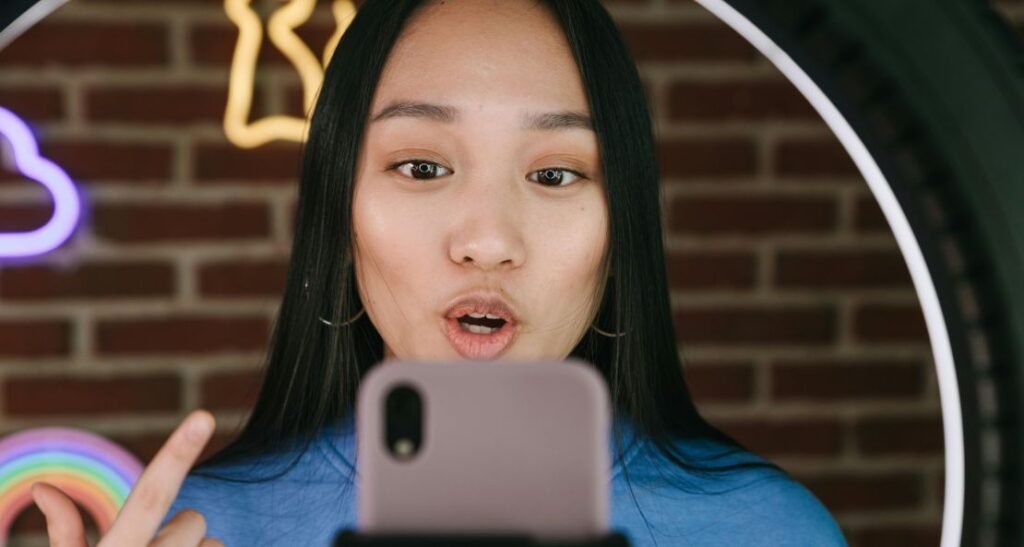
The mistake most artists make is treating email lists as promotional afterthoughts. Build the list first, then you have people to sell to. Livestreams work brilliantly for this. Go live, offer something immediate and personal, then ask people to join your mailing list for a shoutout or exclusive content.
Amari calls this ‘audience harvesting’, which sounds clinical but describes something simple: turn casual viewers into committed supporters. If 50 people watch your livestream and 20 join your email list, you’ve just created 20 direct lines to potential buyers. Do this consistently and the numbers compound.
The Platform Breakdown
Bandcamp remains the obvious choice for most independent artists. The fee structure is straightforward, payouts happen within 24-48 hours, and the platform actively supports artist-fan relationships rather than fighting against them.
When the platform was acquired by Epic Games in 2022, there was concern about commercial pressure changing the model. The subsequent sale to SongTradr in 2023 raised more questions, but the core artist-friendly approach has survived both transitions.
For artists who want more control, selling through your own website works but requires more infrastructure. Payment processing through Stripe, email list management through something like Mailchimp, hosting costs, basic web design. It’s doable, just more moving parts. Platforms like Bandzoogle and Wix handle some of this, though they usually require minimum pricing around £1.
Patreon and crowdfunding platforms like Kickstarter offer different angles. These work better for ongoing supporter relationships rather than single releases. Fans pay monthly or pledge for specific projects, usually in exchange for exclusive content, early access, or other perks.
What The Numbers Actually Show
Spotify distributed over £10 billion in 2024, which sounds massive until you realise that’s split between millions of artists.
Independent artists and labels collectively earned more than £5 billion, roughly half the total. But that £5 billion is still distributed across hundreds of thousands of acts, most earning under £5,000 annually from streaming.
Compare that to direct sales. An artist with 500 dedicated fans who each buy two releases a year at £7 each makes £7,000. That’s more than most artists earn from streaming, from a much smaller audience. The conversion rate matters more than total reach.
Research from Psychology Today shows pay-what-you-want pricing works best when customers have a previous relationship with the business, when purchases support charity causes, or when filling empty capacity. Music fits these patterns perfectly, especially for artists with engaged fanbases.
The Reality Check: What Doesn’t Get Mentioned
This isn’t a magic solution. The challenges facing independent artists haven’t disappeared, they’ve just shifted.
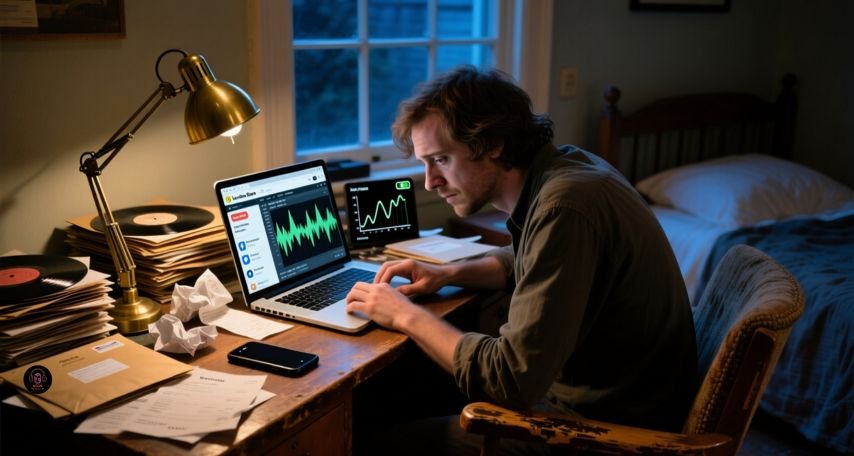
Time management becomes brutal. You’re now running an e-commerce business alongside making music. Customer service, order fulfilment, website maintenance, email marketing, social media management, all of this falls on you. Some artists thrive with this level of control. Others find it exhausting.
Building an audience from scratch remains difficult. Direct sales work brilliantly if you already have 500 people who care about your music.
Getting to that first 500 is the same grind it’s always been. You still need to make music people want to hear. You still need to show up consistently on social media. You still need to perform live when possible.
The financial risk sits entirely with you. Recording costs, mixing, mastering, marketing, all of this comes out of pocket before you see any return.
With streaming, at least your upfront costs are limited to production and distribution fees. Direct sales mean you’re betting your own money that fans will buy.
Discoverability becomes harder without playlist placement. Spotify’s algorithm and editorial playlists might pay poorly, but they do introduce music to new listeners. When you’re selling exclusively through your own channels, every new fan requires active effort. There’s no passive discovery mechanism.
According to Artist Uncut, selling 200 digital albums at £10 generates £2,000 with an 80% take-home of £1,600. The maths works. But getting 200 people to buy requires a level of fan commitment that many artists haven’t yet built. That’s the gap between theory and practice.
The Practical Steps
Stop treating streaming as your primary revenue source. Use it for discovery, for reaching new listeners who might convert into direct supporters. Your actual business model happens elsewhere.
Build your email list aggressively. Every social media post should have a call to action. Every livestream should include a signup moment. Every website visit should offer something in exchange for an email address. This list is your only guaranteed communication channel.
Release music directly to this list first. Two to four weeks before streaming, give your supporters early access. Make it feel like a privilege, because it is. They’re the ones funding your work while Spotify plays catch-up.
Set up pay-what-you-want pricing with a low barrier to entry. Make it easy to pay £1, but enable people to pay more. They will, more often than you expect. This isn’t charity. This is fair value exchange where the buyer decides the value.
Go live regularly. Weekly is better than monthly. Show up, play music, talk to people, ask them to join your list. The frequency matters more than the production quality. Consistency builds trust. Trust converts to sales.
What Changes When You Control The Transaction
The mental shift matters as much as the practical steps. When you’re dependent on streaming revenue, you’re optimising for algorithmic success. Making music that fits playlist parameters. Chasing viral moments on TikTok. Hoping the platform’s recommendation system notices you.
Direct sales change the calculation. You’re making music for the 500 or 1,000 people who’ll actually buy it. That’s liberating. You can take risks. You can make weird stuff. You can spend three years on an album without worrying whether it’ll fit into algorithmic categories.
King describes this mindset shift as the most valuable part of going fully independent. The music industry spent decades convincing artists they needed label backing, radio play, and streaming playlist placement to succeed. None of that is true anymore. You need 500 people who genuinely love your work and will pay you directly for it.
Finding those 500 people takes work. It requires showing up consistently, making genuinely good music, and treating supporters like human beings rather than metrics. But it’s achievable. And once you have them, you have a sustainable career.
The Streaming Platform As Final Stop
This doesn’t mean boycotting streaming. That would be silly. Streaming serves a purpose. It’s where people discover music. It’s where casual listeners go. It’s the background music for commutes and workouts.
Treat streaming as the last step in your release strategy, not the first. Your engaged fans get it first through direct sales. After they’ve had their exclusive window, then put it on Spotify. Those streams are bonus income, not the foundation.
Some artists are experimenting with permanent direct-only releases. King’s ‘Home Movies’ project with producer Cinematograph stays exclusively on Bandcamp. The VHS-style packaging and thematic presentation wouldn’t work as well on streaming anyway. The format matches the distribution method.
Others use streaming for catalogue but release new music direct-first. Both approaches work. The key is making a conscious decision rather than defaulting to streaming because that’s what everyone does.
Why This Works Now But Didn’t Before
The infrastructure didn’t exist a decade ago. Payment processing was clunky. Email marketing tools were expensive. Hosting your own store required technical knowledge most musicians didn’t have. Record labels filled a genuine need because doing it yourself was genuinely difficult.
All that changed. Bandcamp launched in 2008 and proved the model worked. Stripe made payment processing simple. Platforms like Wix and Squarespace made website building accessible. Email services like Mailchimp and ConvertKit offer free tiers for growing lists.
Social media gave artists direct access to potential fans without needing radio play or press coverage. You can build an audience from your bedroom. That was theoretically possible before, but the tools were harder to use and more expensive.
The cultural shift matters too. Buying music directly from artists feels normal now in a way it didn’t ten years ago. The narrative has changed from ‘music should be free’ to ‘support artists you care about’. That’s not universal, but it’s widespread enough to build businesses on.
The Verdict
The streaming poverty narrative is real. Artists earning less than minimum wage despite millions of streams. But it’s not inevitable. It’s the result of choosing a distribution model that doesn’t serve your interests. Other models exist. They work. You just have to use them.
Most artists won’t quit their day jobs doing this. But most artists won’t quit their day jobs on streaming either. The question is whether you’re earning £500 a year or £5,000 a year from your music. For most independent artists, that difference comes from direct sales, not streaming growth.
The barriers are lower than they’ve ever been. The tools are cheaper and easier to use. The audience is there, ready to support artists directly. What’s needed is the willingness to do the work, to show up consistently, and to treat music as both art and business.
You still need to make music people want to hear. You still need to show up consistently. You still need to treat your supporters well and deliver on promises. The difference is you’re paid fairly for doing those things.
Instead of hoping 100,000 people stream your track enough times to earn £300, you’re asking 100 people to pay £3. That’s a completely different ask. It requires different skills, focused on community building rather than algorithmic gaming.
The choice isn’t between streaming and direct sales. It’s about which one forms the foundation of your business model and which serves as supplementary income. Get that hierarchy right, and the rest follows.
You Might Also Like:
- How Much Do Artists Make on Spotify in 2025? (Clear Answers, Current Sources)
- Streaming Payouts 2025: Which Platform Pays Artists the Most?
- Exploring the Impact of DIY Culture on the Indie Music Scene
- Spotify Streaming Chart Watch: December 2025 Rankings
- The Most Streamed Songs on Spotify (2025 List Updated)
- Gabrielle Lynn Shines on Powerful New Single Life’s Been Crazy