

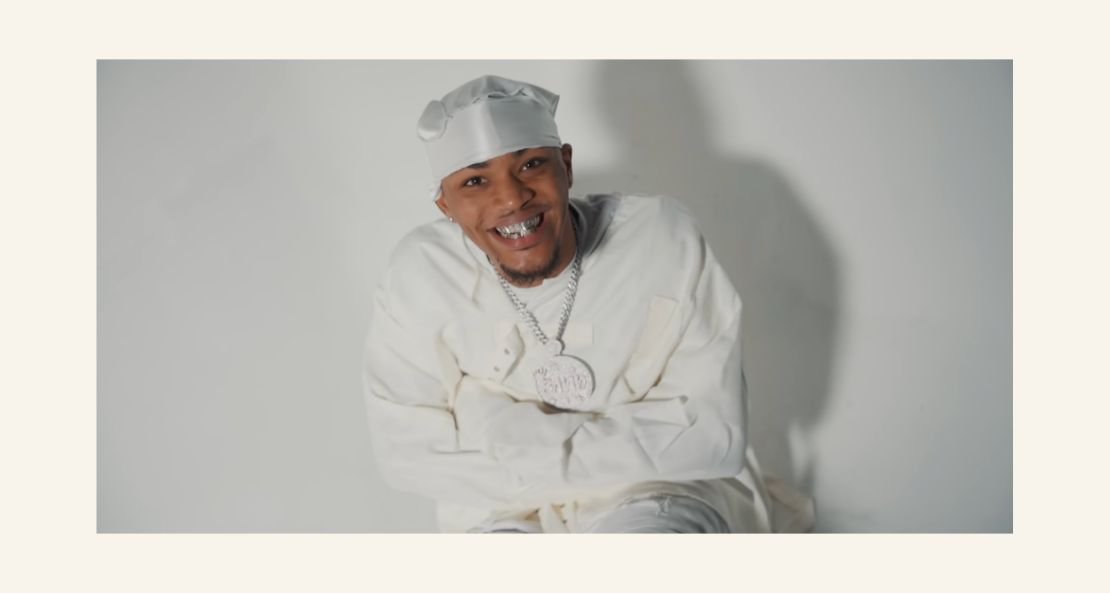
Nobody chants “boo” this many times unless they want attention. That’s where the track starts, long before the horror references or the viral choreography enter the picture. It feels less like a scare and more like someone stepping into a room and deciding silence isn’t an option anymore.
Released 17 October 2025 and produced by Jordan Randall, “BOO” landed like a seasonal drop that might have disappeared with the Halloween cycle.
It didn’t. TikTok caught the hook, YouTube numbers climbed past the million mark, and suddenly a Baton Rouge rapper who once split his time with college basketball found himself moving through charts for the first time.
Virality alone doesn’t explain why people keep searching for “boo h3adband lyrics meaning”. Something in the mood keeps pulling listeners back.
People keep searching for a neat answer. The song keeps dodging one. This isn’t a ghost story disguised as a rap track; it’s a challenge, a warning, a public declaration that someone’s arrival can’t be ignored.
If you’re wondering what the song actually means, think of it less as a horror story and more as a chant about visibility, pressure and announcing your presence. It sounds playful at first.
Then the slasher imagery slips into view and the mood tightens. Freddy Krueger, Chucky, scattered references that don’t tell a story so much as create a mood you recognise instantly.
They feel tossed off, almost casual, which is probably why they land harder than a heavy metaphor would.
Energy keeps swerving. A boast turns into suspicion, then resets before any emotion settles. When he warns listeners not to “don’t get scared now,” the bravado stops sounding playful and starts reading like a public signal that someone is stepping forward whether the room is ready or not.
Nothing stays still long enough to become a straightforward anthem. More like a moving target, the kind of record that sounds celebratory until you notice how alert the voice underneath it really is.
Production stays stripped back, almost impatient. Built on stripped Southern hip-hop drums, deep 808 bass and eerie synth textures, “Boo” moves with a half-time bounce that gives the groove a loose, reggae-like pacing, the drums leaning forward while the rhythm itself hangs back, creating a chant-ready space around H3adband’s voice.
Repetition lands early, like a knock at the door before you’ve decided whether to answer. Maybe that’s why the dance trend never felt entirely ironic. People move to it, but there’s a slight tension in the swing that doesn’t quite settle.
H3adband’s persona stretches wider than the beat itself. Born Jordan Randall and shaped by a pandemic pivot away from basketball, the artist arrived at music through interruption rather than slow planning.
Knowing that isn’t required to enjoy the track, yet it changes how the insistence of the hook reads. Less novelty, more announcement.
Somewhere along the viral climb, ownership of the chant shifted. Over a million TikTok clips later, the word “boo” stopped belonging solely to the artist.
Crowds shout it differently depending on context. Sometimes it sounds playful, sometimes confrontational.
What sounds like a Halloween gimmick is really a status signal, a way of announcing presence in a scene where silence means disappearing.
That ambiguity probably explains why the track keeps resurfacing weeks after trends usually fade.
Baton Rouge rap often leans toward heightened delivery and dramatic imagery, turning street realism into something that feels slightly larger than life. Here that exaggeration collides with algorithm culture.
Horror imagery travels well across timelines because it doesn’t require translation. You recognise the mood instantly, even if you’re only half-listening. Whether that was intentional or just a by-product of timing is harder to pin down.
Listen long enough and repetition stops feeling like a scare tactic. It starts to sound like someone calling their own name across a crowd, checking whether anyone answers back. Less ghost, more roll call. Maybe that insistence is the point, or maybe it’s just what repetition does after a while.
If you’ve followed how regional rap keeps reshaping itself online, you’ll recognise why Neon Music tends to treat moments like this as signals rather than trends. Some tracks vanish after the dance fades. Others linger because they capture a shift listeners don’t quite have language for yet.
By the end, the horror imagery feels almost incidental. What stays behind is the sense of someone forcing visibility into existence, turning a seasonal drop into a statement that refuses to fade quietly.
You might also like:


