

“White Ferrari” is Frank Ocean’s account of a relationship destroyed by silence, told across four verses of fragmented memory, ending in self-liberation with no neat exit.
Released on Blonde in August 2016, it carries no chorus, no hook, and nothing that closes cleanly. What it has instead is a sustained argument: that peace sought through another person is a setup for failure, and that the only way out of that failure is inward.
Ocean reportedly worked through fifty versions before landing on this one. The stripped production, the barely-there vocal, the Beatles interpolation folded in with no fanfare.
None of it was accidental, each choice was made in service of one question the song lives inside without answering: what do you do when you love someone whose vision of the world cannot contain yours?
White Ferrari Meaning — Key Takeaways
- White Ferrari by Frank Ocean explores a relationship that collapses because silence replaces honesty.
- The car symbolises the relationship itself: beautiful, intimate, but fragile when neglected.
- Across four verses, Ocean moves from memory and regret to acceptance and self-liberation.
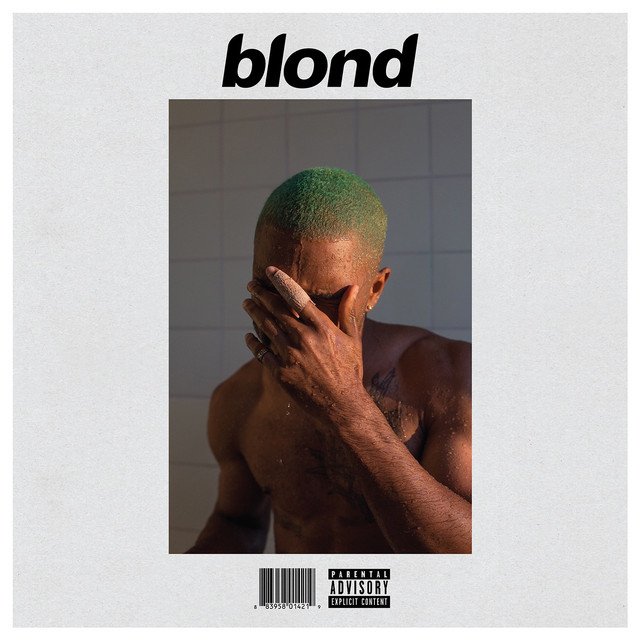
- The song appears on Blonde (2016) and features an interpolation of Here, There and Everywhere.
White Ferrari Meaning in Brief
Frank Ocean’s “White Ferrari” is about a relationship that slowly falls apart because silence replaces honesty. Instead of betrayal or conflict, the song explores how silence, familiarity, and emotional hesitation can quietly end a connection.
Across four verses, Ocean moves from memory to acceptance, concluding that the peace he searched for in the relationship can only come from within.
What Is “White Ferrari” About?
“White Ferrari” is about a relationship that dies not through argument or betrayal but through silence. The narrator and his partner share the same spaces while growing steadily apart, and the song tracks that drift across four scenes: comfortable intimacy, failed communication, acceptance, and a quiet separation of worldviews.
The Ferrari carries the central metaphor. Cars appear throughout Ocean’s work not as status symbols but as containers for moments that matter.
In the Boys Don’t Cry magazine article that accompanied Blonde, Ocean asked: “How much of my life has happened inside of a car?” The white Ferrari is that question made concrete. White for innocence, tied to the “Sweet sixteen” reference in verse one. Ferrari for something rare, high-maintenance, and easily wrecked through inattention.
Is “White Ferrari” a Metaphor?
Yes, on several levels at once.
At the most literal level, Ocean is describing car rides with a past lover. But the car is also a stand-in for the relationship itself: beautiful, performance-oriented, requiring constant attention, and easy to damage through neglect. When Ocean “forgets to speak,” the engine fails. The car stops.
It also works as a vehicle for memory. The song moves through its four verses the way a driver moves through familiar streets, revisiting the same locations with hindsight intact. Ocean stays in the driver’s seat throughout, literally and otherwise. He had control. He still crashed.
The final verse takes this further into philosophy. The “skull” line repositions everything before it. The prison the narrator has been living in was never the relationship. It was the belief that another person could supply what only internal freedom can.
The Beatles Interpolation: “Here, There and Everywhere”
“White Ferrari” interpolates the Lennon-McCartney composition “Here, There and Everywhere” from the Beatles’ Revolver album, specifically the melodic phrase around “spending each day of the year.” The credit appears in the song’s publishing information.
In the original, that melody celebrates love as omnipresence, the way a beloved person inhabits every part of your life. Ocean borrows it to mark exactly the same thing, but inverted. Familiarity in “White Ferrari” is not comfort. It is the mechanism of decay. What the Beatles framed as romantic, Ocean turns into the thing that kills them.
The interpolation arrives in verse three, the point where Ocean accepts that the relationship is over but commits to caring regardless. The nostalgic warmth of that borrowed melody sits against the resignation in the lyric. That friction is the whole song compressed into a single moment.
Who Produced “White Ferrari”?
“White Ferrari” was produced by Frank Ocean, Om’Mas Keith, and Jon Brion. Kanye West holds a writing credit. The Beatles interpolation credits Lennon-McCartney.
Jon Brion handled the instrumental architecture, building around fingerpicked guitar, spare bass, and strings that swell and recede. Om’Mas Keith shaped the sonic texture, keeping Ocean’s voice unusually warm and close for a digital recording. The full breakdown of their production choices is in the Production section below.
Verse-by-Verse Analysis
Verse One: Comfortable Silence
The song opens in a car. The narrator is driving, his partner watching clouds through the window, eyes dilated, lost to whatever they have taken. “Bad luck to talk on these rides” frames their silence as superstition, but the parenthetical “Sweet sixteen, how was I supposed to know anything?” immediately breaks that frame. This is not present-tense narration. It is memory cut through with present-tense regret.
“I let you out at Central” is both location and function. The narrator drops his partner at a hub while he continues on. The divergence is already happening in the geography.
“I didn’t care to state the plain” closes the verse with the song’s core admission. The plain statement is left unnamed. It could be “I love you.” It could be “this is ending.” Either way, keeping his mouth closed is presented not as choice but as failure. “We’re both so familiar” in this verse means comfort. By verse three, the same phrase means complacency.
Verse Two: The Failure to Communicate
The second verse closes the distance, then widens it. “Stick by me, close by me” is desperation, not tenderness. Ocean is begging, trying to hold on through sheer proximity.
“You were fine here” is not reassurance. It is a man trying to convince himself that stillness is the same as happiness.
“That’s just a slow body” is the song’s most debated line. The most direct interpretation: his partner moves slowly, languidly, not yet ready to leave, present but fading. The more pointed one: Ocean is describing himself. His body is slow to speak what his mind already knows. “That’s just” is deflection, an excuse for the silence he has already admitted is destroying them.
“You left when I forgot to speak” is where the relationship ends. Not in an argument, not in a revelation. In a pause that lasted too long.
“So I text the speech, lesser speeds, Texas speed” is the aftermath. He drives home and tries to say via text what he could not say in person. “Texas speed” suggests the slow drag of writing out words instead of speaking them, and the vast empty distance that now sits between them.
Verse Three: Acceptance
“I care for you still and I will forever / That was my part of the deal, honest.” These lines separate love from partnership. Ocean is not saying he wishes things had gone differently. He is saying his love was never contingent on the relationship continuing.
“We got so familiar” appears again. Same words, different charge. In verse one it described intimacy. Here it describes how intimacy became the problem: they knew each other so well they stopped having to say anything, and then they stopped saying the things that mattered.
The Beatles interpolation arrives here, “Spending each day of the year,” pulling nostalgia into a verse about acceptance. The melody carries warmth the lyric no longer can.
“One too many years / Some tattooed eyelids on a facelift” begins the philosophical turn. Permanence against the futile attempt to reverse time. What has happened cannot be undone.
“Mind over matter is magic, I do magic / If you think about it, it’ll be over in no time / And that’s life.” Three lines doing separate work. The first is Ocean’s coping mechanism. The second is either about the relationship or about life itself. The song does not distinguish.
Verse Four: The Incompatibility Made Explicit
The pitched vocals announce that this verse operates differently. Ocean has moved into something that looks like transcendence but is closer to clarity.
“I’m sure we’re taller in another dimension / You say we’re small and not worth the mention.” This is the song’s core argument in two lines. Ocean sees human potential as vast, multidimensional, not fixed by circumstance. His partner sees smallness, insignificance. Neither of them is wrong about the other’s position. They simply cannot both be right at the same time.
“You’re tired of movin’, your body’s achin'” shows someone who wants to stop. “We could vacay, there’s places to go” is Ocean’s answer: there is more than this, if you want it. His partner does not.
“You dream of walls that hold us in prison / It’s just a skull, least that’s what they call it / And we’re free to roam.” The prison was never external. The walls are the limits of what his partner is willing to imagine. The skull is the mind. Freedom is what happens when you stop letting someone else’s ceiling become your floor.
The song ends not with reunion or bitterness. It ends with Ocean choosing his own expansiveness over a shared smallness.
“Taller in Another Dimension”: What Does It Mean?
This couplet holds three interpretations at once.
The first is scale. Relative to ants humans are giants; relative to mountains they are negligible. Ocean is pointing to the arbitrariness of measuring significance at all. His partner accepts the smallest frame and stops there.
The second is multiverse. In another universe they are different versions of themselves: older, wiser, possibly still together. His partner cuts that off too. If there are infinite universes, they probably never met in most of them.
The third connects back to “Sweet sixteen.” In another version of this life, older and knowing more, maybe they would have worked. His partner’s reply ends it. We are still young. It does not matter. This is the interpretation with the most force, because it ties the couplet directly to the age and the failure of youth that verse one established.
“That’s Just a Slow Body”: What Does It Mean?
The line operates in two directions at once. On the surface it describes his partner: languid, present but fading, not yet in motion toward leaving. The more pointed interpretation turns inward. Ocean is describing himself, his body slow to act on what his mind already knows. “That’s just” is deflection. Every point of failure in “White Ferrari” traces back to Ocean, and this is where that pattern is most compressed.
“Text the Speech, Texas Speed”: What Does It Mean?
“Text the speech” is the failed attempt to recover a missed moment through writing. What should have been spoken becomes a message sent too late. “Texas speed” does two things: it literalises the distance, Texas being vast, the gap between them now equivalent. One way to put it is that Ocean is using the car’s voice-to-text function while driving home alone, the car once again becoming the space where things finally get said, this time to no one.
“White Ferrari” and Frank Ocean’s Car Obsession
Cars run through Ocean’s entire catalogue, from his Nostalgia, Ultra mixtape through Channel Orange and into Blonde. In the Boys Don’t Cry essay, he reflected on this directly, asking how much of his life had happened inside a car, and noting that cars had been central to how he listened to and shaped his music.
He described the car as a space of both exposure and protection: close to the world outside, shielded from it at the same time. Two people in the front seats, focused in the same direction, with little distance between them and everything they are moving through. The car is where the relationship exists most fully, because it removes every excuse not to be present.
Queer Readings of “White Ferrari”
Ocean never genders the partner in “White Ferrari.” Every pronoun used for the narrator’s companion is either “you” or absent. This is not an oversight. On Blonde, the album that followed Ocean’s 2012 Tumblr letter about falling in love with a man, the neutral pronouns are a compositional decision.
The song’s place on Blonde invites queer readings without requiring them. The ambiguity is built in. Any listener can place their own relationship into the framework Ocean builds, which is part of why the song has the reach it does. But for listeners familiar with Ocean’s biography, the ungendered address carries additional charge.
Academic attention to the song has focused on this: how Ocean handles queer identity through lyrical ambiguity, letting the music carry what the words leave open.
“White Ferrari” in the Context of Frank Ocean’s Catalogue
The “taller in another dimension” couplet connects directly to “Pink Matter” on Channel Orange, where Ocean and an unnamed sensei spar over human insignificance against the cosmos. In that song, Ocean plays the pessimist.
In “White Ferrari,” he is the optimist, and his partner occupies the nihilist position. The argument is the same. The role he plays in it has inverted.
“Thinking Bout You,” also from Channel Orange, establishes the pattern of unreturned emotional investment that “White Ferrari” continues. The themes echo the emotional uncertainty explored in Thinking Bout You meaning, where Ocean first examined how uneven emotional investment can shape a relationship.
The question “Do you not think so far ahead?” from that song finds its answer in “White Ferrari”‘s final verse. The partner does not think that far ahead. Ocean does. That incompatibility is what the song is actually about.
Why Did Frank Ocean Make 50 Versions of “White Ferrari”?
Ocean told The New York Times in 2016 that he made fifty versions of the track. His younger brother heard one and told him to release it. Ocean declined, because it had not yet given him peace.
That account maps directly onto the song’s content. The narrator spends the song searching for peace through love and failing to find it. Ocean spent the recording process searching for peace through the song and eventually finding it, not by adding more to the track, but by stripping it back. Earlier versions presumably had more instrumentation, more production. What survived was the minimum necessary to say the thing.
The parallel is exact: the song argues that peace comes not from accumulation but from reduction, from letting go of what no longer serves. Ocean found that in the recording process before he found it in the lyric.
Production and Vocal Choices
Jon Brion’s instrumental consists of fingerpicked guitar, minimal bass, and strings that breathe without ever building to a point.
The guitar is played in an open tuning, producing suspended harmonics that never fully land, mirroring the song’s lyrical decision not to close.
Those hanging chords are not a stylistic choice. They are the song’s emotional argument made sonic: some things do not conclude, they simply stop.
The guitar tone, warm and slightly recessed, places the production in a small room. Brion’s film score instincts are audible throughout. The production holds imagery: clouds, car interiors, the wide emptiness of Texas.
Ocean stays just above a whisper through the first three verses. He rarely stacks takes, preferring to let individual lines exist in their own space. The effect is that the listener is positioned in the passenger seat, close enough to hear everything but unable to intervene.
The pitch shift in verse four is a signal. The narrator has moved into a different state of mind, and the recording marks that shift explicitly. The voice rises approximately a third, creating distance between the resigned voice of verses one through three and the liberated one of verse four.
The glitching sounds that introduce verse four, arriving after the silence that follows verse three’s fade, are the “magic” Ocean referenced. The move from past to present is sonically flagged before it is lyrically stated.
Cultural Impact
Eight years after its release, “White Ferrari” remains one of the most-referenced tracks in discussions about emotional vulnerability in contemporary R&B.
Since the release of Blonde in 2016, Frank Ocean’s songwriting has continued to influence contemporary R&B artists.
Its influence is audible in the production choices of Daniel Caesar, Steve Lacy, and Brent Faiyaz, each of whom has taken something from Ocean’s approach to stripping production back to expose feeling directly.
Ocean rarely performs the song live, and the absence is worth examining. Most tracks from Blonde have appeared in some form across his infrequent concert appearances.
“White Ferrari” has not, or only in fragments. The most plausible explanation is that the song is incompatible with live performance. Its power depends on proximity and precision: the whispered vocal sitting centimetres from the listener, the open-tuned guitar in an intimate acoustic space, the silence between verses that a crowd cannot hold.
A live rendition would require Ocean to perform grief at scale, which is the opposite of what the song does. It does not perform grief. It recalls it, quietly, in a car, with one other person present. Scaling that to an arena would not amplify it. It would wreck it.
The decision not to perform “White Ferrari” live is the same one Ocean made in the studio: the song’s power lives in its smallness, and protecting that smallness is worth the cost.
Ocean’s quiet approach to heartbreak also shaped artists like Daniel Caesar, whose songwriting similarly explores vulnerability and restraint. The Best Part meaning shows how directly that lineage runs.
The song has also generated academic interest in Ocean’s use of automotive metaphors, his subversion of R&B convention, and his navigation of queer identity through ambiguous pronouns. That breadth of critical attention reflects how much the song contains beneath its deliberately sparse surface.
You might also like:
- Frank Ocean’s Novacane: The Art of Numbing What Hurts
- Frank Ocean’s American Wedding: When Hotel California Met Modern Love
- Chamber of Reflection: Mac DeMarco’s Song of Isolation and Self-Discovery
- Die for You by Joji: A Song Analysis of the Lyrics, Production and Album Context
- Unveiling the Heartbeat of Made For Me Muni Long: A Deep Dive into Its Lyrics and Soulful Journey
- The Rise of Tommy Richmans Viral Hit Million Dollar Baby
Frank Ocean White Ferrari Lyrics
Verse 1
Bad luck to talk on these rides
Mind on the road, your dilated eyes watch the clouds float
White Ferrari, had a good time
(Sweet sixteen, how was I supposed to know anything?)
I let you out at Central
I didn’t care to state the plain
Kept my mouth closed
We’re both so familiar
White Ferrari, good times
Verse 2
Stick by me, close by me
You were fine, you were fine here
That’s just a slow body
You left when I forgot to speak
So I text the speech, lesser speeds, Texas speed, yes
Basic takes its toll on me, ‘ventually, ‘ventually, yes
Ahh, on me ‘ventually, ‘ventually, yes
Verse 3
I care for you still and I will forever
That was my part of the deal, honest
We got so familiar
Spending each day of the year
White Ferrari, good times
In this life (Life), in this life (Life)
One too many years
Some tattooed eyelids on a facelift
(Thought you might want to know now)
Mind over matter is magic, I do magic
If you think about it, it’ll be over in no time
And that’s life
(Love)
Verse 4
I’m sure we’re taller in another dimension
You say we’re small and not worth the mention
You’re tired of movin’, your body’s achin’
We could vacay, there’s places to go
Clearly, this isn’t all that there is
Can’t take what’s been given (No way)
But we’re so okay here, we’re doing fine
Primal and naked
You dream of walls that hold us in prison
It’s just a skull, least that’s what they call it
And we’re free to roam