
“Wherever You Will Go” by The Calling is a song about a widower who cannot follow his dead wife, written from the imagined perspective of a man watching the woman he loved for fifty years disappear somewhere he cannot go. That is what the song means.
Everything else people have read into it, every wedding playlist it has graced, every romantic dedication it has soundtracked, is a tribute to how completely Aaron Kamin buried his actual subject inside a chorus built for mass consumption.
Kamin wrote the song after attending the funeral of his grandmother’s best friend. Her husband, married to her for over fifty years, sat in that room without her for the first time. Kamin stood there and asked himself a question: what does a person do now? What do they think about? He came to a conclusion, and it became the song’s core: all the man thinks about is finding a way back to her, or being with her, or knowing she is alright. Not moving on. Not healing. Getting back.
The lyrics carry this if you follow them closely rather than letting the chorus wash over you. Verse one opens not with a declaration of love but with anxiety about absence: who will be there to take my place when I’m gone, who will light the shadows on your face. The narrator is not chasing someone who has left. He is anticipating his own departure and dreading what it will leave behind.
By verse two, he is imagining a return, watching and guiding through darkest days, a presence that operates after death rather than before it. The bridge collapses the timeline: run away with my heart / run away with my hope / run away with my love. Not a man being left, but one whose entire emotional architecture has gone somewhere without him.
The outro asks to turn back time and make you mine, which is not the language of romantic aspiration but of loss.
The song’s meaning, then, is not I will follow you anywhere because I love you. It is closer to: I cannot follow you where you have gone, and the impossibility of that is all I can think about.
What the Production Understood
Kamin’s guitar line on the track is not particularly complex but it climbs persistently, a figure that moves upward without quite arriving. It is the sound of reaching. Producer Marc Tanner, who had worked on hits for Nelson, kept the arrangement deliberately spare in the verses: Band’s voice over clean guitar, with the drums held back until the song needs to break open. When they come in, the swell is not euphoric but heavy, the kind of swelling that belongs to funerals as much as to weddings.
Alex Band’s vocal is what makes the emotional misdirection possible. His delivery is gruff and direct, which sounds like confidence. On radio, surrounded by adult contemporary production, it feels like a man making a promise. Listen knowing the context and it sounds more like desperation. He is not telling someone he will follow them. He is saying he would, if only he could.
The conditional tense in the chorus, if I could, then I would, is the whole song. Most listeners heard a declaration. The actual meaning is an admission of powerlessness.
What the Charts Recorded
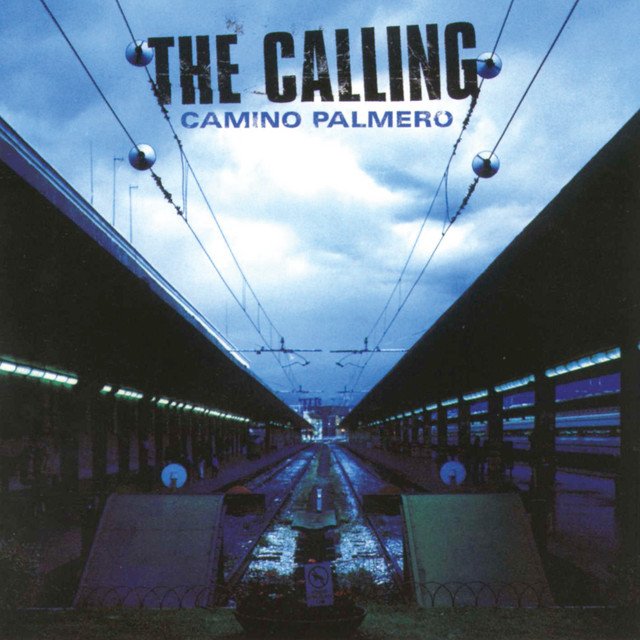
The song was released on May 22, 2001, as The Calling’s debut single from their album Camino Palmero. It peaked at number five on the US Billboard Hot 100 and then did something almost no other song has done: it sat at number one on the Adult Top 40 for twenty-three weeks, the second-longest run in that chart’s history, behind only Santana and Rob Thomas’s “Smooth.”
Billboard named it the number one Adult Pop song of the entire 2000s decade. Outside the US it topped charts in Italy, New Zealand and Poland, and reached number three in the UK. The Camino Palmero album sold over 800,000 copies.
That commercial reach matters to understanding the song’s meaning, because it tells you something about the size of the emotional nerve it hit. Adult contemporary radio is where grief goes when it needs to pass as something easier. The format’s listeners skew older, meaning a significant portion of the people keeping this song at number one for nearly six months had experienced exactly the kind of loss that inspired it. They were not wrong about what the song was doing. They just called it a love song.
The Video Disagreed With the Song
There were two music videos made for “Wherever You Will Go.” The first was shot in Mexico and quickly shelved. The second, directed by Nigel Dick and filmed in an LA sewer, became the version most people know. It features Alex Band pursuing a woman who has caught her boyfriend with someone else. She drives away. He chases.
A story about romantic betrayal and the chase to fix it, essentially the opposite of the song’s actual subject. The widower watching his wife’s coffin does not appear anywhere.
This was not an artistic decision. Nigel Dick recognised that the Mexico video did not fit and the new one did better on MTV’s Total Request Live. What it demonstrates is that the song’s surface, the chorus, the swell, the gravel and the guitar, is persuasive enough to support almost any reading. People accepted a cheating boyfriend narrative onto a song written at a funeral because the music gave them permission to project whatever loss was nearest.
The Song Keeps Finding New Grief
In 2011, London-born singer Charlene Soraia recorded the song for a Twinings tea advertisement in the UK. Her version stripped the production further, leaving little except her voice and a few guitar notes. It entered the UK singles chart and spent twenty-four weeks there, peaking at number three.
Soraia attended the Brit School alongside Adele and Kate Nash. The tea ad, which is not a context anyone would expect to incubate a hit, worked because the song’s core grief is surface-ready. It does not require context to land. You can hear it in a thirty-second ad break and understand immediately that something has been lost.
The song has since appeared in Smallville, Love Actually, Kate and Leopold, and early promotional material for Star Trek: Enterprise. It was there before its commercial release, performed live by The Calling in the 2000 film Coyote Ugly, in a bar scene, sixteen months before the single came out. The audience saw a band play a song at a bar and took it as a moment of romantic energy. The song had not yet been released. Nobody knew what it was about.
What Happened to the Band
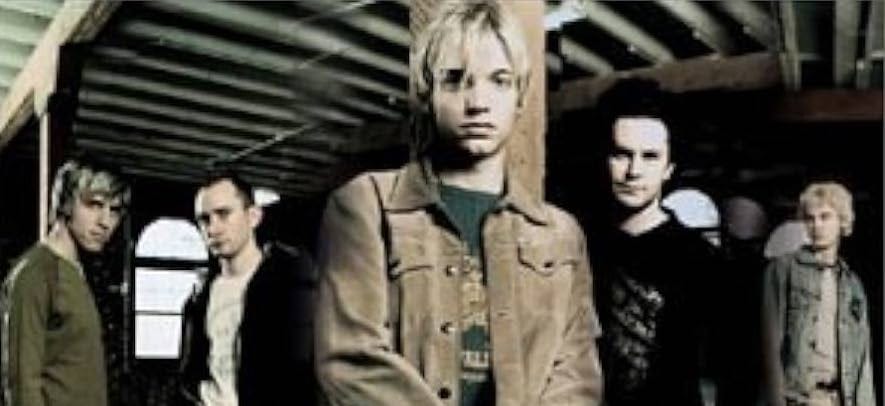
The Calling’s story after “Wherever You Will Go” is worth noting because it carries its own irony. The song was a genuine shared creation, but the band that made it fell apart through dispute over exactly what was shared.
Drummer Nate Wood and bassist Billy Mohler left in 2002 and subsequently sued Band, Kamin, and the group’s management, alleging fraud, mismanagement and unpaid royalties. Band and Kamin argued Wood and Mohler were hired hands with no entitlement to royalties.
The Calling released a second album, Two, in 2004. It underperformed. The band broke up in 2005.
The song that sold hundreds of thousands of copies and held the Adult Top 40 hostage for nearly half a year could not hold the people who made it together. The man at the funeral, the one who inspired all of it, never appears in any of this. He was just sitting in a room, thinking about someone who was gone, and Kamin happened to be watching.
Whether the song would have hit the same way if Kamin had written it plainly, about loss rather than dressed up as reunion, is a question the chart history does not answer. Twenty-three weeks at number one suggests the grief was legible even when nobody named it.
What the song means and what it was sold as are two different things, and twenty-five years later, it is still at number three in the UK, courtesy of a tea advertisement, which might be the most complete summary of its career.
You might also like:
- Nirvana’s Smells Like Teen Spirit: A Deep Dive into the Lyrics and Legacy
- Blink-182 Adam’s Song Meaning: A Journey of Hope and Reflection
- The Lyrics and Legacy of Creep by Radiohead
- Coldplay’s Viva La Vida: The Tragic Fall of a King
The Calling Wherever You Will Go Lyrics
Verse 1
So lately, been wondering
Who will be there to take my place?
When I’m gone, you’ll need love
To light the shadows on your face
Pre-Chorus
If a great wave shall fall
And fall upon us all
Then between the sand and stone
Could you make it on your own?
Chorus
If I could, then I would
I’ll go wherever you will go
Way up high or down low
I’ll go wherever you will go
Verse 2
And maybe I’ll find out
A way to make it back someday
To watch you, to guide you
Through the darkest of your days
Pre-Chorus
If a great wave shall fall
And fall upon us all
Then, I hope there’s someone out there
Who can bring me back to you
Chorus
If I could, then I would
I’ll go wherever you will go
Way up high or down low
I’ll go wherever you will go
Bridge
Run away with my heart
Run away with my hope
Run away with my love
Verse 3
I know now, just quite how
My life and love might still go on
In your heart, in your mind
I’ll stay with you for all of time
Chorus
If I could, then I would
I’ll go wherever you will go
Way up high or down low
I’ll go wherever you will go
Outro
If I could turn back time
I’ll go wherever you will go
If I could make you mine
I’ll go wherever you will go
I’ll go wherever you will go