
Updated March 12, 2026
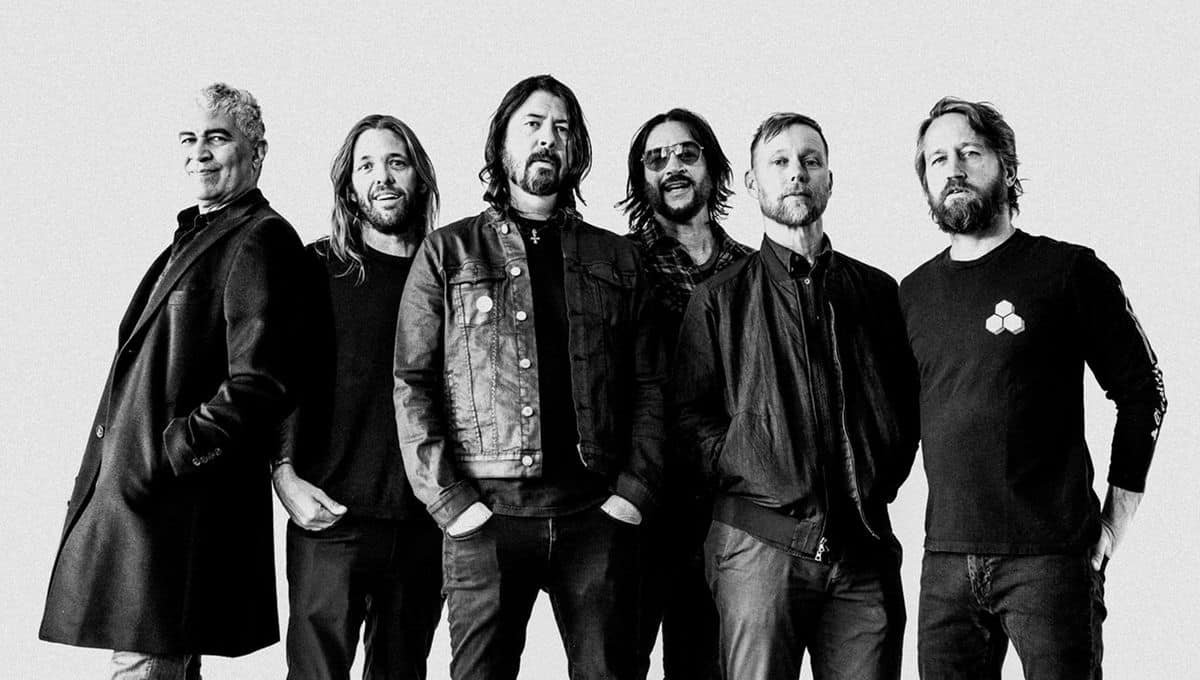
Everlong meaning: Foo Fighters’ “Everlong” captures the intensity of falling in love while knowing the feeling might not last. Dave Grohl wrote the song in December 1996 during the breakdown of his marriage and the start of his relationship with Veruca Salt singer Louise Post.
What Is Everlong About?
Everlong is about the terror and euphoria of falling in love, specifically Dave Grohl’s relationship with Veruca Salt singer Louise Post during one of the lowest points of his life. Written in December 1996 while Grohl was sleeping on a friend’s floor in Virginia, the song captures what it feels like to connect with someone so completely that you dread the moment it stops being real. That dread is the engine of the whole track.
Released in 1997 as track eleven on The Colour and the Shape, Everlong has since become the defining song of Foo Fighters’ career: a permanent set closer, a wedding anthem, a song that saved a talk show host’s life, and still the one people mean when they say a rock song changed something for them.
Like other iconic songs whose meaning deepened over time, the appeal lies partly in how listeners project their own lives into it, something also seen in classics such as Losing My Religion meaning, where the emotional interpretation grew larger than the original story behind the song.
The Everlong Lyrics: What Dave Grohl Is Really Saying
Grohl has always been evasive about the song’s specific subject. Pat Smear told NME in 2015 that nobody was getting that information out of Dave, prompting Grohl to shout from across the room that better journalists had tried and failed. But the emotional logic of the Everlong lyrics is clear enough without a direct answer.
The song opens mid-arrival, not at a beginning, but at a moment of recognition. “Hello, I’ve waited here for you,” Grohl sings, establishing that this connection feels inevitable rather than accidental. The first verse establishes fracture: he’s throwing himself apart, splitting between who he was and what this new feeling is making him.
The second verse asks to escape downward together, not dramatically, but slowly, at the pace the other person sets. The line about being over his head is not distress. It’s surrender offered willingly.
The third verse is where the Everlong lyrics reach their most physical and most intimate point. The instruction to breathe out so he can breathe in is literal proximity, two people close enough that one exhales what the other inhales. The admission that she’s always been out of her head, and he’s been out of his, suggests they were both adrift before finding each other.
The Everlong Chorus Meaning
The chorus is where the Everlong meaning becomes most exposed. Writing in real time rather than from memory, Grohl isn’t remembering a great relationship. He’s standing inside one and already fearing the day it won’t be there.
“If everything could ever feel this real forever…”
The question he keeps returning to isn’t rhetorical. He genuinely doesn’t know if anything will ever feel this real again, and asking it while it’s still happening is what separates the song from straightforward love writing.
Grohl put it plainly in a 2006 Kerrang! interview: the song was about being connected to someone so completely that not only did he love her physically and spiritually, when they sang together, they harmonised perfectly.
That harmonic connection is literal. Louise Post sang on the track, her vocals recorded remotely over a telephone line because she was in Chicago while the band were recording in Hollywood. The phone-line distortion that blurs her voice wasn’t an aesthetic choice. It was the only option available, and it became part of the song’s texture.
How Everlong Was Written
The riff that became Everlong started life as an accident. While recording Monkey Wrench for the previous album, Grohl was noodling in drop-D tuning during a break and landed on something he mentally filed away as a decent Sonic Youth rip-off. He didn’t use it then.
By December 1996, his life had shifted significantly. He had left his wife, Jennifer Youngblood, and moved out of their home. The band was fractured: drummer William Goldsmith had departed after Grohl re-recorded his parts, and guitarist Pat Smear had stepped back because of his friendship with Grohl’s ex-wife.
Grohl was crashing at a friend’s place in Virginia, sleeping bag on the floor, and picked up an acoustic guitar.
The whole song, melody, lyrics and structure, came together in less than sixty minutes, built on that drop-D riff he’d been carrying around for months. He demoed it himself at a friend’s studio in Washington DC, playing every instrument: guitars, bass, drums and vocals.
When he played the demo to Thurston Moore and Kim Gordon of Sonic Youth, they pushed him to include it on the album without hesitation. Producer Gil Norton had reportedly been uncertain. The Sonic Youth verdict closed the argument.
The track was cut at Grandmaster Studios on Cahuenga in Hollywood, formerly a silent movie theatre, with Grohl on drums and rhythm guitar, Pat Smear on lead guitar, and Nate Mendel on bass.
Taylor Hawkins does not play on Everlong.
Who Is Everlong About?
The song is widely understood to be about Louise Post, Grohl’s relationship with her during the Colour and the Shape sessions. He has never confirmed it by name in a formal interview and has actively deflected every direct question.
But the timeline is clean: he left his marriage, fell for Post, wrote Everlong in one sitting at Christmas 1996, and described the song’s subject as a woman he’d fallen in love with who he connected with so perfectly they harmonised when they sang together.
Post sang on the finished recording. The dots are close enough.

What Does Dave Grohl Whisper in Everlong?
Towards the end of the song, the instruments drop out and a distorted voice appears, processed to sound like it’s coming through a phone line. It’s Grohl, but the Everlong whisper has puzzled listeners for nearly three decades.
The official Foo Fighters newsgroup FAQ once described the whispering as three separate overlapping vocal tracks: one described as a love letter, one as a technical manual, and a third as a story about a studio technician’s father.
Grohl confirmed the technical manual element.
When Everlong appeared on the Rock Band 2 soundtrack, fans gained access to isolated multi-tracks and were able to strip the audio down and transcribe the story track more clearly.
The recovered narrative describes a father who took Sundays off as his only rest. Because his children were loud on Sundays, he would make them hold his heavy construction boots over their heads until he fell asleep.
The story ends with the child crying, pleading for the boots to come down.
It has nothing to do with the song’s subject matter, which is exactly the point. Grohl was doing what Lennon did on I Am The Walrus, burying found audio and random material inside the mix as texture rather than meaning.
That same instinct for layering the unexpected extended to the song’s visual treatment.
The Everlong Music Video
The Everlong video was directed by Michel Gondry, then still building his reputation before Eternal Sunshine of the Spotless Mind.
It’s a surrealist black-and-white nightmare sequence involving the band as characters in a dream, with rubbery hands, a slasher movie structure and enough visual invention to still look genuinely strange nearly thirty years later.
It was nominated for Best Rock Video at the 1998 MTV Video Music Awards and put Gondry on the map with a mainstream rock audience.
The Acoustic Version and Taylor Hawkins
It wasn’t the album version that first made Everlong connect.
Taylor Hawkins, who joined the band after the album was recorded, later observed that it took an acoustic performance of the song, stripped to its emotional core, for audiences to really hear it.
That acoustic version became one of the most downloaded files in early Napster-era peer-to-peer sharing.
The song spread that way, informally, before it became a staple.
Songs that build their reputation through reinterpretation often end up with a cultural afterlife similar to tracks like Pumped Up Kicks meaning, where the song’s deeper message only became widely understood years after release.
Everlong and David Letterman
No account of the Everlong meaning is complete without the Letterman story, because the song accrued a second life through him entirely separate from its original context.
David Letterman declared it his favourite song by his favourite band. During his recovery from open heart surgery in 2000, he credited Everlong as the song that got him through.
When he returned to television after fifteen weeks off the air, he asked his producer Sheila Rogers if Foo Fighters could perform it live. Rogers told him they were on tour in South America and it might be a problem.
Two days later, she called back: the band had cancelled the South American dates and were flying in to do the show.
Foo Fighters performed Everlong on Letterman five times between 1997 and 2015. The final performance closed his last ever episode, the song that ended 33 years of late-night television.
Letterman’s closing words before the band played referenced what they’d done: flying back from South America, playing the song he’d asked for.
After the performance, those were the last words he said on the show.
Grohl later described the whole connection simply: “It was f*cking cool.”
Part of what makes Everlong durable is that the song isn’t about nostalgia. Grohl isn’t looking back at something good that ended. He’s standing inside the feeling and already aware it won’t last forever.
That present-tense fear, not loss but the anticipation of loss, is what separates it from most love songs and keeps it resonating decades later.
It closes Foo Fighters concerts. It closes marriages. It closed David Letterman’s career. A man cancelled a South American tour for it. Another credited it with keeping him alive.
For a song assembled in under an hour, on a sleeping bag on someone’s floor, that is not a small thing to have made.
If you enjoyed this article, you may also like our in-depth analysis of the lyrics and meaning behind other iconic songs, such as The Killers’ Timeless Hit: Unravelling the Mr. Brightside Lyrics and Its Enduring Impact on Pop Culture.
You Might Also Like: