Growing up, you probably never thought of Disney songs having hidden meanings or anything of that nature. They were just catchy tunes that made you want to sing along during movie night.
But those seemingly innocent melodies about true love’s kiss, following your dreams, or letting it go weren’t always as simple as they appeared.
Take a closer look at Disney’s musical catalogue and you’ll find layers you completely missed as a kid. Some songs reflect the attitudes of their time in ways that feel uncomfortable now. Others snuck in surprisingly progressive ideas that went right over our heads.
From the gender dynamics in classic princess ballads to the cultural representation (or misrepresentation) in songs from different eras, Disney’s music tells a more complex story than most of us realised.
Let’s go back and listen to those beloved numbers with fresh ears, digging into what was really going on beneath the surface.
There’s something fascinating about discovering the themes of identity, power, and belonging that only make sense when you’re old enough to recognise them.
A Visual Guide to Hidden Meanings
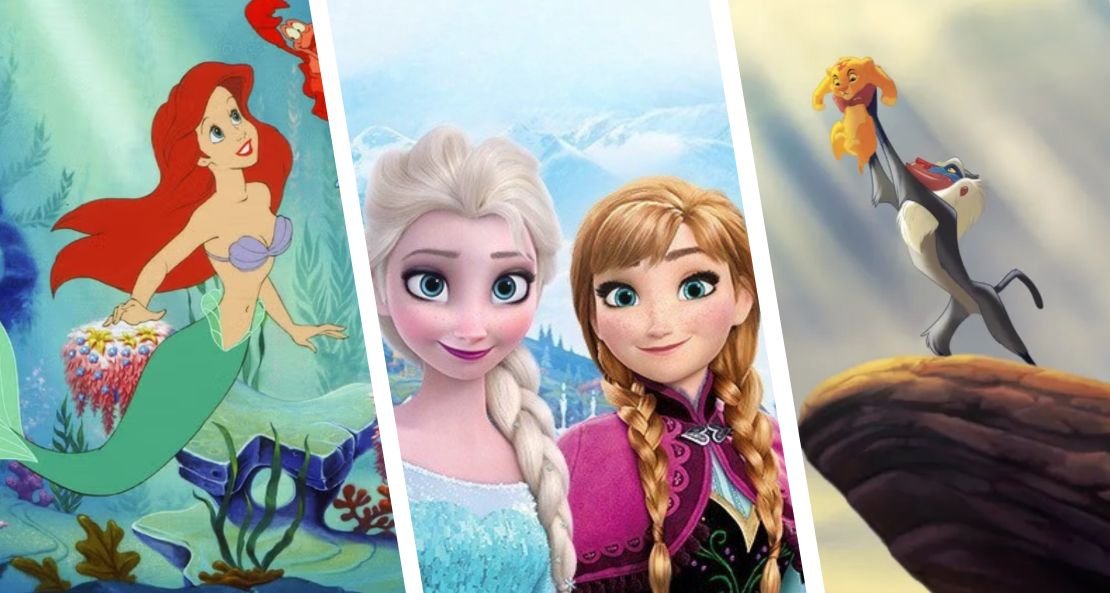
Before we dive deep into specific songs, take a look at the infographic below. It gives you a quick snapshot of what each song is really about beyond the surface-level story.
You’ll see icons from the films paired with keywords that capture the underlying themes we’re about to explore. Think of it as a roadmap for everything you’re about to discover.

“Work Song” – Cinderella (1950)
This upbeat tune plays while the mice assemble Cinderella’s ballgown. At first it sounds like pure 1950s housewife propaganda (“Leave the sewing to the women!”). But PopMatters critic Andrea Tallarita spotted something else going on.
The mice aren’t celebrating domesticity. They’re cataloguing a prison sentence. “Make the fire, fix the breakfast… Wash the dishes, do the mopping.” Listen to that list. It’s relentless. There’s no end to it. That’s the point.
Tallarita reckons this makes “Work Song” one of Disney’s sneakiest numbers. It looks conservative, sounds cheerful, but it’s actually showing you exactly how these rigid gender roles trap women.
The song embraces femininity whilst quietly acknowledging it comes with a life sentence of unpaid labour. Most of us completely missed it because the mice are so bloody cute.
“When I See an Elephant Fly” – Dumbo (1941)
Right, so Dumbo escapes the circus, finds the crows (who are also outcasts), and expects some solidarity. Instead they take the piss out of him. An elephant that can fly? Yeah, right.
The scene is a mess of racist stereotypes. The lead crow is called Jim Crow, for God’s sake. There’s no defending that. But underneath the racism sits an uncomfortable truth about disability and exclusion.
Dumbo’s one of Disney’s first disabled characters. Those ears mark him as a freak, and the film makes him mute. He literally has no voice, which Tallarita points out reflects how people with disabilities were shut out of representation entirely.
The crows reject him even though they’re marginalised themselves. Oppression doesn’t automatically make you kind. Sometimes people who’ve been excluded turn around and do the same thing to someone else. It’s bleak, and it’s probably not what Disney intended, but there it is.
“I’ll Make a Man Out of You” – Mulan (1998)
Everyone loves this training montage. It’s catchy, it’s motivating, it sounds properly masculine.
Except it isn’t. Not really.
Roger Ebert clocked this: Shang redefines what manhood means. He’s not interested in the stereotypical tough-guy rubbish (spitting, brawling, being a dick). He teaches discipline, teamwork, strategy. Mulan becomes a “man” under this definition by getting good at archery and combat.
But then the film pulls the rug out. Physical strength doesn’t actually save the day. Mulan triggers an avalanche using her brain, not her muscles.
And in the climax? She puts on feminine clothing, convinces her male mates to do the same, and they use makeup and sashes to trick Shan Yu’s guards.
Scholar Søren Hough argues this fusion of feminine tactics with military skills completely undermines what he calls the “badass paradigm.”
Strength isn’t about being the toughest or the strongest. It’s about flexibility. The most aggressively masculine song in Disney’s back catalogue ends up deconstructing masculinity entirely. Quite funny when you think about it.
“Hellfire” – The Hunchback of Notre Dame (1996)
This song is genuinely disturbing. Frollo’s having a complete psychological breakdown set to Latin prayers and religious imagery.
Celeste (who has a PhD in film studies) breaks down how it works. Frollo keeps claiming “it’s not my fault” whilst a choir chants “mea culpa” (my fault) in the background. He won’t take responsibility for his own lust, so he blames Esmeralda instead.
The prayers he’s invoking (Confiteor, Kyrie) are all about confession and asking for mercy. The hypocrisy is the point.
There are literal flames dancing around whilst Frollo clutches Esmeralda’s scarf and cries out to the Virgin Mary. Religious devotion and sexual obsession merge into one horrible mess.
It’s a masterclass in showing how some people use religion to avoid dealing with their own feelings, then project all that guilt and shame onto someone else.
The fact that Disney put this in a children’s film is mental. But it works because kids don’t catch most of it, and adults watching now can’t believe they got away with it.
“Colors of the Wind” – Pocahontas (1995)
The film has been rightly criticised for historical inaccuracies, but its signature ballad delivers a surprisingly progressive message.
The Los Osos High School Grizzly Gazette notes that the song works as a plea for empathy, with Pocahontas challenging John Smith’s colonial worldview.
Lyrics like “You think you own whatever land you land on” and “The Earth is just a dead thing you can claim” reject the idea that nature exists for conquest.
The song encourages viewers to see the world through others’ eyes and recognise the wisdom of every creature and culture. It even offers an early mainstream call for environmental stewardship, asking “How high does the sycamore grow? If you cut it down, then you’ll never know.”
Decades before environmental education became commonplace, “Colors of the Wind” taught children that empathy and respect matter both for other peoples and for the planet. Not bad for a film that gets almost everything else about Pocahontas wrong.
“Let It Go” – Frozen (2013)
When Elsa belts “Let It Go,” most listeners hear an empowerment anthem about embracing one’s powers. But the song’s placement in the film undercuts its triumphant tone.
The Guardian’s Dorian Lynskey points out that Elsa’s liberation comes with dark irony: her decision to isolate herself unleashes eternal winter on Arendelle, and her declaration “No right, no wrong, no rules for me” sounds gleefully irresponsible.
The song captures an adolescent rush of breaking free without considering consequences, which explains why it resonates so strongly with pre-teens chafing under parental rules.
Outside the film, “Let It Go” has become a coming-out anthem for the LGBTQ+ community. Lines like “Conceal don’t feel, don’t let them know” echo the pain of living in the closet.
Lyricist Kristen Anderson-Lopez said she wanted to write an anthem that said “screw fear and shame, be yourself, be powerful.”
The song’s multiple interpretations (ranging from teenage rebellion to queer self-acceptance) explain its enduring cultural impact. We all hear what we need to hear.
“Part of Your World” – The Little Mermaid (1989)
“Part of Your World” looks like a simple “I Want” song, with Ariel dreaming of life on land. But Barry Levitt’s piece for The Daily Beast uncovers another layer.
Lyricist Howard Ashman, who was openly gay and diagnosed with HIV/AIDS during production, infused the song with his own longing for belonging.
Ariel’s yearning to “be where the people are” and to be “part of that world” mirrored Ashman’s desire to live openly and free from stigma.
The lyrics resonate strongly with queer audiences, capturing both the specificity of Ariel’s plight and a universal craving for acceptance.
Knowing Ashman’s story makes the final lines ache with the weight of someone who felt exiled from mainstream society.
When Ariel sings about wanting to be part of that world, she’s voicing the pain of everyone who’s ever felt locked out of the life they deserved.
“Be Prepared” – The Lion King (1994)
Scar’s sinister musical number stands out for its dramatic visuals: green flames, marching hyenas and a towering rock.
Business Insider reports that the sequence was consciously modelled on Leni Riefenstahl’s 1935 Nazi propaganda film Triumph of the Will.
Storyboard artist Jorgen Klubien originally sketched Scar as Hitler, and directors Roger Allers and Rob Minkoff ran with the idea, staging a mock Nuremberg rally.
During the song, hyenas goose-step in formation whilst Scar stands elevated above them, mirroring scenes of Adolf Hitler reviewing troops.
Even the beams of light that radiate behind Scar are lifted from the film’s militaristic imagery. The hidden message warns of charismatic leaders who stoke resentment to seize power, and it may explain why the 2019 remake toned down these scenes.
“Be Prepared” turns a villain’s monologue into a cautionary tale about authoritarianism. It’s about as subtle as a brick, once you know what you’re looking at.
So What Now?
These songs are memorable because they work on multiple levels. Kids hear fun tunes. Adults hear critiques of systems we’re still fighting against today. The question is whether that matters to you.
Does knowing about the Nazi imagery in “Be Prepared” change how you hear it? Does Howard Ashman’s story make “Part of Your World” hit differently?
When your kid belts out “Let It Go” for the hundredth time, does it bother you that Elsa’s liberation comes at everyone else’s expense?
Maybe you’ll decide these hidden meanings enrich the songs. Maybe you’ll think we’re reading too much into children’s entertainment.
Maybe you’ll be uncomfortable that you’ve been humming along to messages you didn’t know were there. Whatever you decide, at least now you know what you’re singing. Whether you keep singing is up to you.
For more explorations of Disney music, check out our Sing‑Along series and uncover even more secrets hiding in plain sight