

The music industry has entered its first real test of what happens when artificial intelligence learns from human songs at scale.
What started as niche experimentation has turned into a legal and ethical fight that now involves class actions, multi million dollar settlements and a scramble to design a licensing system that does not crush independent artists in the process.
In 2024, the three biggest record companies sued AI music companies Suno and Udio for copyright infringement in the United States, accusing them of copying thousands of recordings to train their models without permission.
Court filings reported by Reuters described the alleged infringement as happening on an almost unimaginable scale.
That phrase has since become shorthand for the fear that unlicensed AI training could hollow out the value of recorded music.
Neon Music has already traced how quickly synthetic songs can move from curiosity to disruption in its feature on AI generated slop tracks, where machine written country and pop songs began landing on real charts and playlists.
That earlier investigation into AI songs topping charts showed that the technology is not just a toy but a rival product to human work.
From courtroom to conference room

A year later, the picture looks less like a simple showdown between tech and music, and more like a messy negotiation about who controls the next phase of listening.
On 25 November 2025, Warner Music Group quietly settled its lawsuit against Suno and agreed a licensing deal that will let the AI platform launch fully licensed models in 2026.
The settlement, documented by Reuters, also confirms that Suno will cap downloads and shift more of its features behind paid tiers, turning what was once a free flowing generator into a gated ecosystem.
The same report notes that Warner and Universal reached a similar resolution with Udio, another AI music startup that had been accused of scraping label catalogs.
That progression from lawsuit to partnership is not a coincidence. It mirrors the Napster to Spotify story, where litigation cleared the way for controlled, licensed platforms that funnel revenue through a small number of corporate pipes.
The most striking signal came when all three majors signed their first combined licensing agreements with a single AI company.
Universal Music Group announced a first of its kind AI licensing deal with startup Klay, matched by parallel agreements with Sony and Warner.
Klay positions itself less as a rogue generator and more as a licensed layer on top of the traditional music business, where fans can reshape or interact with music that is firmly cleared through existing rights holders.
From a label perspective, this is smart risk management. If AI is inevitable, better to control the pipes and decide who gets paid than to sit on the sidelines while unlicensed tools race ahead.
Where independent artists fit in
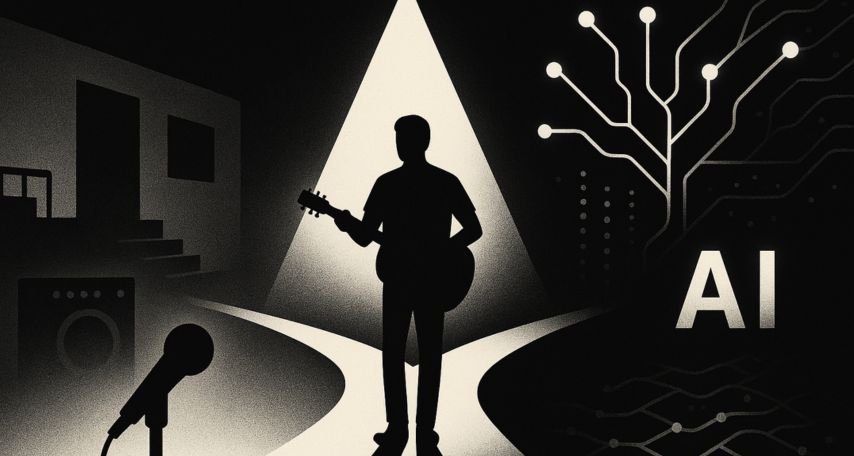
The big flaw in this story so far is that most of the power is held by companies that already own catalogues and publishing empires.
Independent musicians are often the people whose work is quietly scraped but rarely the ones sitting at the table when deals are signed.
A class action filed on behalf of indie artists in the US alleges that Suno and Udio ingested tens of millions of tracks without consent, including songs hosted on personal websites, YouTube channels and digital distributors.
Neon Music previously outlined the stakes of this fight in its guide to AI music lawsuits and artist backlash, which warned that legal outcomes could decide whether AI becomes a partner or a parasite for working musicians.
That explainer on AI music lawsuits highlights how independent creators often lack both the legal budgets and the lobbying power that major labels enjoy.
One of the more explosive claims in the lawsuit is that some AI outputs appear to contain near identical producer tags and vocal phrases from copyrighted songs.
The labels’ own expanded complaints have made similar points. Reporting from Billboard describes how rights groups accused Suno of pirating songs from YouTube, using private datasets to show that full recordings had been ripped, separated into audio files and repurposed as training data.
If those allegations are proven, the fair use defence becomes much harder to sustain. The issue is no longer just about statistical learning on huge datasets, but about whether companies bypassed technical protection measures and turned platforms like YouTube into quiet data farms without permission.
At the same time, it is worth acknowledging a blind spot in some of the arguments coming from the artist side. Not every use of copyrighted work for AI training is obviously harmful.
There is a difference between models that are designed to clone specific artists on demand and research models used to improve recommendation systems, stem separation or noise reduction.
Treating all training as equally unlawful risks collapsing useful, non competitive applications into the same bucket as commercial cloning tools.
Fair use is not a cheat code

Into this confusion stepped the US Copyright Office, which released a detailed report on generative AI training and fair use in May 2025.
The document is not law, but it carries weight in how courts and policymakers will approach these cases.
A legal summary of the report from Skadden notes that the office rejected the idea that training is automatically transformative just because it is done by a machine.
The Copyright Office analysis says that when models use vast troves of expressive works to create outputs that compete in the same market as the originals, especially in a commercial context, that use will often fall outside traditional fair use boundaries.
That is a direct challenge to the narrative from some AI companies that training is equivalent to human learning.
The report stresses that copying at machine scale is different because it can reproduce style, structure and even specific phrases in a way that undermines the market for the original recordings.
However, the same document leaves room for properly licensed or narrowly scoped training. It suggests that guardrails, opt out mechanisms and targeted licences can lean the balance back toward legality.
That nuance tends to be missing when the debate is framed as a simple choice between banning AI or letting it do whatever it wants.
The streaming platforms’ quiet panic
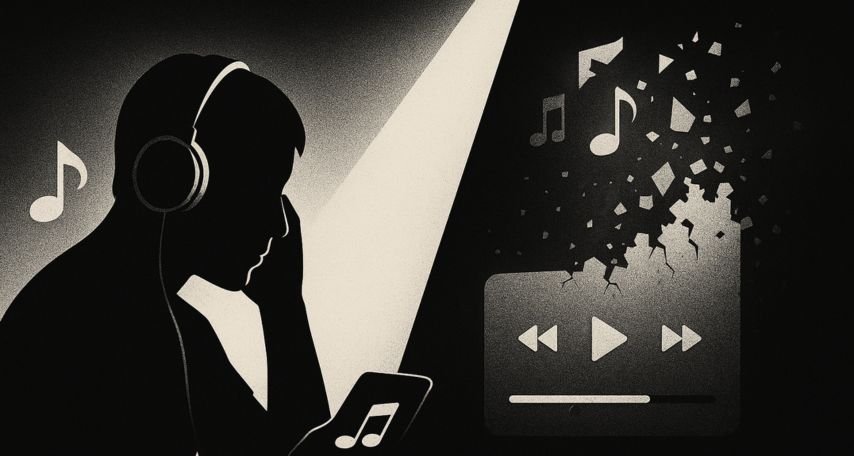
While lawsuits grab headlines, streaming services are dealing with a different kind of crisis. One of the clearest snapshots of the scale problem came from a French platform that has started to measure how much of its catalogue is synthetic.
In November 2025, Music Business Worldwide reported that Deezer is receiving more than 50,000 fully AI generated tracks every day, with those songs now accounting for around a third of all daily uploads.
That report on Deezer’s AI flood also reveals something more unsettling. A separate Deezer Ipsos study found that most listeners cannot reliably tell whether what they are hearing was made by a human at all.
The platform later published its own summary of the research, stating that 97 percent of listeners in a blind test failed to distinguish between human made and fully AI generated songs.
The Deezer Ipsos survey suggests that a large chunk of the audience does not know, and often does not care, whether a track was written by an artist in a room or a model in a server rack.
That gap in perception is exactly why labels and artists are so nervous. If listeners cannot tell the difference, and if AI tracks can be generated at almost zero marginal cost, then synthetic music becomes a tempting replacement for licensed catalogues in low prestige spaces like background playlists, gaming lobbies or low budget adverts.
Neon Music has already followed this trend in stories about AI artists appearing on radio charts, where synthetic performers are promoted as cost effective, endlessly available acts.
Our feature on Xania Monet’s AI radio breakthrough showed how quickly a fictional act can rack up global spins once programmers decide it fits the format.
The upside that often gets buried
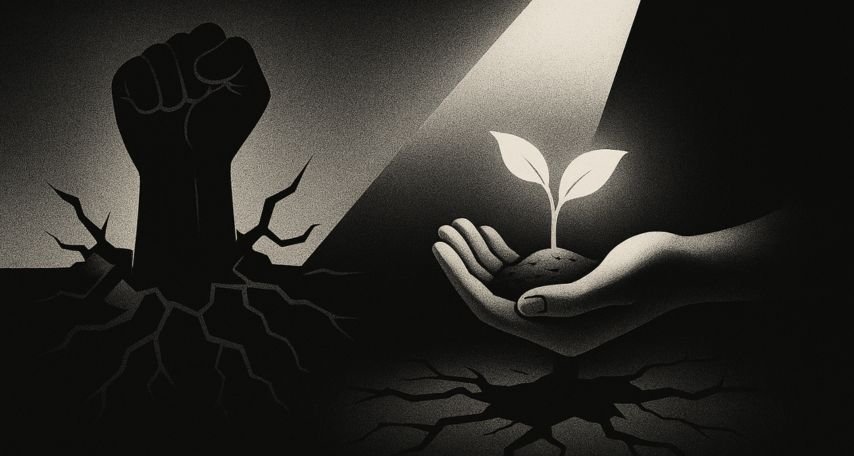
It is easy to focus only on the threats. There is also a quieter story about how musicians themselves are using AI in productive ways that rarely make it into legal filings.
Producers are experimenting with AI to generate chord progressions, harmonies, drum grooves or sound design ideas that would have taken hours to sketch manually.
Neon Music has covered this from the creative side in its piece on AI and the creation of electronic music, which explored how machine tools can act as collaborators rather than replacements when handled with intent.
That feature on AI in electronic music argued that musicians who stay curious, rather than defensive, can bend the tools toward their own taste.
On the technical side, AI powered mixing, mastering and stem separation tools are now embedded in many digital audio workstations.
Neon Music’s guide to the influence of AI on music production shows how these systems can clean up noisy recordings, rebuild damaged stems or translate rough demos into releasable tracks. None of that requires cloning a superstar’s voice to be useful.
The problem is that this more nuanced picture rarely figures in the rhetoric from either side. Tech companies talk about democratising creation while quietly scraping catalogues. Rights holders lean on existential language, then sign exclusive deals that mostly benefit those who already have leverage.
What a fairer AI music deal might look like
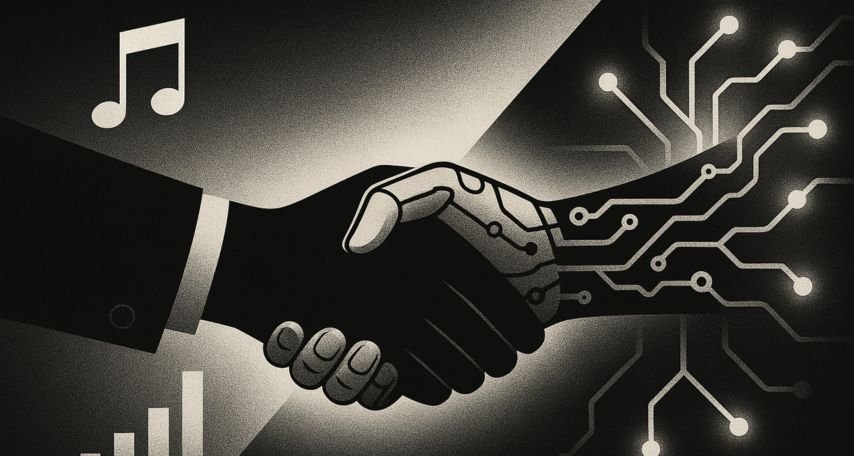
So what would a workable compromise look like if it were designed for actual musicians, not just shareholders and venture capital funds?
First, training should be consent based where the output competes with the original market. That means if a model generates tracks in the style of a specific artist or draws on commercial catalogues to produce full songs, there should be clear opt in, not assumed opt out.
Klay’s licensing approach points in this direction, but at present it is heavily tilted toward major label catalogues rather than independent work.
Second, royalties need to be baked into the business model, not treated as a problem to dodge. Licensing frameworks could borrow from sampling and neighbouring rights, where partial uses of recordings and compositions trigger shared revenue streams.
There is a real risk that if only the majors negotiate these terms, independent musicians will again be left with the cultural cost and none of the upside.
Third, platforms must be transparent about what goes into their models. That includes publishing high level information about which catalogues and datasets have been used, and giving artists practical ways to opt out or see whether their work has been included.
Right now, many statements from AI companies ask for trust without providing verifiable detail.
Finally, artists need to treat contract language around AI as non negotiable. New recording and publishing deals increasingly contain clauses that grant permission to use an artist’s voice, image or catalog for training or synthetic performances.
Without careful review, it is easy to sign away long term control in a couple of lines on page forty.
Why this matters beyond the hype cycle
The real stakes are not whether AI music exists. It already does. The question is who benefits from its growth and who is exposed to its downsides.
If AI training and output can be shaped through consent, licensing and transparent practice, it becomes another tool that musicians can bend to their own ends.
If it remains a black box that ingests everything and apologises later, it risks becoming the latest version of a familiar story, where artists supply the fuel and corporations keep the fire.
The lawsuits, settlements and new licensing deals are the first draft of how this will be decided. Musicians, producers and fans have a brief window to insist that the rules are not written only for those who already own the catalogue.