
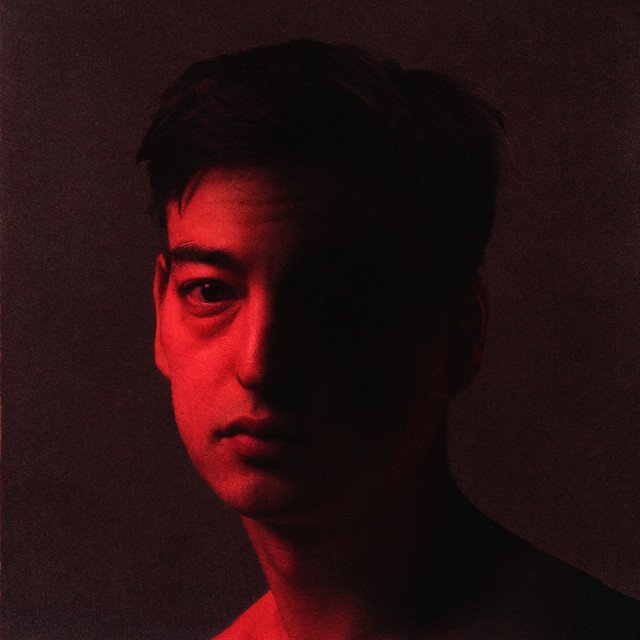
Joji’s fourth studio album arrives three years after SMITHEREENS, marking his first release under his own label Palace Creek and Virgin Music after leaving 88rising.
As a joji piss in the wind review, this reads less like a verdict and more like a diagnosis.
Released February 6, 2026, Piss in the Wind clocks in at 21 tracks across roughly 45 minutes, but most songs barely touch the two-minute mark.
This isn’t an album that builds toward climaxes. It feels more like a stack of sketches, half-thoughts that disappear before they ever become full songs.
The opener “Pixelated Kisses” sets the tone with glitchy electronics and indie-pop textures, Joji’s vocals sitting buried in the mix.
It’s intentionally distant, refusing the nostalgia trip you might expect from someone known for heartbroken piano ballads like “Glimpse of Us”.
That distance carries through “Last of a Dying Breed” and “Love You Less.”
The latter works a Steve Lacy-esque groove with the lyric “If I love you less, will you love me more,” framing affection as a negotiation rather than something freely given.
The real issue with this record is that it doesn’t want to be finished. “If It Only Gets Better,” “Cigarette,” “Tarmac,” these tracks behave like voice memos that accidentally made it onto the final tracklist.
Some reviews, including NME’s take, describe this as “impressionistic” or “explorative.” That’s generous. A lot of this just sounds unfinished.
The Mellotron appears throughout the album as a recurring sonic motif, it drives the entirety of “Last of a Dying Breed” and supports the felted piano on “Can’t See Sh*t in the Club,” but the atmospheric consistency can’t make up for how many ideas here feel abandoned mid-development.
The features don’t interrupt the mood so much as dissolve into it. GIVĒON carries most of the emotional weight on “Piece of You,” Don Toliver drifts through “Fragments” sounding restless rather than engaged, and on ‘Rose Colored’, Yeat doesn’t dominate so much as destabilise the atmosphere, his vocoder-heavy delivery adding tension rather than momentum. 4batz shows up on “Fade to Black” but barely registers.
Helen Brown at The Independent described parts of the record as revealing “a human ghost in the machine,” which captures something about Joji’s half-presence across these tracks.
“Hotel California” (no relation to the Eagles track) functions as the album’s emotional anchor.
The looping imagery of attachment and abandonment sits heavy, the vocal delivery softening for a moment before the walls go back up. It doesn’t explode.
Nothing on this album does. But it’s one of the few moments where the restraint feels earned rather than evasive.
Listen While Reading!
The middle stretch gets blurry. “Fade to Black” leans into resignation, falsetto vocals weaving around subdued beats built for headphones rather than speakers.
The sequencing starts to resemble scrolling through a social feed more than a traditional album arc.
Moments appear, land one idea, then disappear before you can settle into them. That’s a deliberate choice according to Clash Magazine’s review, which frames the record as more mixtape-like and slightly unsystematic, a scenic route through different facets of Joji’s sonic identity.
We track early momentum in music every week. Neon Signals is where it shows up first.
Maybe. Or maybe it’s just 14 interludes and seven actual songs, as one frustrated RateYourMusic reviewer put it.
The standout tracks: “Past Won’t Leave My Bed,” “Sojourn,” “DYKILY.” These are the ones that actually reach past the two-minute mark and give their ideas room to develop.
“Sojourn” in particular sounds like what “Pixelated Kisses” should have been: a complete thought rather than a fragment.
The fact that Joji stacked all the longer, more developed songs in the final third only makes the first two-thirds feel more incomplete by comparison.
“Silhouette Man” presents a narrator who sounds half-present in his own life, while “Fragments” and “Horses to Water” deepen the blurred atmosphere with layered electronics and hushed melodies.
The closer “Dior” ends with an industrial throb, asking “will I ever get the chance of seeing her again” before cutting to silence.
This is Joji’s first independent release, which makes it a statement about artistic freedom.
But it’s hard not to wonder if a label A&R would have pushed him to finish some of these ideas.
The production remains polished throughout. Joji handles much of the production alongside a rotating group of collaborators, but polish can’t compensate for songs that feel more like sketches than statements.
The album plays like he’s testing how little he can give while still keeping listeners engaged.
The title (Piss in the wind) reads like a blunt idiom about futility, the kind of phrase used to describe an effort that’s already doomed before it begins. That sense of wasted motion hangs over the entire album.
Across Reddit threads and listener forums, the same tension keeps appearing: admiration for the atmosphere, frustration with how quickly everything fades.
Some fans argue the incompleteness is intentional, a reflection of modern attention spans and fragmented emotional states. Others just wanted complete songs.
If you’re coming to this expecting another “Glimpse of Us,” the stripped-back piano ballad that became his biggest hit, you won’t find it here.
This is Joji operating at his most elusive, creating music that prioritizes mood over structure. Whether that reads as artistic evolution or creative indulgence depends entirely on your tolerance for ideas that never reach their destination.
Piss in the Wind doesn’t sound like an album chasing mainstream relevance.
It sounds like an artist quietly reshaping expectations around what a Joji project can be: 21 tracks designed less as statements and more as signals that appear, vanish, and return in altered form.
The question is whether listeners will follow him into that fragmentary space, or if they’ll just keep waiting for the songs to actually start.
You might also like: