

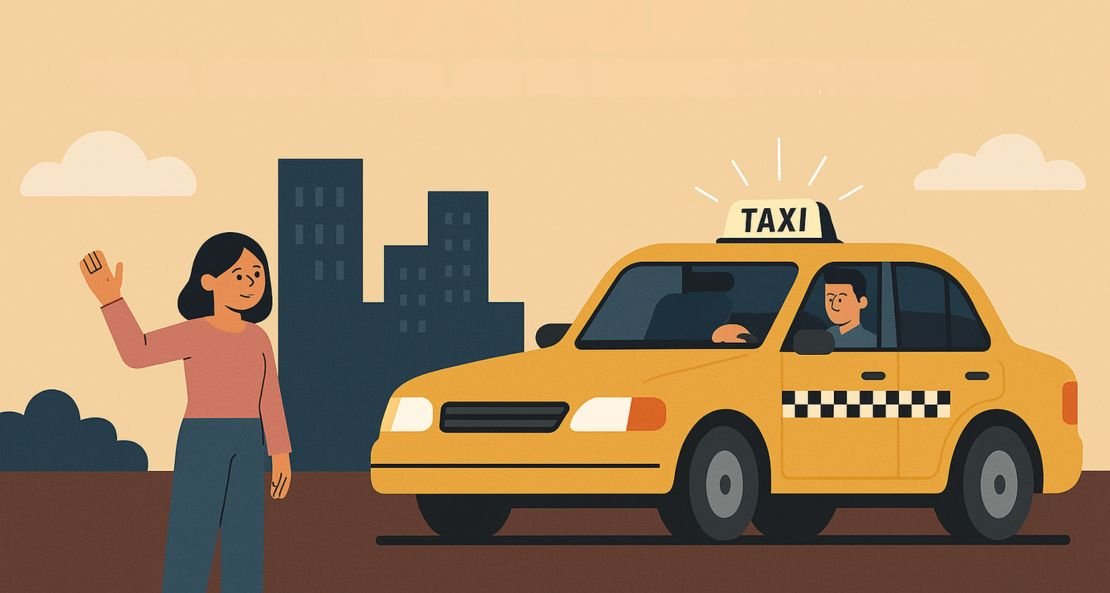

If you’ve ever watched someone date casually for years—only to suddenly get married the moment they meet someone new—then congratulations, you’ve just spotted the Taxi Cab Theory in the wild.
Popularised by Sex and the City, the theory suggests men are like taxis: cruising through life until one day, their metaphorical “available” light switches on, and the next woman who hops in?
She’s the one he marries. It’s tidy, cynical, and suspiciously convenient.
But before we reduce modern love to a metaphor involving public transportation, let’s take a culturally-aware, psychologically-grounded look at why this theory persists, how much water it actually holds, and what we’re getting wrong (and right) by clinging to it.
Commitment Isn’t a Light Switch, and Men Aren’t Uber Drivers
Let’s get one thing out of the way: the Taxi Cab Theory is not based on psychological research or relationship science.
According to experts like Tammy Nelson, PhD, it’s an “overly simplistic” framework that reinforces heteronormative stereotypes and sidelines emotional nuance.
At its worst, it implies men only commit due to timing—ignoring compatibility, shared values, and, you know, actual affection.
It’s a theory that lets everyone off the hook: men aren’t dodging intimacy, they’re just “not ready”; women aren’t being ghosted, they were just a second too early for the green light.
But relationships aren’t built on perfect timing. They’re built on choices.
Okay, But Is There Any Truth to It?
Surprisingly, yes—but with caveats.
Timing can matter. Studies (and more relatable, Reddit testimonies) reveal that people—men and women—often reassess what they want at certain life stages.
A man finishing grad school, or recovering from a breakup, might not be emotionally or practically available.
But that doesn’t mean the next partner is chosen at random when he is. It’s less “any passenger will do” and more “I’ve recalibrated what I need, and now I’m more intentional.”
That nuance gets erased in the Taxi Cab version.
The Real Problem: This Theory Assumes Men Don’t Choose With Their Hearts
Here’s the issue: the theory casts men as passengers to their own emotional growth, not drivers of it.
It suggests women are interchangeable placeholders until the man decides he’s done playing.
As Hannah Feminella points out, this “lets men off the hook for commitment issues” while making women question their worth every time their “almost” becomes someone else’s “forever”.
And that’s not just reductive. It’s emotionally damaging.
The Dating App Effect: Too Many Cabs, Not Enough Maps

Digital dating has complicated this even further. Swiping culture feeds the illusion of infinite options—so when someone finally does commit, we assume it’s not because of who they chose, but because they were just exhausted from swiping.
That exhaustion, in turn, reinforces the idea that settling down is about settling, not about a meaningful connection.
No wonder some believe that commitment and love are separate lanes entirely.
A Better Theory: Emotional Availability Isn’t Random
Instead of waiting for someone’s “light” to switch on, ask this: Are they emotionally available? Are they consistent? Do they make you feel secure, wanted, and part of a future?
Because someone who’s truly not ready won’t just disappear and pop back up married to someone else six months later—they’ll communicate, clarify their needs, and still show care while navigating life’s chaos.
And if they don’t? That’s not about timing. That’s about priorities.
Use It, Don’t Live By It
There’s a seductive comfort in blaming missed connections on timing.
It allows us to avoid reckoning with rejection or incompatibility. But using the Taxi Cab Theory as your dating compass is like navigating by fortune cookie: occasionally comforting, rarely reliable.
Instead of waiting for a ride to stop for you, it might be time to walk toward the kind of relationship you actually want.