Updated 27 Febuary 2026 By Alex Harris
There’s a moment about halfway through Your Best American Girl where Mitski stops reaching.
The guitars haven’t exploded yet, the chorus hasn’t fully landed, and she sings four words, “Don’t wait for me,” with a flatness that lands harder than any scream could. It’s the sound of someone who already knows how this ends.
Your Best American Girl is about loving someone across an unbridgeable cultural divide. Specifically, the experience of being a half-Japanese woman in America who tries to assimilate into a white American life and realises, with resignation rather than bitterness, that she never truly can.
That pull is why this song, nearly a decade after it arrived as the lead single from Puberty 2, keeps finding new listeners.
It appeared on TikTok feeds, in dorm rooms, in the headphones of anyone who has ever loved someone and quietly understood they existed in fundamentally different worlds.
The meaning of Your Best American Girl is not difficult to parse. But understanding where it comes from, and why it hits the way it does, requires knowing something about who wrote it.
The Life Behind the Song
Mitski Miyawaki was born to a Japanese mother and an American diplomat father. She grew up in Japan, Malaysia, the Democratic Republic of Congo, Turkey, the Czech Republic, Alabama, and Virginia.
There was no fixed home, no single place that claimed her. She arrived in the United States carrying a cultural identity that America didn’t quite have a category for: too Japanese to be fully American, too American to feel at home in Japan.
That experience of occupying a space between two worlds without fully belonging to either is not metaphor in Your Best American Girl. It’s autobiography.
In an NPR interview when the song was released, Mitski described it plainly: “I didn’t grow up in the US. I am half Japanese, and it came from wanting to just fit into this very American person’s life and simply not being able to. Just fundamentally being from a different place and feeling like I would just get in the way of their progression in life, because I could just never get to wherever they’re naturally going.”
She had written about expectations before. In Townie she declares “I am not gonna be what my daddy wants me to be.” But Your Best American Girl goes further. It’s not just defiance. It’s the exhausting performance of trying to become someone you fundamentally aren’t, and the moment you realise no performance will ever be convincing enough.
What the Lyrics Actually Say
The opening verse is quiet and almost unbearably tender. Mitski imagines being the little spoon, kissing her lover’s fingers forever, then cuts herself off.
Her partner has things to do, a life with momentum and direction. She has “nothing ahead of me.” That asymmetry is established in eight lines, and it never really goes away.
The second verse is where the song’s central metaphor crystallises. Her lover is the sun, someone who has never seen the night, who exists in permanent warmth and visibility.
Mitski positions herself not as the moon (there’s something almost wry about that line, refusing even the romantic consolation of being a lesser celestial body) but as simply someone awake at night, singing to birds in the dark.
It’s a quietly devastating image of someone who has found a way to exist in the margins: not tragic, not invisible, just fundamentally oriented toward a different sky.
Then comes “Don’t wait for me, I can’t come.” Just that. No explanation, no elaboration. It’s the pre-chorus, and it functions as the song’s emotional core: the moment where the narrator accepts a separation that love alone can’t override.
The chorus brings everything together. Her mother’s way of raising her wouldn’t meet approval.
But she approves of herself, “I do, I think I do,” the hesitation in that “I think” doing a lot of work, acknowledging that self-acceptance doesn’t always arrive fully formed.
And then the central image: an all-American boy, and her, trying to be his best American girl. Not an American girl. His best one.
The superlative matters: it’s not just assimilation she’s describing, but striving for a version of assimilation so complete it earns approval.
The bridge compresses everything into three lines. “You’re the one / You’re all I ever wanted / I think I’ll regret this.”
The last line is what prevents the song from being a straightforward break-up ballad.
She knows she’s walking away from something she genuinely wants. She’s choosing her own limits over the exhaustion of erasing them.
The Music Does the Arguing
The song’s structure mirrors its emotional logic almost too precisely, and somehow that doesn’t make it feel calculated.
It opens on acoustic guitar that barely takes up space, Mitski’s voice close and confessional, like she’s telling you something she hasn’t told many people.
The verses exist in that register. Then something shifts in the pre-chorus. Something starts to strain, the arrangement pulling against itself, and when the chorus arrives, distorted electric guitars explode through the mix like a door being kicked open.
That sonic rupture is intentional. The grunge-adjacent guitar doesn’t signal anger so much as a refusal to keep the volume down.
The controlled, intimate acoustic Mitski of the verses was performing a kind of smallness. The guitars arriving is what happens when that performance collapses.
Her voice tracks the same arc. The verses are half-whispered, almost embarrassed by their own tenderness.
By the time she’s belting “Your mother wouldn’t approve of how my mother raised me,” there’s a fierceness in it that isn’t triumphant. It’s tired of apologising. Then “I think I’ll regret this” drops back down, quieter, and you understand that the defiance and the resignation aren’t opposites. They coexist.
The Music Video: What Zia Anger Built
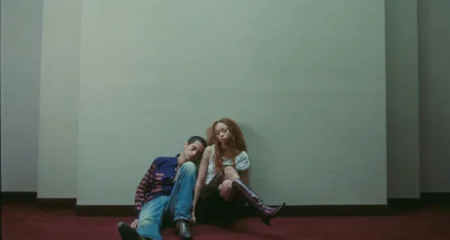
The video, directed by Zia Anger, is one of the better music videos of the 2010s, and it rewards close attention.
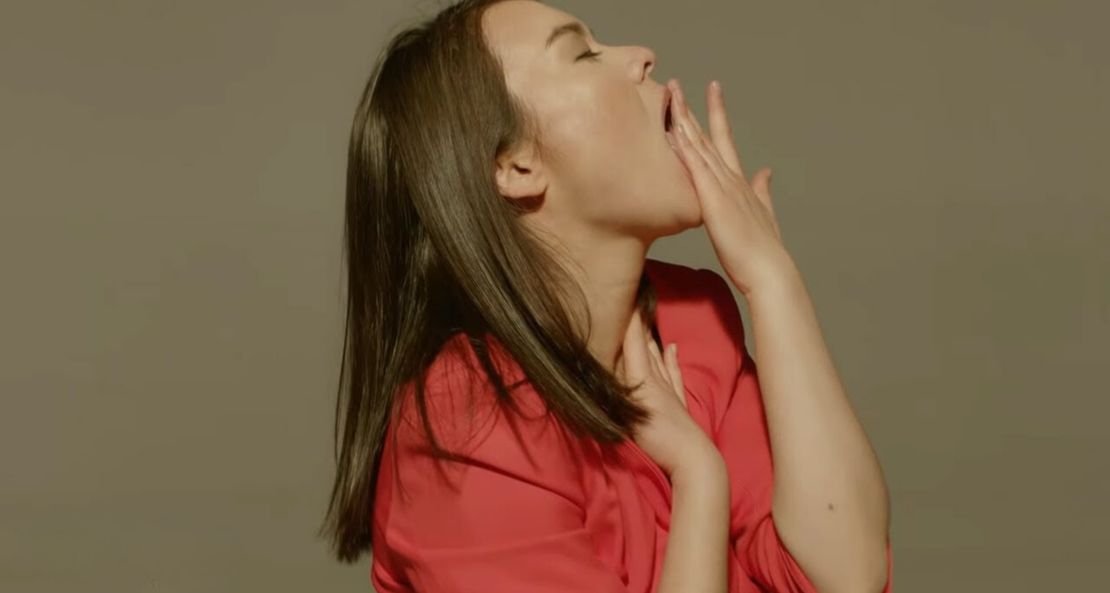
It opens on Mitski being made up, touched up, transformed. She looks completely disinterested in the process, enduring it rather than participating in it.
Across the room sits a young man, conventionally attractive, lit warmly while Mitski remains in shadow. The camera works carefully to keep them in the same frame while establishing the distance between them.
Then a white woman enters and the pair become physically affectionate. Mitski watches. The looks that cross her face, confusion, something close to grief, the specific stillness of someone who has understood something they didn’t want to understand, land with particular force because they feel earned rather than performed.
What happens next is the video’s defining move: Mitski raises her own hand and begins making it kiss her face.
The sequence starts as something genuinely uncomfortable, a person so isolated they’ve learned to rehearse intimacy with themselves, and then, in the space of a few seconds, it becomes something else entirely.
Mitski fully commits. She stops performing loneliness and starts performing herself, with a completeness that makes the couple across the room suddenly irrelevant.
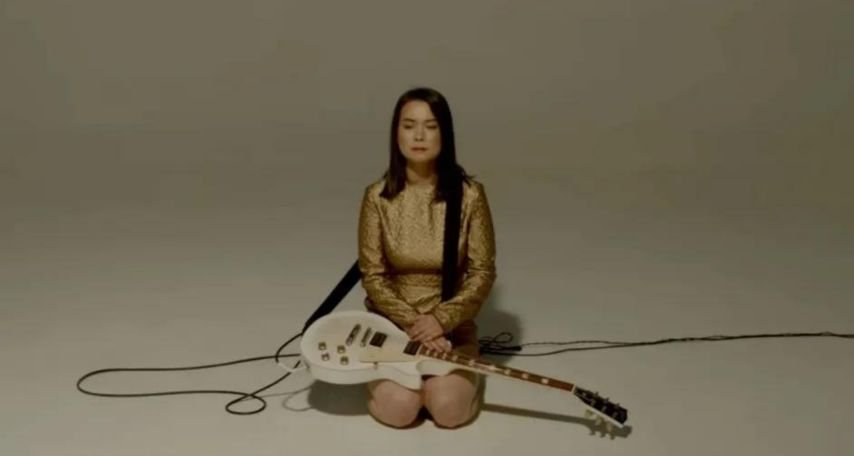
By the end she’s shed the red pantsuit she wore for the opening (the vulnerability costume, as it were) and reappeared in a different dress, guitar in hand.
The desire for connection hasn’t disappeared. But the need for external validation of her worth has loosened its grip.
Why TikTok Brought It Back
When Your Best American Girl resurfaced on TikTok several years after its release, something interesting happened.
White creators began using it to soundtrack their own experiences of romantic rejection or not fitting in, and this prompted genuine debate about whose song it was and who had the right to claim it.
That debate is worth sitting with rather than brushing past. Mitski has spoken about understanding her position as someone who is “an object that’s looked at,” a racialised woman navigating the global music industry with full awareness of how she is perceived.
The song comes from a specific experience of cultural exclusion, and reducing it to a general breakup anthem loses something real.
At the same time, Mitski has always said she wanted to make music for the populace, not an in-group.
The song works through metaphor precise enough to carry weight for people whose circumstances look nothing like hers, and that’s not an accident.
The uncomfortable truth is probably that both things are true simultaneously: the song can genuinely move you regardless of your background, and if you use that feeling as permission to ignore where it came from, you’re doing it a disservice.
Most people who love it seem to understand this instinctively, even if they couldn’t articulate why.
What It Left Behind
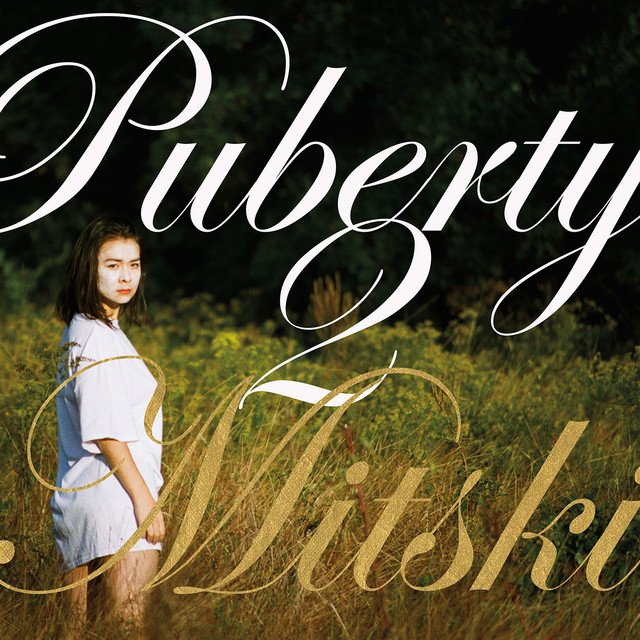
Your Best American Girl arrived as the lead single to Puberty 2 in 2016 and immediately established the album’s emotional register: unsparing, specific, and far more structurally complex than its indie-rock surface suggested.
Pitchfork named it a Best New Track. NPR put it in heavy rotation. The conversation it started, about identity, about who gets to belong, about the cost of assimilation, has never really stopped.
What makes it endure isn’t the chorus, as good as the chorus is. It’s that pre-chorus. “Don’t wait for me, I can’t come.” Four words that contain an entire decision. Not a failure, not a defeat. Just someone who has finally decided to stop trying to arrive somewhere she was never going to be let in.
That’s what the song is about. And nine years on, it still sounds like the truest thing anyone has said about it.
You might also like:
- Mitski My Love Mine All Mine Lyrics: A Deep Dive into the Song’s Meaning and Inspiration
- An In-Depth Examination of Mitski’s Washing Machine Heart Lyrics
- Laufey’s From The Start: An Intoxicating Jazz-Pop Gem of Unrequited Love
- City on a Hill Lyrics – Unveiling Mon Rovîa’s Poetic Odyssey
Mitski Your Best American Girl Lyrics
Verse 1
If I could, I’d be your little spoon
And kiss your fingers forevermore
But, big spoon, you have so much to do
And I have nothing ahead of me
Verse 2
You’re the sun, you’ve never seen the night
But you hear its song from the morning birds
Well, I’m not the moon, I’m not even a star
But awake at night I’ll be singing to the birds
Pre-Chorus
Don’t wait for me, I can’t come
Chorus
Your mother wouldn’t approve of how my mother raised me
But I do, I think I do
And you’re an all-American boy
I guess I couldn’t help trying to be your best American girl
Bridge
You’re the one
You’re all I ever wanted
I think I’ll regret this
Chorus
Your mother wouldn’t approve of how my mother raised me
But I do, I finally do
And you’re an all-American boy
I guess I couldn’t help trying to be the best American girl
Outro
Your mother wouldn’t approve of how my mother raised me
But I do, I think I do