
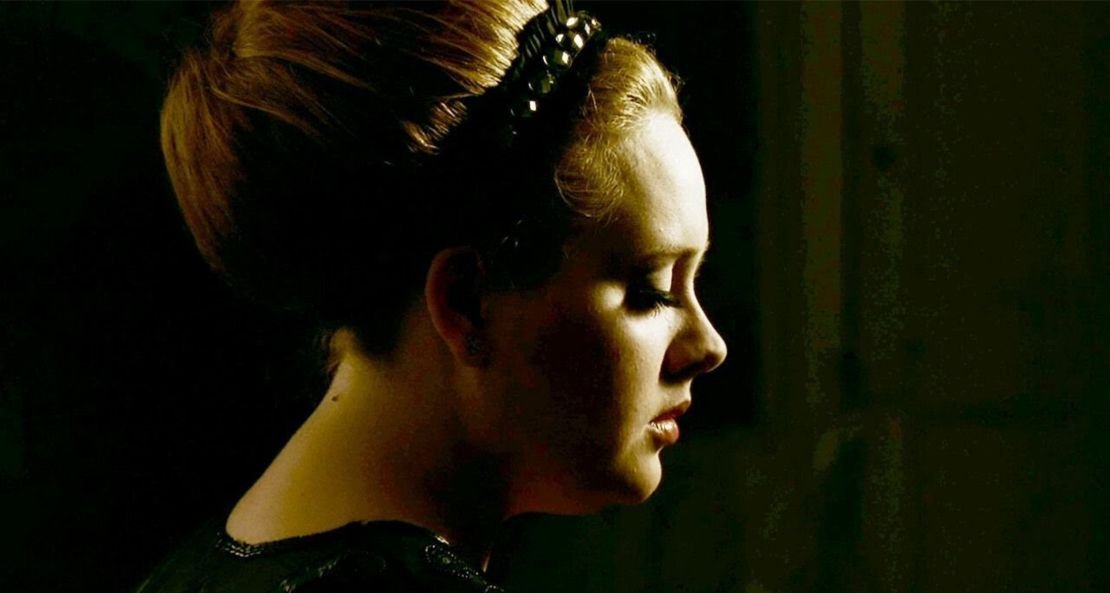
The person who inspired “Rolling in the Deep” told Adele, during what turned out to be their final argument, that her life without him would be boring and lonely and rubbish.
He told her she was weak for leaving. This was, by any measure, a catastrophic misreading of the woman in front of him.
Fourteen years on, the song has over 2.5 billion YouTube views, three Grammy Awards, and a 65-week run on the Billboard Hot 100.
Adele went on to sell 31 million copies of the album it opens. Whatever boring, lonely, rubbish existence he imagined for her, this wasn’t it.
Rolling in the Deep meaning in brief: “Rolling in the Deep” is Adele’s response to a break-up in which she was told that leaving made her weak.
Written and recorded the day after the split, it is about betrayal rather than heartbreak. It captures the specific fury of discovering that someone you trusted unconditionally was never who you believed them to be.

What Is “Rolling in the Deep” About?
At its most direct: “Rolling in the Deep” is Adele’s response to a break-up in which she was told that leaving made her weak.
The song is not about sadness or longing. It is about fury, specifically the kind that arrives when you realise you have been fundamentally misled about who someone is.
The title comes from British slang. “Roll deep” means to move through the world with people who will unconditionally have your back, not fair-weather friends, but people who show up when things get serious.
Adele explained to Rolling Stone that this was what she believed she had in the relationship the album is about. The record is about the moment she found out she was wrong.
This is why the emotional register of “Rolling in the Deep” is so different from a standard breakup song.
Adele isn’t grieving the loss of a person. She is grieving the loss of a belief, specifically the belief that she had a partner who would always be in her corner.
When that’s the thing that turns out to be false, the anger has a different quality to ordinary heartbreak.
It’s the anger of someone who reorganised their understanding of the world around a fact that wasn’t a fact.
What Inspired Adele to Write “Rolling in the Deep”?
Adele walked into the studio the day after the split. Not a week later when the shock had settled. The day after. She had an idea for a slow ballad, something to grieve with, something soft and melodic and bearable. Producer Paul Epworth refused the pitch outright.
What Epworth saw sitting across from him was not someone ready to write a ballad.
He saw someone operating at a temperature that most people only reach a few times in their lives, and he pushed her to use it.
He told her to be fierce. To be, in his words, “a bitch about it.” He asked her to describe physically what she was feeling, and she talked about her blood moving, about the sensation of rage as something almost circulatory.
She kept pressing his hand to her chest so he could feel her pulse.
That pulse became the tempo of the track.
This is not a poetic statement. Adele has described it in interviews. The drum pattern at the foundation of “Rolling in the Deep” was built from her actual heart rate in that room, on that afternoon.
Most pop records are assembled and refined over months until the edges are smooth.
This one was made in the heat of something that hadn’t cooled yet, and you can hear the difference.
She intended it as a rough demo to be replaced later. When she listened back she understood she couldn’t do it again, not at that level, not with that specific vocal.
The thing that produced the performance only existed on that one afternoon.
The demo became the final track, and the final track spent seven consecutive weeks at number one in the United States.
Rolling in the Deep Lyrics Meaning: A Line-by-Line Breakdown
“Finally I can see you crystal clear”
The word “finally” is doing considerable work. It implies a period of not seeing clearly, of being inside something that blurred her judgment. The clarity arriving here is post-relationship revelation, the specific experience of understanding someone better after they’re gone than you ever did while they were present.
“Go ahead and sell me out and I’ll lay your shit bare”
Structured as permission, almost as a dare. The calmness of it is more unsettling than if she’d shouted. She’s not threatening in a desperate way. She’s threatening in the way someone does when they’re confident they hold the stronger position.
“The scars of your love remind me of us / They keep me thinking that we almost had it all”
The word “almost” is the emotional centre of the entire record. It doesn’t let the relationship be nothing. It doesn’t rewrite history the way anger often does. The relationship was real. It had the material for something lasting. “Almost” acknowledges all of that and then sits there, unable to move past it, which is exactly what that particular kind of grief feels like when you’re inside it.
The choice of “scars” rather than “wounds” is precise. Wounds are open and healing. Scars are permanent, closed, fixed records of something that happened. These memories aren’t going to fade. They’re already settled into something harder.
“You had my heart inside of your hand / And you played it to the beat”
Somebody had her complete trust and treated it as a rhythm section. The image takes the standard romantic vulnerability of “giving someone your heart” and makes it mechanical, indifferent. He had something that mattered and used it as an instrument.
The Bridge: “You’ll pay me back in kind and reap just what you’ve sown”
The bridge is the coldest moment on the record and gets less attention than it deserves. On the surface it reads as philosophical, almost encouraging. Throw your soul through every open door, count your blessings. But look at the pronouns. You’ll pay me back. You’ll reap what you’ve sown. It is not self-directed at all.
For about thirty seconds, Adele sounds like someone who has already moved on and is watching from sufficient distance to observe consequences. The rest of the song is immediate and raw. The bridge is remote in a way that is harder to recover from than any amount of shouting.
You might also like:
- The Power Of Music And How It Shapes Society
- SZA’s Snooze Lyrics: A Deep Dive into the Meaning and Symbolism of the Song
- Unveiling the Hidden Meanings: A Deep Dive into Leonard Cohen’s Hallelujah
- Sing-Along Classics: 50 Songs Everyone Knows by Heart
Frequently Asked Questions About “Rolling in the Deep”
What is the meaning of “Rolling in the Deep” by Adele?
“Rolling in the Deep” is about the end of a serious relationship and the specific fury that followed. The title draws from British slang — “roll deep” means to always have someone unconditionally in your corner. Adele believed she had that kind of loyalty and wrote the song when she discovered she didn’t. The emotional register is not grief but anger, recorded the day after the break-up while the feeling was still at its most immediate.
What does “rolling in the deep” mean?
It comes from the British slang “roll deep,” meaning to move through life with people who will always have your back, no matter what. It implies unconditional loyalty and the security of never being alone when things get serious. Adele told Rolling Stone that this was what she believed she had in the relationship, and the song is about losing that belief.
Who is “Rolling in the Deep” written about?
Adele has not confirmed the person’s full identity. She has described him as older than her, someone she was with for over a year while writing the album 21. Her friends and colleagues were reportedly uniformly relieved when it ended. The specific catalyst for the song was being told during the final argument that her life without him would be boring and that leaving made her weak. She found this insulting enough to go and make a record about it.
What does “we could have had it all” mean in Rolling in the Deep?
It is an accusation framed as a lament. Adele is not wishing the relationship had continued — she is stating that it had the material for something real, and that his choices destroyed that possibility. The line functions as a way of placing responsibility precisely. Not circumstances, not incompatibility. His choices. That specificity is why it landed so hard with so many people who have never been in a remotely similar situation.
What inspired Adele to write “Rolling in the Deep”?
She wrote it the day after the break-up in a studio session with producer Paul Epworth. She arrived wanting to write a slow ballad and Epworth refused, pushing her toward something more intense. The drum pattern of the track came directly from her pulse in that session — she kept pressing his hand to her chest to show him what she was feeling. The recording was intended as a rough demo but became the final release when Adele realised the vocal performance couldn’t be replicated once the emotional intensity of that afternoon had passed.
What did “Rolling in the Deep” achieve commercially?
It spent 65 weeks on the Billboard Hot 100 and reached number one in over 25 countries, holding the top spot in the US for seven consecutive weeks. At the 2012 Grammy Awards it won Record of the Year, Song of the Year, and Best Short Form Music Video. The album 21, which it opens, sold over 31 million copies worldwide.