

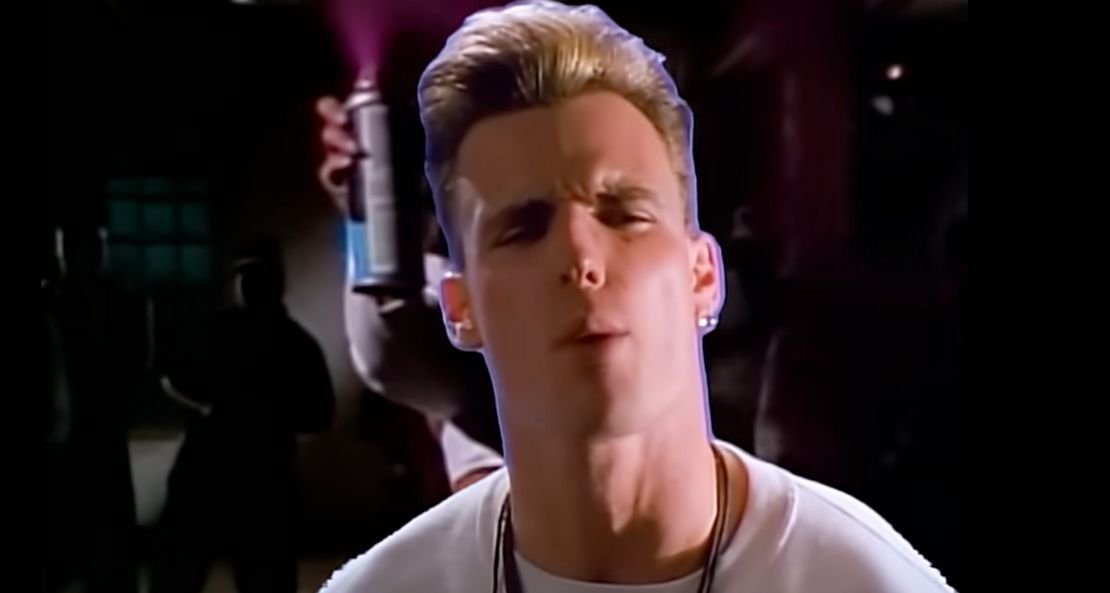
Thirty-five years ago this month, a white rapper from Dallas did what no MC had done before. On November 3, 1990, Vanilla Ice crashed the Billboard Hot 100 summit with “Ice Ice Baby,” dropping the first hip-hop track to ever claim the top spot.
The achievement split opinions faster than shells hitting concrete, but nobody could deny the cultural earthquake it triggered. Robert Van Winkle penned these bars at sixteen, pulling straight from his South Beach experiences.
The track kicks off with that instantly recognisable bassline, the one he lifted from Queen and David Bowie’s “Under Pressure”, before Van Winkle’s flow takes control. (For the full story behind the sampling controversy and lyric breakdown, check out our complete guide to Ice Ice Baby.)
DJ Earthquake looped those eight bars, laid a beat underneath, and watched Van Winkle flip when he heard it. That’s where the magic sparked.
The production flexes old-school 808 kicks that rattle speakers and shake floors. Those drum machines punch through the mix with the kind of boom-bap energy that defined early hip-hop’s golden era.
The bassline drives everything forward like a Mustang down Ocean Drive, never letting up for three and a half minutes of pure adrenaline.
It’s minimalist but deadly: just bass, drums, and that cold hook that refuses to leave your skull.
Van Winkle’s delivery carries that laid-back Miami swagger throughout. His rhyme schemes stay simple but effective, painting vivid pictures of A1A Beachfront Avenue where the heat rises off the pavement and danger lurks around every corner.
The flow melts smooth across the beat, maintaining that cruising tempo even when the narrative turns violent.
The lyrics blend braggadocious bars about his mic technique with a weekend story from South Beach. He rolls in his 5.0, gunshots crack, he bounces before trouble catches him.
Between verses, Van Winkle spits metaphors stacked high: rocking stages like a vandal, melting competition like candles, claiming his style hits like a chemical spill.
That signature chant, “Ice Ice Baby,” came straight from Alpha Phi Alpha fraternity’s rallying cry, adding another layer to the track’s cultural DNA.
The hook grabs attention through sheer repetition and attitude. When Van Winkle commands listeners to stop, collaborate, and listen, he’s announcing a brand new invention, claiming his space in a genre that hadn’t yet crowned a chart-topping single. That confidence radiates through every line, even when critics questioned his authenticity.
The sampling controversy that erupted after the track blew up became one of hip-hop’s most famous legal battles, eventually settled out of court with Queen and Bowie receiving writing credits and financial compensation.
That settlement money reportedly helped fund Death Row Records, inadvertently bankrolling the West Coast gangsta rap movement that would define hip-hop’s next chapter.
SBK Records pulled a brilliant marketing move when the single hit number one. They stopped pressing copies, forcing fans to buy the full album “To the Extreme” instead.
The strategy worked like a charm. The album knocked MC Hammer’s “Please Hammer Don’t Hurt ‘Em” off its throne and stayed at number one for sixteen consecutive weeks, moving seven million copies in the United States alone.
At one point, retailers sold a hundred thousand copies daily. The album became the fastest-selling debut in history during its first fourteen weeks, matching the Beastie Boys’ “Licensed to Ill” for the longest run at number one by a white rapper.
Van Winkle rode the wave hard. SBK dropped him from MC Hammer’s tour when “To the Extreme” bumped “Please Hammer Don’t Hurt ‘Em” from the top spot.
The two rappers traded minor jabs in the press, but Van Winkle started headlining arenas himself. He taped a cameo in “Teenage Mutant Ninja Turtles II: The Secret of the Ooze,” starred in his own film “Cool As Ice,” and watched his face appear on dolls, magazines, and board games. The merchandising blitz rivalled anything pop music had seen.
Critics savaged the track’s simplicity and questioned Van Winkle’s street credentials. The backlash came swift and merciless, with hip-hop purists dismissing him as a novelty act who diluted the culture.
Fair or not, that criticism stuck, and Van Winkle became a cautionary tale about authenticity versus commercial appeal. Yet the numbers told a different story.
Radio stations played it constantly, MTV kept the video in rotation, and crowds packed arenas to see him perform.
The track also dominated charts internationally, hitting number one in the UK where it stayed for four weeks, plus topping charts in Australia and across Europe. The single sold millions worldwide, proving hip-hop’s commercial viability on a global scale.
The track’s influence extended beyond charts and sales figures. It proved hip-hop could dominate mainstream pop culture, opening doors for every rapper who followed.
Before “Ice Ice Baby,” radio programmers stayed hesitant about hip-hop’s commercial potential. After it, the floodgates burst open.
Drake, Travis Scott, and every chart-topping rapper since owes something to that November 1990 breakthrough, whether they acknowledge it or not.
Looking back three and a half decades later, “Ice Ice Baby” stands as a historical marker more than a masterpiece.
The track captures a specific moment when hip-hop crossed over from underground culture to mainstream phenomenon.
Van Winkle might have been the wrong messenger for some purists, but his delivery system worked perfectly for pop radio. The beat still knocks, the hook still sticks, and that bassline still makes speakers vibrate.
Thirty-five years later, “Ice Ice Baby” remains impossible to escape. It shows up in films, commercials, and nostalgic playlists.
Young artists sample it, DJs drop it for guaranteed crowd reactions, and karaoke singers tackle it with varying degrees of success.
Love it or dismiss it, the track refuses to die. That staying power speaks to something deeper than novelty or controversy.
Van Winkle wrote these bars as a teenager, captured a moment in time, and accidentally changed hip-hop history.
The achievement deserves recognition, even from those who wished someone else had claimed that first number one.
The barriers broke regardless of who broke them, and every rapper who topped the charts afterwards benefited from that initial breakthrough.
That’s the real legacy of “Ice Ice Baby”: not perfection, but permission for hip-hop to dominate popular music forever.
The song sparked debates about cultural appropriation, sampling ethics, and commercial rap that continue today.
Those conversations matter, but so does the undeniable fact that on November 3, 1990, hip-hop proved it could command the mainstream.
Thirty-five years on, that moment still echoes through every chart-topping rapper who followed.
You might also like:
- The Golden Age of Hip Hop: A Guide to the 90s Rap Scene
- The Best Conscious Hip-Hop Songs of All Time: A Playlist for Social Change
- Skee-Lo’s I Wish Lyrics: Unpacking the Humour and Satire Behind the ’90s Hip Hop Classic
- Unforgettable 90s Karaoke Songs: A Journey Through the Decade’s Most Beloved Hits
- The 90s Grunge Fashion: A Subculture That Defined a Generation
- Is R&B Dying Or Evolving? Exploring the Evolution of the Genre from the 90s to Today