
Chappell Roan didn’t release “The Subway” so much as let it simmer until everyone was already humming it.
The track floated through her live sets for over a year, half-myth and half-audible, until the official release on August 1, 2025. By the time it landed, it felt less like a debut and more like a long-overdue confrontation with heartbreak itself.
Produced by longtime collaborator Dan Nigro, “The Subway” marks a sonic departure from the synth-heavy hits that made Roan a household name.
No glitter-bomb production like “Good Luck, Babe!” here. Instead, Nigro strips everything back to jangle pop guitars, reverb-washed vocals, and space that lets Roan’s voice do the damage.
The result? A dream pop ballad that sounds like The Cranberries and The Sundays had a baby in a New York City subway car.
The Year-Long Wait for The Subway
Roan first debuted “The Subway” at Governor’s Ball Music Festival on June 9, 2024. Dressed as the Statue of Liberty (complete with green paint and a torch), she performed the track for the first time to a crowd that immediately demanded the studio version.
The day before, she teased fans by changing her Instagram profile picture to the Subway restaurant logo. A playful nod to the song’s title that had fans scrambling to figure out what she was cooking up.
But the studio version didn’t arrive for another 13 months.
Why the wait? Roan told the Las Culturistas podcast in April 2025 that she struggled to replicate her live vocal performance in the studio.
She felt the song worked better in concert and worried about how fans would receive a different version.
“Some songs just work live and they don’t work in the studio,” she explained. “For ‘The Subway’, it’s just going to feel different, and different doesn’t always mean worse.”
She was right to worry. Fans who’d watched countless grainy phone recordings from festivals had built up expectations.
But when the studio version finally dropped, it proved Roan’s instincts right. The recorded version doesn’t try to recreate the raw power of her live performance. It becomes something else entirely: a melancholy meditation on memory and loss.
The Subway Lyrics: What Every Line Means
That first line? “I saw your green hair…” It’s not setting the scene. It’s setting the spiral.
Verse 1: The Subway Encounter
“I saw your green hair, beauty mark next to your mouth”
Roan opens with hyper-specific details that make the ex instantly recognizable. The green hair isn’t just description. It became a symbol, linking the ex to the Statue of Liberty imagery Roan wore when debuting the song. Some fans have theorized the green hair represents New York City itself, as prominent as Lady Liberty.
“There on the subway, I nearly had a breakdown”
The mundane setting (public transit) clashes with the intensity of emotion. This is heartbreak in the wild, not in private. New York City forces you to process grief in public, surrounded by strangers who won’t meet your eye.
“A few weeks later, somebody wore your perfume / It almost killed me, I had to leave the room”
Scent memory is the most powerful trigger. Dan Nigro keeps the instrumentation sparse here, just clean electric guitar and subtle percussion. The production mirrors the raw exposure of being ambushed by a smell.
Chorus: The Never-Ending Loop
“It’s just another day and it’s not over / ‘Til it’s over, it’s never over”
The repetition mirrors the obsessive loop of post-breakup thinking. You tell yourself you’re fine. You tell yourself it’s over. But it’s not over until the memories stop ambushing you on the subway, in rooms, on stairwells.
Post-Chorus: Waiting for Normalcy
“‘Til I don’t look for you on the staircase / Or wish you thought that we were still soulmates”
Still holding onto the fantasy. Still searching for them in every crowd. The specificity of “staircase” feels so personal, like a memory she can’t shake.
“But I’m still counting down all of the days / ‘Til you’re just another girl on the subway”
The goal: transform the ex from THE PERSON to just another stranger. Anonymity as healing. In a city of millions, that should be easy. But grief makes it impossible.
Verse 2: The Saskatchewan Threat
“Made you the villain, evil for just moving on”
A moment of brutal self-awareness. She knows she’s rewriting history to cope. She knows she’s the one still stuck while her ex has moved forward. The honesty here stings.
“I see your shadow, I see it even with the lights off”
Haunted even in darkness. The ex is a ghost that won’t leave, appearing in shapes and silhouettes that probably aren’t even real.
“I made a promise, if in four months this feeling ain’t gone / Well, fuck this city, I’m movin’ to Saskatchewan”
The line that broke the internet.
Saskatchewan, a Canadian province about as far from New York City as you can get, becomes the ultimate escape plan. It’s half-joke, half-serious threat. If the heartbreak doesn’t fade, she’s torching everything and starting over somewhere nobody knows her name.
The line worked. Tourism Saskatchewan saw its first U.S. Google search spike in two years after the song dropped. The province’s tourism board racked up over 50,000 social media interactions in August 2025 alone. They should probably send Roan a thank-you card.
Post-Chorus 2: The Intimate Details
“‘Til I can break routine during foreplay / And trust myself that I won’t say your name”
Brutally honest. The ex lives in muscle memory now, showing up in the most intimate moments with someone new. This vulnerability separates Roan from pop stars who sanitize heartbreak for radio play.
Bridge: The Wordplay That Wrecked Us
“She’s got a way / She got away”
This is where Roan’s songwriting genius explodes.
The words are nearly identical, but the meaning shifts:
- “She’s got a way” means she has this charm, this thing about her that’s unforgettable
- “She got away” means she escaped, she left, I lost her
Same sounds. Completely different grief.
Vocally, Roan channels Dolores O’Riordan of The Cranberries here. She lets her voice crack and wail, reaching for notes that feel just out of reach. It’s the emotional peak of the song, and she delivers it with the kind of raw power that made fans fall in love with the live version.
Outro: The Loop Continues
The repetition of “she’s got/got away” becomes hypnotic, like a thought you can’t stop replaying at 3 AM. Roan’s vocals soar higher, straining, pushing. Then the song just ends.
No resolution. No closure. No neat bow.
Because that’s how heartbreak actually works.
You might also like:
- Laufey’s Lover Girl Lyrics and Video Explained: A Dizzy Bossa Nova Romance in Tokyo
- Reneé Rapp Why Is She Still Here Lyrics Meaning: Not a Love Triangle, a Haunting
- Conan Gray Vodka Cranberry Lyrics Meaning: A Raw Breakup Confession That Stings Twice
- Zach Bryan’s A Song For You Lyrics Meaning: A Keepsake for Lost Nights and Old Lovers
Why The Subway Sounds Like The Cranberries
If “Good Luck, Babe!” strutted with camp and drama, “The Subway” sits in its feelings. The production represents Roan’s boldest departure yet from her signature sound.
Dan Nigro ditches the gloss. No heavy synths. No theatrical maximalism. Instead, he builds a spacious, reverb-washed soundscape that gives Roan’s vocals room to explore new emotional territory.
The track features:
- Jangly electric guitars (The Sundays territory)
- Crisp, minimal percussion
- Dream pop textures
- Shoegaze-style reverb
- Acoustic-forward production
Critics immediately drew comparisons to 90s alternative acts. Pitchfork called Roan “one of pop’s most distinctive writers” and praised the track’s “familiarity and novelty.” The Fader noted she “puts feeling ahead of the exuberance of her biggest hits.”
The Cranberries Connection
That wailing outro? Pure Dolores O’Riordan energy.
Fans who know Roan’s history weren’t surprised by the reference. She used to cover “Dreams” by The Cranberries at small shows years ago. After Dolores passed in 2018, Roan dedicated her performances of the song to her.
The influence shows up in how Roan bends vowels, how she lets her voice crack on “over” in the chorus, how she builds to that soaring bridge. It’s not imitation. It’s homage from a younger artist who clearly studied at the altar of 90s dream pop.
How It Compares to Casual
Roan has called “The Subway” a “sister song” to “Casual,” one of the standout tracks from The Rise and Fall of a Midwest Princess.
Here’s how they connect:
Casual: The chaos of an undefined relationship. “Knee deep in the passenger seat and you’re eating me out” followed by “Is it casual now?” The confusion of someone treating you like a girlfriend but calling it casual.
The Subway: The aftermath of losing someone who was never fully yours. The grief of watching them move on while you’re still stuck on subway platforms, seeing their ghost everywhere.
Where “Casual” had bite and anger, “The Subway” drowns in yearning. It’s the quieter, more devastating sequel.
Music Video: Every Easter Egg You Missed
Then there’s the video, directed by Amber Grace Johnson.
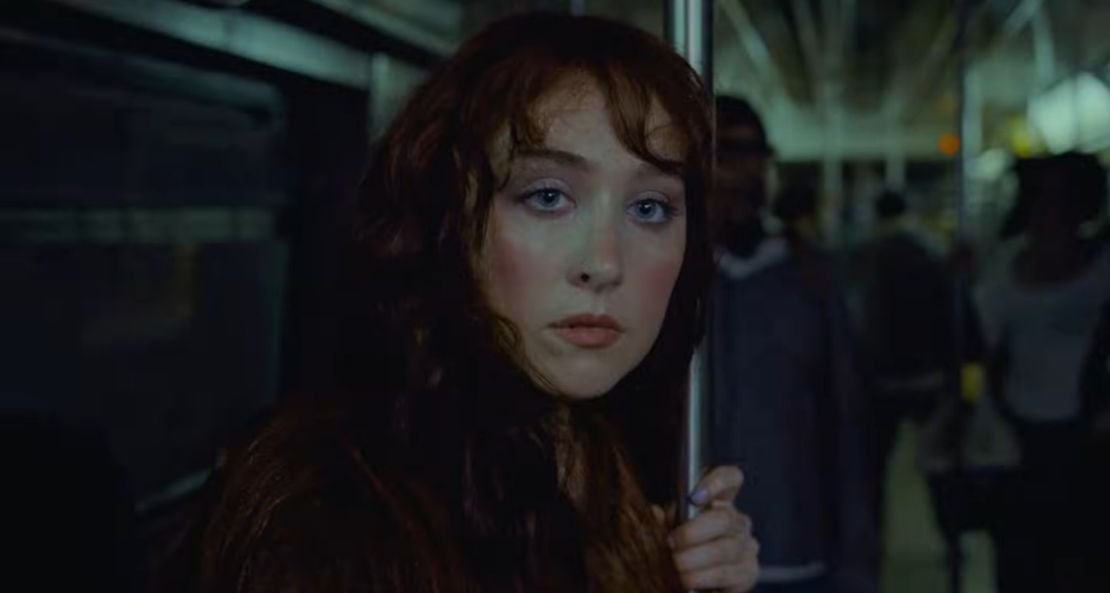
A real-life train drags Roan’s hair like fraying rope through a sea of blank faces. She keeps singing, strands snapping behind her. No one flinches.
The choreography isn’t for them. It’s for her. A way to stay upright while the city keeps moving.
The Hair as Metaphor
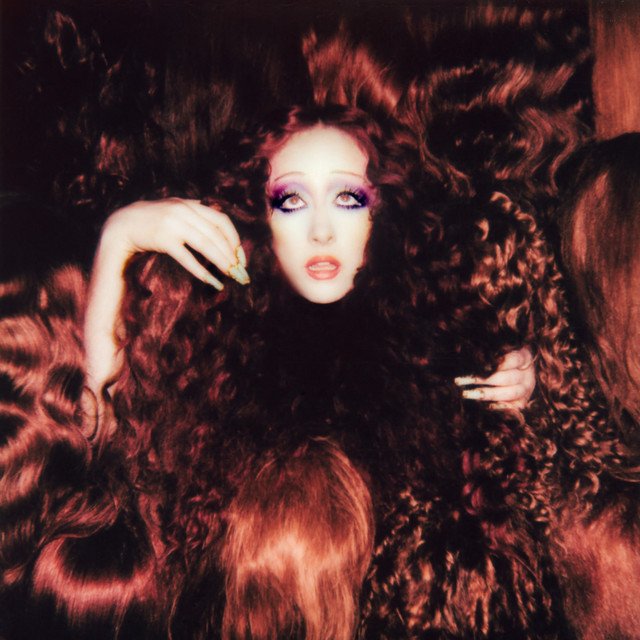
Roan’s red hair cascades everywhere in this video. Literally everywhere.
It gets stuck in a taxi door and drags her through Manhattan streets. Garbage and rats accumulate in it as she wanders. At one point, it becomes Rapunzel-length, flowing from a fire escape.
The hair represents attachment. Heavy, messy, impossible to escape. She drags it behind her like it weighs something. Maybe it does.
The Green Lady Cameo
Eagle-eyed viewers spotted Elizabeth Eaton Rosenthal in a brief scene. Known as the “Green Lady of Brooklyn,” Rosenthal covers herself head-to-toe in green and has become a beloved street performer in the borough.
Her cameo is a love letter to New York City’s eccentric characters. The ones who make the city feel alive even when you’re drowning in heartbreak.
Washington Square Park: The Ophelia Moment
In one striking scene, Roan floats in Washington Square Park’s fountain like the subject of John Everett Millais’s painting “Ophelia.” A woman consumed by grief, sinking beneath the surface.
Meanwhile, a couple makes out a few feet away. Life goes on. Nobody notices the breakdown happening right next to them.
That’s New York. You can have a full emotional collapse in public, and people will just step over you to catch their train.
The Subway Transforms into a Club
The train car suddenly fills with drag queens and partying dancers. No one pays attention to Roan’s breakdown in the middle of the car.
This scene reinforces a theme: In New York, everyone’s too absorbed in their own drama to notice yours. You’re alone in a crowd of millions.
The Wizard of Oz Ending
Just like Dorothy, Roan wakes up on the subway and realizes it was all a dream. Or was it a nightmare?
She’s still on the train. The ex isn’t there. The green-haired figure never existed.
But the grief? That’s real. That followed her back from the dream.
King Kong Climbs Again
In one surreal moment, Roan climbs a giant green wig like King Kong scaling the Empire State Building. Obsession rendered as absurdist comedy.
The video doesn’t explain itself. It doesn’t need to. You either feel it or you don’t.
Dan Nigro’s Production: Space to Break Down
Roan isn’t processing a breakup here. She’s rerunning it every time someone passes by wearing the ex’s perfume. Every time a stranger on the subway flickers with that familiar mouth, that familiar mark.
And every time she’s reminded, she breaks a little differently.
Dan Nigro, who produced every track on The Rise and Fall of a Midwest Princess and recent hits for Olivia Rodrigo, understands restraint. He doesn’t compete with Roan’s breakdown.
There’s a clean electric guitar. Some space. Maybe a ghost of reverb. Mostly, he lets her voice do the damage.
The bridge alone, where she spirals into “She’s got a way… she got away,” doesn’t need decoding. You just sit with it.
You hear “Saskatchewan” and laugh. Then you realize it’s the most serious thing she’s said. A threat disguised as a punchline. The kind that only works when you’re absolutely not joking.
The Cultural Moment: When a Ballad Broke Through
“The Subway” wasn’t supposed to be a hit.
Ballads rarely are in 2025, when TikTok favors 15-second hooks and algorithm-friendly uptempo tracks. But Roan built anticipation the old-fashioned way: by performing the song live for a year.
Fans recorded grainy videos at Lollapalooza, Primavera Sound, and Reading Festival. The recordings went viral. By the time the studio version dropped, millions of people already knew the words.
The song peaked at various positions globally, but its real impact showed up elsewhere. Reddit threads dissecting the “she got/got a way” wordplay. TikToks analysing the Cranberries influence. Thinkpieces about heartbreak in public spaces.
Music critics took notice too.
Shaad D’Souza of Pitchfork praised Roan as “one of pop’s most distinctive writers,” noting the song “sounds totally fresh” despite its “familiarity.” He called the combination of “familiarity and novelty” Roan’s “real magic trick.”
Paolo Ragusa of Consequence praised the “passionate, majestic songwriting” and noted the track has more “subtlety” than typical Roan fare.
David Renshaw of The Fader wrote that Roan “puts feeling ahead of the exuberance of her biggest hits.”
The Subway vs. Good Luck, Babe: Two Sides of Heartbreak
If “Good Luck, Babe!” was a kiss-off in glitter heels, “The Subway” shows what happens after the high fades.
That earlier single, released in April 2024, strutted with camp and defiance. The production sparkled. The lyrics bit hard: “You can kiss a hundred boys in bars / Shoot another shot, try to stop the feeling.”
“The Subway” offers no such swagger. Roan is quieter here. Unmasked. There’s no snark, no hook to scream into a crowd. Just a woman watching her own heartbreak play out like a movie she can’t walk out of.
Where “Good Luck, Babe!” confronted the ex directly, “The Subway” turns inward. The ex barely appears except as a ghost, a shadow, a stranger’s perfume. The real confrontation happens inside Roan’s head, on an endless loop.
Both tracks showcase Roan’s range. She can deliver theatrical pop anthems and stripped-down emotional confessions with equal skill. Not many artists pull that off.
Why This Song Almost Didn’t Exist
Fans who waited a year for this release might have expected a cathartic belter. Instead, Roan cuts the song just when the chorus could return.
It’s a bold move. No final explosion. No rinse-and-repeat hook. Just the weight of absence.
It leaves you wanting the chorus again. It mimics the feeling of losing someone and not getting one more conversation. One more chance to say what you mean before they slip through subway doors and disappear forever.
Roan announced the release on instagram:
View this post on Instagram
The perfectionism paid off. “The Subway” doesn’t sound rushed or forced. It sounds like an artist who took the time to get it right, even when fans were screaming for it.
Genre Classification: What Actually Is This Song?
Music critics have struggled to pin down “The Subway” into a single genre. Here’s what reviewers called it:
- Dream pop (Cocteau Twins influence)
- Alt-pop (mainstream accessibility with indie sensibilities)
- Power pop (strong melodies and hooks)
- Jangle pop (guitar sound straight from the 80s/90s)
- 90s rock throwback (Cranberries comparisons)
- Shoegaze-adjacent (reverb and atmosphere)
The genre fluidity makes sense. Roan has never been interested in staying in one lane. Her debut album bounced from campy synthpop (“Hot to Go!”) to vulnerable ballads (“Casual”) to country-tinged anthems (“Pink Pony Club”).
“The Subway” fits into her catalog as the most sonically adventurous track yet. It proves she’s not locked into the glitter-bomb aesthetic that made her famous. She can strip it all away and still wreck you.
The Subway: Frequently Asked Questions
What is “The Subway” about?
“The Subway” chronicles running into an ex on New York City public transit and having your entire day derailed by the encounter.
More broadly, it explores how memories ambush you in everyday places: perfume, stairwells, strangers who look like them.
Chappell wrote the song while navigating a breakup in New York City, where the density of the city means you can never truly escape someone.
Who produced “The Subway”?
Dan Nigro, Chappell Roan’s longtime collaborator who’s also worked with Olivia Rodrigo on SOUR and GUTS. Nigro produced the entirety of The Rise and Fall of a Midwest Princess and all of Roan’s recent singles including “Good Luck, Babe!” and “The Giver.”
Why is Saskatchewan mentioned in the song?
In the second verse, Roan sings: “I made a promise, if in four months this feeling ain’t gone / Well, fuck this city, I’m movin’ to Saskatchewan.”
Saskatchewan is a Canadian province, about as far from NYC as you can get. It’s half-joke, half-serious threat. If the heartbreak doesn’t fade, she’s leaving everything behind.
After the song dropped, Saskatchewan saw its first U.S. Google search spike in two years. Tourism Saskatchewan racked up 50,000+ social media interactions in August 2025.
What does “she’s got a way / she got away” mean?
It’s brilliant wordplay. “She’s got a way” means she has this charm, this unforgettable quality. “She got away” means she escaped, she left, I lost her. Same words, completely different meanings. It captures the grief of someone being both unforgettable AND gone. Roan’s vocal delivery on this bridge, channeling Dolores O’Riordan, makes it the emotional peak of the song.
When was “The Subway” first performed?
June 9, 2024, at Governor’s Ball festival in New York City. Chappell dressed as the Statue of Liberty, complete with green paint (fitting for a song about NYC). Fans immediately demanded a studio version, but she waited over a year to release it, wanting to get the production exactly right.
Why did it take so long to release?
Chappell told the Las Culturistas podcast she struggled to replicate her live vocal performance in the studio. She felt the song worked better in concert and worried about how a studio version would land. She wanted to take time to figure out “how this song should feel musically and visually and emotionally.” The year-long wait proved worth it.
Is it related to “Casual”?
Yes. Chappell called “The Subway” a “sister song” to “Casual.” Where “Casual” captures the chaos of an undefined relationship (“Is it casual now?”), “The Subway” explores the aftermath of losing someone who was never fully yours. Both tracks deal with the specific grief of queer relationships that exist in liminal spaces.
Who’s the “Green Lady” in the video?
Elizabeth Eaton Rosenthal, a beloved NYC street performer who’s covered head-to-toe in green. She’s been a Brooklyn fixture for years. Her cameo is a tribute to New York City’s eccentric street culture and the characters who make the city feel alive.
What genre is “The Subway”?
Dream pop / alt-pop / power pop with jangle pop guitars and shoegaze textures. Think: The Cranberries, The Sundays, Cocteau Twins, Sixpence None the Richer. It’s a total departure from Chappell’s synth-heavy hits like “Good Luck, Babe!” and represents her most adventurous sonic territory yet.
Will there be more music like this?
Chappell told Vogue in April 2025 that her second album “doesn’t exist yet” and “it’s probably gonna take at least five years” to complete. She’s not rushing the process. If “The Subway,” “Good Luck, Babe!,” and “The Giver” represent the sonic palette of the next album, fans can expect a more mature, sonically diverse collection than her debut.
You’re Not Supposed to Break Down in Public
You’re not supposed to break down in public. But Roan does. And she makes it look like art.
Like “Pink Pony Club,” “The Subway” turns personal chaos into vivid storytelling. But this time, there’s no disco ball. No escape to West Hollywood. Just the MTA, the crowds, and the ghost of someone who might not even be real.
Maybe the most devastating part? The city doesn’t notice. The MTA won’t validate your heartbreak. The train comes and goes. People get on and off. You’re just another girl on the subway, trying to figure out when this stops hurting.
And Chappell Roan, with Dan Nigro’s restrained production and The Cranberries in her DNA, captures that feeling better than anyone has in years.
She drags a trail of red hair behind her like it weighs something. The green-haired blur she’s chasing keeps slipping through doors, through crowds. Never looking back.
She sings into crowded subway platforms as if trying to make the transit system notice her heartbreak. It doesn’t. It never does.
But we notice. And that’s enough.