
Somewhere between AI-generated sharks in trainers and cappuccino-headed ballerinas, a proper business has emerged.
While you’re trying to explain to your mum what Italian brainrot actually is, teenagers are already turning it into income.
Physical merchandise, gaming economies, cryptocurrency pump-and-dumps. The whole thing’s moved past joke territory into something that requires actual business plans.
The Merch Landed Fast
Within months of these characters going viral, the toys were already in shops. Walk into certain stores now and you’ll find Tralalero Tralala figurines next to mainstream brands. Ballerina Cappuccina plushies. Tung Tung Tung Sahur keychains.
@sarahparker444 #italianbrainrot #plush #30cm #plushies #italian #brainrot #summersales #tiktokmademebuyit ♬ original sound – One Stop Metalhead Shop
Multiple online retailers competing for the same market, all flogging variations of the same AI-generated absurdity.
The projections are genuinely impressive. Analysts reckon the brainrot toy market could hit 12% annual growth through 2028, with current valuations over $120 million.
Italian newsstands started selling brainrot trading cards earlier this year, and Gen Alpha went mad for them. People who remember Garbage Pail Kids in the ’80s saw the pattern immediately.
Most of this stuff gets manufactured in China with surprisingly low minimums. You can order anything from single pieces to bulk shipments of thousands.
That accessibility means anyone with a few hundred quid and a Shopify store can jump in, which partly explains why the market got saturated so quickly.
Roblox Changed Everything
Steal a Brainrot hit Roblox in early 2025 and the numbers were bonkers. Twenty-three million concurrent players in a single day.
To put that in perspective, Counter-Strike 2 on Steam peaks around 1.5 million. This game, based entirely on stealing and collecting meme characters, became one of the biggest things in gaming almost overnight.
The mechanics are dead simple. You stand by a conveyor belt, wait for the character you want, buy it before someone else does.
Each brainrot generates passive income in the game, so everyone’s incentivised to collect more and defend what they’ve got. Fortnite launched their own version that pulled 542,000 concurrent players.
What’s wild is the secondary market that appeared. Third-party sites now sell in-game brainrot characters for actual money. Rare items fetch real prices.
These websites have full customer support, secure payment systems, the works. It’s the same model that developed around CS:GO skins or Fortnite accounts, just condensed into about six months instead of several years.
The Crypto Crowd Showed Up
Of course there’s a meme coin. Italianrot launched on Solana in March 2025, riding the viral wave straight into speculative trading.
At its peak in May, the market cap hit $9 million with individual coins trading at $0.0154. Then reality kicked in.
By October 2025, it’s trading around $0.0018. That’s an 88% drop from the top. Daily trading volume went from $9.28 million at the peak to roughly $99,000 more recently.
During its initial run, the coin outperformed most meme tokens, gaining 63% in a week whilst the broader meme coin category dropped 4.3%.
There’s no actual utility here. One billion tokens, all in circulation, no vesting, no unlock schedules. It exists purely as a bet on whether the meme stays viral.
Some exchanges list it alongside proper cryptocurrencies. Wallet data shows “whale activity,” meaning traders with serious money are taking positions. They’re treating it like a legitimate gamble, which maybe it is.
How Creators Actually Make Mon

The brainrot challenge where people film their relatives trying to read ridiculous phrases whilst holding water in their mouths?
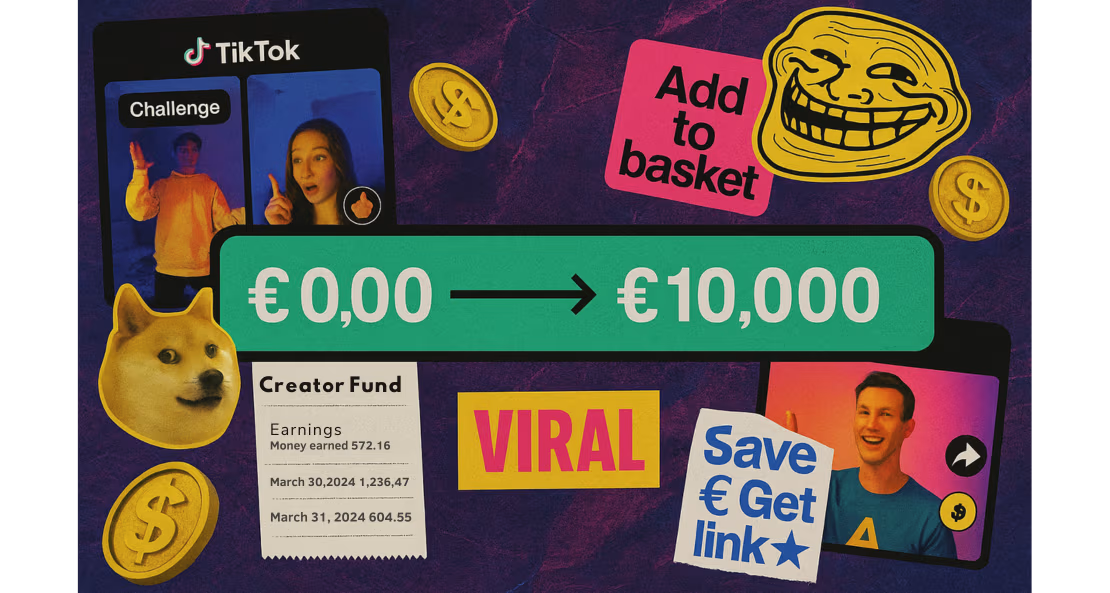
That’s not just content, it’s a monetisation strategy. Views convert to platform payments through TikTok’s Creator Rewards Programme, YouTube’s ad revenue sharing, Instagram’s various creator incentives.
The creator economy sits at $250 billion globally right now, heading towards $480 billion by 2027. Only 4% of creators earn over $100,000 annually, but the successful ones stack multiple income streams.
Platform payments, brand sponsorships, affiliate commissions, product sales. You need all of it to make proper money.
Brand partnerships matter more than platform payments for most creators. Companies pay to have brainrot themes integrated into sponsored content because they know Gen Z and Alpha respond to absurdist humour.
Viktor Orbán posted a TikTok of Tung Tung Tung Sahur dancing in a Hungarian government meeting. When heads of state are using your meme characters, the trend’s gone properly mainstream.
The Side Hustle Generation
Nearly two-thirds of young people run side gigs now. Content creation ranks as Gen Alpha’s top career aspiration, ahead of doctor, teacher, any traditional profession.
Makes sense when you see YouTubers making millions whilst university graduates struggle to find work that covers their student loans.
The income distribution tells the real story though. Half of all creators earn up to $5,000 annually. Seventeen per cent make between $30,000 and $100,000. Seven per cent exceed $100,000. Side hustlers average $1,215 monthly, but the median’s only $400. The gap between top performers and everyone else is massive.
The barrier to entry stays low. You need a phone and ideas. Platforms like TikTok and YouTube have made it possible for one viral video to change someone’s financial situation.
That unpredictability keeps people participating even when most of them won’t ever generate sustainable income.
Where the Ethics Get Complicated
Family therapists aren’t thrilled about any of this. When professionals describe brainrot as “digital cotton candy for the brain,” they’re pointing out how this content prioritises engagement over children’s wellbeing.
The commercialisation of deliberately overstimulating content aimed at kids raises obvious concerns.
The legal situation’s a proper mess. When Steal a Brainrot removed Tung Tung Tung Sahur over potential copyright issues, fans treated it like a death in the family.
Memorial videos flooded TikTok. But it highlighted the central question: who owns AI-generated memes when they become global intellectual property?
Right now, the answer’s “whoever monetises fastest.” Manufacturers, game developers, crypto promoters, content creators, they’re all staking claims to the same characters.
The original creator of Tung Tung Tung Sahur has fought for recognition, which might eventually force legal clarity on how AI meme ownership works. But for now, it’s chaos.
Why Gen Z Actually Gets It

Older generations keep treating internet culture like it’s frivolous, but Gen Z and Alpha see it as actual business.
They’ve worked out that attention equals money, and they’re willing to participate in seemingly stupid trends if those trends generate income. That’s not naivety, it’s pragmatism.
There’s overlap with the delulu lifestyle here. You need irrational confidence to believe you can make money from AI-generated sharks. But when that confidence occasionally works, it reinforces the whole approach.
Internet culture cycles have compressed brutally. What used to take years to develop and monetise now happens in weeks. By the time mainstream media covers a trend, the kids who started it have already moved on.
Where This Goes Next
More merchandise seems inevitable. Gaming platforms will keep integrating whatever meme characters are currently viral. New meme coins will launch, each trying to replicate Italianrot’s brief success.
But meme-based economies burn out fast. Some creators will successfully pivot their audience to new content. Most won’t. Manufacturers will move to the next viral thing. Crypto speculators will find new tokens to pump.
Here’s what actually matters: Gen Z and Alpha have worked out how to monetise chaos. They’ve built a template that converts viral moments into multiple revenue streams within weeks. The specific meme doesn’t matter.
Brainrot will fade, something else will replace it, and the same monetisation playbook will get deployed again. That’s the actual story.
You might also like:
- Italian Brainrot: Why Gen Alpha Is Obsessed with Gibberish Sharks and Cappuccino Ballerinas The origin story behind the AI-generated characters driving the brainrot economy
- The Rise of Brainrot Slang: How TikTok’s Viral Lingo Took Over Pop Culture Understanding the language that powers brainrot content and Gen Z communication
- Living Delulu: How Gen Z Turned Fantasy Into a Lifestyle The irrational confidence mindset fuelling Gen Z’s approach to money and memes
- 60 Gen Alpha Slang Words & Meanings (2025) Complete guide to the vocabulary shaping how young creators communicate online
- What Does Chronically Online Mean? A Deep Dive into Internet Culture Understanding the digital lifestyle that makes brainrot monetization possible
- Understanding Mogging: An In-Depth Exploration of the Mogging Phenomenon Another viral trend showing how Gen Z turns niche concepts into cultural moments