
What Is “All Star” by Smash Mouth About?
“All Star” by Smash Mouth is a self-belief anthem written for outsiders. Guitarist Greg Camp composed it in direct response to fan letters from kids who described being bullied, nerdy, and dismissed. The song tells them they are the ones who break the mould, not the people judging them. The chorus functions as a pep talk. The verses are something more complicated.
All Star meaning (quick explanation)
The meaning of “All Star” by Smash Mouth is about resilience and self-belief. Songwriter Greg Camp wrote it after reading fan letters from teenagers who felt bullied or dismissed. The lyrics encourage outsiders to ignore ridicule and define success on their own terms, similar to how Pumped Up Kicks and The Sound of Silence explore social isolation and the pressure to conform.
The Origin: Interscope Said No
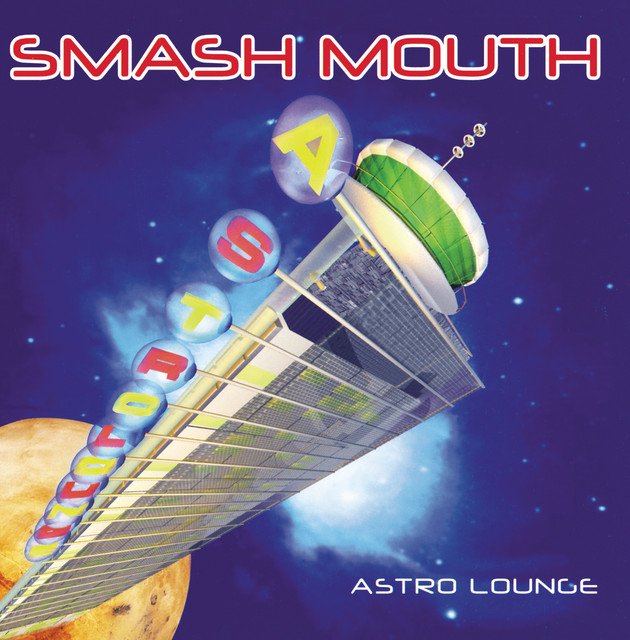
By 1998, Smash Mouth had recorded the bulk of their second album Astro Lounge at a converted house in Los Gatos with producer Eric Valentine. Thirteen tracks. They thought they were done.
Interscope disagreed. Jimmy Iovine and Tom Whalley told manager Robert Hayes the album had no single and refused to release it as delivered. Hayes brought Camp a copy of Billboard magazine. They went through the Top 50 together, broke each hit down to its structural components, and Camp was charged with writing something that contained all of them.
A few days later he came back with “Then the Morning Comes” and “All Star.” Both would go on to become singles from Astro Lounge.
Camp built “All Star” from a looped breakbeat. He played bass over it, whistled melodies into a microphone (that whistle ended up on the actual recording), then went back and added guitar skanks. The skeleton came first. The theme followed.
The Real Meaning Behind the Lyrics
While on the road for their debut album Fush Yu Mang, Camp and bassist Paul De Lisle would take bags of fan mail to laundromats and read through them while doing their washing. One thread kept recurring: kids thanking Smash Mouth for being their band. Outsiders. Kids being bullied at school, dismissed at home.
Camp could relate personally. He had been harassed for being a musician rather than a jock. His parents pushed him toward a real career. One girlfriend directed the “L” on her forehead at him as he left the house for a cover band gig at night while she worked a nine-to-five.
That image became the song’s opening.
De Lisle described the intent plainly: the song was for those kids, telling them to hang in there, that they controlled their own ship. Camp framed it as a pep talk rather than a life philosophy. Even Steve Harwell distanced himself from the central figure at times, calling him a “jester” whose worldview was not meant to be taken as instruction. The song gives the character a voice without endorsing every line he says.
What Does “All That Glitters Is Gold” Mean?
The phrase comes from Shakespeare’s The Merchant of Venice and carries a warning: surface appearance and real value are not the same thing. Inside the chorus it sits uneasily next to “get the show on, get paid,” an instruction to perform and profit. Camp never addressed that tension directly. The line briefly interrupts what otherwise sounds like straightforward encouragement, suggesting that the character chasing success might also be blind to its traps.
What Does the Second Verse Mean?
The second verse references thinning ice and warming water. Camp wrote it from the perspective of someone aware of the problems around him but unwilling to be paralysed by them. The “my world’s on fire” line lands differently depending on whether you read the character as pushing back against the noise or simply not paying attention to it.
What Does “L on the Forehead” Mean?
It is a loser gesture, index finger and thumb forming an L against the forehead. In the song’s opening, someone directs it at the central figure.
Camp confirmed it was autobiographical. His then-girlfriend made the gesture at him as he left for a gig, expressing contempt for a life spent playing music at night rather than building a conventional career.
The line establishes the central figure as someone who has been written off. The rest of the song argues that verdict was wrong.
The Chord Progression Twist
The chorus does something unexpected. It moves from G to C, the expected I to IV shift, but instead of resolving to the usual V chord it jumps unexpectedly to C#. Camp said the disruption was intentional: nothing worthwhile is easy, and life throws curveballs. The progression then settles back on the comfortable C at the end.
Camp traced the influence to James Bond soundtracks and Italian spy film scores from the 1960s, genres he had absorbed through a long-standing love of surf music.
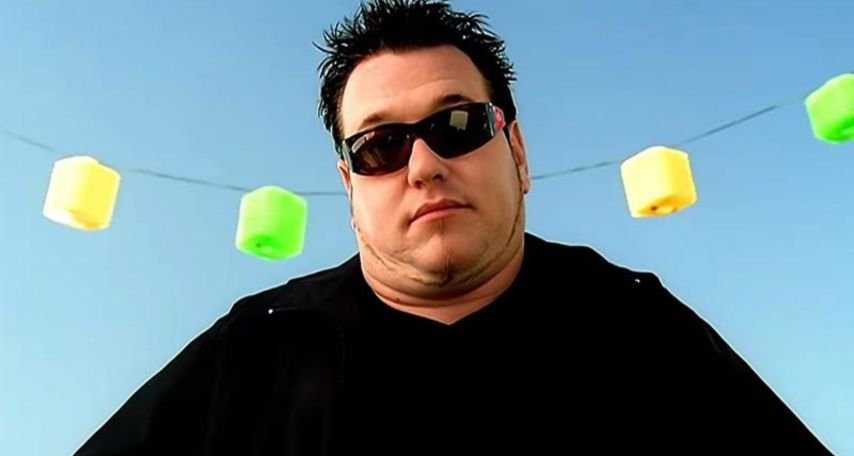
Chart Performance
Released as a single on 4 May 1999, “All Star” peaked at No.4 on the Billboard Hot 100. It went further on format-specific charts: No.1 on both the Adult Top 40 and Mainstream Top 40, and No.2 on Alternative Airplay. Internationally it reached No.4 in Canada and No.31 in Australia.
Session drummer Michael Urbano, brought in by Valentine, played the track twice before nailing it. He barely remembered the session until he heard it on the radio. Within two weeks he had heard it three million times.
The Grammy nomination for Best Pop Performance that year went to Santana.
The Film Placements
Before Shrek, “All Star” appeared in four films: Mystery Men (1999), Inspector Gadget (1999), Digimon: The Movie (2000), and Rat Race (2001).
Manager Robert Hayes described the song as unusually licensable from the start, and throughout 1999 and 2000 it became genuinely difficult to avoid in shops or on television.
Smash Mouth initially turned down DreamWorks’ request to use the song in Shrek. After a private screening they changed their minds. The film opened with it in 2001 and fixed “All Star” to a generation’s memory in a way the radio run alone had not managed.
Camp still receives licensing requests multiple times a week.
Steve Harwell
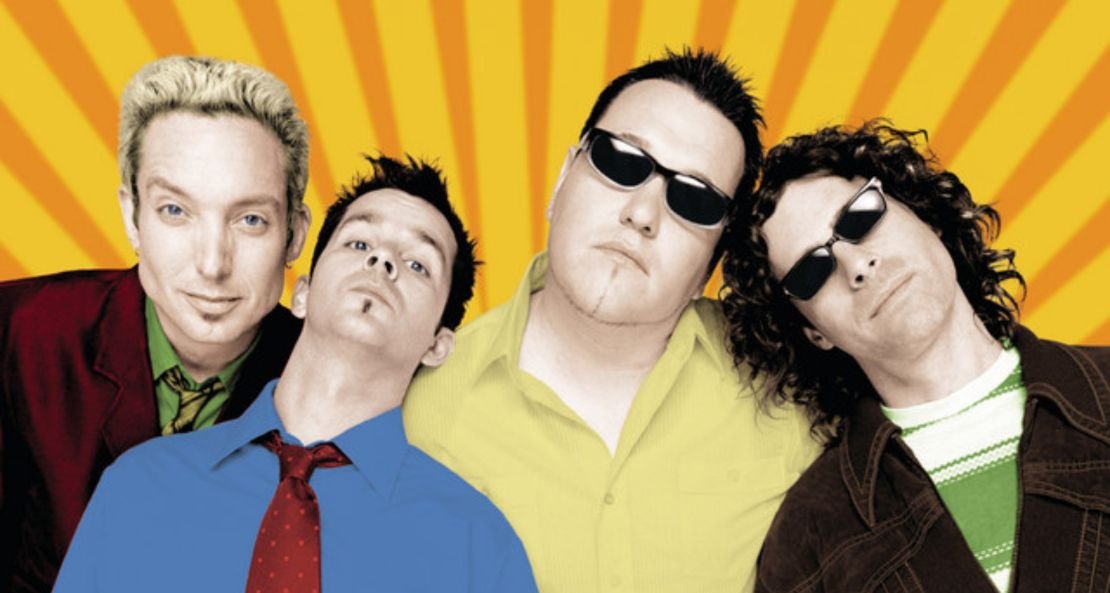
Steve Harwell, who sang “All Star” and fronted Smash Mouth from their formation until his retirement in 2021, died in September 2023 from liver failure. He was 56.
Harwell did not write the song but his delivery defined it. The flat, conversational vocal tone set against the track’s bright production gives the self-belief message its unusual calmness, as if being an all-star were simply the default state and the listener had temporarily forgotten.
The Meme Life
By the late 2000s “All Star” had acquired an ironic second life online. Remixes, mashups and Shrek-centred memes on YouTube introduced it to audiences who had not been born when it charted. Camp has said none of this bothers him.
The song was engineered to a brief, and Camp was open about that process. What kept it alive is not the construction but what sits underneath it: a melody that lodges in the brain and a message simple enough to survive every generation that rediscovers it.
Stream Smash Mouth All Star:
You might also like:
- The Killers’ Timeless Hit: Unravelling the Mr. Brightside Lyrics and Its Enduring Impact on Pop Culture
- Twenty One Pilots Release Thrilling New Single Next Semester
- The Ultimate Guide to Linkin Park’s Most Popular Songs
- Nirvana’s Smells Like Teen Spirit: A Deep Dive into the Lyrics and Legacy
- From Creation to TikTok: The Journey of Teenage Dirtbag by Wheatus