
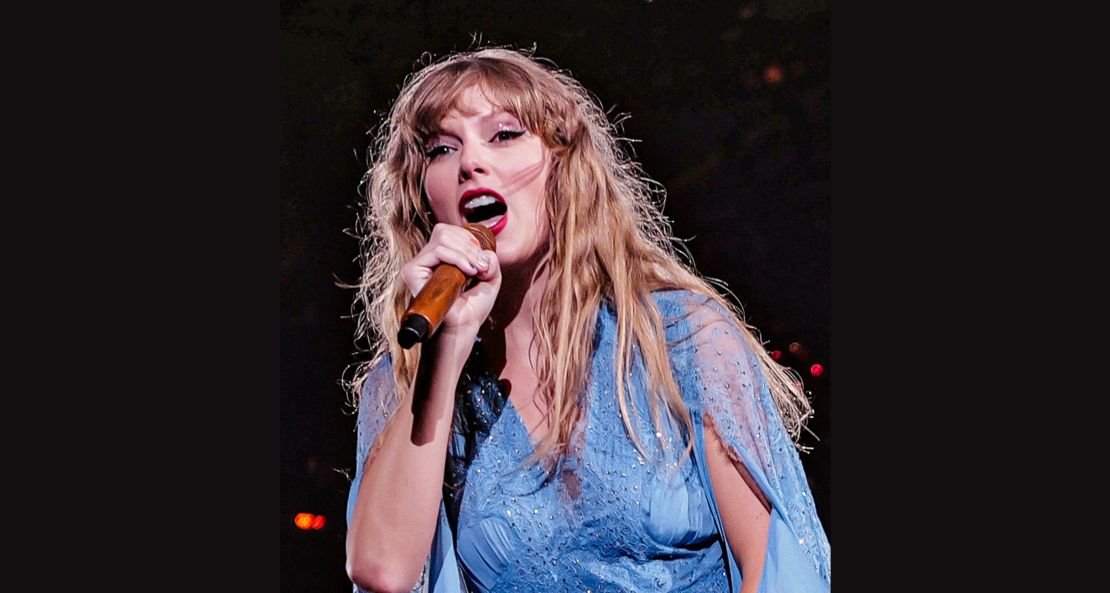
“Guilty as Sin?” is about wanting someone you never touched, being found guilty for it anyway, and knowing the outcome was never really in question.
It is a bedroom solo fantasy about someone she cannot have. Swift turns that into something closer to a theological problem. Either the most Taylor Swift instinct imaginable, or something sharper than that.
Not a confession. A deposition to herself, in a court that adjourned before she opened her mouth.
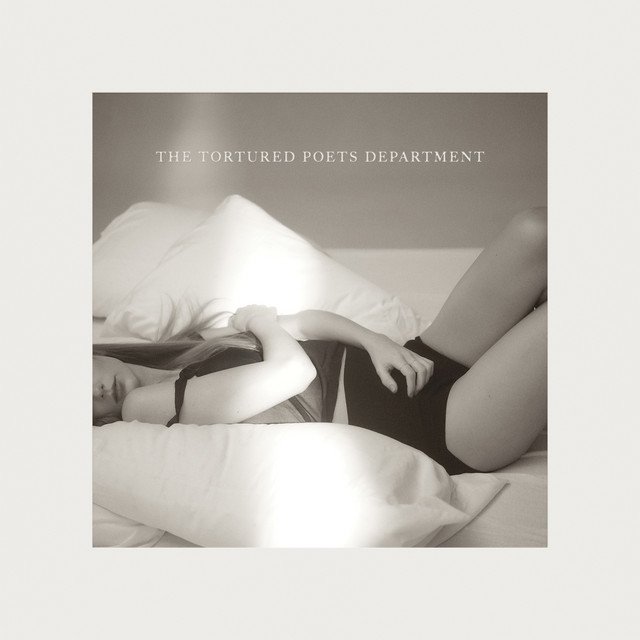
“Guilty as Sin?” is track 10 on The Tortured Poets Department (2024), co-written and co-produced with Jack Antonoff, and peaked at number 10 on the Billboard Hot 100. It moves slower than most of the album and has been picked apart more than almost anything else on it.
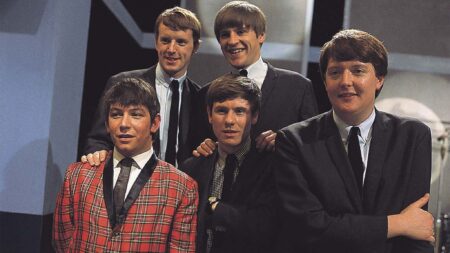
She opens not with herself but with him, drowned in The Blue Nile, sent a song called “Downtown Lights” she hadn’t thought about in a while.
The Blue Nile are a Scottish band who released their album Hats in 1989. “Downtown Lights” runs nearly six minutes and doesn’t go anywhere fast: it is a song about watching someone you love from across a city at night, wanting something that stays just out of reach.
Matty Healy, frontman of The 1975, told Vulture in a 2016 interview: “The Blue Nile are my favorite band of all time. They’re fucking amazing. Musically, they’ve inspired me so much.” He named Hats specifically as his favourite album of the decade.
So when Swift sings that he sent her “Downtown Lights,” the choice of song matters. He sent her a track built on lonliness and desire, about a city at night and someone watching from the wrong side of it.
Healy did not just cite this song as an influence either. The 1975 sampled the intro hook of “Downtown Lights” directly in their song “Love It If We Made It.”
He took a piece of it and built something of his own around it. When Swift drowns in the Blue Nile in the opening line, she is drowning in music that Healy has been carrying inside his own work for years.
By the time the lyric begins, no one has touched anyone yet.
Swift and Healy were first linked in 2014. Nothing came of it. Nearly a decade passed. Then, briefly and very publicly in 2023, something did. This song sits in the space between those two points.
The chorus keeps asking the same question: without ever touching his skin, how can I be guilty as sin?
The framework she is writing against does not require contact. Desire is enough.
Everything else follows from that.
The imagery never names the act but doesn’t need to. Bed sheets ablaze. His name, screamed. Waves crashing over her grave. Nothing has happened outside her imagination. All of it has happened.
She writes around the act with enough distance to keep it poetic, and enough details that it lands.
“Oh what a way to die” carries the sentiment of la petite mort, the little death, a phrase for post-orgasmic clarity. The guilt she is carrying is physical, whether anything occurred or not.
The only defence arrives in the second verse: someone told her there are no bad thoughts, only actions. It lands, then slips. The thoughts stay.
She keeps her longings locked in lowercase, inside a vault.
folklore and evermore had fully lowercase track listings. The vault is Swift’s own term for songs kept back from original albums, recovered years later during her re-records.
The lyric is saying she was already writing about Healy during the Alwyn years and kept it filed away under a different era’s name. A woman with a private archive of things that never happened, feeling guilty about it anyway.
Swift is not writing above this feeling. She is all the way inside it.
The hedge maze appears twice, both times as a place she is falling back into. In “Labyrinth” it marked falling in love without expecting it. Here, she recognises the pattern and goes back in anyway.
She has been here before, she knows where it goes, and she is sliding back in anyway.
The bridge opens on a resurrection image: she could roll the stone away. She answers herself immediately. They will crucify her anyway.
The image is biblical, but the mechanics are tabloid. The punishment was scheduled before she arrived.
Then comes the line that catches you off guard: what if the way you hold me is actually what’s holy? She is asking whether long-suffering propriety is itself the sin. Whether the feeling she has been locking in lowercase is closer to faith than the public judgment that condemns it.
“I choose you and me religiously” does not fix the argument. It makes a different one. Not that she is innocent, not that she has earned it, just that she is choosing it with the full weight of what that costs her.
This same logic ran through “Carolina,” Swift’s 2022 song for the film Where the Crawdads Sing, which contained the line about being called guilty as sin and sleeping in a liar’s bed.
That character was ostracised by a town that had made up its mind. Swift lifted the phrase and brought it forward two years, into a situation where she was the one sleeping in the liar’s bed, except the lie is that there is any bed to speak of.
Swift and Antonoff have worked together since 2013, and by this point he understands exactly where she puts the emotional weight in a song and where she leaves silence. On “Guilty as Sin?” he withholds the one thing their best collaborative work usually delivers: a release point.
The production sits somewhere between the synth-pop of 1989 and the bare, confessional writing of folklore. The pulsing rhythm underneath gives it a physical quality, something close to a heartbeat or the specific restlessness of lying awake. The atmosphere is soft rock but the anxiety running through it is not soft at all.
The song’s sonic world shares ground with early 1975 records, particularly the 2013 debut, which Healy has always attributed directly to The Blue Nile’s influence. The whole track is flooded with him before he is physically present in a single line.
For most of the song, she is talking about him. He sent her the song. She screamed his name. He is the subject of a story she is telling herself, described in the third person, kept at a remove.
Then the bridge arrives and the pronoun shifts. She stops talking about him and starts talking to him. The “you” comes in: the way you hold me, how you’ve haunted me, I choose you. For the length of the bridge she is no longer narrating the feeling. She is inside it, addressing him directly.
Then the final chorus pulls back. He is third person again. His skin. His name written on her thigh, only in her mind. The outro closes the same way the song opened: he sent her “Downtown Lights.” He is back across the distance where the song found him.
The reach toward him in the bridge is the only moment of direct address in the whole track, and the song does not hold it. She retreats. The final question, am I allowed to cry, is not asked to him. It goes nowhere in particular. The vault closes.
The outro skips the bigger questions, guilt, justification, what was real, and settles on something smaller. It asks whether she is allowed to cry about it. The real question underneath it: can a thought alone make someone guilty?
“Guilty as Sin?” is from The Tortured Poets Department (2024), written and produced by Taylor Swift and Jack Antonoff.
You might also like:
- But Daddy I Love Him Lyrics: Taylor Swift’s Defiant Ode to Controversial Love
- David Kushner, Daylight Lyrics: The Meaning and Inspiration Behind the Song
- Kali Uchis’ Moonlight Lyrics: A Luminous Exploration of Love and Self
- Unpacking Billie Eilish’s CHIHIRO Lyrics: A Deep Dive into Meaning and Inspiration
- Orange Juice by Noah Kahan: The Full Story Behind the Fan-Favourite Track